Top 12 Natural Monuments around Cromstrijen
Best natural monuments around Cromstrijen offer diverse landscapes and ecological significance within the Hoeksche Waard region. This area features unique hydrological environments, including riverine landscapes and polders. Visitors can explore a variety of natural features, from expansive nature reserves to specific landmarks. The region provides opportunities to observe local wildlife and experience the natural heritage of the Netherlands.
Best natural monuments around Cromstrijen
- The most popular natural monuments is De Wachter Art Installation, a man-made monument and natural monument…
Last updated: June 23, 2026
De Wachter Art Installation
Highlight • Monument
Translated by Google •
Tip by

Bee and insect hotel with information stand
Highlight • Structure
Translated by Google •
Tip by

Sign up now to discover places like this
Get recommendations on the best single tracks, peaks, & plenty of other exciting outdoor places.
Sign up for free
Wildflower fields in the Oude Polder, Haringvliet
Highlight • Natural
Translated by Google •
Tip by

Tiendgorzen Nature Reserve
Highlight • Natural
Translated by Google •
Tip by

Bird Watching Hut Tiengemeten
Highlight • Mountain Hut
Translated by Google •
Tip by
Sign up for free to discover even more natural monuments around Cromstrijen.
Sign up for free
Already have an account?
Start today with a free account
Your next adventure awaits.
Login or Signup
Other adventures around Cromstrijen

Tips from the Community

An insect hotel is a structure that is specially designed to provide shelter and nesting places for insects. It is often used in gardens, parks or natural areas to support biodiversity. Here is more information about insect hotels: Purpose of an insect hotel • Supporting biodiversity: Insect hotels help beneficial insect species such as bees, ladybirds, lacewings and earwigs to survive, especially in urban or agricultural areas where natural shelters are scarce. • Pollination: Solitary bees, which often use insect hotels, play an important role in pollinating flowers and crops. • Pest control: Some insects, such as ladybirds and earwigs, eat pest insects such as aphids, which can help to naturally maintain plants. Construction of an insect hotel An insect hotel consists of several compartments, each suitable for different types of insects. Commonly used materials include: • Wooden blocks with holes drilled into them: For solitary bees, such as the mason bee. • Hollow stems: Bamboo or reed for small bee species. • Pine cones or straw: For ladybugs and earwigs. • Bark and twigs: For spiders and other small insects. • Loam or clay: For bees that seal their nests with mud.
8
0

Along the Oostdijk between the Tonnekreek and Willemstad is 'De Wachter' a special work of art. De Wachter stands exactly on the spot where the storm surge on 1 February 1953 hit and flooded the Ruigenhilpolder. The work of art is an eight-metre-high hill, on which sheep can graze. The work of art De Wachter, by artist Marius Boender, was built along the Hollandsch Diep at the spot where the dike broke during the Flood Disaster in 1953. The reason for the monument was the completion of the dike reinforcement in 2001. The work of art is an eight-metre-high, pyramid-like clay hill, overgrown with grass. You can climb the work of art via a path that winds over the work of art. There is a good chance that you will do so in the company of grazing sheep. The creation of the work of art was a challenge, because factors such as weight (not too heavy), weather resistance (rain and wind) and construction (not subsidence under pressure from visitors) had to be taken into account. Source: https://www.visitmoerdijk.nl/nl/locaties/2645610321/de-wachter
6
0

The work of art is an eight-metre high hill on which sheep can graze. De Wachter, by artist Marius Boender, was built along the Hollandsch Diep at the spot where the dike broke during the 1953 flood disaster.
3
0

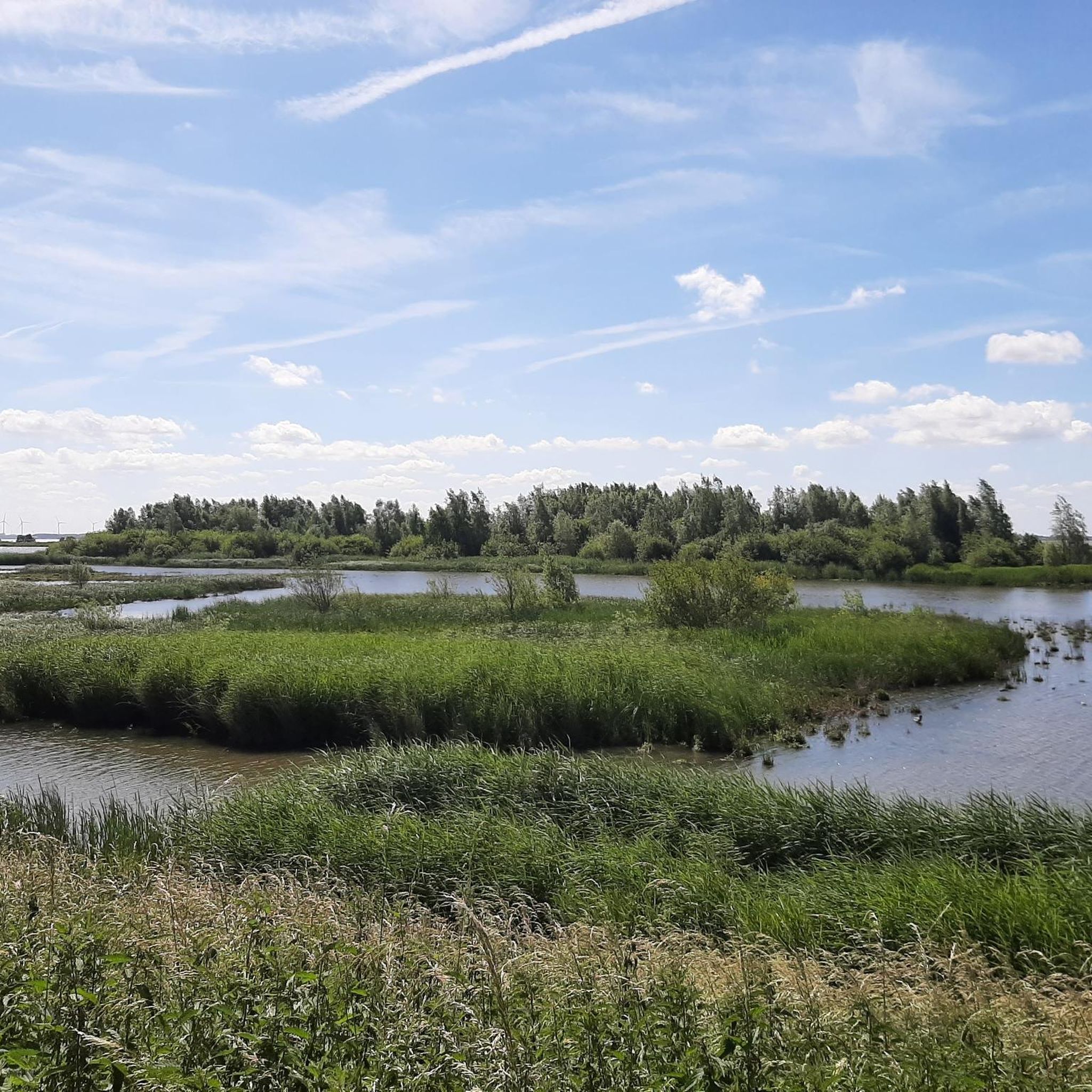
The nature reserve of the Tiendgorzen is located on the Haringvliet next to the ferry to the island of Tiengemeten. The rare Arctic vole has been living in the wetlands of Tiendgorzen for several years now. The animal feels completely at home in the nature of the marshy grass and reed land. There are also many birds in Tiendgorzen. For example, reed birds and waders such as the reed warbler and redshank are frequent visitors. [natuurmonumenten.nl]
0
0

Fields with many colourful flowers
3
0

Bird watching at Tiengemeten is a unique experience. Especially in the spring when the breeding birds are busy and countless migrants pass by. With a bit of luck you can see the sea or osprey or even a flamingo on the island!
1
0
Arable lands full of poppy, cornflower and yellow goose flower. The farmer used to harvest grains, including weeds. He saved part of the harvest for sowing again the following year. In addition to grain, the wild field flowers also reappeared. Nowadays, the foresters are actively working on the return of field flowers to restore the agricultural image of the past in the Oude Polder.
3
0
Frequently Asked Questions
What are some of the most popular natural monuments to visit around Cromstrijen?
Visitors frequently enjoy the unique blend of history and nature at De Wachter Art Installation, an eight-meter-high clay hill marking the site of a 1953 flood dike breach. Another favorite is the Bird Watching Hut Tiengemeten, offering excellent views of diverse bird species. The Wildflower fields in the Oude Polder, Haringvliet are also highly appreciated for their vibrant display of poppy, cornflower, and yellow goose flowers.
Are there family-friendly natural monuments in the Cromstrijen area?
Yes, several natural monuments are suitable for families. De Wachter Art Installation is family-friendly, offering a climbable hill and grazing sheep. The Wildflower fields in the Oude Polder, Haringvliet provide a colorful and open space for children to explore. Additionally, the Bird Watching Hut Tiengemeten and the Tiendgorzen Nature Reserve are great for wildlife spotting, and Natuureiland Tiengemeten features a large nature play park accessible by ferry.
What kind of wildlife can I expect to see at the natural monuments?
The natural monuments around Cromstrijen are rich in wildlife. At Natuureiland Tiengemeten, you can spot beavers and a wide variety of bird species. The Tiendgorzen Nature Reserve is home to the rare Nordic water vole, as well as reed birds and waders like the reed warbler and redshank. Kuipersveer is known for spoonbills, and the Bird Watching Hut Tiengemeten offers chances to see breeding birds, migrants, and occasionally sea eagles or flamingos. Oeverlanden Hollands Diep features Highland cattle grazing in its grasslands.
Are there opportunities for hiking or walking near these natural monuments?
Absolutely. Many natural monuments offer excellent walking opportunities. Tiendgorzen has walks of 1 or 3 kilometers alongside ponds and the Haringvliet. Kuipersveer features beautiful circular walks through overgrown willow coppice. Oeverlanden Hollands Diep provides various walking paths. For more structured routes, you can explore the running trails around Cromstrijen, which often pass through natural areas.
What is the best time of year to visit the natural monuments around Cromstrijen?
Spring is particularly vibrant, with breeding birds active and migrants passing through, especially around the Bird Watching Hut Tiengemeten. The Wildflower fields in the Oude Polder, Haringvliet are at their most colorful during the warmer months. Note that access to Korendijkse Slikken, a significant bird sanctuary, is restricted to between July 1st and November 1st due to its importance for birds.
Can I go cycling near the natural monuments?
Yes, cycling is a popular activity in the region. Natuureiland Tiengemeten is ideal for cycling, offering an immersive natural experience. You can find various road cycling routes and MTB trails around Cromstrijen that pass through or near many of these natural areas, allowing you to explore the diverse landscapes on two wheels.
Are there any natural monuments with historical significance?
Yes, De Wachter Art Installation is a natural monument with significant historical context. It's an eight-meter-high clay hill located precisely where a dike broke during the devastating 1953 flood disaster, serving as a poignant reminder of the event. Additionally, at Kuipersveer, you can see remnants of an old bridge along the Maas river, historically used by figures like Napoleon and Mozart.
What are the access restrictions for Korendijkse Slikken?
Korendijkse Slikken is a vital bird sanctuary, and to protect its breeding and overwintering bird populations, public access is restricted. Visitors are only permitted between July 1st and November 1st. During this period, you can walk from the parking area through the Leenherengorzenpolder and use two bird hides for observation, or visit a viewing mound for panoramic views.
Is Natuureiland Tiengemeten accessible, and what can I do there?
Natuureiland Tiengemeten is accessible only by ferry. Once on the island, you'll find untamed nature, expansive water plains with reed beds, and diverse bird species. It's home to beavers and features a large nature play park for children. The island is excellent for walking and cycling, offering a deep natural experience.
Are there any viewpoints to get a good overview of the natural landscapes?
Yes, several locations offer great viewpoints. De Wachter Art Installation provides a historical and natural viewpoint from its eight-meter-high clay hill. The Bird Watching Hut Tiengemeten offers magnificent views of the surrounding nature. At Kuipersveer, there's a viewpoint along the Maas river. Korendijkse Slikken also has a viewing mound with panoramic vistas of the Haringvliet and the Spui estuary.
What is the purpose of the Bee and insect hotel with information stand?
The Bee and insect hotel with information stand is designed to support biodiversity by providing shelter and nesting places for beneficial insect species like bees, ladybirds, and lacewings. These insects play crucial roles in pollination and natural pest control, especially in areas where natural shelters are scarce. The information stand helps visitors understand the importance of these structures and the insects they support.
What is unique about the Oeverlanden Hollands Diep nature reserve?
Oeverlanden Hollands Diep, part of the Delta Nature, is unique due to its dynamic environment shaped by the ebb and flow of the tide. This creates varied landscapes and habitats. The reserve, located between Strijensas and Numansdorp, offers various walking paths and is known for its grasslands where Highland cattle graze, adding to its distinctive natural character.
Most popular attractions around Cromstrijen

Get inspired with the komoot mobile app


Explore more
Extend your search for the best caves by checking out these guides of the top ones around Cromstrijen:
