Top 6 Natural Monuments around Santa Comba Dão
Best natural monuments around Santa Comba Dão are found in the Viseu district of Portugal, offering a diverse array of natural features. The region is characterized by picturesque landscapes, including river valleys like the Dão and Mondego, and elevated viewpoints. These sites provide opportunities to explore geological formations, historical megalithic structures, and serene riverine environments. The area's natural attractions blend scenic beauty with historical significance, making it a notable destination for outdoor exploration.
Best natural monuments around Santa Comba Dão
…Last updated: June 23, 2026
Lapa da Orca Dolmen
Highlight • Historical Site
Translated by Google •
Tip by

Anta da Palheira
Highlight • Historical Site
cm-carregal.pt/pages/1027?poi_id=129
ORCA/ANTA from PALHEIRA is located in the megalithic nucleus of Fiais/Ameal. It is …
Translated by Google •
Tip by

Sign up now to discover places like this
Get recommendations on the best single tracks, peaks, & plenty of other exciting outdoor places.
Sign up for free
Miradouro do Penedo Cabana
Highlight • Viewpoint
Translated by Google •
Tip by
Livraria do Mondego Viewpoint
Highlight • Viewpoint
Translated by Google •
Tip by

Cascata de Sevilha
Highlight • Waterfall
According to …
Translated by Google •
Tip by

Sign up for free to discover even more natural monuments around Santa Comba Dão.
Sign up for free
Already have an account?
Start today with a free account
Your next adventure awaits.
Login or Signup


Tips from the Community

Designated a National Monument since 1974, this structure retains the nine upright stones of its main chamber, which is three meters high, and the capstone (covering slab) practically intact. The access corridor to the chamber has 15 upright stones and preserves all the covering slabs, with the dolmen being inserted into a tumulus (or mound, which originally covered the entire stone structure of the monument) approximately 20 meters in diameter. Its construction is believed to have occurred during the Neolithic-Chalcolithic period (between the end of the Neolithic and the beginning of the Chalcolithic), corresponding to the end of the 4th millennium BC. The region where the Orca Dolmen is located shows traces of continuous human activity and occupation since the prehistoric period. It is situated in an area with orographic characteristics conducive to human settlement, being close to a watercourse (the Mondego River) and possessing vast hunting resources. We know that shepherding has been a source of livelihood and income for centuries for the populations of the region, situated on a livestock route between the highlands of the Serra da Estrela and the Mondego valley.
1
0

This Orca/Anta is part of a tour circuit: PREHISTORIC CIRCUIT OF FIAIS/AZENHA in Carregal do Sal. https://www.cm-carregal.pt/pages/1027?poi_id=129 ORCA/ANTA from PALHEIRA is located in the megalithic nucleus of Fiais/Ameal. It is a monument of considerable size, which can be placed, architecturally, within the large group of monuments of Beira. It has a polygonal chamber with nine pillars, with an elongated corridor. However, its peculiar characteristics make this monument the rarest and most representative example of the circuit, given that at a somewhat later and yet to be determined period, a considerable barn was built around its central structure, which is part of that farm. Thus, the dolmen remained incorporated within it and was used as a dwelling until the 1970s.
2
0

Seville, a distinctly rural village, has as one of its treasures the mill area, with a dam creating a large body of water creating a beautiful two-tiered waterfall. According to information gathered from local residents, water runs through the waterfall all year round.
1
0
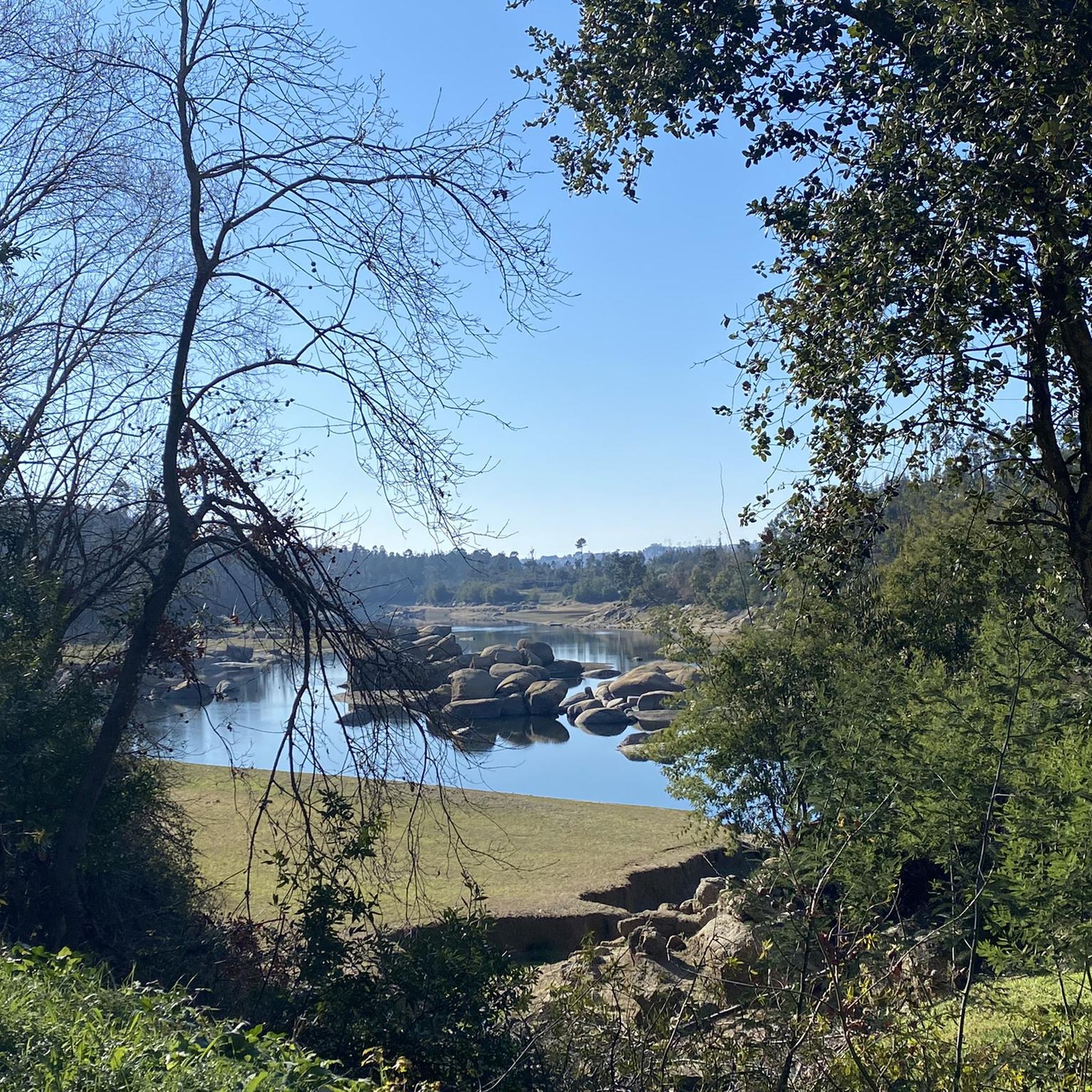
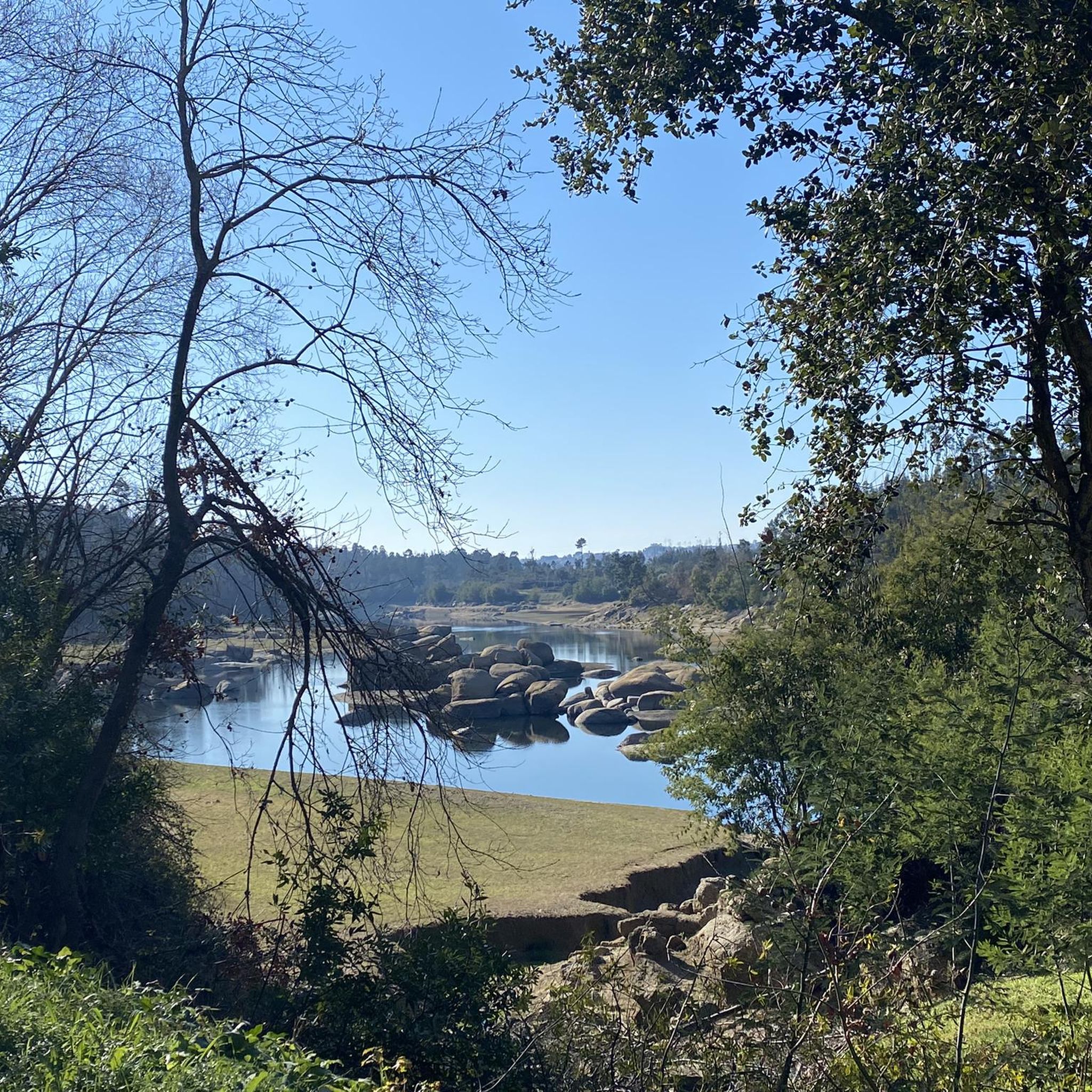
The Penedo C'abana is a large rocky outcrop located near Póvoa de Midões, on the slope overlooking the River Mondego. It is a reference point for viewing the river and the municipality of Tábua. It has the peculiarity of swaying slightly when pressure is applied to it, shaking it. The Penedo C'Abana is classified as a Property of Public Interest.
1
0

The place is easily accessible and offers visitors plenty of space to relax and enjoy nature. It is best to visit in the morning when you are alone. There is a small car park nearby.
2
0
It is one of the largest dolmens in Portugal and one of the best preserved.
3
0


After doing this route, there is nothing better than taking a dip here!
0
0
Frequently Asked Questions
What are some unique natural monuments to explore around Santa Comba Dão?
The region offers several distinctive natural monuments. You can visit the Livraria do Mondego Viewpoint, known for its rock formation resembling books on a shelf, offering a peaceful spot for contemplation. Another unique site is the Lapa da Orca Dolmen, one of Portugal's largest and best-preserved megalithic monuments, set within a remarkable natural landscape with expansive views.
Are there family-friendly natural monuments in the area?
Yes, several natural monuments are suitable for families. The Livraria do Mondego Viewpoint is easily accessible and offers scenic views. The Cascata de Sevilha, a beautiful two-tiered waterfall, provides a serene natural refuge with trails and natural pools, perfect for a family outing. The Ecopista do Dão, a 49-kilometer path, is also excellent for family cycling and walking due to its gentle slopes.
What kind of historical natural sites can I visit near Santa Comba Dão?
Beyond the Lapa da Orca Dolmen, you can explore the Anta da Palheira, another significant megalithic monument with a polygonal chamber and an elongated corridor. The Ponte Romana de Sumes, an ancient Roman bridge spanning the Cavalos River, is also notable for its integration into a pristine natural environment with trails and waterfalls, blending history with natural beauty.
What outdoor activities can I do near these natural monuments?
The region is excellent for various outdoor activities. You can enjoy cycling on the Ecopista do Dão, which follows a former railway line between Santa Comba Dão and Viseu. For mountain biking, consider routes like the 'Roman Bridge of Sumes – Vale de Gaios River Beach loop' or the 'Sevilha Waterfall – Vale de Gaios River Beach loop'. Find more cycling options in the Cycling around Santa Comba Dão guide, Road Cycling Routes around Santa Comba Dão guide, and MTB Trails around Santa Comba Dão guide.
Are there any viewpoints offering panoramic views of the natural landscape?
Yes, Santa Comba Dão is known for its stunning viewpoints. Besides the Livraria do Mondego Viewpoint, you can visit Miradouro do Penedo Cabana, a large rocky outcrop near Póvoa de Midões, offering views of the River Mondego. The Miradouro Pedra da Sé, near Tábua, provides magnificent panoramic views of the Aguieira reservoir and the Mondego River. Miradouro Pedra Talhada and Miradouro Santo Estêvão are also part of the 'Rota dos Miradouros', offering captivating views of the forest and riverine landscape.
What is the best time of year to visit the natural monuments around Santa Comba Dão?
Spring and early autumn are generally ideal for visiting, as the weather is pleasant for outdoor activities like cycling and hiking. In spring, waterfalls like Cascatas de Sevilha will have a more powerful flow. Summer offers a refreshing escape at river beaches like Praia Fluvial de Vimieiro, though some trails might be warmer. The region's natural beauty can be appreciated year-round, but these seasons offer optimal conditions for exploration.
Are there any river beaches or water features to enjoy?
Absolutely. The Praia Fluvial de Vimieiro, located on the banks of the Alva River, is a charming natural spot with clear waters, recognized with Blue Flag and Gold Quality awards. It's perfect for relaxation and swimming. Additionally, the Cascata de Sevilha offers natural pools amidst a forested landscape, ideal for a refreshing dip.
What do visitors enjoy most about the natural monuments in Santa Comba Dão?
Visitors frequently appreciate the tranquility and natural beauty of the sites. For instance, the Livraria do Mondego Viewpoint is noted as a 'place of contemplation and peace.' The Miradouro do Penedo Cabana is praised for its 'spectacular view' and being a 'pleasant place.' The historical significance of sites like the Lapa da Orca Dolmen, combined with their natural settings, also receives high acclaim.
Can I find any hidden natural gems or less-known spots?
While many sites are well-known, the Ribeira das Hortas offers a charming, bucolic experience flowing through the Aldrógãos area of Santa Comba Dão. It features wooden walkways and flowerbeds, creating a delightful atmosphere for a stroll, and feeds weirs that once powered ancient watermills, adding a historical dimension to its natural beauty.
Is public transport available to reach these natural monuments?
While specific public transport routes directly to all natural monuments can be limited, Santa Comba Dão itself is accessible. For many natural sites, especially those off the main roads, personal transport or cycling (like on the Ecopista do Dão) might be the most convenient options. It's advisable to check local transport schedules for specific destinations.
Are there any trails suitable for walking with dogs?
Many natural trails and paths in the region are suitable for walking with dogs, especially those in more open natural areas. The Ecopista do Dão, with its extensive length and natural surroundings, is a popular choice for dog walkers. Always ensure your dog is on a leash and that you clean up after them to preserve the natural environment for everyone.
What kind of geological formations can be observed?
The region is rich in geological features. The Livraria do Mondego Viewpoint showcases a unique rock formation resembling books. The Miradouro Pedra da Sé is characterized by a large granite rock formation, offering dramatic landscapes. The Miradouro do Penedo Cabana is another notable rocky outcrop, known for its slight sway when pressure is applied.
Most popular routes around Santa Comba Dão
Most popular attractions around Santa Comba Dão

Get inspired with the komoot mobile app


Explore more
Extend your search for the best caves by checking out these guides of the top ones around Santa Comba Dão:
