Top 20 Natural Monuments around Villing
Natural monuments around Villing offer diverse geological formations and historical natural sites. The region features unique natural features near Villing, including tufa staircases, rock formations, and gorges. These natural attractions provide opportunities to explore the area's distinct landscape. The natural monuments around Villing showcase the geological processes that have shaped the terrain over millennia.
Best natural monuments around Villing
- The most popular natural monuments is Travertine Steps on the Idesbach Trail, a natural monument and waterfall that features a…
Last updated: June 22, 2026
Travertine Steps on the Idesbach Trail
Highlight • Natural Monument
Translated by Google •
Tip by

Three Capuchin Rock Carvings (Gallo-Roman Deity Reliefs)
Highlight • Monument
The relief of Nantosuelta, the patron goddess of house and court, and that of Sucellus, the god of miners and …
Translated by Google •
Tip by

Sign up now to discover places like this
Get recommendations on the best single tracks, peaks, & plenty of other exciting outdoor places.
Sign up for free
The Grott (Raufels) Rock Formation
Highlight • Natural Monument
Translated by Google •
Tip by

Pastorsgrät Gorge
Highlight • Gorge
Ein tragisches Ereignis mit tödlichem Ende, dessen tatsächlichen Hintergründe und wahren Ursachen vom Volksmund gem in das Dunkel des Geheimnisvollen und Unaufgeklärten gedichtet werden, soll an dieser Stelle erzählt …
Tip by

Beruser Kalksteinbruch Nature Reserve
Highlight • Natural Monument
Translated by Google •
Tip by

Sign up for free to discover even more natural monuments around Villing.
Sign up for free
Already have an account?
Start today with a free account
Your next adventure awaits.
Login or Signup
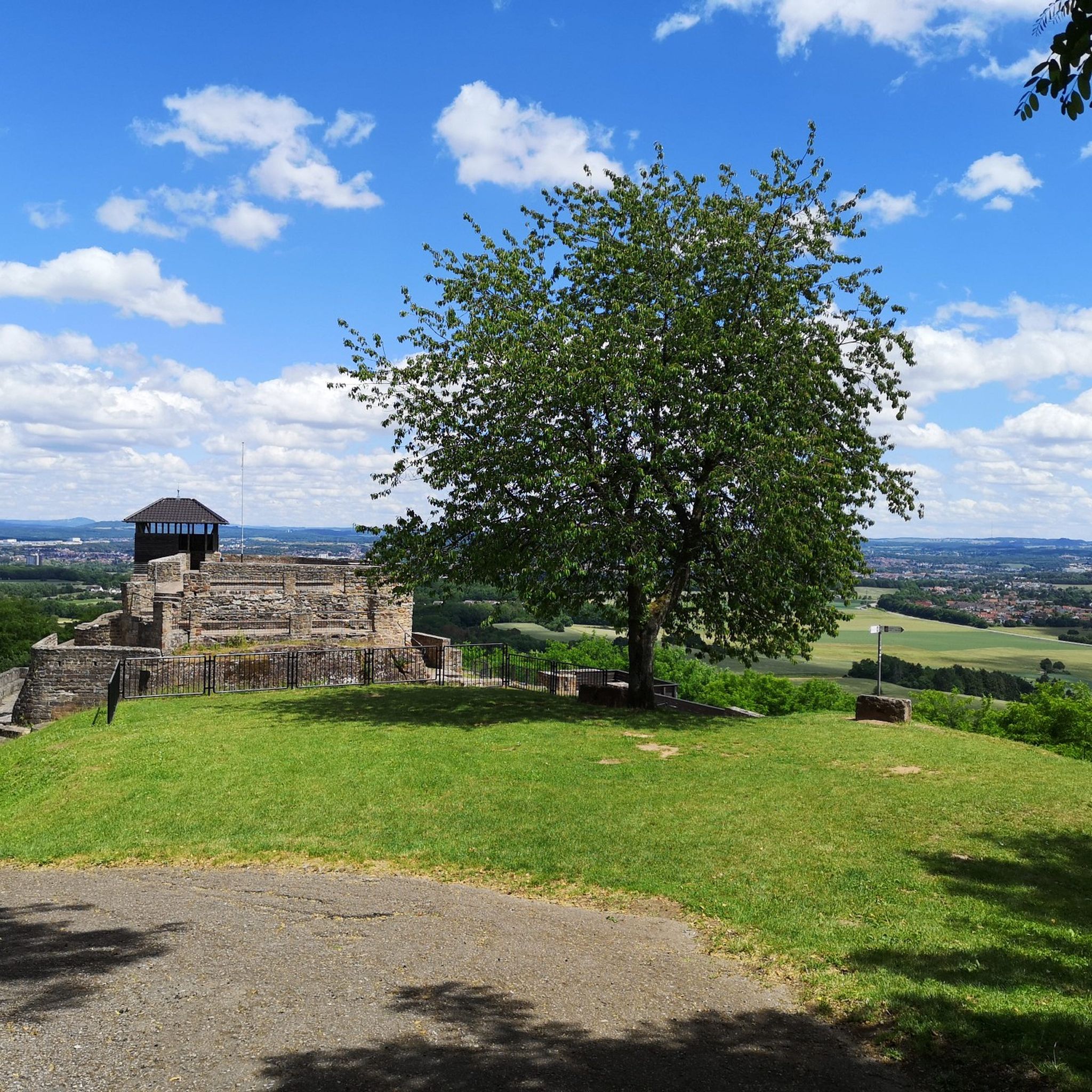
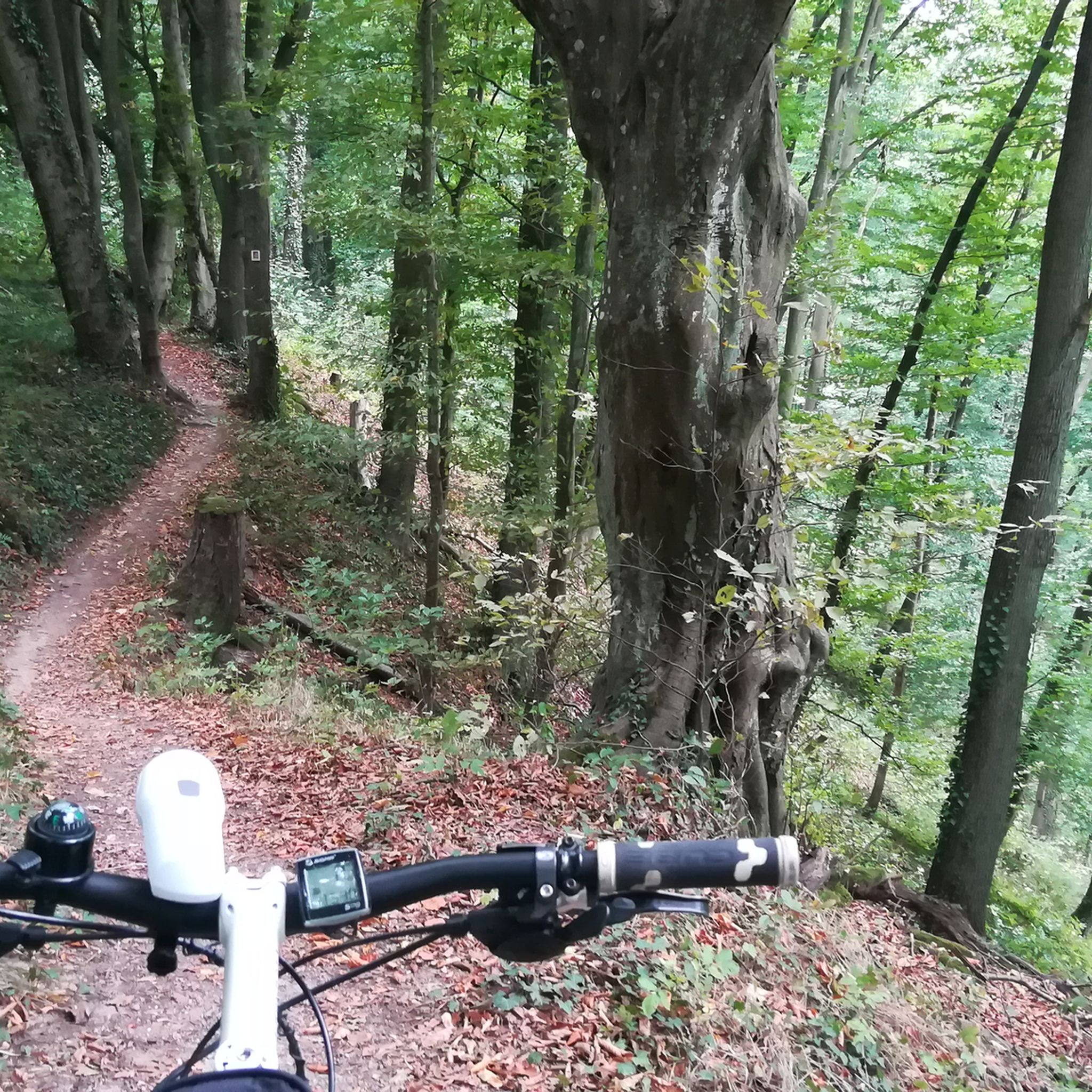
Tips from the Community

Beautiful section on the dream loop
0
0

The tuff stone staircase was created by the constant flow of water and the precipitated lime.
0
0

The "Three Capuchins" is a Gallo-Roman rock relief that can be found along the Vaubansteig dream loop in Saarland. This relief, carved in red sandstone, originally shows three figures, two of which are still recognizable today: Nantosuelta, the protective goddess of house and farm, and Sucellus, the god of miners and blacksmiths. The name "Three Capuchins" came about in the Middle Ages, when the figures were thought to be Capuchin monks because of their clothing.
1
0

Dream loop which consists mostly of gravel roads.
0
0
Dream loop which consists mostly of gravel roads.
0
0

There are not only 3 stone monks
0
0

The place is absolutely easy to miss and I only noticed where it was at home when I was watching the videos. But the entire rock itself was worth the trip.
1
0

In the photo you can see the Itzbach flowing down from its source
1
0
Frequently Asked Questions
What are some of the most unique natural monuments around Villing?
The Villing area is home to several distinctive natural monuments. Among them are the Travertine Steps on the Idesbach Trail, a rare tufa staircase formed by calcareous spring water. You can also explore Pastorsgrät Gorge, a deep ravine carved by water erosion over millennia, revealing ancient geological layers. Another notable site is The Grott (Raufels) Rock Formation, a bizarre limestone rock created by similar natural processes.
Are there any natural monuments with historical significance in the Villing area?
Yes, the region offers natural monuments with rich historical connections. The Three Capuchin Rock Carvings (Gallo-Roman Deity Reliefs) are ancient reliefs of Nantosuelta and Sucellus carved into a rock face, historically believed to protect azurite miners. Additionally, the Beruser Kalksteinbruch Nature Reserve was once a significant limestone quarry that supplied the Völklinger Hütte, later designated as a nature reserve in 1983, showcasing both geological and cultural history.
What kind of geological formations can I expect to see near Villing?
The natural monuments around Villing are characterized by diverse geological formations. You'll find unique tufa staircases like the Travertine Steps on the Idesbach Trail, formed by the calcareous Leitersteiner Spring. Deep gorges such as Pastorsgrät Gorge reveal layers of Buntsandstein, while bizarre limestone rock formations like The Grott (Raufels) demonstrate the effects of highly calcareous water over millennia.
Tell me more about the Travertine Steps on the Idesbach Trail.
The Travertine Steps on the Idesbach Trail are a geological rarity. This fragile, stepped limestone structure, also known as a tufa staircase, was created by water from the higher-lying Leitersteiner Spring. It extends horizontally for about 120 meters and vertically for 15 meters, formed by a process called calcareous sintering where dissolved carbon dioxide escapes, causing limestone particles to adhere to obstacles in the streambed.
What is the story behind the Three Capuchin Rock Carvings?
The Three Capuchin Rock Carvings are Gallo-Roman deity reliefs carved into a rock face. These reliefs depict Nantosuelta, the patron goddess of house and court, and Sucellus, the god of miners and blacksmiths. They were historically meant to protect those who mined azurite on these slopes hundreds of years ago, which was important for production between Wallerfangen and St. Barbara.
What can I expect when visiting the Pastorsgrät Gorge?
When visiting Pastorsgrät Gorge, you'll encounter a deep ravine in the Gisinger forest. This impressive gorge was created by water erosion over thousands of years, exposing geological layers of the Middle and Upper Buntsandstein. The name 'Pastorsgrät' comes from a tragic event in 1857 when a pastor fell into the ravine. It's a significant natural and historical site, offering a glimpse into the region's geological past.
Is the Beruser Kalksteinbruch Nature Reserve worth visiting?
Yes, the Beruser Kalksteinbruch Nature Reserve is a valuable site. It's the former Röchling’s limestone quarry, which operated until the post-war period and was designated a nature reserve in 1983. It protects unique flora and fauna, such as the 'nine killer' bird species and the 'pyramid orchid'. As a geological and cultural historical monument, it showcases exposed rock series of the Upper Muschelkalk, reminding visitors of both human activity and natural processes.
Are there hiking opportunities near the natural monuments around Villing?
Absolutely! The Villing area offers numerous hiking opportunities that allow you to explore these natural monuments. Many trails pass directly by or through these sites. For a variety of routes, you can check out the Running Trails around Villing or the MTB Trails around Villing guides, which often include paths suitable for walking and offer different difficulty levels.
What outdoor activities can I do near these natural monuments?
Beyond exploring the natural monuments themselves, the Villing region provides various outdoor activities. You can find numerous routes for mountain biking, gravel biking, and running. For instance, the MTB Trails around Villing guide features routes like the 'Grenzland Trail' and 'Lake Bisten – E.ON Reservoir loop'. If you prefer running, the Running Trails around Villing offers options from easy to difficult, including routes near the St. Oranna Pilgrimage Chapel.
What do visitors enjoy most about the natural monuments in the Villing area?
Visitors frequently appreciate the unique geological features and the serene natural settings. For example, the Travertine Steps on the Idesbach Trail are loved as a 'wonderful place to linger in the middle of trees and on the water,' especially for its shade in summer. The historical significance of sites like the Three Capuchin Rock Carvings, even if a little blurred over time, is still found impressive and easily recognizable by many.
Are there any viewpoints or scenic spots among the natural monuments?
Yes, several natural monuments offer scenic views. The Travertine Steps on the Idesbach Trail is described as a wonderful place to linger, with a rest area below and benches above. The Grott (Raufels) Rock Formation also provides a unique natural spectacle at the edge of the path, with a sensory bench nearby for resting amidst the forest.
What is the best time of year to visit the natural monuments around Villing?
While specific seasonal advice isn't provided for all sites, the Travertine Steps on the Idesbach Trail are noted as being 'more for summer' due to the shade provided by the surrounding trees, making it a pleasant spot during warmer months. Generally, spring and autumn offer mild weather ideal for hiking and exploring the outdoor natural features.
Most popular routes around Villing
Most popular attractions around Villing

Get inspired with the komoot mobile app


Explore more
Extend your search for the best caves by checking out these guides of the top ones around Villing:
