Top 16 Natural Monuments around Cayeux-Sur-Mer
Best natural monuments around Cayeux-Sur-Mer offer a diverse landscape characterized by unique geological features, rich wildlife, and expansive scenic views. Situated on the southern edge of the ecologically significant Baie de Somme, the area features vast natural habitats including dunes, marshes, and pebble beaches. Visitors can explore dramatic chalk cliffs, important ornithological reserves, and extensive coastal paths. This region provides opportunities to observe diverse flora and fauna within its wild coastal setting.
Best natural monuments around Cayeux-Sur-Mer
- The most popular…
Last updated: October 8, 2026
Ault Chalk Cliffs
Highlight • Natural Monument
Translated by Google •
Tip by

Cape Hornu
Highlight • Beach
The name Cap Hornu comes from the Picard word “hornu”, which means “horned” …
Tip by
Sign up now to discover places like this
Get recommendations on the best single tracks, peaks, & plenty of other exciting outdoor places.
La Cise Cliff
Highlight • Natural Monument
Translated by Google •
Tip by

Cliffs of Ault
Highlight • Natural Monument
Even if the city has lost its splendor, the site is impressive, because to the north, the plain of …
Translated by Google •
Tip by

Baie de Somme
Highlight • Beach
Translated by Google •
Tip by

Sign up for free to discover even more natural monuments around Cayeux-Sur-Mer.
Already have an account?
Start today with a free account
Your next adventure awaits.
Other adventures around Cayeux-Sur-Mer

Tips from the Community

The cliffs are made of chalk and are impressive to look at.
3
0
Here in Ault begin the chalk cliffs, which stretch all the way to Normandy and repeatedly appear as enormous cliffs.
4
0
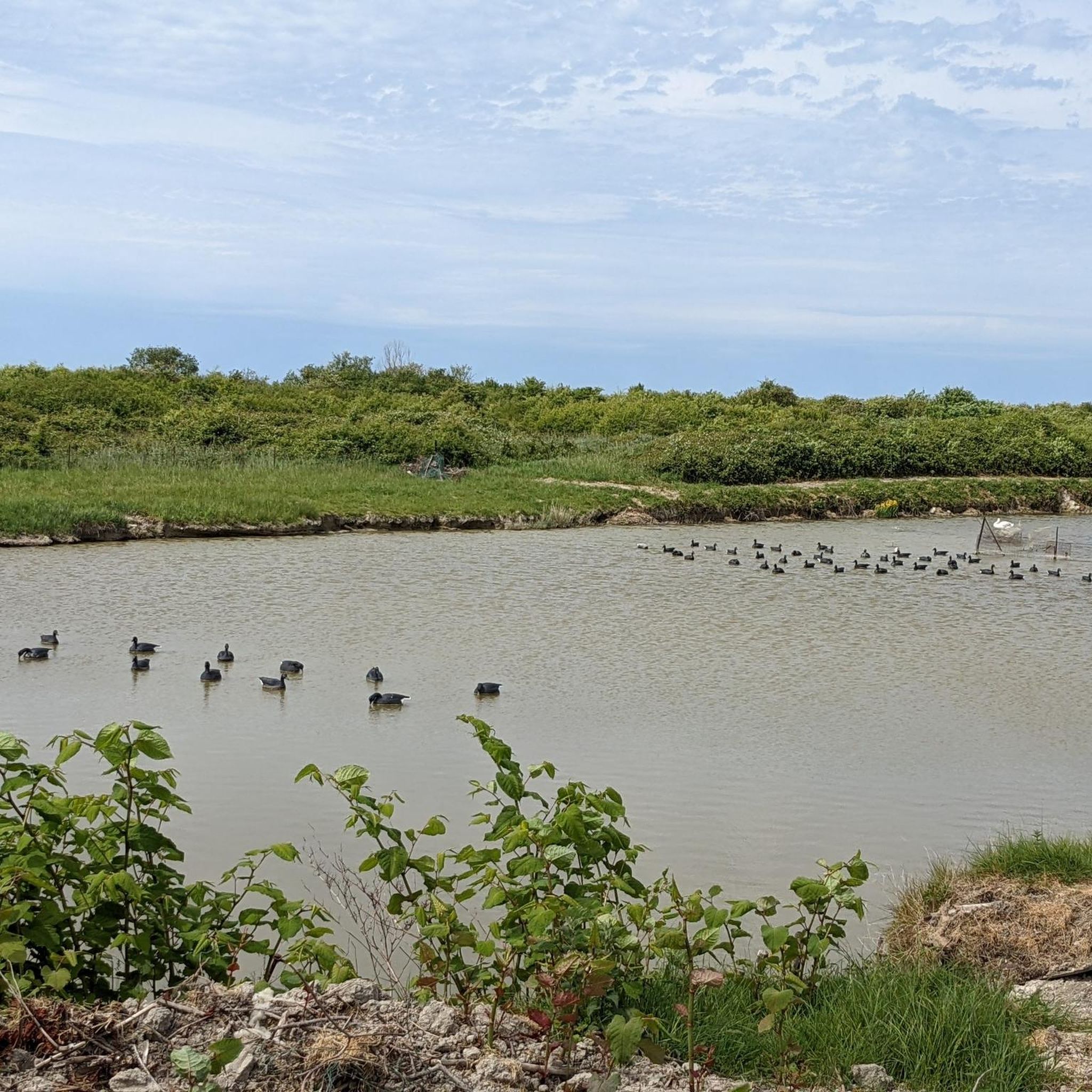
The bay of summer, on our trip it was low tide.
6
0


The cliffs around the beach of Ault are composed of chalk from the Upper Cretaceous, more precisely from the Turonian and Coniacian (around 83 million years ago to 90 million years ago). They are strewn with flint nodules which highlight the subhorizontal stratification planes (the formation of flint has already been discussed in Discovery of the geology of the cliffs of Étretat, presentation of an excursion from the beach of Tilleul (Antifer) to the Porte d'Amont (Étretat Nord)). The relative proportion of chalk and flint is around 90-95% chalk to 5-10% flint. Flint horizons are stratigraphic markers. On the cliffs of Ault, the regular flint band called Seven Sisters is recognizable and characterizes the boundary between the Middle Coniacian and the Upper Coniacian (around 87 million years ago). The boundary between the lower and middle Coniacian is marked by the Shoreham 2 marl level, which is more difficult to identify. These lithostratigraphic markings allow in particular the correlation of distant deposits, such as between the Normandy and Picardy coasts, or between the French and English coasts.
3
0
The cliffs around the beach of Ault are composed of chalk from the Upper Cretaceous, more precisely from the Turonian and Coniacian (around 83 million years ago to 90 million years ago). They are strewn with flint nodules which highlight the subhorizontal stratification planes (the formation of flint has already been discussed in Discovery of the geology of the cliffs of Étretat, presentation of an excursion from the beach of Tilleul (Antifer) to the Porte d'Amont (Étretat Nord)). The relative proportion of chalk and flint is around 90-95% chalk to 5-10% flint. Flint horizons are stratigraphic markers. On the cliffs of Ault, the regular flint band called Seven Sisters is recognizable and characterizes the boundary between the Middle Coniacian and the Upper Coniacian (around 87 million years ago). The boundary between the lower and middle Coniacian is marked by the Shoreham 2 marl level, which is more difficult to identify. These lithostratigraphic markings allow in particular the correlation of distant deposits, such as between the Normandy and Picardy coasts, or between the French and English coasts.
2
0
The cliffs around the beach of Ault are composed of chalk from the Upper Cretaceous, more precisely from the Turonian and Coniacian (around 83 million years ago to 90 million years ago). They are strewn with flint nodules which highlight the subhorizontal stratification planes (the formation of flint has already been discussed in Discovery of the geology of the cliffs of Étretat, presentation of an excursion from the beach of Tilleul (Antifer) to the Porte d'Amont (Étretat Nord)). The relative proportion of chalk and flint is around 90-95% chalk to 5-10% flint. Flint horizons are stratigraphic markers. On the cliffs of Ault, the regular flint band called Seven Sisters is recognizable and characterizes the boundary between the Middle Coniacian and the Upper Coniacian (around 87 million years ago). The boundary between the lower and middle Coniacian is marked by the Shoreham 2 marl level, which is more difficult to identify. These lithostratigraphic markings allow in particular the correlation of distant deposits, such as between the Normandy and Picardy coasts, or between the French and English coasts.
3
0

Ault is a beautiful place. Beautifully laid out paths above and below the impressive cliffs. The town center is perfect for relaxing. There are a few cafes and bistros for when you get a little hungry. There are benches everywhere where you can sit and enjoy a few minutes of peace and the wonderful views.
1
0
Frequently Asked Questions
What are the most popular natural monuments around Cayeux-sur-Mer?
Visitors frequently appreciate the dramatic chalk cliffs and expansive bay areas. Highly rated spots include La Cise Cliff, known for its stunning white chalk cliffs, and the Ault Chalk Cliffs, which mark the beginning of the Normandy cliffs. Cape Hornu also offers panoramic views of the Bay of Somme and its wildlife.
What unique natural features can I expect to see in the Cayeux-sur-Mer area?
The region is characterized by its unique geological features. You'll find extensive pebble beaches, particularly in Cayeux-sur-Mer itself, where the 'blue pebbles' are renowned for their purity. The dramatic white chalk cliffs, such as those at La Cise Cliff and Ault Chalk Cliffs, are composed of chalk from the Upper Cretaceous period, often strewn with flint nodules. The vast Baie de Somme also features diverse landscapes including dunes, marshes, and grassy plateaus.
Are there opportunities for wildlife observation near Cayeux-sur-Mer?
Absolutely. The Baie de Somme is a major migratory route for thousands of birds and home to France's largest colony of common seals. Pointe du Hourdel is a prime location for seal watching, with both grey and harbour seals often seen on sandbanks at low tide. The Hâble d'Ault Nature Reserve, a former lagoon, is an important ornithological reserve sheltering nearly 270 species of migratory birds.
What kind of outdoor activities can I do near these natural monuments?
The area offers a variety of outdoor activities. You can enjoy long walks along the extensive pebble beaches and coastal paths. Hiking is very popular, with routes like the 'Le Hourdel Loop' or 'Observatory 4 – Hable d'Ault Observatory loop' available. For cycling enthusiasts, there are numerous routes for MTB and gravel biking, such as the 'Lighthouse far away from the beach – Saint Valery sur Somme loop' or 'The Hâble d'Ault Route'. You can find more details on these activities in the Hiking around Cayeux-Sur-Mer and MTB Trails around Cayeux-Sur-Mer guides.
Are there family-friendly natural monuments or activities in the area?
Yes, several natural monuments are suitable for families. The Baie de Somme offers opportunities for gentle walks and birdwatching, which can be engaging for children. Cape Hornu is also listed as family-friendly, providing scenic views and a path along the coast. The extensive Cayeux-sur-Mer beach is great for long walks and beachcombing, especially at low tide when sandy expanses appear.
What is the best time of year to visit the natural monuments around Cayeux-sur-Mer?
The natural monuments can be enjoyed year-round, but each season offers a different experience. Spring and autumn are ideal for birdwatching, especially in the Baie de Somme and Hâble d'Ault Nature Reserve, due to migratory patterns. Summer provides pleasant weather for beach activities and longer walks. Even winter visits can be rewarding for observing the raw natural beauty and dramatic coastal landscapes, often with fewer crowds.
Are there easy walking trails suitable for all fitness levels?
Yes, the region offers many easy walks. The general terrain around Cayeux-sur-Mer, including the dunes, marshes, and grassy plateaus, is gentle and suitable for various fitness levels. The 'Observatory 4 – Hable d'Ault Observatory loop from Cayeux-sur-Mer' is an example of an easy hiking route. The long boardwalk along Cayeux-sur-Mer beach also provides a flat, accessible path for a leisurely stroll.
Can I bring my dog to the natural monuments and walking trails?
Many natural areas and walking paths around Cayeux-sur-Mer are dog-friendly, but it's always best to check specific regulations for nature reserves or protected areas. Generally, dogs on a leash are welcome on coastal paths and beaches, especially during off-peak seasons. Always ensure to clean up after your pet.
What should I wear when visiting the natural monuments?
Given the coastal and often windswept environment, it's advisable to dress in layers. Comfortable walking shoes are essential, especially for exploring trails and pebble beaches (water shoes are recommended for the pebbly beach itself). A windproof and waterproof jacket is highly recommended, regardless of the season, as weather can change quickly. Don't forget sun protection, even on cloudy days.
Are there any historical landmarks associated with the natural monuments?
While primarily natural, some sites have historical significance. Cape Hornu, for instance, is near Saint-Valery-sur-Somme, a town with a rich medieval history. The cape itself has historical ties to William the Conqueror and Joan of Arc. The Chapelle des Marins, dedicated to sailors, is also located along the coastal path near Cap Hornu, adding a cultural layer to the natural beauty.
Where can I find more information about the Cayeux-sur-Mer and Pointe du Hourdel area?
For additional details about Cayeux-sur-Mer and the Pointe du Hourdel, including local attractions and practical information, you can visit the official tourism website: somme-tourisme.com.
What makes the Cayeux-sur-Mer beach unique?
The Cayeux-sur-Mer beach is unique due to its extensive stretch of pebbles and shingle, which gives way to vast sandy expanses at low tide. These 'blue pebbles' are a natural marvel, originating from the erosion of chalk and flint cliffs in Normandy and shaped by oceanic currents. The beach is also home to Europe's longest boardwalk, lined with over 400 colorful beach cabins, adding to its distinctive charm.
Most popular routes around Cayeux-Sur-Mer
Most popular attractions around Cayeux-Sur-Mer

Get inspired with the komoot mobile app


Explore more
Extend your search for the best caves by checking out these guides of the top ones around Cayeux-Sur-Mer:
