Top 3 Natural Monuments around Drocourt
Natural monuments around Drocourt are characterized by a unique post-industrial landscape, where former mining activities have given rise to distinct natural environments. The area is notable for its terrils, or slag heaps, which have been reclaimed by nature and transformed into diverse ecosystems. These sites offer a blend of industrial heritage and natural regeneration, providing unique hiking experiences and opportunities to observe wildlife. The terrain often includes varied elevation and features resulting from its mining history.
Best natural monuments around…
Last updated: October 8, 2026
Ostricourt slag heap
Highlight • Natural Monument
Translated by Google •
Tip by

Ladder Tree
Highlight • Forest
It is easily accessible by bicycle.
Which is not the path that goes deep into the forest.
Translated by Google •
Tip by

Sign up now to discover places like this
Get recommendations on the best single tracks, peaks, & plenty of other exciting outdoor places.
Terril Estevelles
Highlight • Summit
Translated by Google •
Tip by

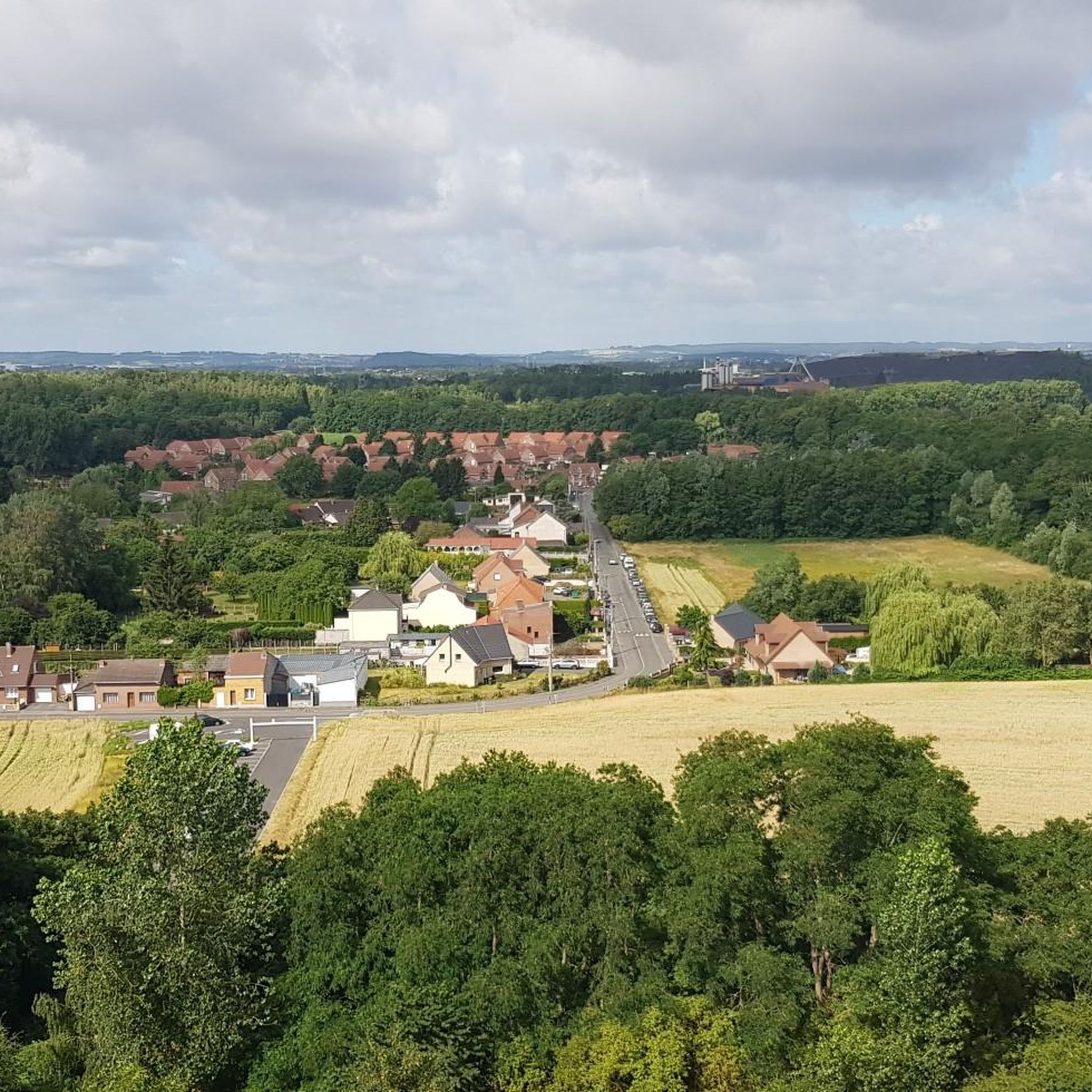
View of the mining basin and the hills of Artois
Highlight • Viewpoint
Translated by Google •
Tip by

Crater and 360° Panoramic View from Terril 74, Loos-en-Gohelle
Highlight • Viewpoint
watch out for wind and gusts
Translated by Google •
Tip by

Start today with a free account
Your next adventure awaits.


Tips from the Community

Can we take the dogs?
0
0

climb this spiral in a good 5 minutes with a superb view. Small crater in the middle with water often. watch out for wind and gusts
0
0

This oak, 200 to 300 years old, would have been used by the German army during the First World War as an observation post. The panel states: "The soldiers could thus observe the artillery and enemy movements. We can still observe some of the iron bars which would have been inserted into the trunk in order to constitute a ladder. The tree having continued to grow, the majority of the bars have been absorbed by the bark."
1
0

Be careful on a narrow path, in some places a slippery plastic coating covers part of the path
0
0

Remarkable century-old oak, having participated in the history of the First World War. It is easily accessible by bicycle. Which is not the path that goes deep into the forest.
1
0

Beautiful view of the mining basin and the hills of Artois on a clear day. Trail training heap.
1
0

Difficult to drive on the site at this time because of the "luxuriant" vegetation. Access to the karting level is blocked by padlocked gates.
0
0

Beautiful slag heap accessible to the most athletic 3 switchbacks without a plateau to reach the top and admire the beautiful view of the Harnesien and the Carvinois and other summits of the slag heaps that surround it.
0
0
Frequently Asked Questions
What makes the natural monuments around Drocourt unique?
The natural monuments around Drocourt are primarily characterized by their unique post-industrial landscape. These are often former mining spoil heaps, known as "terrils," which have been re-naturalized over time. They offer a fascinating blend of industrial heritage and ecological regeneration, providing diverse ecosystems and panoramic views. For example, the Crater and 360° Panoramic View from Terril 74, Loos-en-Gohelle, showcases this transformation with its distinct crater and spiral path.
Are there family-friendly natural monuments to visit near Drocourt?
Yes, the Ladder Tree is a family-friendly natural monument. It's a remarkable century-old oak within a forest, easily accessible, and offers a glimpse into local history, having served as an observation post during the First World War. Its historical context makes it an engaging spot for all ages.
Can I bring my dog to the natural monuments?
Many natural monuments, especially the terrils, are dog-friendly. For instance, the View of the mining basin and the hills of Artois is noted as dog-friendly, offering trails for you and your canine companion to explore. Always ensure your dog is on a leash and you clean up after them to preserve the natural environment.
What kind of views can I expect from these natural monuments?
From the summits of the terrils, you can expect expansive panoramic views. The Crater and 360° Panoramic View from Terril 74, Loos-en-Gohelle, as its name suggests, offers a full 360° vista. Similarly, Terril Estevelles provides beautiful views of the Harnesien and Carvinois regions, along with other surrounding slag heaps.
What outdoor activities can I do near the natural monuments?
The area around Drocourt offers a variety of outdoor activities, particularly cycling and hiking. You can find numerous routes for cycling, gravel biking, and road cycling that often incorporate the terrils and surrounding natural landscapes. The terrils themselves, like the Ostricourt slag heap, provide challenging trails for hiking and mountain biking with varied terrain.
Are there challenging trails for experienced hikers?
Yes, for experienced hikers, the Ostricourt slag heap offers a challenging trail with varied terrain, including climbs, descents, and single tracks. Similarly, Terril Estevelles features three switchbacks without a plateau, making for a strenuous ascent to its summit.
What is the historical significance of these natural monuments?
Many natural monuments in the Drocourt area, particularly the terrils, are remnants of the region's rich mining history, which is recognized as a UNESCO World Heritage site. They represent the transformation of industrial landscapes into unique natural areas. The Ladder Tree also holds historical significance, having served as an observation post during the First World War, with remnants of iron bars still visible in its trunk.
What is the best time of year to visit the natural monuments around Drocourt?
Spring and autumn are generally the best seasons to visit. The weather is milder, making outdoor activities more comfortable, and the changing foliage offers beautiful scenery. While winter hiking is possible, be prepared for potentially slippery conditions on the terrils due to frost or rain. Summer can be pleasant, but some trails might be overgrown, as noted for the Ostricourt slag heap.
Are there any natural reserves or broader natural sites near Drocourt?
Yes, depending on which Drocourt you're near, there are several significant natural sites. Drocourt in Pas-de-Calais is close to regional nature reserves like the Réserve naturelle régionale du Marais de Wagnonville. If you're near Drocourt in Yvelines, you'll find the Réserve naturelle régionale des Larris et Tourbières de Saint-Pierre-es-Champs, the scenic Vaux de Cernay, and the vast Vallée de Chevreuse Regional Natural Park, all offering diverse ecosystems and outdoor opportunities.
How accessible are the natural monuments by public transport?
While specific public transport routes to each terril can vary, many are located within reasonable proximity to towns with bus or train services. However, direct access to the trailheads often requires a short walk or a local taxi. For the most flexibility, especially when exploring multiple sites, traveling by car is often recommended. Always check local transport schedules in advance.
What should I pack for a visit to the natural monuments?
For a comfortable visit, especially when exploring the terrils, it's advisable to pack sturdy hiking shoes, as trails can be uneven and steep. Depending on the season, layers of clothing are recommended, along with rain gear. Don't forget water, snacks, sunscreen, and a hat. Binoculars can enhance wildlife spotting and panoramic views, and a camera is a must to capture the unique landscapes.
Can I spot wildlife at these sites?
Yes, the re-naturalized terrils and nearby reserves are home to diverse flora and fauna. These unique ecosystems attract various bird species, insects, and small mammals. The regional nature reserves, such as the Réserve naturelle régionale des Larris et Tourbières de Saint-Pierre-es-Champs (near Drocourt in Yvelines) or the Réserve naturelle régionale du Marais de Wagnonville (near Drocourt in Pas-de-Calais), are particularly good for birdwatching and nature observation.
Are there any natural monuments suitable for a quick visit?
Many of the terrils can be explored relatively quickly, depending on your pace and how far you wish to ascend. For example, climbing the spiral path to the top of the Crater and 360° Panoramic View from Terril 74, Loos-en-Gohelle can take around 5 minutes, offering a superb view for a short stop. The Ladder Tree is also easily accessible for a brief historical and natural encounter.
Most popular routes around Drocourt
Most popular attractions around Drocourt

Get inspired with the komoot mobile app


Explore more
Extend your search for the best caves by checking out these guides of the top ones around Drocourt:
