Top 5 Natural Monuments around Acq
Best natural monuments around Acq are situated in the Pas-de-Calais department of northern France, an area featuring ancient formations and diverse natural landscapes. The region is home to intriguing megalithic structures and unique geological features. Visitors can explore a variety of natural monuments, from historical sites shaped by past events to natural springs. The area provides opportunities to experience both cultural heritage and natural beauty.
Best natural monuments around Acq
- The most popular natural monument is Passage dolmen: The Fairy…
Last updated: June 21, 2026
Vimy Ridge Shell Craters
Highlight (Segment) • Historical Site
This is one of the most famous battles for Canadians during the First World War.
Vimy Ridge was a strategic position fortified …
Translated by Google •
Tip by

Passage dolmen: The Fairy Table
Highlight • Historical Site
– 4 dolmens, …
Translated by Google •
Tip by

Sign up now to discover places like this
Get recommendations on the best single tracks, peaks, & plenty of other exciting outdoor places.
Sign up for free
Vimy Foundation Centennial Park
Highlight (Segment) • Historical Site
Vimy Foundation Centennial Park offers visitors a unique and reflective space to reflect on the horrors that occurred on these lands during the Great War, contrasting …
Translated by Google •
Tip by
Bray Chalk Quarry
Highlight • Structure
Translated by Google •
Tip by

Sainte-Bertille Spring
Highlight • Natural Monument
Translated by Google •
Tip by
Start today with a free account
Your next adventure awaits.
Login or Signup



Tips from the Community

The Battle of Vimy Ridge (April 9-12, 1917) This is one of the most famous battles for Canadians during the First World War. Vimy Ridge was a strategic position fortified by the Germans since 1914. In April 1917, the four Canadian divisions, united for the first time, attacked to retake it. - 💥 The bombardments that created the shell holes Before the assault For several weeks, Allied artillery (mainly British and Canadian) bombarded the German positions to weaken the defenses, cut the barbed wire, and destroy the enemy trenches. It is estimated that more than a million shells were fired in preparation for the attack. During the attack On April 9, 1917, the Canadian infantry advanced under a creeping barrage, that is, artillery fire that advanced just ahead of the soldiers to protect their advance. Result These intense bombardments literally riddled the ridge with craters. Each shell exploding in the ground dug a hole of varying width (depending on the caliber, often between 1 and 5 meters in diameter). 🏞 After the War Why are the shell holes still there? After 1918, it was decided to preserve certain areas as they were, particularly around the future memorial, to demonstrate the scale of the fighting. The land was therefore not leveled or cultivated, unlike other areas of the front, which reverted to agricultural fields. A Landscape for Remembrance The shell craters, reconstructed trenches, and replanted trees (each tree represents a killed Canadian soldier) create a living memorial park, keeping the scars of the conflict visible for future generations.
0
0
Vimy Foundation Centennial Park Vimy Foundation Centennial Park offers visitors a unique and reflective space to reflect on the horrors that occurred on these lands during the Great War, contrasting with the solemnity and grace of the adjacent Canadian National Memorial. The main attraction of the four-acre park is 100 Vimy Oak trees, grown from acorns collected on the battlefield in 1917, along with the Borden bugle, the Centennial Flagpole, and 360-degree memorial views of the First World War battlefield. One hundred years after the war, the Park ensures that we never forget the sacrifice of all those who served our country. The Vimy Foundation The Vimy Foundation is a national charitable organization whose mission is to preserve and promote Canada's legacy of the First World War, symbolized by the victory at Vimy Ridge in April 1917. This momentous event is widely considered a pivotal moment in our history, Canada's first steps onto the world stage. Through youth education programs, awareness campaigns, and legacy projects, including the new Vimy Visitor and Education Centre and Centennial Park, the Vimy Foundation provides Canadians with opportunities to learn how the First World War transformed our nation. Vimy Oaks The park's oak trees are directly descended from acorns collected on the Vimy Ridge battlefield by a Canadian soldier, Lieutenant Leslie Miller of Scarborough, Ontario, and later planted on his farm in Canada, which he named The Vimy Oaks. A number of these majestic oaks are still alive today in Canada, while virtually none of the Vimy Ridge oaks survived the First World War. The Vimy Oaks Legacy Society, a Canadian non-profit volunteer association, was created to repatriate young Vimy oaks descended from acorns collected after the battle. Volunteers landscaped and planted these repatriated Vimy oaks, which now stand guard in this park adjacent to the Canadian National Vimy Memorial.
0
0

it's written like that on the sign
0
0
legend of the fairies who dance around the dolmen
0
0

This site is part of the unknown treasures of the Land of Artois. The various megalithic sites are good for a beautiful walk, among mysteries and legends, history and extraordinary landscapes
1
0

La Carrière de Craie de Bray is a quarry in the municipality of Mont-Saint-Éloi. It is a popular place for hikers and nature lovers because of its beautiful surroundings. The hills around Mont-Saint-Éloi consist of a thick layer of secondary-age chalk, formed by the accumulation of skeletons of marine animals when Artois was submerged in a shallow sea.
8
0
The Source Sainte-Bertille is a source in Maroeuil, a commune in the French department of Pas-de-Calais in the Hauts-de-France region. The spring is named after Sainte Bertille, a 7th century saint known for her healing powers. Legend has it that Sainte Bertille created the well by hitting the ground with her staff when she encountered a group of thirsty workers. The spring is still active and is considered a place of pilgrimage for people suffering from eye diseases. It is also a popular place for hikers and nature lovers because of its beautiful surroundings.
8
0

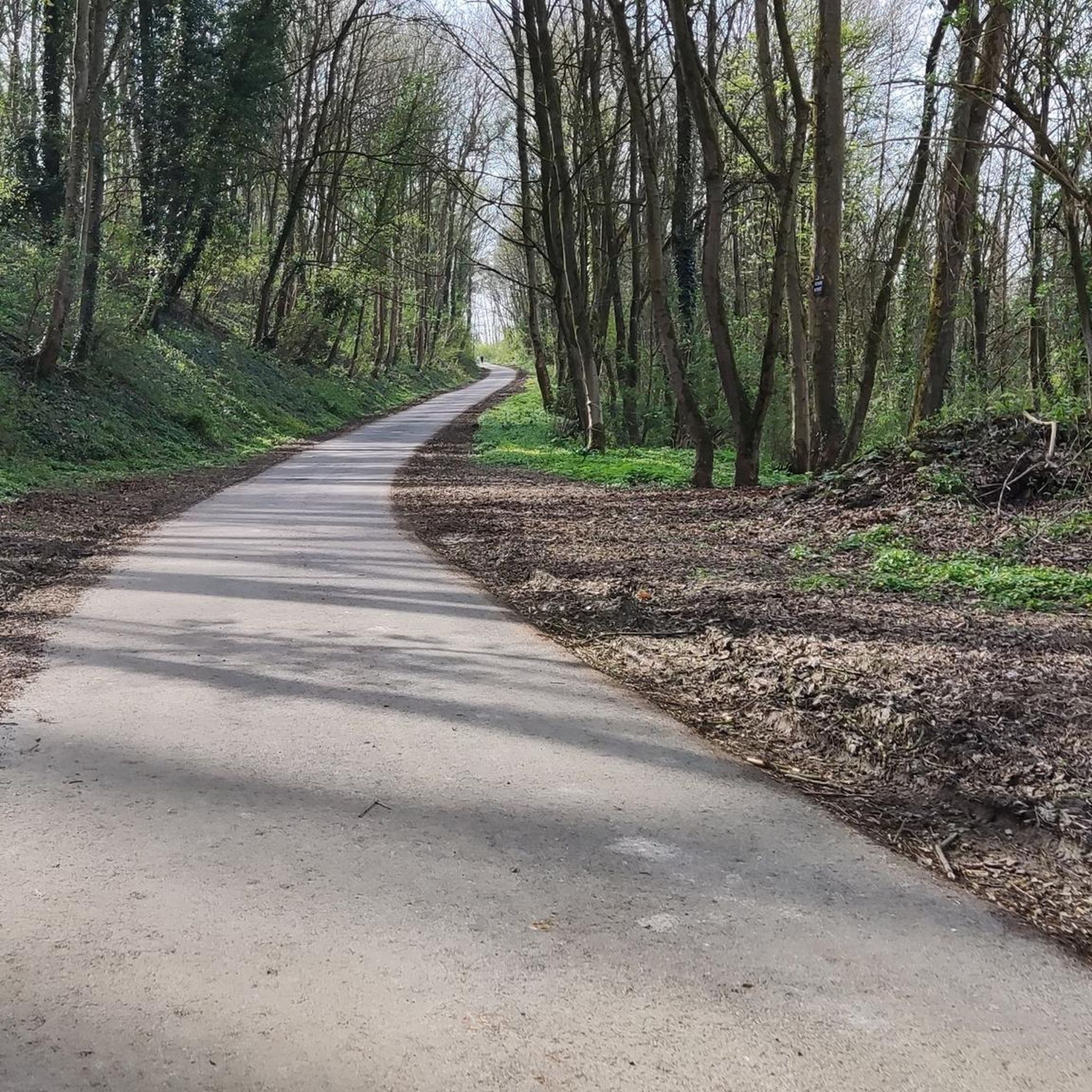
Path blocked at the exit of the wood, after the wooden footbridge. Unable to pass.
1
0
Frequently Asked Questions
What types of natural monuments can I explore around Acq?
Around Acq, you can explore a diverse range of natural monuments, including ancient megalithic structures like the Passage dolmen: The Fairy Table, historical sites shaped by past events such as the Vimy Ridge Shell Craters, and unique geological formations like the Bray Chalk Quarry. There are also natural springs, like the Sainte-Bertille Spring, offering a blend of natural beauty and local legend.
Are there any natural monuments with historical significance near Acq?
Yes, several natural monuments around Acq hold significant historical value. The Passage dolmen: The Fairy Table is an archaeological site over 4000 years old, representing a remnant of a vast megalithic complex. The Vimy Ridge Shell Craters preserve the landscape as it was after the Battle of Vimy Ridge, serving as a poignant reminder of World War I. Additionally, the Vimy Foundation Centennial Park, adjacent to the Canadian National Memorial, features 100 Vimy Oak trees grown from acorns collected on the battlefield in 1917.
What natural areas or parks are accessible from Acq?
While Acq itself is a small commune, the broader Hauts-de-France region offers several significant natural parks. These include the Parc Naturel Régional Scarpe-Escaut, known for its meadows, peat bogs, and river valleys; the Parc Naturel des Caps et Marais d'Opale with its coastal cliffs and marshlands; and the Parc Naturel Régional de la Baie de Somme Picardie maritime, famous for its beautiful bay and seal colonies. These regional parks provide extensive opportunities for appreciating diverse natural landscapes and wildlife.
Are there family-friendly natural monuments to visit near Acq?
Yes, several natural monuments around Acq are suitable for families. The Vimy Ridge Shell Craters and the adjacent Vimy Foundation Centennial Park are both marked as family-friendly, offering a chance to learn about history in an outdoor setting. The Sainte-Bertille Spring is also noted as family-friendly, providing a pleasant natural spot with a local legend.
What outdoor activities can I do near these natural monuments?
The area around Acq offers various outdoor activities, particularly cycling. You can find numerous routes for different sports:
- For MTB trails, explore options like the 'Brick bridge – EuroVélo 5 at Souchez loop' or 'The two Towers loop'. Find more at MTB Trails around Acq.
- For road cycling, consider routes such as 'Ruins of Mont-Saint-Eloi Abbey – Abbey of Mont Saint-Éloi loop' or 'Memory Cycle Route'. Discover more at Road Cycling Routes around Acq.
- For gravel biking, routes like 'Scarpe riverbanks – The Scarpe by bike loop' or 'Lac de Beugin – La Comté Waterfall loop' are available. See more at Gravel biking around Acq.
What is the best time to visit the natural monuments around Acq?
The best time to visit the natural monuments around Acq is generally during the spring (April to June) and autumn (September to October) months. During these periods, the weather is typically mild and pleasant for outdoor exploration, and the natural landscapes are at their most vibrant. Summer can also be enjoyable, though it can be warmer and more crowded, especially at popular historical sites.
Are there any viewpoints or scenic spots among the natural monuments?
Yes, the Vimy Foundation Centennial Park is highlighted as a viewpoint, offering 360-degree memorial views of the First World War battlefield. While not explicitly listed as a viewpoint, the Bray Chalk Quarry is known for its beautiful surroundings and hills, which provide scenic vistas of the landscape.
Can I bring my dog to the natural monuments near Acq?
While specific regulations for each site are not detailed, many natural outdoor areas in France are dog-friendly, especially if dogs are kept on a leash. For sites like the Vimy Ridge Shell Craters and Vimy Foundation Centennial Park, it's generally acceptable to bring dogs on paths, but always check for local signage regarding pet policies. For regional natural parks, dogs are usually welcome on trails but must be leashed to protect wildlife.
What are the geological features of the natural monuments in the Acq region?
The Acq region is characterized by interesting geological features, particularly evident at the Bray Chalk Quarry. The hills around Mont-Saint-Éloi consist of a thick layer of secondary-age chalk. This chalk was formed by the accumulation of marine animal skeletons when the Artois region was submerged in a shallow sea, offering a glimpse into the area's ancient geological past.
Where can I find accommodation or places to eat near the natural monuments?
Acq and its surrounding villages offer various options for accommodation and dining. While specific establishments are not listed in the guide, you can find local cafes, pubs, and restaurants in the nearby towns and communes. For accommodation, look for guesthouses, B&Bs, or small hotels in Acq, Mont-Saint-Éloi, or other neighboring communities, which cater to visitors exploring the historical and natural sites of the Pas-de-Calais department.
Are there any hidden gems or lesser-known natural monuments worth visiting?
Beyond the more prominent sites, the Sainte-Bertille Spring in Maroeuil could be considered a hidden gem. It's a tranquil natural spring with a fascinating local legend about Sainte Bertille and her healing powers, making it a peaceful spot for hikers and nature lovers away from larger crowds. Exploring the smaller paths and villages within the regional natural parks also often reveals charming, less-trafficked natural spots.
What makes the natural monuments around Acq unique?
The natural monuments around Acq are unique due to their blend of ancient history, poignant wartime remembrance, and distinct geological formations. You can find a 4000-year-old megalithic dolmen, a landscape scarred by World War I shell craters preserved as a memorial, and chalk quarries revealing millions of years of geological history. This combination offers a rare opportunity to experience both cultural heritage and diverse natural beauty in one region.
Most popular attractions around Acq

Get inspired with the komoot mobile app


Explore more
Extend your search for the best caves by checking out these guides of the top ones around Acq:
