Top 4 Natural Monuments around Trouville-La-Haule
Best natural monuments around Trouville-La-Haule are situated in a landscape shaped by the Seine River, notably the Marais-Vernier, an extensive natural region. This area features a semi-circular depression encompassing diverse wetland habitats, including wet meadows, marshes, and peat bogs. The region is recognized for its rich biodiversity and unique ecological characteristics, offering various natural landmarks and scenic viewpoints. These natural areas provide opportunities for exploring varied terrain and observing local flora and fauna.
Best natural monuments around Trouville-La-Haule
- The most…
Last updated: July 4, 2026
Marais Vernier Viewpoint
Highlight • Viewpoint
Translated by Google •
Tip by

La Grand-Mare Observation Tower
Highlight • Viewpoint
Translated by Google •
Tip by

Sign up now to discover places like this
Get recommendations on the best single tracks, peaks, & plenty of other exciting outdoor places.
Sign up for free
The Millennial Yews of La Haye-de-Routot
Highlight • Natural Monument
The two common yews grow in the center of La Haye-de-Routot, in the Eure, in the cemetery of the Notre-Dame church. They …
Translated by Google •
Tip by
Mare Tonne (Brotonne Forest)
Highlight • Lake
Tip by
Start today with a free account
Your next adventure awaits.
Login or Signup



Tips from the Community

Beautiful view of the Marais Vernier natural site. I had, when I was 18, the honor and the pleasure of working there in the company of several biologists. It is an exceptional site due to the richness of its fauna. On site live Camargue horses, Hyland cattle, Scottish sheep, gray herons and many other species. A few group visits are regularly organised. To participate, you must register in advance on the Marais Vernier nature reserve website.
1
0

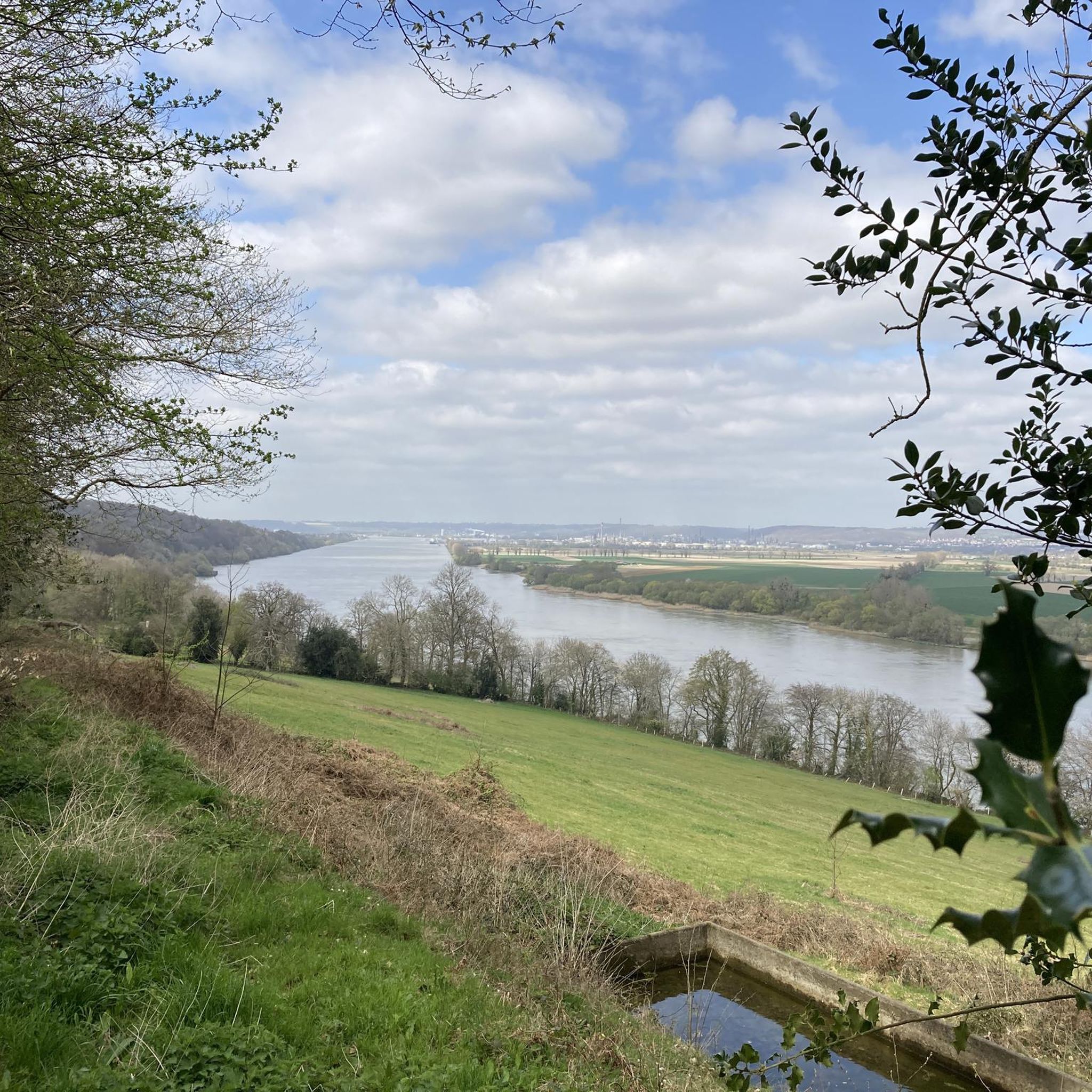
The Marais-Vernier Orientation Table is a viewpoint overlooking the Marais Vernier, a vast wetland area home to a very diverse fauna and flora. The orientation table allows you to appreciate the panoramic view of the marsh and its unique agricultural plots, called courtils, by helping you to identify landmarks. You may be able to spot rare birds like osprey, heron, falcon or stork. The Marais Vernier is a natural wonder that offers a variety of landscapes and terrains for runners.
2
0

The largest of the Marais Vernier ponds
4
0
Right in the middle of the climb, a panoramic point of view.
2
0
The Marais-Vernier orientation table offers a spectacular view of the Marais Vernier, a vast 4,500-hectare wetland that is home to a rich biodiversity of birds, plants and animals. This viewpoint offers a panoramic view of the marshes and the Seine. You will also be able to observe the unique shape of the courtyards, these circular plots created by the old meanders of the river.
2
0

A magnificent point of view
1
0

La Grand'Mare is a hunting and wildlife reserve managed by the French Office for Biodiversity. Along with the Seine estuary, it is one of the favorite migratory stopovers for surface ducks, such as the teal or the snipe. You can also see some waders there.
0
0

Située au Nord-Ouest de la Forêt de Brotonne, la Mare Tonne est l’une des plus importantes de ce vaste massif forestier. Elle est implantée sur un substrat acide (sables et cailloutis de silex). Vraisemblablement d’origine anthropique, elle est l’une des seules du Nord de la forêt, où les sols sablo-caillouteux (et le sous-sol crayeux filtrant) ne sont pas favorables à la permanence de milieux aquatiques. En son centre s’étend un îlot tourbeux tremblant, formé de radeaux flottants de sphaignes (alliance de l’Utricularion intermedio-minoris) et de Laîches dont la Laîche vésiculeuse (Carex vesicaria). Le cœur de l’îlot est en voie d’atterrissement : des bouleaux et des saules s’y développent progressivement. Cette mare oligotrophe abrite en particulier d’importantes formations à Potamot à feuilles de Renouée (Potamogeton polygonifolius) typique des eaux acides et surtout à Potamot nageant (Potamogeton natans ; groupement du Potametum natantis), des herbiers à Utriculaires (Utricularia australis, U. vulgaris), des voiles de Lemnacées (Lemna minor, Lemna trisulca, etc.). Les habitats et les espèces oligotrophes (Potamogeton polygonifolius, Utricularia pls. sp, etc.) sont particulièrement rares et menacés en Haute Normandie. Sur les berges de l’îlot central, la formation de radeaux de sphaignes est encore active et participe, avec l’extension des cariçaies et glycériaies, à la formation de la tourbe. Plusieurs espèces de sphaignes ont été identifiées : Sphagnum palustre et S. fimbriatum. Plusieurs espèces très rares à assez rares sont présentes en bordure, comme la Laîche vésiculeuse (Carex vesicaria), le Rubanier simple (Sparganium emersum), la Prêle des bourbiers (Equisetum fluviatile), le Saule cendré (Salix cinerea), etc. Le maintien de la Stellaire des marais (Stellaria palustris), exceptionnelle en Haute-Normandie, de la Morrène aquatique (Hydrocharis morsus-ranae), très rare, de l’Utriculaire naine (Utricularia minor) et de l’Hottonie des marais (Hottonia palustris), protégée, mériterait une confirmation (espèces citées dans les années 1980). La faune associée à cette mare comprend plusieurs éléments remarquables. En particulier, cette mare joue un rôle essentiel pour la conservation des populations de batraciens et d’odonates. On note ainsi la présence des quatre espèces de Tritons (Tritons palmé, ponctué, alpestre et crêté) et de la Salamandre tachetée (Salamandra salamandra). Les odonates sont encore assez peu connus, mais quelques espèces rares et menacées pourraient s’y reproduire. A l’heure actuelle, une dizaine d’espèces communes à peu communes ont été notées. Chez les reptiles, le Lézard vivipare (Lacerta vivipara) est régulièrement observé aux abords. Aux alentours, les parcelles de feuillus (et de quelques pins) accueillent le Pic mar (Dendrocopos medius) et le Pic noir (Dryocopus martius), tous deux inscrits à l’annexe I de la directive Oiseaux.
3
0
Frequently Asked Questions
What are the main natural features to explore in the Trouville-La-Haule area?
The primary natural monument is the vast Marais-Vernier, a significant wetland formed from a former meander of the Seine River. It features wet meadows, marshes, reed beds, canals, and peat bogs. You can also find unique agricultural plots known as "courtils" and forest lakes like Mare Tonne (Brotonne Forest).
Where can I get the best panoramic views of the Marais-Vernier wetlands?
For spectacular panoramic views, visit the Marais Vernier Viewpoint. It offers an excellent vantage point to observe the 4,500-hectare wetland, including its unique agricultural plots and diverse bird species.
What kind of wildlife can I expect to see in the Marais-Vernier?
The Marais-Vernier is rich in biodiversity, home to many protected species. You might spot storks, hawks, harriers, and owls. The area is also a significant migratory stopover for surface ducks and waders, especially around La Grand-Mare Observation Tower. Rare birds like osprey, heron, and falcon can also be seen.
Are there any unique historical natural monuments in the region?
Yes, you can visit The Millennial Yews of La Haye-de-Routot. These two common yews are estimated to be over a thousand years old and grow in the cemetery of the Notre-Dame church. Their hollow trunks house small religious sanctuaries, adding a unique historical and cultural dimension to their natural significance.
Are the natural monuments around Trouville-La-Haule suitable for families?
Many natural monuments in the area are family-friendly. The Marais Vernier Viewpoint and La Grand-Mare Observation Tower are great for all ages, offering easy access and opportunities for birdwatching. The Millennial Yews of La Haye-de-Routot also offer an interesting and accessible visit for families.
What outdoor activities can I do near these natural monuments?
The diverse landscapes offer various outdoor activities. You can enjoy hiking on trails like the 'Maladrerie Saint-Thomas-Becket — loop from Vieux-Port' or 'Old Port – Saint-Thomas-Becket Chapel loop'. Cycling is also popular, with routes such as 'The Seine by Bike: Thatched Cottages Loop'. For more options, explore the hiking guide or cycling guide for Trouville-La-Haule.
What is the best time of year to visit the Marais-Vernier for birdwatching?
The Marais-Vernier is particularly rewarding for birdwatching during spring and autumn, as it serves as a crucial migratory stopover. These seasons offer the best chances to observe a wide variety of surface ducks, waders, and other migratory birds.
Is the Marais-Vernier accessible by public transport?
While direct public transport to specific viewpoints within the Marais-Vernier can be limited, local bus routes may connect Trouville-La-Haule to nearby villages. It's generally recommended to use a car or bicycle for more flexible access to the various natural sites and observation points within the wetland.
Are there dog-friendly options for exploring the natural monuments?
Many natural areas and trails around Trouville-La-Haule and within the Marais-Vernier are suitable for walks with dogs, provided they are kept on a leash to protect local wildlife and livestock. Always check local signage for specific restrictions in nature reserves or protected areas.
How long should I plan for a visit to the natural monuments in this area?
To fully appreciate the Marais-Vernier and its surrounding natural monuments, plan for at least a half-day to a full day. This allows time to visit viewpoints, explore some trails, and enjoy birdwatching. If you wish to include the Millennial Yews of La Haye-de-Routot, allocate additional time for travel and exploration.
What makes the peat bog in Marais-Vernier unique?
The Marais-Vernier houses the largest peat bog in France by peat volume, covering nearly 1,800 hectares. This unique ecosystem is characterized by its semi-circular depression and is vital for its diverse flora, including pollard trees and holly hedges, and its role in supporting numerous protected species.
Most popular routes around Trouville-La-Haule
Most popular attractions around Trouville-La-Haule

Get inspired with the komoot mobile app


Explore more
Extend your search for the best caves by checking out these guides of the top ones around Trouville-La-Haule:
