Top 9 Natural Monuments around Épeugney
Best natural monuments around Épeugney offer diverse natural landscapes within the Doubs department of France. The region is characterized by its varied terrain, including unique geological formations and significant viewpoints. These natural sites provide opportunities to explore distinct ecosystems and observe local flora and fauna. The area's natural heritage is preserved through designated sites and accessible trails.
Best natural monuments around Épeugney
- The most popular natural monument is The Holed Rock, a natural rock arch that is easily accessible…
Last updated: June 20, 2026
Bout du Monde Waterfall
Highlight • Waterfall
Translated by Google •
Tip by

Liberation Monument
Highlight • Historical Site
The Mémorial Notre-Dame de …
Translated by Google •
Tip by

Sign up now to discover places like this
Get recommendations on the best single tracks, peaks, & plenty of other exciting outdoor places.
Sign up for free
The Holed Rock
Highlight • Natural Monument
It also has the advantage and the comfort of being placed on …
Translated by Google •
Tip by

State Major Fountain
Highlight • Monument
Translated by Google •
Tip by

View of Roche Bottine
Highlight • Viewpoint
Translated by Google •
Tip by
Sign up for free to discover even more natural monuments around Épeugney.
Sign up for free
Already have an account?
Start today with a free account
Your next adventure awaits.
Login or Signup

Tips from the Community

The waterfall is impressive even when it's carrying little water. Unfortunately, it can only be seen from the small path leading down from the road. The area at the base of the waterfall is private and extensively fenced. I found that a shame.
0
0

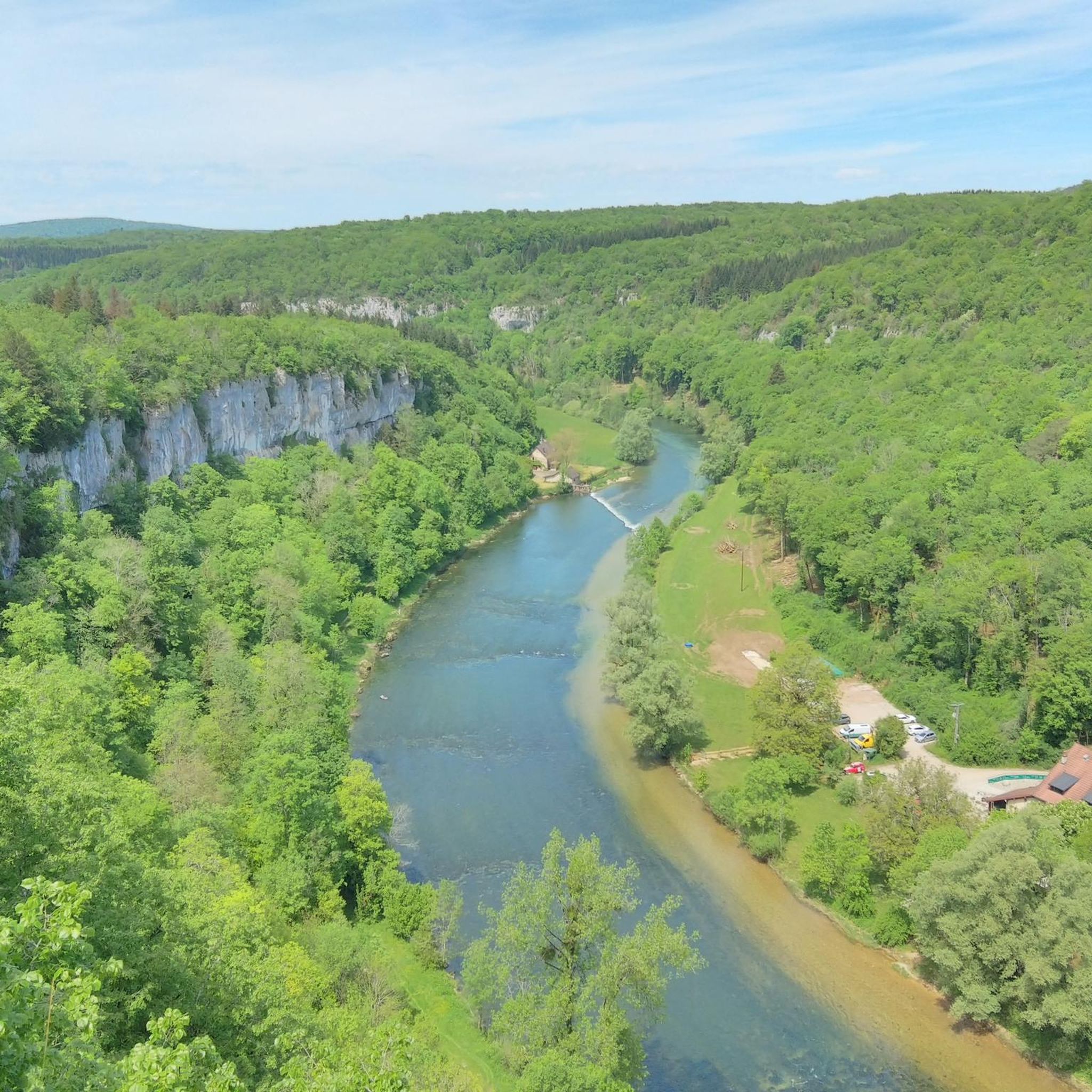
A beautiful valley - very relaxing to drive. La Roche Bottine is the right-hand rock edge that you see above Ornans. It is on the right of Ornans towards Lahier, above the D492 The left-hand rock edge is the Belvédére de Notre-Dame du Mont. Curious rock... its special shape inspired its name: La Roche Bottine
1
0

Here you have a view of three rock masses. The question is which one is the Roche Bottines
6
0

The area around the waterfall is cordoned off, so that it is actually inaccessible and can only be seen from afar. The "standing seats" that have been set up are friendly, but do not really add value to the barbed wire. You can get closer to the waterfall from above, but you should do this with caution!!
1
0

Decorative monument in Besançon
4
0
Corner fountain created in 1900 by the sculptor Pasche based on the drawings of the architect Saint-Ginest. This monumental fountain replaced a fountain created in 1740 that was destroyed during the Revolution. The inscription "UTINAM" engraved under the pediment is the motto of Besançon, which can also be found engraved on other monuments in the form "PLÛT A DIEU".
1
0

Notre-Dame de la Libération is a site of memory built on the Mont des Buis inside the ditches of an old fort which dominates the city of Besançon. After the Second World War, in 1949, a place of commemoration and memory was built on the site of Fort des Buis-est. A crypt is topped with a statue of the Virgin Mary. Inside the crypt, there are the names of the 5,500 Besançon people who died during the war.
0
0

Frequently Asked Questions
What unique natural features can I explore around Épeugney?
Épeugney is home to diverse natural features. You can discover the unique marl lawns of Le Grand Mont, a Natura 2000 site known for its rare flora and fauna. Additionally, don't miss The Holed Rock, a natural rock arch over 4 meters high and nearly 10 meters wide, offering a unique geological formation to explore.
Are there any impressive waterfalls to visit near Épeugney?
Yes, the Bout du Monde Waterfall is a classified natural site near Épeugney, reaching an impressive height of 50 meters. Its visibility depends on rainfall, so it's best to plan your visit after a period of rain to see it at its fullest. While the immediate area is cordoned off, you can view it from afar or cautiously approach from above.
Where can I find panoramic views of the region around Épeugney?
For breathtaking panoramic views, head to the Liberation Monument. This historical site offers expansive views over the city of Besançon and the plains of the Doubs. Another excellent spot is the Croix des Échaulles, located on Le Grand Mont, which provides commanding views of the village and the Loue valley.
What kind of wildlife and ecosystems can I observe in Épeugney's natural monuments?
Le Grand Mont, a Natura 2000 site, is particularly rich in biodiversity. Its unique marl lawns, which are very humid in rainy periods and dry in summer, support a specific flora and fauna adapted to these conditions. This makes it an interesting spot for observing rare, threatened, and protected species in the Franche-Comté region.
Are there family-friendly natural sites to visit around Épeugney?
Yes, the Liberation Monument is considered family-friendly. It offers historical context and beautiful views, making it suitable for visitors of all ages. The View of Roche Bottine is also listed as family-friendly, providing a relaxing spot to appreciate the valley scenery.
What hiking opportunities are available near Épeugney's natural monuments?
There are various hiking opportunities. You can explore walking trails on Le Grand Mont, including one that traverses its protected zone, leading to the Croix des Échaulles. For more structured routes, consider exploring the hiking trails around Épeugney, which include options like the 'Château de Scey and Valbois Ravine Trail' or easier loops like 'Chez Gervais'.
What is the difficulty level of hiking trails around Épeugney's natural monuments?
Hiking trails around Épeugney vary in difficulty. For instance, the hike to the Croix des Échaulles from Le Grand Mont is described as moderate, covering about 7.56 km. Many routes in the broader area, such as those found in the hiking guide, are also rated as easy to moderate, making them accessible for different fitness levels.
Can I combine a visit to a natural monument with a historical site?
Absolutely. The Liberation Monument is both a significant historical site and a natural viewpoint. It serves as a memorial for WWII victims and offers panoramic views, making it a place where history and nature converge. Another example is the State Major Fountain, a decorative monument with historical significance that is also classified as a natural monument.
What do visitors particularly enjoy about the natural monuments in Épeugney?
Visitors appreciate the diverse natural landscapes, from unique geological formations like The Holed Rock to impressive waterfalls such as the Bout du Monde Waterfall. The panoramic views from sites like the Liberation Monument are also highly rated, as is the opportunity for bird watching.
Are there opportunities for cycling near the natural monuments of Épeugney?
Yes, the region around Épeugney offers various cycling routes. You can find numerous options for both mountain biking and road cycling. Explore the MTB Trails around Épeugney or the Road Cycling Routes around Épeugney for trails ranging from moderate to difficult, allowing you to discover the natural beauty on two wheels.
What is the best time to visit Le Grand Mont to experience its unique ecosystem?
Le Grand Mont's marl lawns are unique because they are very humid during rainy periods and extremely dry in summer. To observe the specific flora and fauna adapted to these conditions, visiting during the transition seasons (spring or autumn) might offer the best chance to see the ecosystem in different states, though the rare species are present year-round.
Most popular routes around Épeugney
Most popular attractions around Épeugney

Get inspired with the komoot mobile app


Explore more
Extend your search for the best caves by checking out these guides of the top ones around Épeugney:
