Top 5 Natural Monuments around Caux
Best natural monuments around Caux offer diverse landscapes for outdoor exploration. This region features prominent geological formations, including dramatic cirques and peaks, alongside serene lakes and man-made reservoirs. Visitors can discover a variety of natural attractions, from impressive rock formations to scenic viewpoints. The area provides opportunities for exploring different types of natural monuments, catering to various interests.
Best natural monuments around Caux
- The most popular natural monuments is Cirque de Mourèze Viewpoint, a viewpoint that offers impressive rock…
Last updated: October 6, 2026
The Fairy Stretcher
Highlight • Natural Monument
Human imagination has given rise to a legend: fairies used to …
Translated by Google •
Tip by

Cirque de Mourèze Viewpoint
Highlight • Viewpoint
Translated by Google •
Tip by

Sign up now to discover places like this
Get recommendations on the best single tracks, peaks, & plenty of other exciting outdoor places.
Vissou Peak
Highlight • Summit
Translated by Google •
Tip by

Garrigue around Castelnau-de-Guers
Highlight • Natural Monument
Showing Translation
Tip by

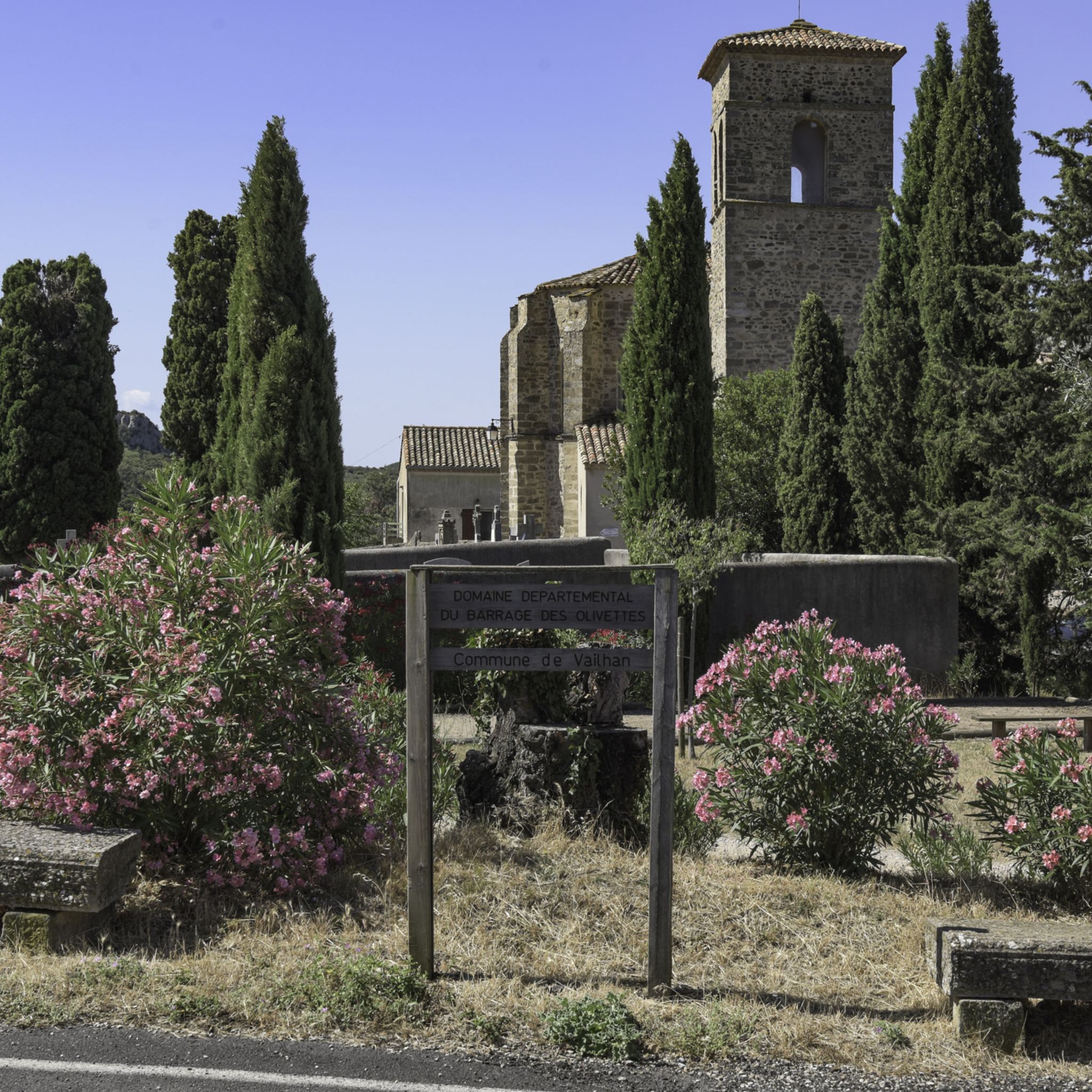
Olivettes Dam
Highlight • Monument
Translated by Google •
Tip by

Sign up for free to discover even more natural monuments around Caux.
Already have an account?
Start today with a free account
Your next adventure awaits.

Tips from the Community

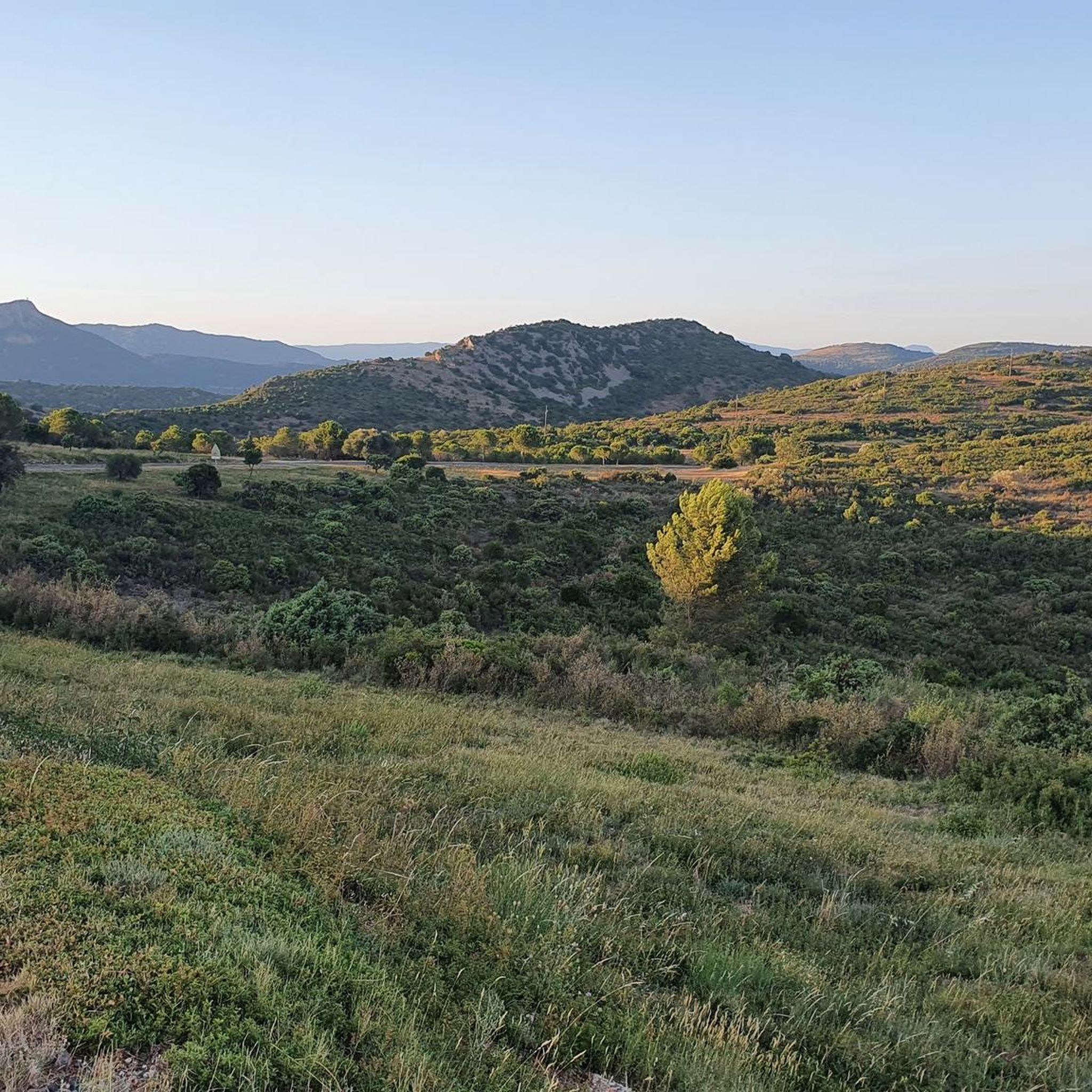
🧚🏼♀️ L’Étendoir des Fées – a small moonscape In the middle of the garrigue near Castelnau-de-Guers, this extraordinary landscape suddenly appears. The rock layer, about 50 million years old, made of pink sandstone, was formed by erosion over millions of years and in places really resembles a small moonscape. 🌕👌🏼 The so-called “L’Étendoir des Fées” is about 200 meters long and 50 meters wide. After rain, water collects in the small hollows of the rock and reflects the sky – the place is said to look particularly impressive then. And of course, there is also a fitting legend: On full moon nights, after the rain, fairies are said to have washed their laundry here and then laid it out on the rocks to dry. 🧚🏼♀️ Hence the beautiful name “Fairy’s Drying Place”. An unusual spot of nature in the middle of the Mediterranean garrigue and definitely worth a detour. Greetings Marcus ✌🏼
0
0

Le Pic de Vissou is a summit that is as much contemplated as it is read. Behind its characteristic silhouette lies one of the most remarkable geological sites in the Hérault: nearly 400 million years of Earth's history are visible in the rocks. Geologists have long come here to study exceptional formations and marine fossils over 500 million years old, while the first Neolithic communities were already exploiting copper there. Once at the summit, the reward is commensurate with the detour: a 360° panorama over the Cabrières mountains, the Languedoc plain, the Mediterranean, the Pyrenees and, on very clear days, as far as Mont Ventoux.
3
0
A remarkable geological site, worthy of the fairy legend! The rock that constitutes it is a sandstone (detrital rock) with a carbonate cement and not a limestone. Differential erosion has shaped this landscape into natural basins.
3
0

This lunar landscape is composed of small mounds of rocks formed by rounded pebbles eroded some 50 million years ago during the flow of waters that covered the region in the Tertiary era.
2
0
The dinosaur egg-laying sites, the red lands, the white rocks, and the Fairy's Waslijn are among the most remarkable geological sites in the municipality. The Fairy's Waslijn is worth the detour as it is an original formation of limestone rocks, deposited at the beginning of the Tertiary era, during the foldings of the Pyrenean-Provençal chain, on a continental plain episodically crossed by rivers.
0
0

A beautiful geological curiosity, this is the place where there are the most, but we can see others in the surroundings a little more hidden (or not).
0
0
A superb 360-degree viewpoint that is well worth it! Be careful if you choose to descend by any path from the summit, expect trails with difficulty levels S3-S4!
0
0

Magnificent 180° panorama, peaceful and relaxing, a magical break, it's worth the detour and it's worth it (a little)....
1
0
Frequently Asked Questions
What are the most popular natural monuments to visit around Caux?
The region around Caux is known for its diverse natural monuments. Among the most popular are the Cirque de Mourèze Viewpoint, offering impressive rock formations and magnificent panoramic views, and Vissou Peak, which provides a stunning 360° view from its summit. Visitors also appreciate the tranquil setting of Olivettes Dam, a man-made reservoir.
Are there family-friendly natural monuments around Caux?
Yes, the Olivettes Dam is considered family-friendly. While swimming in the lake is not permitted, there's a small pond downstream of the dam with unsupervised swimming, picnic, and barbecue tables, making it a relaxing spot for families.
What kind of natural features can I expect to see in the Caux region?
The Caux region is characterized by a variety of natural features. You'll find dramatic geological formations like the gorges and rock formations at the Cirque of Mourèze, as well as impressive viewpoints such as Cirque de Mourèze Viewpoint and Vissou Peak. The area also features serene water bodies like Lac de Vailhan and the Olivettes Dam.
What outdoor activities can I do near the natural monuments around Caux?
The Caux region offers a range of outdoor activities. You can explore numerous running trails, cycling routes, and mountain biking paths. For example, there are routes like the 'Vissou Peak – Tiberet Ruins loop' for running, 'View of the Volcanic Landscape – Lac des Olivettes loop' for cycling, and 'Tiberet Ruins – Olivettes Dam loop' for mountain biking. You can find more details on these activities in the Running Trails around Caux, Cycling around Caux, and MTB Trails around Caux guides.
Are there hiking trails near these natural monuments?
Yes, many of the natural monuments are excellent starting points for hikes. The Cirque of Mourèze offers very nice courses with gorgeous scenery. You can find various hiking options, including routes that pass by Vissou Peak and Olivettes Dam. Check the specific komoot guides for running, cycling, and MTB for detailed trail information, as many can be adapted for hiking.
What do visitors enjoy most about the natural monuments around Caux?
Visitors frequently praise the impressive rock formations and the magnificent panoramic views, especially from the Cirque de Mourèze Viewpoint and Vissou Peak. The tranquil and relaxing atmosphere of places like the Olivettes Dam is also highly appreciated. The overall consensus highlights the stunning landscapes and the opportunities for scenic walks.
What is the difficulty level of trails around the natural monuments in Caux?
The trails around Caux's natural monuments vary in difficulty. For instance, the Cirque de Mourèze Viewpoint and Cirque of Mourèze are generally considered intermediate. Some running and cycling routes in the area can be quite challenging, rated as 'difficult,' while others are 'moderate' or 'easy.' It's advisable to check individual route details for specific difficulty ratings.
Can I find circular walks around the natural monuments in Caux?
Yes, there are several circular routes available that allow you to explore the natural monuments. Many of the listed running, cycling, and mountain biking trails are designed as loops, such as the 'Vissou Peak – Tiberet Ruins loop' or the 'View of the Volcanic Landscape – Lac des Olivettes loop.' These often incorporate key natural sights and offer a comprehensive experience of the area.
Are there any lakes or reservoirs to visit in the Caux region?
Yes, the region features beautiful water bodies. The Olivettes Dam is a notable man-made reservoir offering a quiet and relaxing environment. Additionally, Lac de Vailhan is another superb place with a splendid landscape, though the road leading to it can be challenging.
What kind of views can I expect from the viewpoints in Caux?
From viewpoints like the Cirque de Mourèze Viewpoint, you can expect magnificent panoramic views over the entire Mourèze cirque with its impressive rock formations. Vissou Peak, at an altitude of 481 meters, offers an incredible 360° view of the surrounding area, including Lac du Salagou to the south.
What is the best season to visit the natural monuments around Caux?
While specific seasonal tips are not provided, the region's natural beauty, with its rock formations, peaks, and lakes, can be enjoyed across various seasons. Spring and autumn generally offer pleasant temperatures for hiking and outdoor activities, while summer allows for longer daylight hours. Winter walks can also be rewarding, offering a different perspective of the landscapes.
Most popular attractions around Caux

Get inspired with the komoot mobile app


Explore more
Extend your search for the best caves by checking out these guides of the top ones around Caux:
