Top 6 Natural Monuments around Saint-Blaise
Natural monuments around Saint-Blaise, Switzerland, are primarily found in the Mont Salève area, a Pre-Alps mountain environment near Geneva. This region is characterized by diverse landscapes, including mountain passes and unique geological formations. Visitors can explore features shaped by limestone erosion, offering insights into the area's natural history. The Mont Salève area provides accessible natural spaces for various outdoor activities.
Best natural monuments around Saint-Blaise
- The most popular natural monuments is Orjobet Cave, a cave that showcases typical limestone…
Last updated: July 2, 2026
Orjobet Cave
Highlight • Cave
Translated by Google •
Tip by

The Trou de la Tine
Highlight • Cave
Translated by Google •
Tip by
Sign up now to discover places like this
Get recommendations on the best single tracks, peaks, & plenty of other exciting outdoor places.
Sign up for free
Rochers de Faverges
Highlight • Natural Monument
Translated by Google •
Tip by

Cross on the mountain
Highlight • Natural Monument
Translated by Google •
Tip by

La Coraterie Cliff
Highlight • Climb
Translated by Google •
Tip by

Sign up for free to discover even more natural monuments around Saint-Blaise.
Sign up for free
Already have an account?
Start today with a free account
Your next adventure awaits.
Login or Signup

Tips from the Community

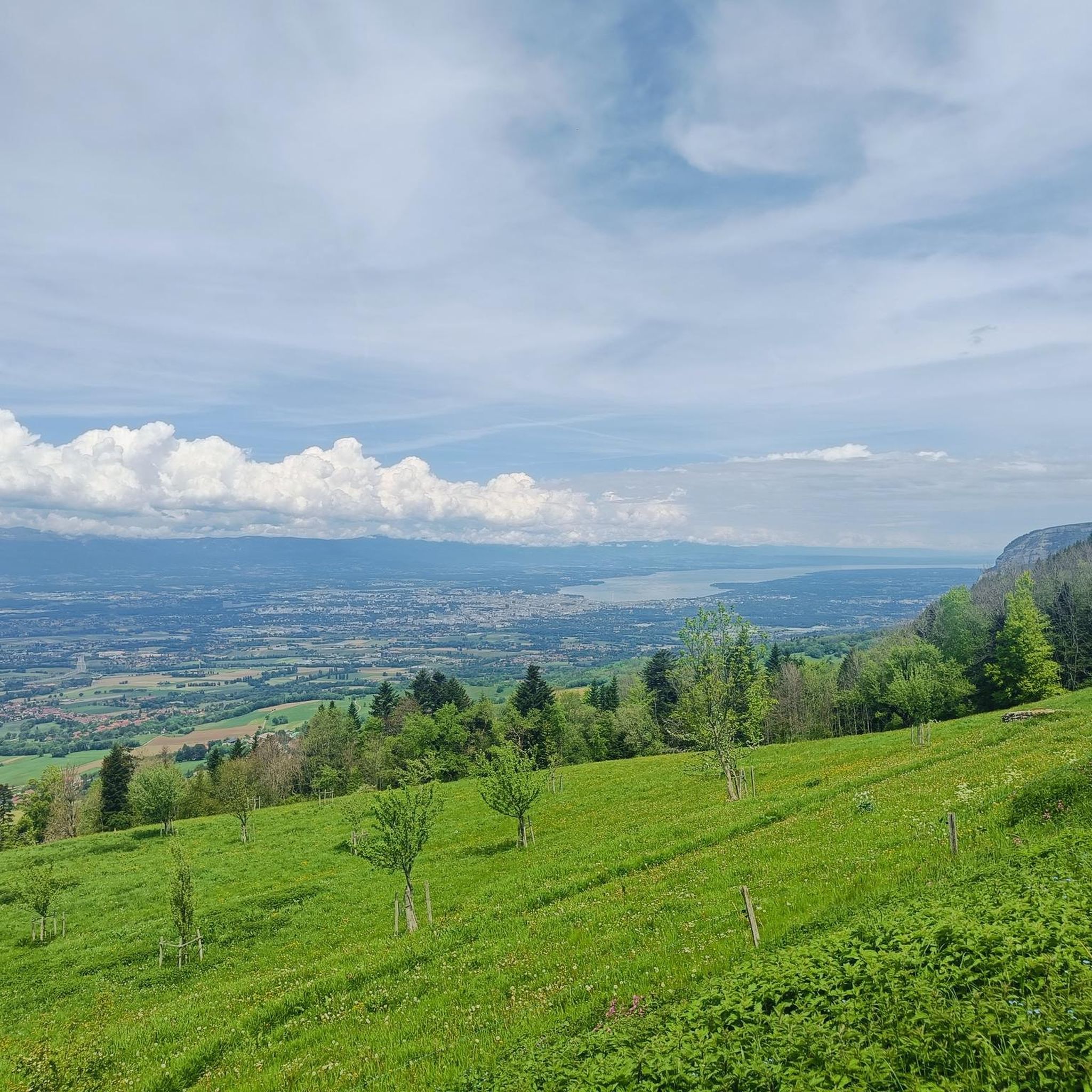
La Corraterie is a narrow rocky ledge and cliff path on the west flank of Mont Salève (the so-called “Balcony of Geneva”) in Haute-Savoie (France). From here, you have breathtaking panoramic views of Lake Geneva, the city of Geneva, and the Jura Mountains. Highlights along the path besides the view ;-): ⭐ The passage cave Grotte d'Orjobet. ⭐ Trou de la Tine: An impressive natural rock arch and sinkhole formed by erosion in the cliffs of La Corraterie. ⭐ Numerous climbers can be observed on the vertical limestone walls. And here is the story behind the flag on the mountain path: It is not the Swiss flag, but the coat of arms of Savoy (meaning no white cross, but the bars extend to the edge). It all began in the late 1960s. American students from the nearby Adventist campus in Collonges-sous-Salève climbed the steep rock face after a night of revelry. Since the mountain offers a direct view of Geneva, they were firmly convinced they were in Switzerland. They painted a huge Swiss flag on the rocks. However, Mont Salève is geographically located in France (Haute-Savoie region). The local French residents found the Swiss flag on their mountain to be an affront. Local activists climbed up and painted over the Swiss cross, turning it into the coat of arms of Savoy (Cross of Savoy) to emphasize the French-Savoyard affiliation. To this day, unknown individuals (mostly from Geneva) regularly climb the wall at night to shorten the bars and turn the Savoy coat of arms back into a Swiss flag.
0
0

Le Trou de la Tine (Trou of the Tine Cave) was formed by erosion on the flank of Mont Salève. It is a deep, sunken hole shaped like an open-topped barrel ("Tine" is an old dialect term for barrel, "trou" means hole). The cave's ceiling has collapsed due to erosion, revealing a natural "barrel" with a side opening. One can walk into the "barrel" through this side opening.
0
0


Cave with collapsed ceiling
1
0
A beautiful geological formation
0
2

Nice little tour (steep!!) in this geological curiosity
0
3
Frequently Asked Questions
What are some of the most popular natural monuments to visit around Saint-Blaise?
The Mont Salève area near Saint-Blaise, Switzerland, offers several notable natural monuments. Among the most popular are the Orjobet Cave, known for its limestone erosion formations, and The Trou de la Tine, a unique cave resembling an open-topped barrel. Visitors also appreciate the Cross on the mountain for its panoramic views.
What kind of geological features can I expect to see in the natural monuments around Saint-Blaise?
The natural monuments around Saint-Blaise are primarily characterized by limestone geology, especially in the Mont Salève area. You can observe impressive features like the typical limestone erosion in Orjobet Cave and the unique formation of The Trou de la Tine, which resulted from a collapsed cave ceiling. Additionally, the Rochers de Faverges showcase different rock types, including sandstone with iron oxide veins, distinct from Salève's Jurassic limestone.
Are there any natural monuments with historical significance near Saint-Blaise?
Yes, the Rochers de Faverges hold historical significance. Unlike the Jurassic limestone of Salève, these rocks are Eocene sandstone with iron oxide veins. These veins were exploited in Roman times, giving the rocks their name, as 'Faverges' comes from the Latin 'fabrica,' meaning a metalworking workshop.
What outdoor activities can I do near the natural monuments around Saint-Blaise?
The Mont Salève area, where many natural monuments are located, is a free and accessible natural space supporting various outdoor activities. You can find numerous trails for hiking, mountain biking, and running. For specific routes, explore the Gravel biking around Saint-Blaise, Running Trails around Saint-Blaise, and Mountain Hikes around Saint-Blaise guides.
Are there family-friendly natural monuments or trails around Saint-Blaise?
The Mont Salève area offers accessible natural spaces suitable for families. While specific 'family-friendly' categories aren't always assigned to individual monuments, many trails leading to these sites can be enjoyed by families. For example, the Orjobet Cave has been equipped with a path since 1905, making it more accessible. Always check the difficulty ratings of specific routes before heading out with children.
What is the best time of year to visit the natural monuments around Saint-Blaise?
The Mont Salève area is generally accessible throughout the year, but the best time to visit depends on your preferred activities. Spring and autumn offer pleasant temperatures for hiking and exploring the caves. Summer is ideal for longer excursions, while winter provides opportunities for cross-country skiing and snowshoeing, though some trails might be more challenging due to snow and ice.
What should I know about visiting the <a href="https://www.komoot.com/highlight/4913492" target="_blank" rel="noopener">Cross on the mountain</a>?
The Cross on the mountain is a rewarding viewpoint, but it requires sure-footedness and a good head for heights to reach. While not the most accessible spot on Salève, the panoramic views of the Savoie cross and the surrounding landscape make the effort worthwhile for many visitors.
Can I find any unique natural bridges or gorges in the area?
Yes, the Pont de Pissieu is a notable natural monument in the area. This stone bridge, dating from 1721, allows you to admire the Fornant river and impressive 'pots of giants' – large cavities carved into the limestone rock, offering a fascinating glimpse into the region's geological processes.
Are there any specific hiking trails that lead to these natural monuments?
Many hiking trails in the Mont Salève region lead to or pass by these natural monuments. For instance, you can find routes that incorporate the Orjobet Cave. The Balcony Trail on the Salève is also a challenging option offering spectacular viewpoints. For detailed routes, refer to the Mountain Hikes around Saint-Blaise guide.
What do visitors enjoy most about the natural monuments around Saint-Blaise?
Visitors frequently highlight the unique geological formations, such as the limestone erosion in Orjobet Cave and the distinctive shape of The Trou de la Tine. The stunning panoramic views from various viewpoints, including the Cross on the mountain, are also highly appreciated. The opportunity for diverse outdoor activities in a beautiful natural setting is a major draw.
Is there public transport available to reach the natural monuments near Saint-Blaise?
While specific public transport details to each individual natural monument are not always direct, the Mont Salève area is generally accessible. For example, you can often reach starting points for trails leading to these monuments via public transport from nearby cities like Geneva. It's advisable to check local bus schedules to specific trailheads or villages at the base of Mont Salève.
Are there any permits required for hiking or visiting natural monuments in the Saint-Blaise area?
The Mont Salève area is largely a free and accessible natural space, meaning general hiking and visiting natural monuments typically do not require specific permits. However, always respect local regulations, especially concerning protected areas, and ensure you stay on marked trails to preserve the natural environment.
Most popular routes around Saint-Blaise
Most popular attractions around Saint-Blaise

Get inspired with the komoot mobile app


Explore more
Extend your search for the best caves by checking out these guides of the top ones around Saint-Blaise:
