Top 13 Natural Monuments around Bailleul
Best natural monuments around Bailleul offer a blend of biodiversity preservation and serene landscapes. The region, situated near the Monts de Flandre, features significant green spaces and botanical gardens. These sites provide opportunities to connect with local flora and fauna, highlighting the benefits of nature. The area's landscape provides a setting for outdoor exploration and natural discovery.
Best natural monuments around Bailleul
- The most popular natural monument is Spanbroekmolen Crater (Pool of Peace), a natural monument and historical site.…
Last updated: October 5, 2026
Spanbroekmolen Crater (Pool of Peace)
Highlight • Natural Monument
Translated by Google •
Tip by

Kemmelberg
Highlight • Historical Site
The memorial column on the summit of the Kemmelberg is one of the most important French monuments in the Westhoek. It commemorates the many French soldiers …
Showing Translation
Tip by

Sign up now to discover places like this
Get recommendations on the best single tracks, peaks, & plenty of other exciting outdoor places.
Lijstermolen on the Baneberg
Highlight • Monument
The top of the slope is between the Rodeberg and the Vidaigneberg. Near the top there is a thrush mill. There is a chairlift (Cordoba) between the Baneberg …
Translated by Google •
Tip by

Island of Ireland Peace Park and Round Tower
Highlight • Monument
Translated by Google •
Tip by
Locre No 10 Cemetery
Highlight • Historical Site
Translated by Google •
Tip by

Sign up for free to discover even more natural monuments around Bailleul.
Already have an account?
Start today with a free account
Your next adventure awaits.



Tips from the Community

The summit of the slope lies between the Rodeberg and the Vidaigneberg. Near the summit stands the Lijstermolen (Listers Mill). A chairlift runs between the Baneberg and the Vidaigneberg, gliding over the saddle valley between the two "mountains" and the vineyards of the Entre-Deux-Monts, offering panoramic views of northern France and the Belgian coastal plain. The summit is 140 meters high. The name comes from the Bane family, who owned the mountain in the 13th and 14th centuries. The slope is also sometimes called Gildestraat (Gilde Street). https://nl.wikipedia.org/wiki/Baneberg
0
0

The Irish Peace Tower is the central monument in the Irish Peace Park in Mesen, West Flanders. The park and the tower were built in memory of the Irish soldiers who were killed, wounded or missing in action during the First World War. The tower, which has a height of 30.5 metres, is designed according to the traditional model of an Irish round tower. Since September 2023, the park has been on the UNESCO World Heritage List.
6
0
An interesting anecdote concerns the explosion of one of the mines on 17 July 1955 by lightning. This mine had not been detonated during the war and was still underground. The explosion created a new crater and reminded the local population of the lasting impact of the war.
7
0
The Spanbroekmolen crater, also known as the Pool of Peace, is an impressive mine crater in Wijtschate. This crater was formed on June 7, 1917, during the Second Battle of Messines, when British troops detonated 19 underground mines. The explosion created a crater 27 meters deep and 129 meters in diameter. After nearly 100 years of erosion, the crater is now a peaceful pool 12 meters deep and 76 meters in diameter.
9
0


Take the time to get off your bike and read the inscriptions on the stones. They tell their own tale.
0
0

Behind the small Locre No. 10 Cemetery there is an oak tree in the middle of a field. The men in the cemetery died during the Great War of 1914-1918, one of the last victims of that same war fell 65 years later. A farmer ripped apart a bomb with the tail of his plow and flew into the air. The oak tree is planted at the site of the tragedy. www.derondevanbelgie.nl
0
0

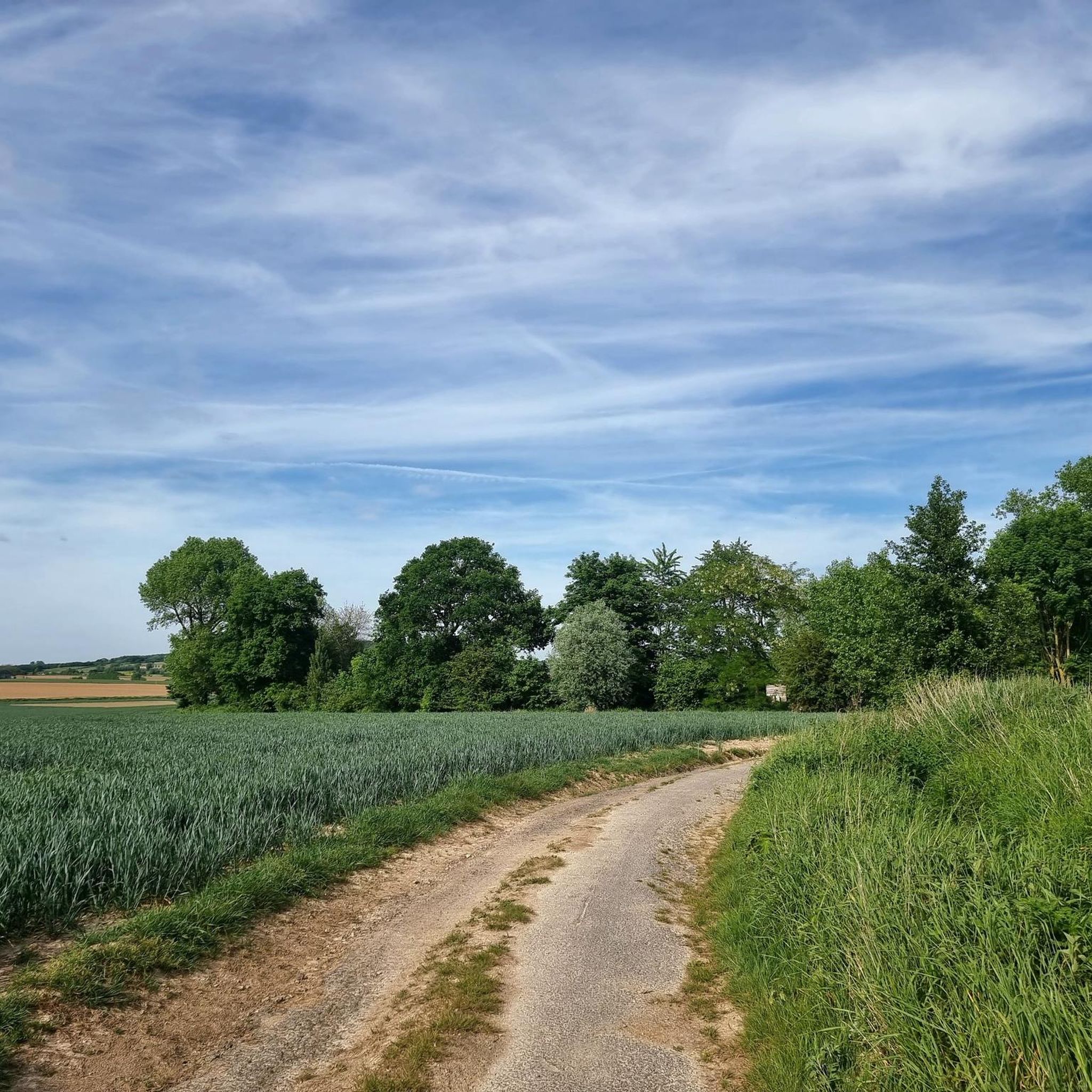
A walking path around it stimulates the observation of the surroundings. Due to the high location (76m) one has a good view. It gives an idea of the view that the Germans had over the battlefield. Various landmarks make the spatial filling of the front landscape interpretable: the position of the Pool of Peace shows the advanced German positions, the first 130m on the other side of the Kruisstraat formed the no man's land. (Inventory of Immovable Heritage)
11
0
Frequently Asked Questions
What are some significant natural sites to visit in Bailleul that focus on biodiversity?
Bailleul offers several sites dedicated to nature and biodiversity. The Espace naturel Bellekindt is an 8-hectare green space within Bailleul, providing opportunities to observe local flora and fauna along pedestrian paths with educational panels. Additionally, the Conservatoire Botanique National de Bailleul (CBNBL) features a Wild Plant Garden and a Medicinal Plant Garden, focusing on the study and preservation of biodiversity in the Hauts-de-France region.
Are there family-friendly natural monuments around Bailleul?
Yes, several natural monuments are suitable for families. The Pool of Peace (Spanbroekmolen Crater) is a peaceful historical site that can be visited with family. Other family-friendly options include the French Monument (Den Engel) — Kemmelberg and the Island of Ireland Peace Park and Round Tower, both offering historical context in natural settings.
What historical natural monuments can I explore near Bailleul?
The region is rich in historical natural monuments. The Pool of Peace (Spanbroekmolen Crater) is a significant site from World War I, formed by a mine explosion. The Lijstermolen on the Baneberg is a historical mill located on a summit offering panoramic views. You can also visit Locre No 10 Cemetery, a British military cemetery from WWI, set in a natural landscape.
Can I find viewpoints with panoramic scenery among the natural monuments?
Absolutely. The French Monument (Den Engel) — Kemmelberg offers excellent views from the Kemmelberg. Similarly, the Lijstermolen on the Baneberg, at 140 meters, provides panoramic views over northern France and the Belgian coastal plain. The Island of Ireland Peace Park and Round Tower also features a viewpoint.
What kind of outdoor activities can I do near Bailleul's natural monuments?
The area around Bailleul's natural monuments is ideal for various outdoor activities. You can find numerous options for hiking, road cycling, and mountain biking. These routes often pass by or offer views of the natural and historical sites.
Are there hiking opportunities around the natural monuments in Bailleul?
Yes, there are several hiking opportunities. For example, you can explore the area around the Conservatoire Botanique National de Bailleul with a moderate 15 km loop hike from Bailleul. Other moderate trails include a 13 km loop around the Mont Noir Forest and an 11 km journey around the Bailleul Belfry. You can find more details on hiking around Bailleul.
Where can I learn about plant conservation and botany in the Bailleul area?
The Conservatoire Botanique National de Bailleul (CBNBL) is the primary location for learning about plant conservation and botany. It functions as an open-air museum with a Wild Plant Garden and a Medicinal Plant Garden, dedicated to the study and preservation of biodiversity in the Hauts-de-France region. They offer both guided and self-guided tours.
What is the Pool of Peace, and what makes it a significant natural monument?
The Pool of Peace (Spanbroekmolen Crater) is a unique natural monument near Wijtschate. It is a large crater, 12 meters deep and 129 meters in diameter, formed by a mine explosion during the Battle of Messines in June 1917. Today, it stands as a peaceful, water-filled reminder of the historical events of World War I.
What do visitors appreciate most about the natural monuments around Bailleul?
Visitors frequently appreciate the blend of natural beauty and historical significance. Many enjoy the panoramic views from sites like the Kemmelberg and Baneberg, the peaceful atmosphere of places like the Pool of Peace, and the educational aspects of the botanical gardens. The komoot community has shared over 26 photos and given more than 200 upvotes, highlighting the area's appeal.
Are there accessible natural sites for pedestrians in Bailleul?
Yes, the Espace naturel Bellekindt in Bailleul is designed for pedestrian access only, ensuring a tranquil experience. Its pathways are suitable for observing local flora and fauna, making it an accessible urban green space for a leisurely walk.
Can I find places for wildlife spotting near Bailleul's natural monuments?
The Espace naturel Bellekindt is an excellent spot for wildlife spotting. This protected biodiversity site encourages visitors to observe local flora and fauna, including birds, butterflies, and dragonflies, along its pedestrian paths. Educational panels provide insights into the area's pond and wildlife.
Are there cycling routes near the natural monuments?
Yes, there are numerous cycling routes that allow you to explore the natural monuments. You can find road cycling routes like the 'Mont des Cats – Mont Noir (West) loop from Bailleul' or MTB trails such as the 'Mont des Cats Abbey – Hellegatbos Forest Path loop from Bailleul', which pass through scenic areas and near various sites.
Most popular routes around Bailleul
Most popular attractions around Bailleul

Get inspired with the komoot mobile app


Explore more
Extend your search for the best caves by checking out these guides of the top ones around Bailleul:
