Top 5 Natural Monuments around El Cerro De Andévalo
Best natural monuments around El Cerro De Andévalo showcase a landscape shaped by both natural processes and a rich mining history. This region in Huelva province features extensive dehesas, scrubland, hills, forests, reservoirs, and rivers. Its natural attractions often reveal geological features and historical mining sites, offering a unique blend of natural beauty and cultural heritage. The area provides diverse ecosystems supporting various wildlife and opportunities for outdoor activities.
Best natural monuments around El Cerro De Andévalo
- The most popular…
Last updated: July 1, 2026
Valdelamusa Water-Filled Quarry
Highlight • Structure
Translated by Google •
Tip by

Calañas
Highlight • Settlement
Ancient Origins: It was a mining enclave …
Translated by Google •
Tip by
Sign up now to discover places like this
Get recommendations on the best single tracks, peaks, & plenty of other exciting outdoor places.
Sign up for free
Tharsis Open-Pit Mine
Highlight • Structure
Translated by Google •
Tip by

Start today with a free account
Your next adventure awaits.
Login or Signup
Popular around El Cerro De Andévalo

Tips from the Community

It is an open-pit mine that reached approximately 200 meters in diameter and 180 meters in depth. After mining operations ceased, the quarry filled with water, forming a kind of artificial lagoon that is now one of the most unique landscapes in the area. The mine is called Confesionarios (Confessionals) because of the gossan geological formations that resemble confessionals in churches.
1
0
The flooded Valdelamusa quarry, also known as the Corta de los Confesionarios, is one of the most striking elements of the mining heritage of this district of Cortegana, in the province of Huelva.
1
0
Places of Interest Church of Santa María de Gracia: Late Gothic with Renaissance elements (16th–17th centuries). Hermitage of Nuestra Señora de la Coronada: Built on a Roman necropolis, a center of local devotion. El Morante: A natural viewpoint with Roman remains. Odiel Mills Route: Hiking trails among old flour mills and riverside landscapes. Paseo El Real: A green area along the Odiel River, ideal for relaxing. Fuente García and La Torerera: Charming and refreshing spots.
1
0
Calañas, in the province of Huelva, is a town with a rich mining history, a privileged natural environment, and a deeply rooted culture. Ancient Origins: It was a mining enclave from the Tartessian and Roman periods, with finds at "El Morante" including amphorae, tombstones, and coins. Middle Ages: Under Muslim, then Christian, rule, it passed to the Guzmán family. Livestock farming was the main activity. 19th Century: Mining revived (pyrite, copper, iron, manganese), and the railway arrived in 1886. Calañas reached 12,000 inhabitants in 1910. 20th Century: The closure of mines and subsistence farming led to depopulation. Today, it seeks to revitalize itself through tourism and culture.
1
0

Valdelamusa is a hamlet and mining town in the municipality of Cortegana. It is surrounded by pyrite mines that are currently closed. In the mid-19th century, favorable mining legislation and the need for metals in the European industry facilitated the entry of foreign capital and companies into the entire Huelva pyrite belt, whose mineral wealth has been known since ancient times.
0
1
This village has been a mining area for many centuries, in whose mines, above all, massive pyrite was extracted for the manufacture of sulfuric acid.
1
0
Located in the Andévalo region, it is historically linked to mining. This territory has historical roots that go back to the time of the Tartessians and the Romans, as witnessed by numerous archaeological remains, some related to the mining activity of Sotiel Coronada. The ruins of the Castle and indications of a Roman villa in "El Morante" also remain.
1
1
Frequently Asked Questions
What unique natural features can I explore around El Cerro De Andévalo?
The region is characterized by its extensive dehesas (meadows with oaks and cork trees), scrubland with cistus, rosemary, and rock rose, and a landscape shaped by a rich mining history. You'll find impressive geological features like former open-pit mines that have transformed into striking artificial lakes, such as the Valdelamusa Water-Filled Quarry and Corta de los Silos.
Are there any natural viewpoints offering panoramic views in the area?
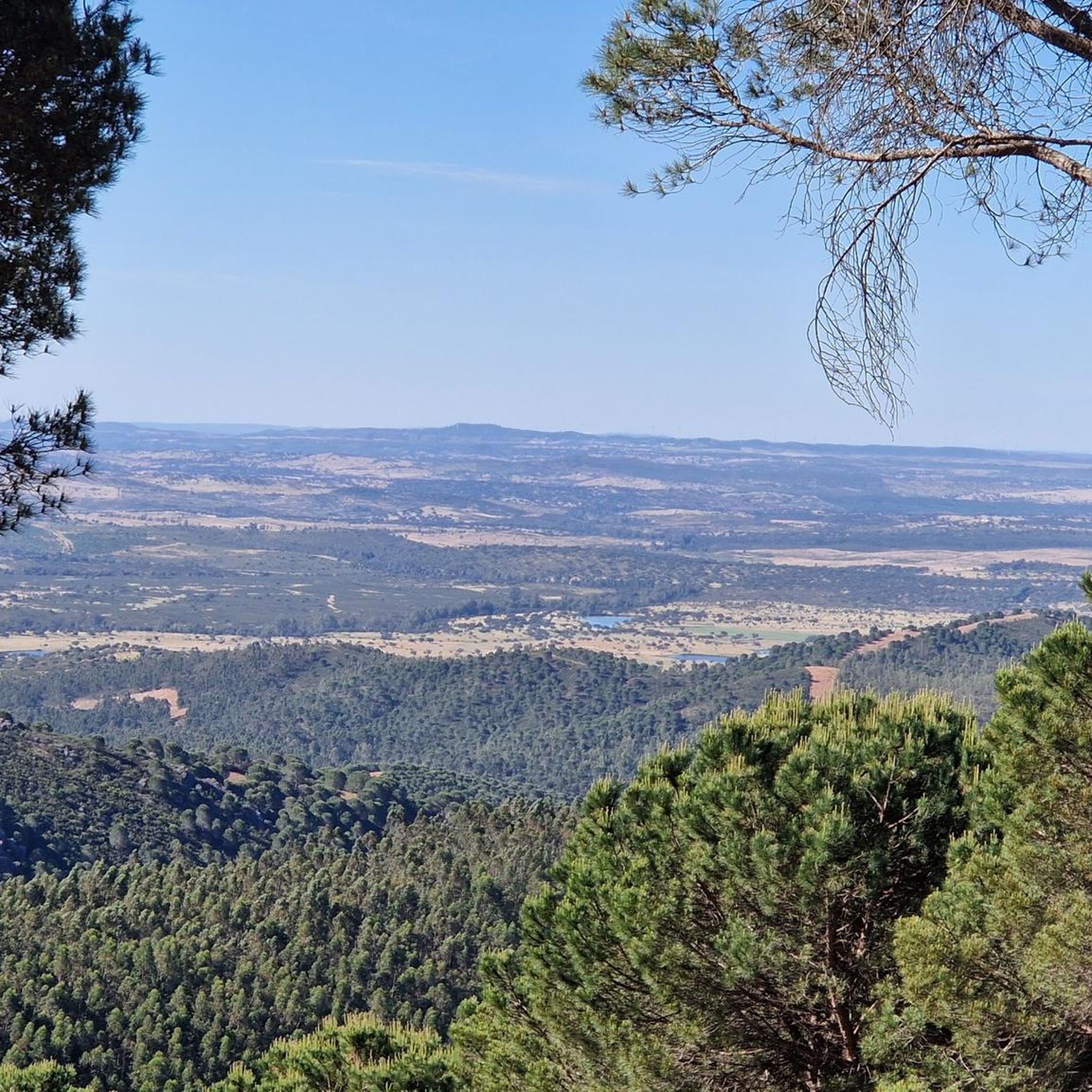
Yes, Calañas offers 'El Morante', a natural viewpoint with Roman remains. Additionally, the broader region includes elevated points like La Cabeza de La Lancha, which provides breathtaking panoramic views and opportunities for birdwatching, particularly for black and griffon vultures.
What kind of wildlife can I expect to see in El Cerro De Andévalo's natural areas?
The diverse ecosystem of El Cerro De Andévalo supports a variety of wildlife. You might encounter partridges, rabbits, and wild boar in the dehesas and scrublands. Elevated points like La Cabeza de La Lancha are excellent for observing majestic black and griffon vultures.
What outdoor activities are available near the natural monuments?
El Cerro De Andévalo offers ample opportunities for outdoor activities. You can explore numerous trails for mountain biking, cycling, and hiking. For specific routes, check out the guides for MTB Trails around El Cerro De Andévalo, Cycling around El Cerro De Andévalo, and Road Cycling Routes around El Cerro De Andévalo.
Are there family-friendly natural sites to visit?
Yes, the town of Calañas is considered family-friendly and offers a rich history and natural environment. Its 'Paseo El Real' is a green area along the Odiel River, ideal for relaxing with family. The ecological route, Vía de la Joya San Miguel, which follows an old railway line, can also be a pleasant family activity.
What is the historical significance of the natural monuments in this region?
Many natural sites in El Cerro De Andévalo are deeply intertwined with its industrial past. The region is part of the Iberian Pyrite Belt, and sites like the Tharsis Open-Pit Mine and Valdelamusa Water-Filled Quarry are former mining complexes that have left a significant mark on the landscape, showcasing centuries of mineral extraction dating back to Roman times.
Can I find hiking trails that explore the mining heritage?
Absolutely. The Vía de la Joya San Miguel is an ecological route that follows an old railway line used to transport minerals from the Mina de la Joya. This route allows visitors to witness both the historical mining impact and the unique flora of the region, including the 'heather of the mines' endemic to these acidic soils.
What is the best time of year to visit the natural monuments around El Cerro De Andévalo?
While specific data isn't provided, generally, the spring and autumn months offer the most pleasant weather for exploring the outdoor natural monuments in this region. Temperatures are milder, making hiking and cycling more comfortable, and the landscape is often vibrant with flora.
What makes the Valdelamusa Water-Filled Quarry unique?
The Valdelamusa Water-Filled Quarry, also known as Corta de los Confesionarios, is a striking artificial lake formed from a former open-pit mine. It reached approximately 200 meters in diameter and 180 meters in depth. Its name 'Confesionarios' comes from the gossan geological formations that resemble church confessionals, creating a unique and visually impressive landscape.
What are the main characteristics of the broader natural environment in El Cerro De Andévalo?
The general natural environment is characterized by a blend of dehesas, scrubland, hills, forests, reservoirs, and rivers. This diverse landscape provides a habitat for various wildlife and offers a unique combination of natural beauty and cultural heritage, particularly due to its historical mining influence.
Are there any specific plants or flora unique to the mining areas?
Yes, the acidic soils resulting from the mining activities have fostered unique flora. Along routes like the Vía de la Joya San Miguel, you can observe the 'heather of the mines,' an endemic plant specifically adapted to these conditions.
What do visitors appreciate most about the natural monuments in El Cerro De Andévalo?
Visitors are often captivated by the unique blend of natural beauty and industrial heritage. The transformation of former mining sites into impressive lakes, the panoramic views from elevated points, and the opportunity to observe diverse wildlife are frequently highlighted. The historical context embedded in the landscape also adds a significant layer of appreciation.
Most popular attractions around El Cerro De Andévalo

Get inspired with the komoot mobile app


Explore more
Extend your search for the best caves by checking out these guides of the top ones around El Cerro De Andévalo:
