The best walks and hikes around Lassee
4.6
(968)
4,986
hikers
195
hikes
Hiking around Lassee offers access to diverse landscapes, from the open fields and vineyards of the Pannonian Lowlands to the lush riparian forests and wetlands of the nearby Donau-Auen National Park. The region is characterized by generally flat terrain, with gentle elevation changes, making it suitable for various hiking abilities. The Danube River flows through the area, shaping dynamic habitats and providing scenic routes along its banks.
Best hiking trails around Lassee
- The most popular hiking route is Baroque Garden of Schloss Hof – Hof Palace loop from Schloss Hof, an easy 3.0 miles (4.9 km) trail that takes 1 hour 17 minutes to complete. This route explores the historic Baroque gardens of Schloss Hof.
- Another top favourite among local hikers is Weikendorfer Remise Heath loop from Weikendorfer Remise, a moderate 6.0 miles (9.6 km) path. This trail leads through the natural heathland of Weikendorfer Remise.
- Local hikers also love the Weikendorfer Remise Heath loop from Breinfeld, a 6.8 miles (11.0 km) trail leading through heathland and open landscapes, often completed in about 2 hours 47 minutes.
- Hiking around Lassee is defined by riparian forests, open fields, and wetlands, with routes often following the Danube River or exploring cultural landmarks like Schloss Hof. The network offers options for different ability levels, from easy strolls to moderate day hikes.
- The routes in Lassee are highly rated by the komoot community with an average score of 4.6 stars from more than 900 reviews. More than 5000 hikers have used komoot to explore Lassee's varied terrain.
Last updated: June 18, 2026
5.0
(4)
50
hikers
4.87km
01:17
50m
50m
Easy hike. Great for any fitness level. Easily-accessible paths. Suitable for all skill levels.
4.0
(4)
19
hikers
9.64km
02:26
10m
10m
Moderate hike. Good fitness required. Easily-accessible paths. Suitable for all skill levels.

Sign up for free
3.7
(3)
11
hikers
11.0km
02:47
20m
20m
Moderate hike. Good fitness required. Easily-accessible paths. Suitable for all skill levels.
4.5
(2)
14
hikers
Easy hike. Great for any fitness level. Easily-accessible paths. Suitable for all skill levels.
5.0
(1)
3
hikers
Moderate hike. Good fitness required. Easily-accessible paths. Suitable for all skill levels.
Get access to more routes and recommendations from other explorers.
Sign up for free
Already have an account?
Our route recommendations are based on thousands of hikes, rides, and runs completed by other people on komoot.
Start today with a free account
Your next adventure awaits.
Login or Signup

Tips from the Community


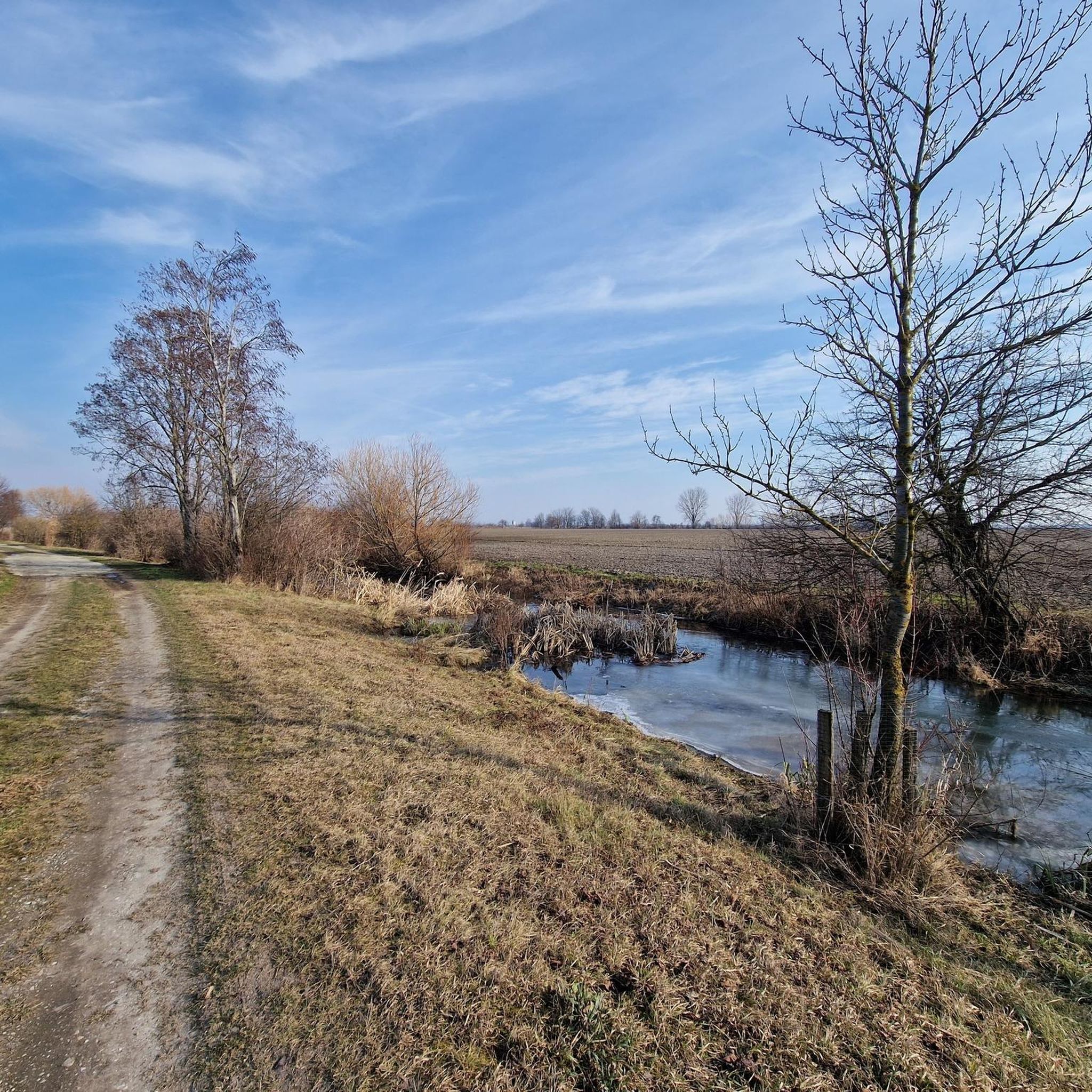
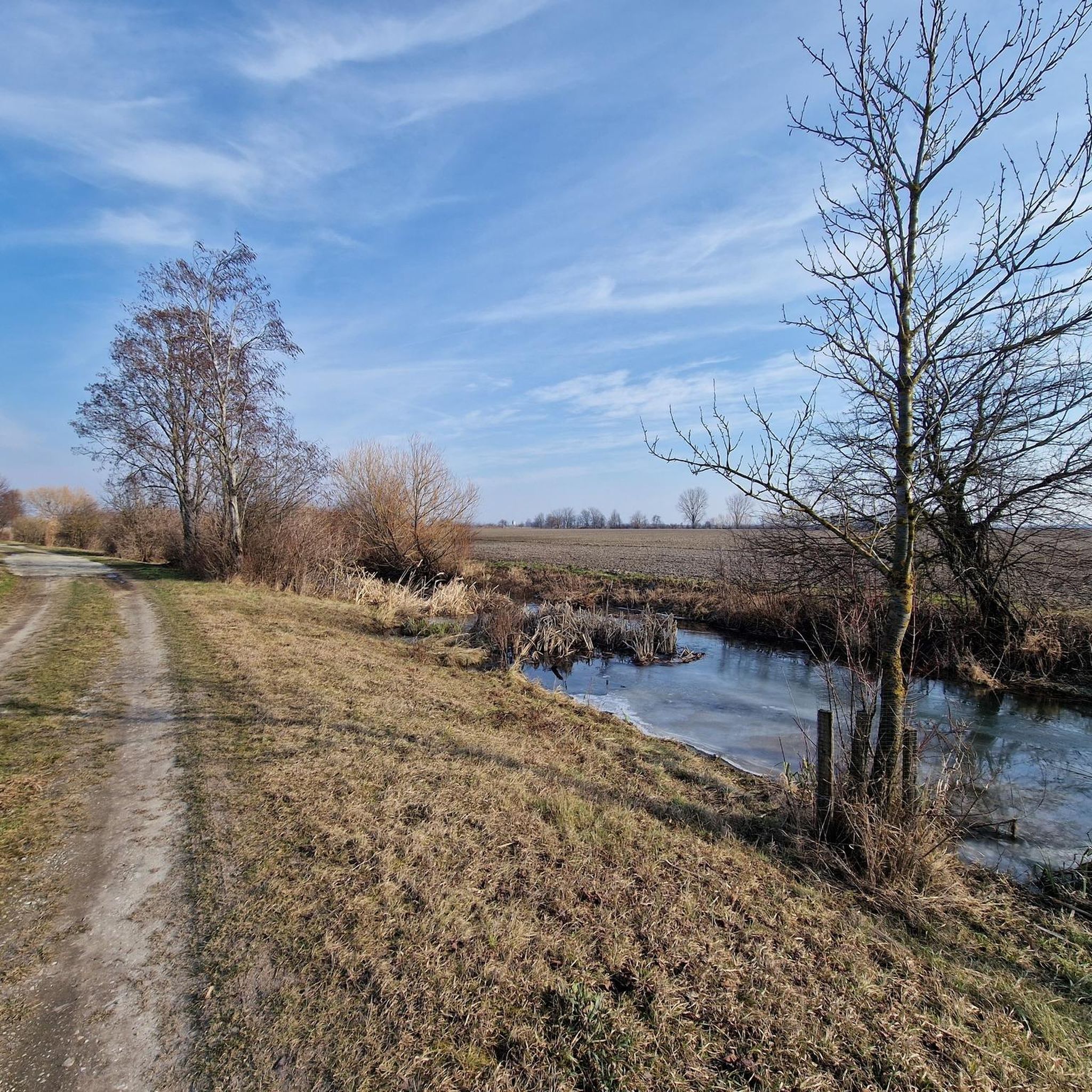
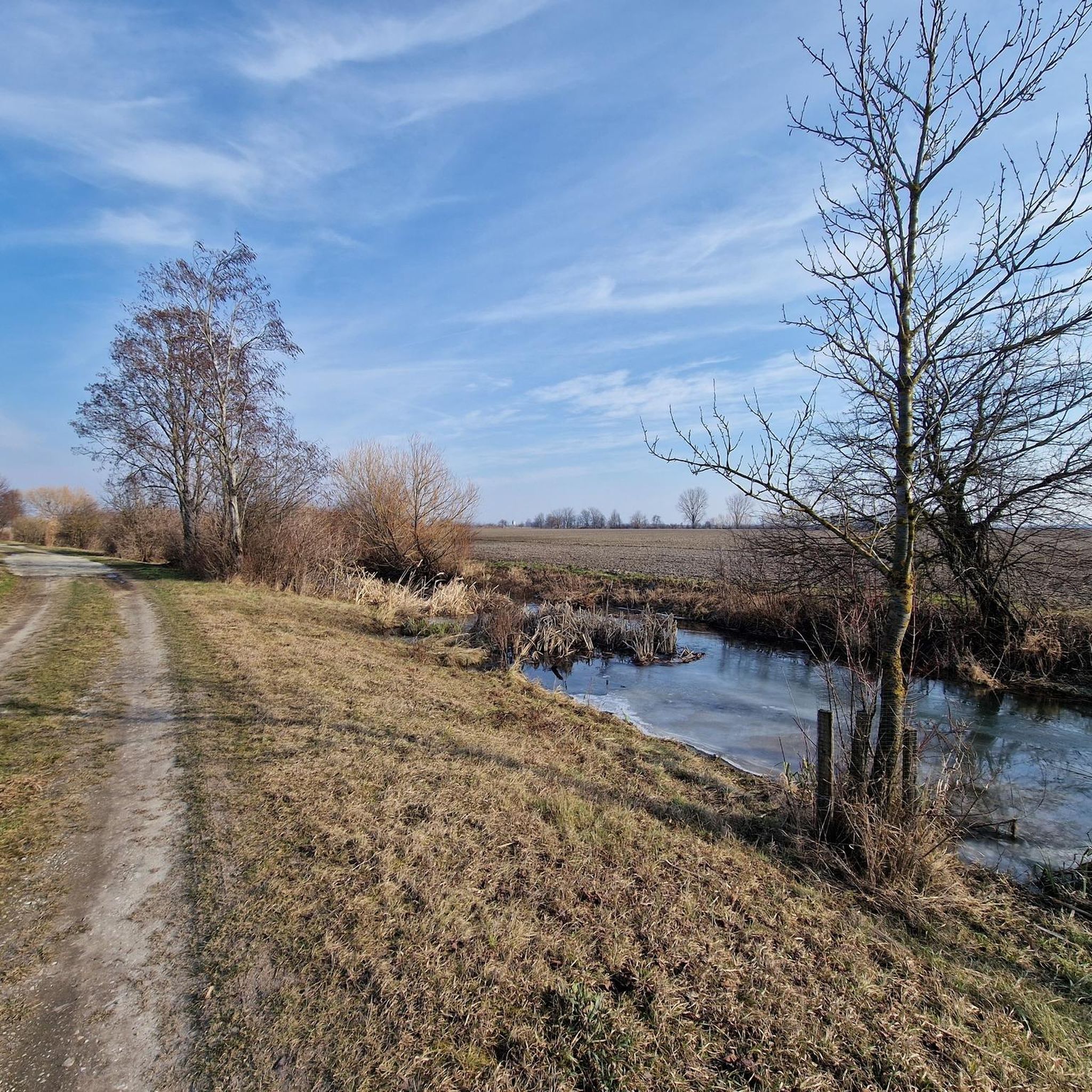
Pond / small lake at the main entrance of Schloss Hof Beautiful pond / small lake at the main entrance / ticket office / exit of Schloss Hof on Friedrich-Prankh-Weg
13
0
Baroque Garden - The Garden Paradise, Hof Castle The area sloping down to the March lowlands to the east of the castle was predestined to create a garden based on the French model simply because of its location. In just a few years, Prince Eugene had the architect Johann Lucas von Hildebrandt and the garden engineer Anton Zinner create one of the most important gardens in the German-speaking world on a total of seven terraces. The vertical central axis, along which there are numerous fountains, divides the garden into two mirror-image areas on each level. A well-thought-out sculpture program created by the sculptor Johann Christoph Mader pays homage to the lord of the castle, Prince Eugene. The water required to operate the fountains and to supply the plants was derived from three ponds in the nearest village of Groißenbrunn. In the 19th and 20th centuries, the garden gradually fell into disrepair. The three paintings by Bernardo Belotto, known as Canaletto, were one of the most important sources for the gradual reconstruction of the individual terrace areas since 2002. These views of the palace complex were created on Maria Theresa's commission around 1760. Text / Source: Schloss Hof, 2294 Schloßhof 1 https://www.schlosshof.at/ueber-schloss-hof/garten
13
0
Baroque Garden - The revitalization of the Baroque Garden, Schloss Hof After 15 years of detailed reconstruction, the garden in Schloss Hof can now be experienced by our guests in its 18th century appearance right down to the last terrace! We have accompanied this journey for you and provide insights into the exciting period of restoration work. With the restoration of the seventh garden terrace in 2019 and the completed reconstruction of the Great Cascade in 2018, the 15-hectare Baroque Garden of Schloss Hof can once again be experienced in its entirety as it was in the 18th century. Text / Source: Schloss Hof, 2294 Schloßhof 1 https://www.schlosshof.at/ueber-schloss-hof/garten/revitalisierung-barockgarten
13
0
Neptune Fountain, Schloss Hof The original fountain, dating from the time of Prince Eugene, was demolished in the 19th century. The reconstructed structure is missing the most important group of figures, Neptune with a dolphin, which has been lost. The groups on the sides of the fountain depict the fight between Hercules and Antaeus, in which the ancient hero defeats his opponent through strength and cleverness. This motif was often used as a reference to the princely virtues of the castle owner. Text / Source: Schloss Hof, 2294 Schloßhof 1 https://www.schlosshof.at/ueber-schloss-hof/garten/1-terrasse?tourId=17
13
0
Saved from decay!!, Hof Castle After the end of the Habsburg monarchy, the property became state property. Little changed for Hof Castle. It remained under military administration, only the soldiers' uniforms changed. After the Imperial and Royal Cavalry, the Austrian Federal Army moved in, then the German Wehrmacht and finally, in 1945, the soldiers of the Red Army. Major restoration and restoration work in the Hof and Niederweiden castles, which had already fallen into disrepair at that time, took place on the occasion of the Lower Austrian State Exhibition "Prince Eugene and Baroque Austria" in 1986. Extensive renovation work and the restoration of the two castles began in 2002, when the Marchfeldschlösser Revitalisierungs- und Betriebsges.m.b.H. was founded. This was incorporated into the Schloß Schönbrunn Kultur- und Betriebsges.m.b.H. in 2015. Text / Source: Schloss Hof, 2294 Schloßhof 1 https://www.schlosshof.at/ueber-schloss-hof/geschichte
13
0
Owned by the Habsburgs - Maria Theresa's widow's residence, Hof Palace Shortly after the purchase, minor adaptations began in the palace: Prince Eugene's private rooms now served the imperial couple and were refurnished for this purpose. Until his death in 1765, Emperor Franz Stephan spent a few weeks at Hof Palace every year to hunt or to "lighten the soul of the burden of ruling" with Maria Theresa and the children, as an inscription on the palace's garden-side façade states. Far-reaching changes were made to the palace in the 1770s by the imperial court architect Franz Anton Hillebrandt. The building was raised by one floor to create additional guest rooms. The rooms on the main floor were redesigned in the classicist style. Maria Theresa, who had since become a widow, had an apartment furnished in predominantly grey and white in the south wing. This phase of renovation gave the palace its current appearance. A palace as a training facility for the k.k. Army After Maria Theresa's death in 1780, the following generations showed little interest in their Marchfeld summer residence and increasingly left it to the influences of nature. In 1898, Emperor Franz Joseph decided to hand the complex over to the army administration in order to set up a riding and driving training institute. Before the military moved in, most of the art objects such as furniture, garden sculptures and wrought iron gates were transported to Vienna in 200 wagons and formed a rich fund for the furnishing of other imperial palaces over the next two decades. The most striking change in Schloss Hof during this time was the construction of two new riding halls on the first terrace. Text / Source: Schloss Hof, 2294 Schloßhof 1 https://www.schlosshof.at/ueber-schloss-hof/geschichte
13
0
History of Schloss Hof and Schloss Niederweiden The grounds of Schloss Hof extend over more than 70 hectares in the east of Lower Austria. The magnificent ensemble consisting of the two-story castle, the garden and the manor house is of particular artistic and cultural historical significance. Prince Eugene's hunting paradise In 1725, the 62-year-old general Prince Eugene of Savoy acquired a one-story Renaissance castle with a rectangular floor plan and commissioned Johann Lucas von Hildebrandt to build a representative hunting lodge. Expensive furnishings The castle was extended to the west by two wings. Over 800 craftsmen were busy laying out a spacious garden with seven terraces until Prince Eugene's death in 1736. The manor house built to the north of the castle was to serve as economic supplies in the future. For the exquisite furnishing of the palace rooms - on the first floor were Prince Eugene's living apartment, the state apartment, 13 guest rooms, the chapel and the ballroom - the artists who had already made a name for themselves in the Belvedere palaces, among others, were hired. These included the interior decorator Claude Le Fort du Plessy and the stucco artists Santino Bussi and Alberto Camesina. The great inheritance and intoxicating parties When Prince Eugene died at the age of seventy-three, his only living relative, his niece Anna Victoria of Savoy-Soissons, inherited all of his possessions and became one of the richest women in Europe. Two years after the inheritance, she married Prince Joseph Friedrich of Saxe-Hildburghausen, who was 18 years younger than him, and gave him the Hof and Niederweiden palaces. Even after the couple separated, these properties remained in Joseph Friedrich's possession and he knew how to use them as venues for luxurious events. Prince Saxe-Hildburghausen used his last big party at Schloss Hof in 1754 to sell the property as profitably as possible. For three days, the guests of honor - Maria Theresa and Franz I Stephan of Lorraine - were shown every conceivable spectacle to encourage them to buy. The numerous performances had their effect. A year later, Maria Theresa purchased Schloss Hof and gave it to her husband. Text / Source: Schloss Hof, 2294 Schloßhof 1 https://www.schlosshof.at/ueber-schloss-hof/geschichte
13
0
Frequently Asked Questions
How many hiking trails are available around Lassee?
There are over 200 hiking routes around Lassee, offering a wide variety of options for different interests and fitness levels. This includes 125 easy routes, 76 moderate routes, and 5 more challenging trails.
What kind of terrain can I expect when hiking near Lassee?
Hiking around Lassee offers a mix of landscapes. You'll find the open fields and vineyards characteristic of the Pannonian Lowlands, as well as the lush riparian forests and wetlands of the nearby Donau-Auen National Park. The terrain is generally flat with gentle elevation changes, making it suitable for various abilities.
What do other hikers say about the trails around Lassee?
The hiking trails around Lassee are highly regarded by the komoot community, with an average rating of 4.6 out of 5 stars from over 900 reviews. Hikers often praise the well-maintained paths, the peaceful natural surroundings, and the diverse scenery, especially within the Donau-Auen National Park.
Are there any easy hiking options suitable for beginners or families?
Yes, Lassee offers many easy hiking options perfect for beginners or families. With 125 easy routes, you can find gentle strolls through open landscapes or explore cultural sites. For example, the Schloss Hof Animal Farm – Schloss Hof Palace loop from Schloss Hof is an easy 3.6 km walk that takes you through the palace grounds.
Can I find circular hiking routes in the Lassee area?
Yes, many of the hiking routes around Lassee are circular, allowing you to start and end at the same point. This includes popular options like the Weikendorfer Remise Heath loop from Weikendorfer Remise, which is a moderate 9.6 km trail through natural heathland.
What natural features or landmarks can I see while hiking near Lassee?
The region is rich in natural beauty, primarily due to its proximity to the Donau-Auen National Park, one of Central Europe's last great intact floodplain landscapes. You can explore diverse habitats shaped by the Danube River. Notable natural landmarks include various lakes such as Marchegg Lake and the Pond near Eckartsau.
Are there any historical sites or cultural attractions accessible from the trails?
Absolutely. The Lassee area combines outdoor activities with cultural experiences. A prominent attraction is Schloss Hof Palace and Gardens, a vast Baroque palace that can be explored via routes like the Baroque Garden of Schloss Hof – Hof Palace loop. Further afield, you can visit Devín Castle, an important historical site with Roman and Slavic history.
Is the Donau-Auen National Park accessible for hiking from Lassee?
Yes, Lassee is strategically located near the Donau-Auen National Park, making it an excellent base for exploring this unique floodplain landscape. The park features an extensive network of marked hiking trails, offering insights into its rich flora and fauna. You can learn more about the park at Nationalparks Austria.
Are there opportunities for wildlife spotting in the region?
The Donau-Auen National Park, adjacent to Lassee, is a vital refuge for over 800 animal species. While hiking, you might spot kingfishers, swamp turtles, and various bird species, including sea eagles. Staying on marked paths helps protect this sensitive environment and increases your chances of observing wildlife.
Are the hiking trails around Lassee suitable for dogs?
Many trails in the Lassee region, particularly those outside the most sensitive areas of the Donau-Auen National Park, are suitable for dogs. However, it's always recommended to keep dogs on a leash to protect local wildlife and ensure a pleasant experience for all hikers. Always check specific trail regulations before heading out.
What is the best time of year for hiking near Lassee?
The best time for hiking near Lassee is generally from spring to autumn (April to October). During these months, the weather is pleasant, and the natural landscapes, especially the Donau-Auen National Park, are vibrant with flora and fauna. Summer can be warm, so early morning or late afternoon hikes are often preferred.
Are there any trails that offer views of the Danube River?
Yes, given the region's proximity to the Danube River and its role in shaping the landscape, many trails offer scenic views of the river or follow its banks. The river is a dynamic force, creating diverse habitats and providing picturesque routes for hikers.
How accessible are the trails for people with limited mobility or strollers?
While many trails in the region are generally flat, specific accessibility for wheelchairs or strollers can vary. The Donau-Auen National Park has some well-maintained paths, but it's advisable to check individual route descriptions for details on surface conditions and width. Easy, paved paths around cultural sites like Schloss Hof may be more suitable.
Most popular attractions around Lassee

Get inspired with the komoot mobile app


Explore more
Browse the best Hikes in other regions.
