Top 6 Natural Monuments around Pajarón
Best natural monuments around Pajarón are found within the province of Cuenca, Spain, offering access to diverse natural sites. The region is characterized by its karstic landscapes, featuring unique geological formations such as sinkholes, lagoons, and sculpted rock formations. Pajarón is situated amidst extensive pine and juniper forests, providing a setting for outdoor exploration. This area showcases the geological richness of the Iberian System, shaped by water erosion over millennia.
Best natural monuments around Pajarón
- The most popular natural monuments…
Last updated: October 18, 2026
Laguna de la Gitana
Highlight • Lake
Translated by Google •
Tip by

Torca de la Novia
Highlight • Canyon
Translated by Google •
Tip by
Sign up now to discover places like this
Get recommendations on the best single tracks, peaks, & plenty of other exciting outdoor places.
Lagoons of Cañada de Hoyo
Highlight • Lake
Translated by Google •
Tip by
Las Corbeteras
Highlight • Natural Monument
Translated by Google •
Tip by

Rock formations near Cañete
Highlight • Natural Monument
Translated by Google •
Tip by

Sign up for free to discover even more natural monuments around Pajarón.
Already have an account?
Start today with a free account
Your next adventure awaits.


Tips from the Community

Very close to the parking lot and very easy to see.
0
0

One of the 22 Torcas in the area of Torcas de Palancares and Tierra Muerta. It is a beautiful area. Torca small but well defined. Torcas are depressions in the ground caused by the collapse of cave ceilings.
2
0
Lagoon complex of Cañada de Hoyo, the 7 lagoons are located 3.5 km from this town. The tour is worth it, the most impressive lagoons are the Laguna del Tejo and the Laguna de la Cruz or La Gitana.
1
0
The most impressive lagoon of this lagoon complex, it is recommended to do the whole tour. The name comes from a legend of the two gypsy families who lived in bad relations, but two young people (a boy and a girl) from the families fell in love; After one of the families fled to prevent the couple from meeting, the gypsy woman drowned in the lagoon.
2
0

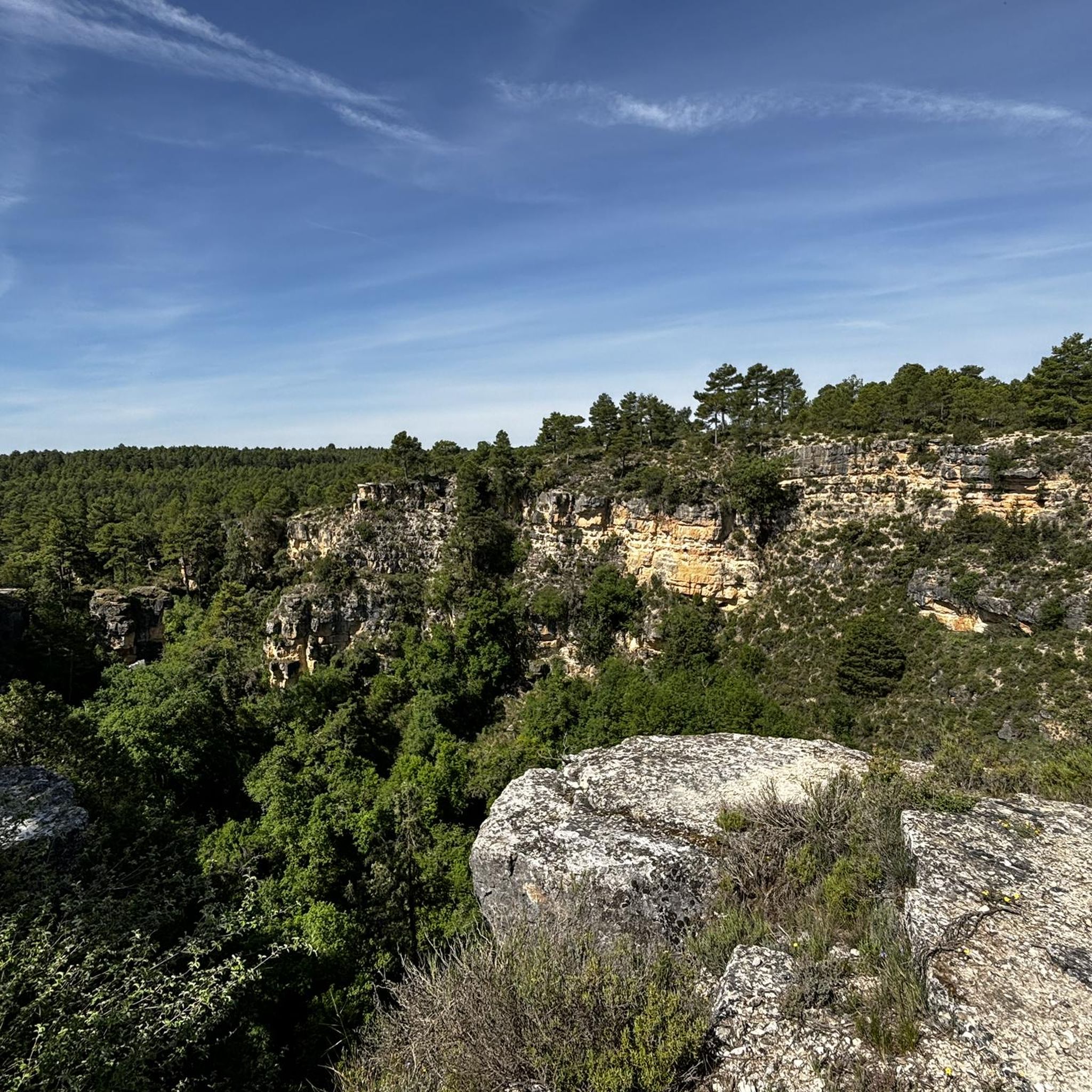
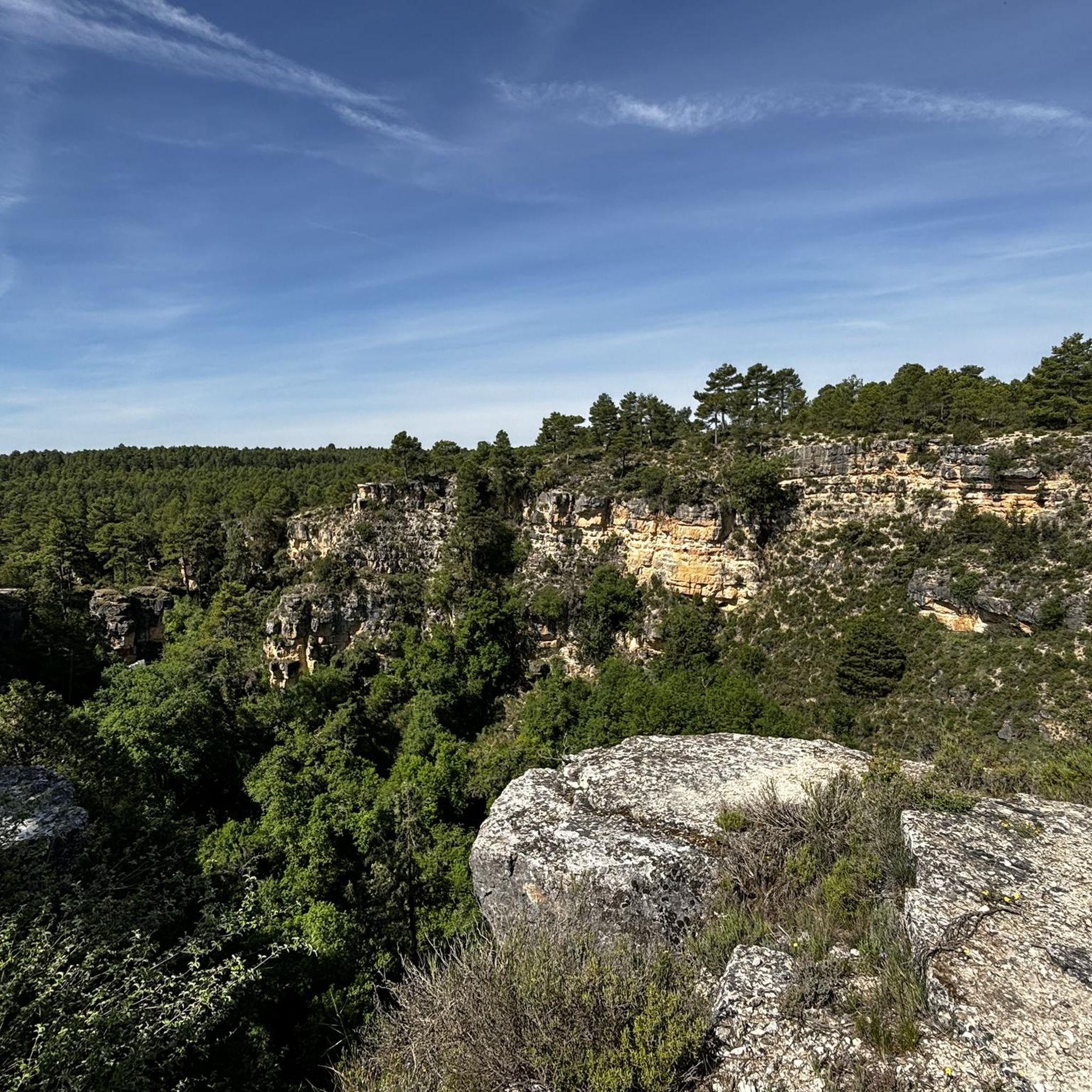
In this area of the province, rock formations appear between pine forests and rise above the treetops. It shows the Río Cabriel near the road.
0
0
Lagoons that are close to the road and whose waters are karst springs that come from underground water. There are 7 of them and they can be seen a few meters from the road. It is one of the most well-known lagoons in this area.
0
0

The interior of Cuenca is full of curious rock formations, products of its geology and topography that have suffered the onslaught of erosion over thousands of years. Like the well-known Ciudad Encantada, very close to the little-known town of Pajaroncillo is this set of formations that attract a lot of attention due to their curious shapes and that are truly worthy of a postcard.
1
0

The magical waters of the lakes change color in different seasons.
1
0
Frequently Asked Questions
What are the most unique geological features to explore around Pajarón?
The region around Pajarón is renowned for its karstic landscapes. You can explore the Lagunas de Cañada del Hoyo, a complex of seven lagoons with striking color variations due to minerals and microorganisms. Another remarkable site is the Torcas de Palancares y Tierra Muerta, featuring around 30 impressive sinkholes like Torca de la Novia, formed by the collapse of cave ceilings.
Are there family-friendly natural monuments near Pajarón?
Yes, several natural monuments are suitable for families. The Laguna de la Gitana, part of the Lagunas de Cañada del Hoyo, is considered family-friendly and offers a fascinating visual experience with its changing water colors. The Torcas de Palancares y Tierra Muerta also has well-marked trails of varying lengths, making it accessible for families to explore the unique sinkholes.
What kind of hiking trails can I find near these natural monuments?
The area offers a variety of hiking trails. For instance, you can find easy to moderate trails around the Lagunas de Cañada del Hoyo, such as the 'Trail of the Lagoons' (5.1 km, easy) or the 'Lagunas Trail from Cañada del Hoyo' (11.1 km, moderate). The Torcas de Palancares y Tierra Muerta also features trails ranging from 30 minutes to 2 hours, allowing you to explore the geological formations. You can find more hiking options in the Hiking around Pajarón guide.
What is the best time of year to visit the natural monuments around Pajarón?
The natural monuments around Pajarón, particularly the Lagunas de Cañada del Hoyo, offer different visual experiences depending on the season. The striking color variations of the lagoons are influenced by light, temperature, and time of year. Spring and autumn generally provide pleasant temperatures for exploring, while the colors of the lagoons might be particularly vibrant in certain conditions.
What other outdoor activities are available in the Pajarón region besides hiking?
Beyond hiking, the Pajarón region, situated within the Serranía de Cuenca Natural Park, is excellent for various outdoor activities. You can find numerous routes for road cycling and mountain biking. For example, there are challenging MTB trails like 'Las Corbeteras y Torre Balbina' (52.9 km, difficult) or moderate road cycling loops around the lagoons. Explore more options in the Road Cycling Routes around Pajarón and MTB Trails around Pajarón guides.
Where can I see unique rock formations near Pajarón?
The area is rich in unique rock formations. Besides the famous Ciudad Encantada, you can visit Las Corbeteras, a natural monument near Pajaroncillo known for its curious shapes sculpted by erosion. Another spot to observe these geological wonders is the Rock formations near Cañete, where they rise impressively amidst pine forests.
Are there any natural monuments with waterfalls or gorges?
Yes, you can find such features. The El Corciol is a natural monument featuring a succession of natural pools carved by water, culminating in a small waterfall when water levels are sufficient. Additionally, the Nacimiento del Río Cuervo, within the Serranía de Cuenca Natural Park, is famous for its impressive travertine spring formations and waterfalls, especially after rainfall.
What is the Serranía de Cuenca Natural Park and what does it offer?
The Serranía de Cuenca Natural Park is an extensive mountain range encompassing the Pajarón area, known for its diverse landscapes including craggy mountains, gorges, and thick pine forests. It's a haven for wildlife and boasts unique karstic geological formations. Within the park, you can visit sites like Ciudad Encantada, Nacimiento del Río Cuervo, and El Ventano del Diablo, offering opportunities for hiking, nature observation, and stunning panoramic views.
Is there parking available at the natural monuments?
Parking is generally available at the main natural monument sites. For instance, the Torcas de Palancares y Tierra Muerta has parking facilities, with Torca de la Novia being very close to a parking area. Some lagoons at Lagunas de Cañada del Hoyo are publicly accessible, and parking is typically provided. It's advisable to check specific site information for detailed parking instructions.
Are dogs allowed on trails at the natural monuments?
While many natural areas in Spain are dog-friendly, specific rules can vary by natural monument or park. It's generally recommended to keep dogs on a leash to protect wildlife and ensure the safety of other visitors. Always check local regulations for each specific site, such as the Lagunas de Cañada del Hoyo or the Torcas de Palancares y Tierra Muerta, before visiting with your dog.
What makes the Lagunas de Cañada del Hoyo unique?
The Lagunas de Cañada del Hoyo are unique due to their seven permanent lagoons, each displaying distinct and often vibrant colors ranging from blue, green, to black. These striking color variations are attributed to specific microorganisms and minerals in the water, as well as the effects of light and temperature. The lagoons are actually karstic sinkholes filled with water, creating a mesmerizing visual spectacle.
Where can I find more information about the Torcas de Palancares y Tierra Muerta?
For more detailed information about the Torcas de Palancares y Tierra Muerta, including trails and geological insights, you can visit the official tourism resources. A good starting point is the Visita Serranía de Cuenca website, which provides context on this geological wonder.
Most popular attractions around Pajarón

Get inspired with the komoot mobile app


Explore more
Extend your search for the best caves by checking out these guides of the top ones around Pajarón:
