Top 13 Natural Monuments around Sant Jaume Dels Domenys
Best natural monuments around Sant Jaume Dels Domenys encompass a range of natural features, providing scenic beauty and opportunities for outdoor activities. The area, situated between the Penedès plain and the Serra del Montmell, offers diverse landscapes. These include elevated viewpoints with panoramic vistas and significant hydrological sites, presenting varied terrain and ecological interest for exploration.
Best natural monuments around Sant Jaume Dels Domenys
- The most popular natural monuments is Puig de l'Àliga, a summit that stands at 464…
Last updated: July 1, 2026
Puig de l'Àliga
Highlight • Summit
Translated by Google •
Tip by

Gran Pèlag of Vilobí del Penedès
Highlight • Lake
Translated by Google •
Tip by

Sign up now to discover places like this
Get recommendations on the best single tracks, peaks, & plenty of other exciting outdoor places.
Sign up for free
Pla dels Albats Necropolis and Chapel Ruins
Highlight • Historical Site
Translated by Google •
Tip by

Fita dels Tres Termes
Highlight • Summit
Translated by Google •
Tip by

Font de Fontjilles
Highlight • Natural Monument
Translated by Google •
Tip by

Sign up for free to discover even more natural monuments around Sant Jaume Dels Domenys.
Sign up for free
Already have an account?
Start today with a free account
Your next adventure awaits.
Login or Signup
Popular around Sant Jaume Dels Domenys

Other adventures around Sant Jaume Dels Domenys

Tips from the Community

Beautiful hike and a great view of Vilanova i la Geltrú and the sea.
8
0


The Puig de l'Àliga, at 464 meters above sea level, is not the highest peak of the Garraf, that honor goes to the Puig de la Mola (534 meters), but it is the highest of the foothills southern parts of the Garraf massif. It forms a natural border between the regions of Alt Penedès and Garraf and is a natural viewpoint of both the Penedès plain and the Garraf coast. At its highest point there is a geodesic vertex, a large cross, and a fire watch tower.
2
0
La Fita dels Tres Termes is a mountain 234 meters high located in the Garraf massif, at the confluence of the municipalities of Vilanova and la Geltrú, Castellet and la Gornal and Cubelles. In its highest part, next to the forest surveillance tower, there is a cairn of mortar, right at the apex of the three municipal boundaries.
5
0

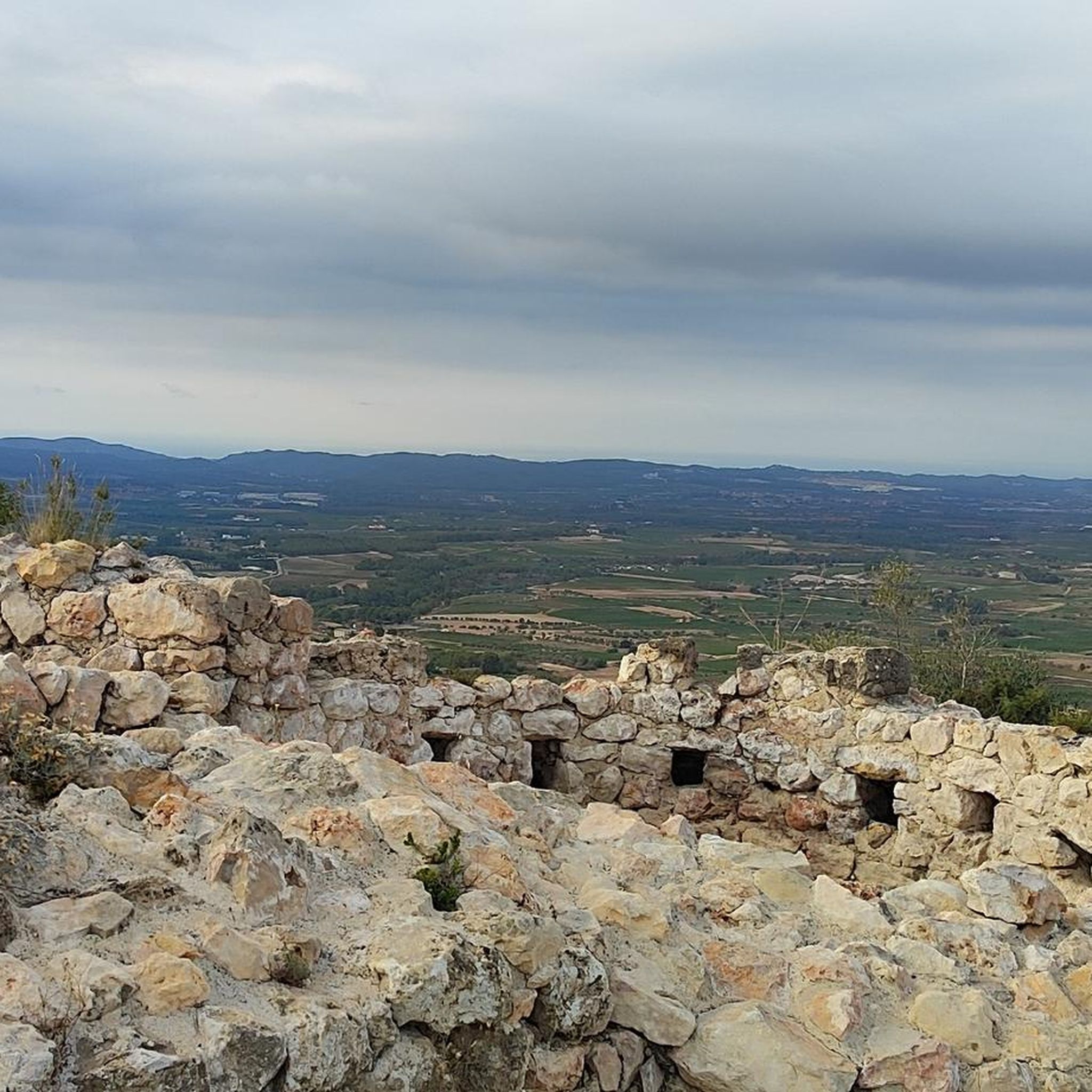
Necropolis located on the elongated hill located in front of the Olerdolana wall. It is known as Pla dels Albats (relatively modern place name). This name comes from the numerous small and medium-sized tombs corresponding to infants and alabtas (babies who died before receiving the sacraments or having the use of reason) found in the necropolis of anthropomorphic tombs. More than a hundred tombs have been located. The graves are excavated in the rock, they are rectangular in plan, with the head separated from the rest of the body and narrower at the feet. Most feature a socket in the rock itself for the cap. The graves follow the east-west orientation. In the middle of the necropolis are the ruins of a building that has been identified as the remains of the chapel of Santa Maria. Part of the north wall is preserved, with a height close to 3 meters and the west wall, modernly altered. The chapel of Santa Maria and the necropolis must be associated with the population, more or less dispersed, located outside the walls in medieval times. They were already in operation at the beginning of the 10th century. Observations: Archaeological research is very incipient in this sector, its evolution will confirm the exact functionality of the building described, its chronology and the relationship with the remains of another building that can be guessed in the middle of the necropolis.
3
0
Channeled fountain located in the upper part of the bottom of the Seguera, the water flows from a metal faucet fixed on a wall, on which the legend MCMLXV (1975) is written. Under the tap of the fountain there is a small square masonry sink and a concrete shed. A shallow channel carries the water to a small circular pool located a few meters below.
0
0

Pla dels Albats Necropolis owes its name to the numerous tombs of children and newborns (babies who died before receiving the Sacraments). More than a hundred tombs outside the enclosure are documented. The tombs are excavated in the rock, they are rectangular with the head differentiated from the rest of the body and narrower at the feet. Most of them have a lace in the same rock for the cover. This consisted of one or several slabs that protected the body. The graves follow the east-west orientation.
2
0

The Pèlags of Vilobí del Penedès are a small natural place in Vilobí del Penedès, in the Alt Penedès region. This space is made up of the old gypsum quarries on the Vilobí hill. It is of great scenic beauty and great ecological and geological value. This is a very peculiar area, a wetland with the presence of many species of birds, including several protected. The Pèlags de Vilobí have the interesting feature that four different environmental spaces come together in the same area: rock, forestry, agriculture and water. [ The pelagics - also called the cuttings - appeared as a result of the gypsum extraction activity that dates back to Roman times and has been typical of Vilobí until 1993. Since it stopped being extracted stone, a natural space has been formed consisting of four pelagics. The concentration of runoff water has given rise to its characteristic crescent shape and the particular ecosystem that has developed in the environment. It has very interesting and very peculiar landscapes such as the quarries themselves, and a very peculiar fauna and flora. This microecosystem formed by the Vilobí pelagics contrasts sharply with the wine landscape of the Alt Penedès region. Wikiloc dixit
1
0
Frequently Asked Questions
What are some of the most popular natural attractions in the Sant Jaume Dels Domenys area?
Visitors frequently enjoy the panoramic views from Puig de l'Àliga, which offers vistas of both the Penedès plain and the Garraf coast. Another popular spot is the Foix Reservoir, known for its diverse waterfowl and the scenic backdrop of Castellet Castle.
Are there any natural monuments suitable for families with children?
Yes, the Gran Pèlag of Vilobí del Penedès is a family-friendly natural monument. It features a unique ecosystem of lagoons formed from old gypsum quarries, offering an interesting landscape for exploration and learning about local flora and fauna.
Where can I find impressive viewpoints in the region?
For breathtaking views, head to Puig de l'Àliga, a summit at 464 meters above sea level, providing expansive panoramas. Another excellent viewpoint is Fita dels Tres Termes, which offers great views of Vilanova i la Geltrú and the sea from the Garraf massif.
What kind of outdoor activities can I do near these natural monuments?
The region offers various outdoor activities. You can find numerous cycling routes, including those around Coll de les Ventoses, a popular spot for cyclists. There are also gravel biking opportunities and hiking trails, such as the 'El Castellot – Spectacular View loop' near Sant Jaume dels Domenys. For more options, explore the hiking guide or gravel biking guide for the area.
Are there any historical sites combined with natural beauty?
Yes, the Pla dels Albats Necropolis and Chapel Ruins offer a unique blend of history and natural setting. This site features ancient rock-cut tombs and the remains of a chapel, situated on an elongated hill with a natural viewpoint.
What makes the Foix Reservoir a significant natural monument?
The Foix Reservoir, inaugurated in 1928, was originally built for irrigation. Today, it's a vital wetland known for its diverse waterfowl, with an observatory available for birdwatching. The picturesque setting is further enhanced by the imposing Castellet Castle overlooking the marsh.
What is the best time of year to visit the natural monuments around Sant Jaume Dels Domenys?
The region's natural monuments can be enjoyed throughout the year, but spring and autumn generally offer the most pleasant weather for outdoor activities like hiking and cycling, with milder temperatures and vibrant landscapes. Summers can be hot, while winters are typically mild.
Can I find trails with varying difficulty levels near these natural attractions?
Yes, the area provides a range of trails. For instance, hiking routes near Sant Jaume dels Domenys include easy options like the 'Cal Jepillo loop' and moderate trails such as the 'El Castellot – Spectacular View loop'. Cycling and gravel biking routes also vary from moderate to difficult, catering to different fitness levels. You can find detailed information in the respective hiking, cycling, and gravel biking guides.
What unique geological features can be observed?
The Gran Pèlag of Vilobí del Penedès is a prime example of unique geological features. It consists of lagoons formed from ancient gypsum quarries, creating a distinctive landscape that contrasts sharply with the surrounding wine-growing region of Alt Penedès.
Are there opportunities for birdwatching?
Absolutely. The Foix Reservoir is particularly renowned for its diverse waterfowl. There's an observatory specifically designed for birdwatching enthusiasts, making it an ideal spot to observe various species. Remember to bring binoculars for the best experience.
What do visitors appreciate most about the natural monuments in this area?
Visitors consistently highlight the breathtaking panoramic views, especially from summits like Puig de l'Àliga and Fita dels Tres Termes. The unique ecosystems, such as the wetlands of Foix Reservoir and the Gran Pèlag of Vilobí del Penedès, are also highly appreciated for their ecological value and scenic beauty. Many enjoy the blend of natural exploration with opportunities for cycling and hiking.
Is there parking available near the natural attractions?
While specific parking details vary by location, many natural attractions and trailheads in the Sant Jaume Dels Domenys area typically have designated parking areas or roadside spots. It's advisable to check specific route details on Komoot for information on parking at the start of your chosen activity.
Most popular routes around Sant Jaume Dels Domenys
Most popular attractions around Sant Jaume Dels Domenys

Get inspired with the komoot mobile app


Explore more
Extend your search for the best caves by checking out these guides of the top ones around Sant Jaume Dels Domenys:
