Top 20 Natural Monuments around Badia Del Vallès
Best natural monuments around Badia Del Vallès include a variety of ecological, cultural, and historical sites. This municipality in Spain is characterized by its green spaces and preserved natural areas, offering a contrast to the surrounding urban environment. The region features significant natural landmarks, from ancient trees to expansive rural landscapes, providing opportunities for outdoor exploration. These natural monuments contribute to the area's biodiversity and offer residents and visitors a chance to connect with nature.
Best natural monuments around Badia…
Last updated: July 1, 2026
Pi d'en Xandri
Highlight • Natural Monument
Translated by Google •
Tip by

Lion Fountain
Highlight • Natural Monument
Translated by Google •
Tip by

Sign up now to discover places like this
Get recommendations on the best single tracks, peaks, & plenty of other exciting outdoor places.
Sign up for free
Gallecs Rural Area
Highlight (Segment) • Natural
Translated by Google •
Tip by
Camp del Miracle Fountain
Highlight • Natural Monument
Translated by Google •
Tip by
Turó de Montcada
Highlight • Summit
Translated by Google •
Tip by
Sign up for free to discover even more natural monuments around Badia Del Vallès.
Sign up for free
Already have an account?
Start today with a free account
Your next adventure awaits.
Login or Signup
Tips from the Community

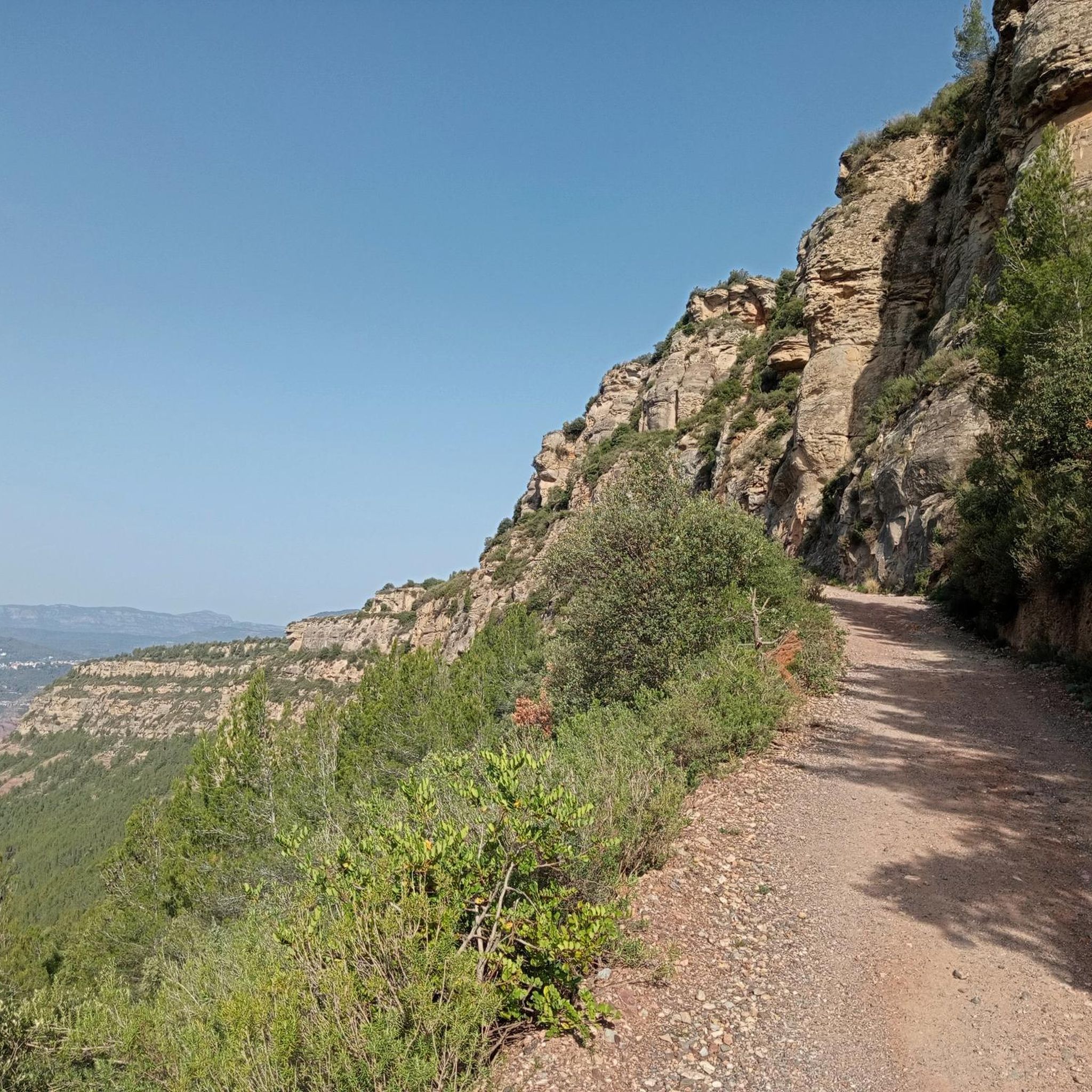
Real nice, shame it's only about 2 km but also a shame there aren't more such roads in the area. Go when there's no racing or practice sessions at the nearby Montmeló circuit!
0
0

For cultural reasons, the monastery of St. Geroni della Murtra was very important.
0
0

This water point is located in front of the entrance to the monastery.
2
0

The Font del Lleó that was fixed a few years ago, as well as its pond located opposite. It is located on the site of the old Mas Murtra, in the Poià valley, where, according to Josep Maria Cuyàs, there had been the chapel dedicated to Sant Martí since the 12th century, the monastery of Sant Jeroni was founded in 1416 by the Jerome monks with the help of the merchant Bertran Nicolau, who bought the farm and, in addition, obtained from Benedict XIII the license to move the community from its place of origin, Mont Olivet, to Sant Pere de Ribes (Carafe); the reasons for the move were, possibly, the poor conditions of the place: infertile soil and lack of water. In 1821 the monastery was used as a hospital during the yellow fever epidemic, the contagion of which ended in July of the following year;
3
0
Take the opportunity to fill your canteen and visit the old monastery
7
0

The Xandri pine is a monumental pinyoner pine (Pinus pinea in Latin) located in the territory of the rural park of Torre Negra in Sant Cugat del Vallès, about 250 years old (according to a dendrological analysis it germinated in 1774). The tree has a height of 23 meters, a trunk circumference of 3.20 meters and a trunk thickness of 3.60 meters. Its head has a width of 21 by 15 meters. It is called Xandri because it is located on land that was once owned by a farmer named Xandri
3
0
Short climb but very intense the last two hundred meters, somewhat hard, good views from the top.
1
0

Perfect to go out on a bike and take some photos
4
0
Frequently Asked Questions
What are some of the most popular natural monuments around Badia Del Vallès?
Visitors frequently appreciate the ancient Pi d'en Xandri, one of Catalonia's oldest pines, and the expansive Gallecs Rural Area, known for its preserved natural landscapes. Another favorite is Turó de Montcada, which offers panoramic views of the surrounding plains and mountain ranges.
Are there natural monuments suitable for families with children?
Yes, several natural monuments are family-friendly. The Pi d'en Xandri is a great spot for a short visit, offering a glimpse of an ancient tree with historical significance. The Gallecs Rural Area provides ample space for outdoor activities and environmental discovery, perfect for a family outing. Additionally, the Camp del Miracle Fountain area, near the Ermita de Sant Medir, is a pleasant spot for a break during a walk.
What kind of historical or cultural significance do these natural monuments hold?
The Pi d'en Xandri is a significant historical and cultural symbol of Sant Cugat, estimated to be around 248 years old. Its resilience after a vandalism attempt in 1997 made it a symbol of environmental protection efforts. The Camp del Miracle Fountain, while not a natural formation itself, is culturally significant due to its location in front of the Ermita de Sant Medir and its association with an annual gathering.
What are the best places for panoramic views near Badia Del Vallès?
For breathtaking panoramic views, head to Turó de Montcada. From its 273-meter summit, you can enjoy a 360-degree vista encompassing the Vallès and Barcelonès plains, the Besòs river, and the Marina and Collserola mountain ranges.
Are there opportunities for outdoor activities like hiking or cycling near these natural monuments?
Yes, the region offers various outdoor activities. The Gallecs Rural Area is ideal for walking and cycling, with its preserved rural landscape. For more extensive options, you can explore the many MTB Trails around Badia Del Vallès, Road Cycling Routes, or Gravel Biking routes that pass through or near these natural areas.
What makes the Gallecs Rural Area unique?
The Gallecs Rural Area is unique for preserving its natural and landscape values in stark contrast to the surrounding urban and industrial environment. It's a significant area for environmental conservation, promoting sustainable agriculture, and offering a rich natural landscape for leisure and environmental discovery. It's also part of the Plan of Areas of Natural Interest (PEIN).
What kind of trees can be found in Badia Del Vallès's green spaces?
Badia Del Vallès boasts a rich plant heritage with over 3,500 trees from about 100 different species. Its 'green lungs,' such as Joan Oliver Park, Illes Balears Park, and Bètica Forest, contain trees that are nearly a century old, predating the city's creation, alongside newer plantings. These diverse trees contribute significantly to the area's biodiversity and environmental health.
Are there any natural monuments that are particularly easy to access for beginners or those looking for a gentle walk?
Yes, the green spaces within Badia Del Vallès itself, such as Joan Oliver Park and Illes Balears Park, offer easy access for gentle walks among diverse tree species. The area around the Pi d'en Xandri in Torre Negra rural park is also suitable for a leisurely visit to appreciate the ancient pine.
What do visitors say about the natural monuments in Badia Del Vallès?
The komoot community highly appreciates the natural beauty and outdoor opportunities offered by these locations. Visitors particularly enjoy the historical significance of the Pi d'en Xandri, the preserved rural essence of the Gallecs Rural Area, and the spectacular 360-degree views from Turó de Montcada. Many highlight the contrast these natural spaces provide to the urban environment.
Can I find water sources or facilities near these natural monuments?
The Camp del Miracle Fountain, located in front of the Ermita de Sant Medir, is a notable spot with four push-button taps and a large running sink, providing drinking water for visitors. This makes it a convenient stop during walks in the area.
What is the best time of year to visit the natural monuments around Badia Del Vallès?
While the natural monuments can be enjoyed year-round, spring and autumn generally offer the most pleasant weather for outdoor exploration. During these seasons, temperatures are mild, and the landscapes are vibrant, whether with spring blooms or autumn colors. Summer can be warm, making early morning or late afternoon visits preferable, while winter offers a quieter, often crisp experience.
Most popular routes around Badia Del Vallès
Most popular attractions around Badia Del Vallès

Get inspired with the komoot mobile app


Explore more
Extend your search for the best caves by checking out these guides of the top ones around Badia Del Vallès:
