Top 4 Natural Monuments around Much Dewchurch
Best natural monuments around Much Dewchurch are found within Herefordshire's landscape of rolling hills, ancient woodlands, and agricultural scenery. The area features notable examples of natural beauty and geological interest. Significant natural features are often protected under classifications such as Sites of Special Scientific Interest. The region's geology is predominantly composed of Devonian Old Red Sandstones, contributing to its characteristic upland topography.
Best natural monuments around Much Dewchurch
- The most popular natural monuments is Capler Camp Hillfort, a natural…
Last updated: August 24, 2026
Capler Camp Hillfort
Highlight • Natural Monument
Tip by

Higgins' Well
Highlight • Structure
Tip by

Sign up now to discover places like this
Get recommendations on the best single tracks, peaks, & plenty of other exciting outdoor places.
Sign up for free
Holy Rood Church, Mordiford
Highlight • Religious Site
Tip by
Graig Syfyrddin (Edmund's Tump) Summit
Highlight • Viewpoint
Tip by

Clehonger Waterfall
Highlight • Natural Monument
Tip by

Start today with a free account
Your next adventure awaits.
Login or Signup


Tips from the Community

There is a small waterfall here, At its best after decent rainfall
0
0

Hidden a quiet part of Little Birch village, the brickwork of Higgins' Well dates from the early 19th century. Some improvements were added later, including a large pool as an animal trough for use during Victoria's diamond jubilee. Higgins Well has long been an important and unfailing supply of water for the village. A local legend about the well, as told on http://www.visitoruk.com/Hereford/little-birch-C592-V11335.html runs as follows: "The original outlet for the waters of the well was in a meadow at the top of the steep bank which rises above the present well. The owner of this meadow became so annoyed at the trespasses of the villagers across his land to the well that he had it filled up. However, shortly afterwards, while smoking his pipe in the great chimney corner of his house, he was startled by a sudden eruption of water under his feet." "To his untutored mind, the waters forcing this new outlet were a sign that the guardian spirit protecting the local people's rights was asserting itself. To appease this spirit, but determined not to reopen the well, he moved down to the present site and started to dig. In due course water began to bubble up through the underlying rock and, miraculously, the inrush in the chimney corner disappeared. The water spirit was obviously satisfied that water was once again made available to the people. This "act of contrition" resulted in local immortality for Mr Higgins."
0
0

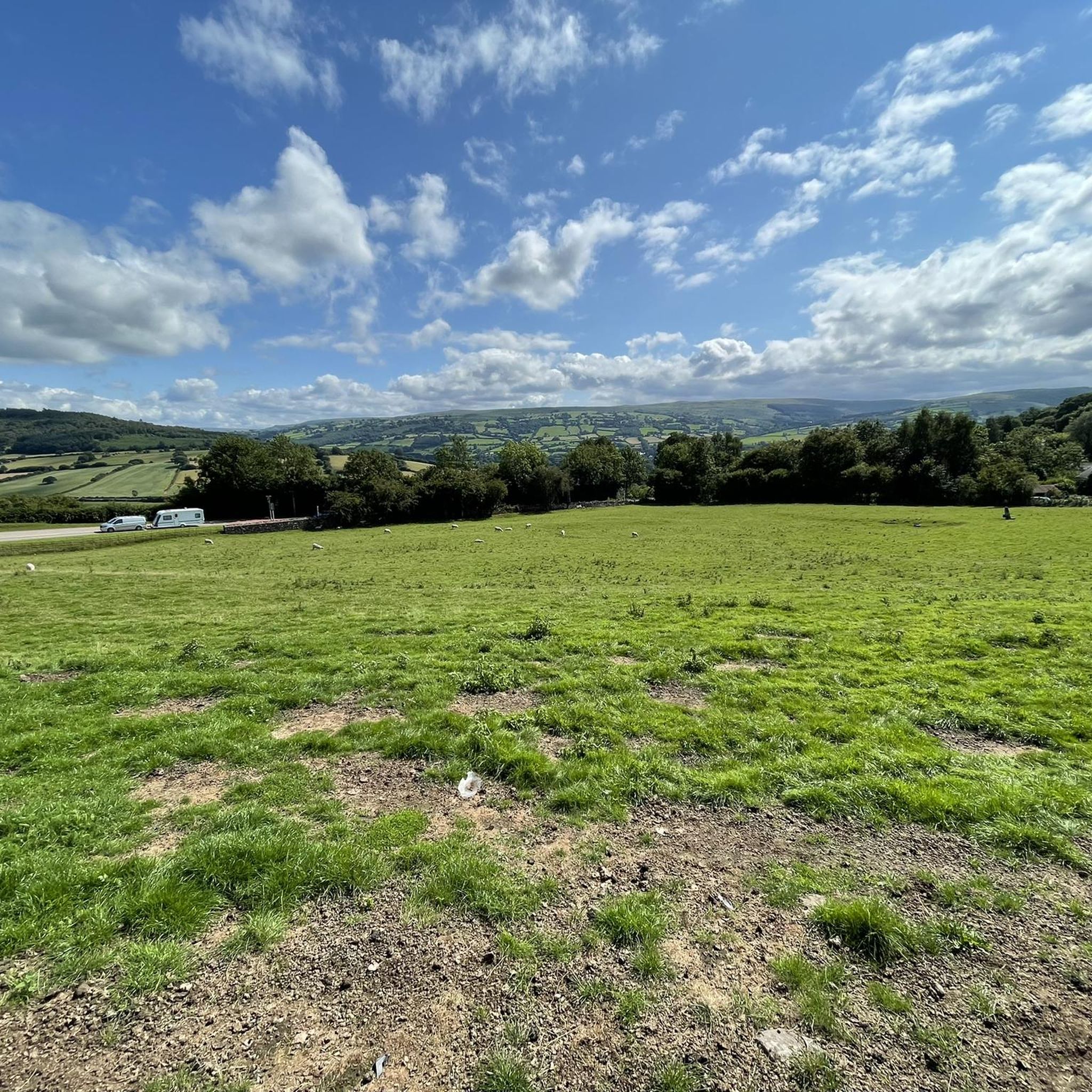
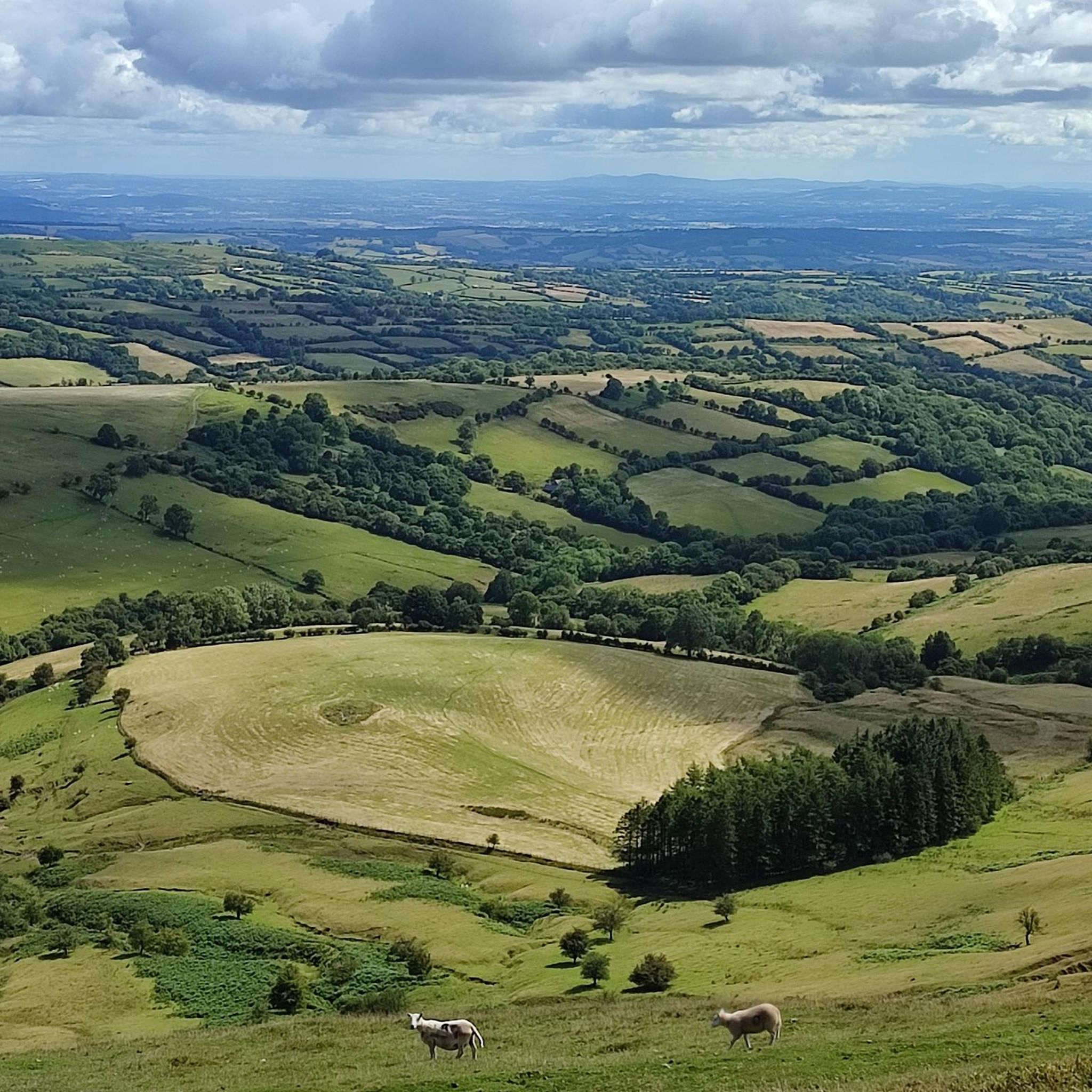
Graig Syfyrddin or just The Graig, is a 423m high hill near Grosmont in north-eastern Monmouthshire, Wales. The summit knoll is known as Edmund's Tump. The hill consists of an isolated mass of the micaceous sandstones of the Brownstones Formation, a unit of the Old Red Sandstone well known from the nearby Black Mountains, of which it can be considered an outlier in both the geographical and geological sense
1
0

Holy Rood Church is a pretty parish church that is synonymous with the Mordiford Dragon; the legend of which has changed with the paintings of it in the church. Holy Rood has a 12th century core with a 13th century but was largely rebuilt in 1811 after flooding. It is Grade II-listed.
1
0
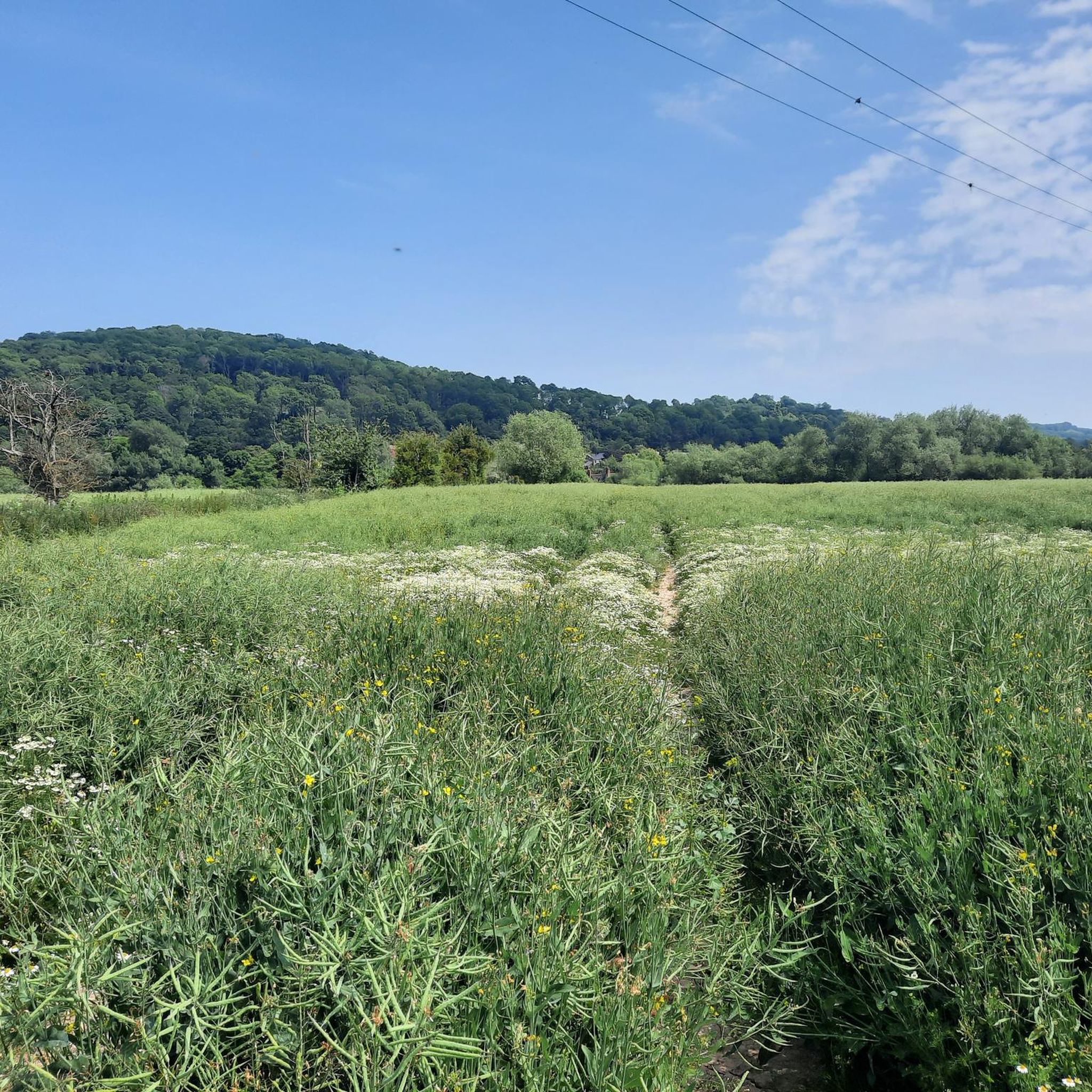
Capler Camp is a large Iron Age hill fort on Capler Hill overlooking the Wye Valley. Many of the ramparts and ditches are still visible today and you are afforded a lovely view from the fort. Excavations have revealed stone foundations on the site. Roman Coins plus artefacts from the Bronze Age and Iron Age have also been found.
2
0
Frequently Asked Questions
What types of natural monuments can I explore around Much Dewchurch?
The area around Much Dewchurch features a diverse range of natural monuments, including significant geological formations, ancient woodlands, and historical sites integrated into the natural landscape. You can find Iron Age hill forts like Capler Camp Hillfort, prominent summits such as Graig Syfyrddin (Edmund's Tump) Summit, and even unique natural features like Clehonger Waterfall.
Are there any natural monuments with historical significance in the area?
Yes, several natural monuments around Much Dewchurch also hold historical importance. Capler Camp Hillfort is a large Iron Age hill fort with visible ramparts and ditches. Additionally, Holy Rood Church, Mordiford, a parish church, is considered a natural monument and is associated with the legend of the Mordiford Dragon. You can also visit Higgins' Well, an early 19th-century brickwork well with a local legend.
What are the best natural monuments for panoramic views?
For expansive views, Capler Camp Hillfort offers lovely vistas overlooking the Wye Valley. Further afield, Garway Hill, a prominent natural landmark near Much Dewchurch, provides panoramic views stretching across Wales' Black Mountains and the Wye Valley.
Are there family-friendly natural monuments around Much Dewchurch?
Yes, Holy Rood Church, Mordiford is categorized as family-friendly, offering a blend of history and local legend that can be engaging for all ages. While specific family-friendly trails are not detailed for all monuments, the general landscape of rolling hills and woodlands provides opportunities for gentle exploration suitable for families.
What kind of geological features can be found in the Much Dewchurch area?
The geology of Herefordshire, including the Much Dewchurch area, is predominantly characterized by Devonian Old Red Sandstones. This contributes to the region's distinctive upland topography. For example, Graig Syfyrddin (Edmund's Tump) Summit consists of micaceous sandstones of the Brownstones Formation, an outlier of the Black Mountains. The Herefordshire & Worcestershire Earth Heritage Trust works to protect and promote these significant geological features.
What outdoor activities can I do near these natural monuments?
Beyond exploring the natural monuments themselves, the region offers various outdoor activities. You can find numerous cycling routes, including touring bicycle options like the 'Kilpeck Church and Churchyard – Locks Garage Farm Shop & Café loop from Belmont Rural', and road cycling routes such as the 'Foy Suspension Bridge – Fawley Court loop from Kilpeck'. There are also running trails, including 'The Old Bridge, Hereford – Hereford Cathedral loop from Belmont Rural'. You can find more details on these activities in the cycling around Much Dewchurch, road cycling routes around Much Dewchurch, and running trails around Much Dewchurch guides.
Are there specific hiking trails associated with the natural monuments?
While specific trails for each natural monument are not detailed, many of them, like Capler Camp Hillfort and Graig Syfyrddin (Edmund's Tump) Summit, are accessible via intermediate-difficulty paths. Aconbury Woods, a quiet woodland near Much Dewchurch, also offers trails leading to viewpoints amidst ancient trees, suitable for moderate hikes.
What is the best time of year to visit the natural monuments in Much Dewchurch?
The natural monuments around Much Dewchurch can be enjoyed throughout the year. Spring and summer offer lush greenery and pleasant weather for hiking and exploring. Autumn brings beautiful fall colors to the woodlands and rolling hills. Even in winter, a visit can be rewarding, especially after rainfall when Clehonger Waterfall is at its best.
Can I find ancient trees in the Much Dewchurch area?
While specific ancient trees directly within Much Dewchurch are not highlighted, the broader Herefordshire region is known for its ancient trees, particularly yew trees often found in churchyards. These venerable trees are considered 'living monuments' due to their longevity and ecological value, suggesting similar remarkable specimens could be found in the parish or its immediate surroundings.
What should I know about parking and public transport when visiting?
Information on specific parking facilities or public transport access for each individual natural monument is not readily available. It is generally advisable to research local parking options for the specific monument you plan to visit. For public transport, services in rural Herefordshire can be limited, so planning your journey in advance is recommended.
What do visitors enjoy most about the natural monuments around Much Dewchurch?
Visitors appreciate the blend of natural beauty and historical significance. The panoramic views from locations like Capler Camp Hillfort are highly rated. The unique local legends associated with sites like Holy Rood Church, Mordiford and Higgins' Well also add a captivating dimension to the experience. The tranquility of the woodlands and the characteristic rolling hills of Herefordshire are also frequently mentioned as highlights.
Most popular attractions around Much Dewchurch

Get inspired with the komoot mobile app


Explore more
Extend your search for the best caves by checking out these guides of the top ones around Much Dewchurch:
