Top 9 Natural Monuments around Ebbesborne Wake
Best natural monuments around Ebbesborne Wake are found within a landscape of rolling chalk hills and diverse natural features. The area, nestled in the Chalke Valley and Cranborne Chase Area of Outstanding Natural Beauty, offers opportunities to explore significant chalk grassland habitats and historical earthworks. It is characterized by verdant meadows and a rich variety of wildflowers and butterflies.
Best natural monuments around Ebbesborne Wake
- The most popular natural monuments is Win Green Summit, a historical site that is…
Last updated: July 1, 2026
Win Green Summit
Highlight • Historical Site
Tip by

Bokerley Dyke
Highlight • Trail
Tip by

Sign up now to discover places like this
Get recommendations on the best single tracks, peaks, & plenty of other exciting outdoor places.
Sign up for free
Fontmell Down
Highlight (Segment) • Viewpoint
Tip by
Knowle Hill
Highlight (Segment) • Natural Monument
Tip by

Bluebell Fields in Cranborne Chase & West Wiltshire Downs
Highlight • Forest
Tip by

Sign up for free to discover even more natural monuments around Ebbesborne Wake.
Sign up for free
Already have an account?
Start today with a free account
Your next adventure awaits.
Login or Signup


Tips from the Community

Fontmell Down is a Site of Special Scientific Interest (SSSI) and a nature reserve located in Dorset, England, within the Cranborne Chase Area of Outstanding Natural Beauty. It is known for its beautiful chalk downland, rich biodiversity, and panoramic views. The down is a steep, sinuous flank of a chalk plateau, offering extensive views across the Blackmore Vale, a landscape featured in the novels of Thomas Hardy. The chalk was formed about 100 million years ago from microscopic plants, and the down's steep-sided dry valleys were created by periglacial meltwater erosion during the last Ice Age. Earthworks visible on the down are much more recent, including those from a golf course that was present in the 1930s. In 1645, the downs were the site of an assembly of 3,000 Dorset "Clubmen," who were local residents protesting against the armies of both sides in the English Civil War.
0
0
Bokerley Dyke is a substantial linear earthwork, approximately 5.75 kilometers (3.6 miles) long, located on Cranborne Chase. It runs along part of the border between Dorset and Hampshire, specifically between Woodyates and Martin. It is part of a larger Scheduled Monument that also includes Grim's Ditch and other earthworks. The dyke has a multi-period history. It is believed to have originated in the Bronze Age or Early Iron Age as an important political and cultural boundary. In the 1st century, it was cut through by a Roman road, Ackling Dyke, which ran between Old Sarum and Badbury Rings. In the 4th century, the dyke was remodeled and brought back into use. During this period, the Roman road was blocked. A coin of Valens found during excavations dates this activity to shortly after 364 AD, with some sources suggesting it was built between 367-368 AD. This remodeling may have been a defensive measure against attacks on Britain by Picts, Scots, and Saxons. The Roman road was eventually reopened, but the dyke may have continued to be used as a boundary after the Roman administration ended. Today, it still forms part of the border between the counties of Dorset and Hampshire.
0
0

End of April is the best for bluebells
1
0
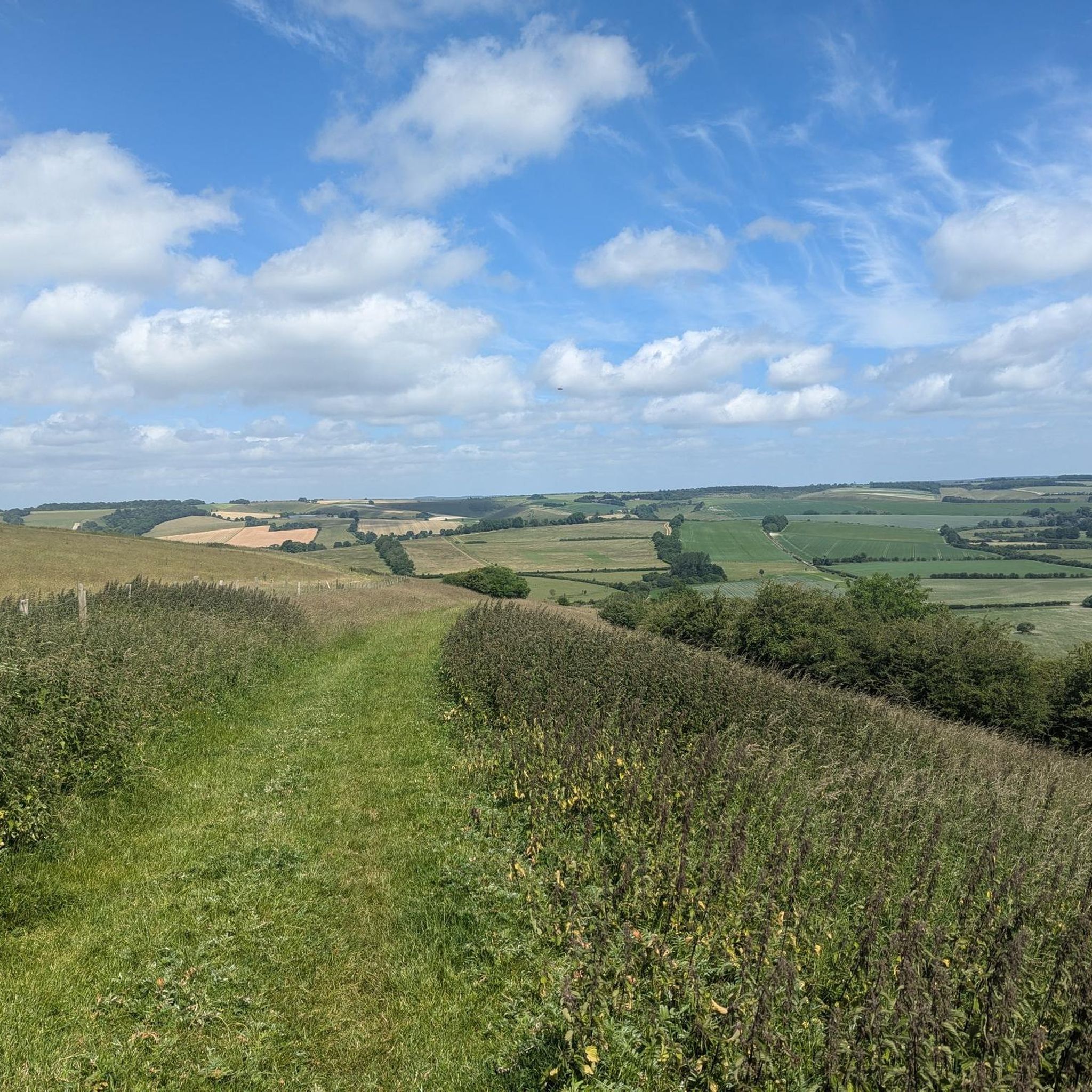
One of the most beautiful places in the south of England 🏴 and amazing views of Wiltshire and Dorset 🤩
0
0

Win Green at 277 m is the highest point on Cranbourne Chase. The tree topped summit also has a Bronze Age hill barrow, topography stone and trig point. Lots of great running loops from here as well as easy parking close by.
0
0
Walk here in the spring to find carpets of bluebells under the trees. The woods are great for other wildflowers as well, such as celandines, primroses and the tall spears of great mullein and foxgloves.
1
0
Win Green hill at 277m is the highest point on Cranborne Chase. The trig point affords panoramic views apart from the bit blocked by the little clump of trees on the summit. The beech trees are growing on a Bronze Age bowl barrow. It's managed by the National Trust and is often busy because it's close to a car park. Still very nice though!
0
0

Bokerley Dyke may have originated in the Bronze Age or Early Iron Age and formed a political and cultural boundary. It was cut through by a Roman Road (Ackling Dyke running between Old Sarum and Badbury Rings) in the 1st century.
0
0
Frequently Asked Questions
What natural features can I explore around Ebbesborne Wake?
The area around Ebbesborne Wake is rich in natural beauty, characterized by rolling chalk hills, verdant meadows, and the meandering River Ebble. You can explore significant chalk grassland habitats like Prescombe Down, known for its abundant wildflowers and butterflies. Another excellent spot is Fontmell Down, a nature reserve offering panoramic views and diverse chalk downland. In spring, don't miss the Bluebell Fields in Cranborne Chase & West Wiltshire Downs for stunning floral displays.
Are there historical natural monuments to visit in the area?
Yes, the region features several natural monuments with significant historical importance. Win Green Summit is not only the highest point in Cranborne Chase with panoramic views but is also crowned by beech trees atop a Bronze Age bowl barrow. Another notable site is Bokerley Dyke, a substantial linear earthwork with a multi-period history, originating as a boundary ditch in the Bronze Age or Early Iron Age.
What is the best time to visit the natural monuments for wildlife and wildflowers?
The summer months are ideal for experiencing the vibrant display of wildflowers and butterflies, particularly at sites like Prescombe Down, which is renowned for its species-rich chalk grassland and diverse orchid populations. For bluebells, late April is the best time to visit the Bluebell Fields in Cranborne Chase & West Wiltshire Downs.
Are there family-friendly natural monuments around Ebbesborne Wake?
Many natural monuments in the area are suitable for families. The Bluebell Fields in Cranborne Chase & West Wiltshire Downs offer gentle walks through enchanting woodlands, perfect for children. Win Green Summit also provides a rewarding experience with its panoramic views and open spaces, though some paths may be uneven.
What kind of views can I expect from the natural monuments?
The natural monuments around Ebbesborne Wake offer breathtaking panoramic views. From Win Green Summit, you can see across Blackmore Vale and the Salisbury Plain, with views extending to the Isle of Wight on clear days. Fontmell Down also provides magnificent views across the Blackmore Vale, a landscape famously featured in Thomas Hardy's novels. Knowle Hill offers great views across Cranborne Chase.
What outdoor activities can I do near these natural monuments?
The area is excellent for various outdoor activities. You can find numerous hiking and walking routes that explore the rolling hills and valleys. For detailed hiking options, check out the Hiking around Ebbesborne Wake guide. Cycling is also popular, with routes like the Gussage Hill and Knowlton Henge loop. For more cycling adventures, explore the Cycling around Ebbesborne Wake guide or the Road Cycling Routes around Ebbesborne Wake guide.
Are there specific hiking trails near the natural monuments?
Yes, there are many trails that allow you to explore the natural monuments. For instance, you can find routes that incorporate Win Green Summit, offering a 6-mile walk through the Rushmore Estate. The Chalke Valley itself provides a network of footpaths and bridleways for varied terrain and scenic views. For a comprehensive list of trails, refer to the Hiking around Ebbesborne Wake guide.
What should I wear when visiting the natural monuments?
Given the outdoor nature of these sites, it's advisable to wear comfortable walking shoes or hiking boots, as paths can be uneven and muddy, especially after rain. Layered clothing is recommended to adapt to changing weather conditions, and a waterproof jacket is always a good idea. Don't forget sun protection during warmer months.
What is Prescombe Down and why is it significant?
Prescombe Down is a highly significant natural monument near Ebbesborne Wake, designated as a National Nature Reserve (NNR), a Site of Special Scientific Interest (SSSI), and a Special Area of Conservation (SAC). It's internationally important for its species-rich chalk grassland, hosting over 150 wildflower species, including various orchids, and a diverse array of butterflies like the adonis blue. It offers stunning panoramic views and is easily reachable on foot from Ebbesbourne Wake.
What do visitors enjoy most about the natural monuments around Ebbesborne Wake?
Visitors frequently highlight the stunning panoramic views, especially from Win Green Summit and Fontmell Down. The rich biodiversity, particularly the wildflowers and butterflies in summer, is also a major draw. Many appreciate the peaceful atmosphere and the opportunity for invigorating walks through the picturesque countryside, often noting the well-maintained trails and the chance to spot wildlife.
Are there any natural monuments that are good for spotting wildlife?
Yes, the entire Cranborne Chase Area of Outstanding Natural Beauty, where Ebbesborne Wake is located, is important for wildlife. Prescombe Down is particularly noted for its diverse array of butterflies, including the adonis blue and marsh fritillary, and green woodpeckers feeding on anthills. Fontmell Down is also known for its excellent butterfly populations. The wider area supports various bird species like skylarks and buzzards.
Can I find circular walks that include these natural monuments?
Yes, the network of footpaths and bridleways in the Chalke Valley and Cranborne Chase allows for many circular routes. For example, there are running loops from Win Green Summit. Many of the routes listed in the Hiking around Ebbesborne Wake guide are designed as loops, such as the Broad Chalke & Fifield Bavant loop.
Most popular attractions around Ebbesborne Wake

Get inspired with the komoot mobile app


Explore more
Extend your search for the best caves by checking out these guides of the top ones around Ebbesborne Wake:
