Top 13 Natural Monuments around Kidderminster
Best natural monuments around Kidderminster feature diverse ecological landscapes and unique geological formations. The region offers significant green spaces for outdoor exploration. These sites are valued for their biodiversity and scenic beauty, providing varied experiences for visitors. Kidderminster's landscape is a place to explore natural features.
Best natural monuments around Kidderminster
- The most popular natural monuments is The Four Stones, Clent Hills, a man-made monument at the top of the Clent Hills. While they look prehistoric, they were erected around 1763 and are supposedly aligned with the solstice sunset, offering views. A gentle climb up this hill provides good views.
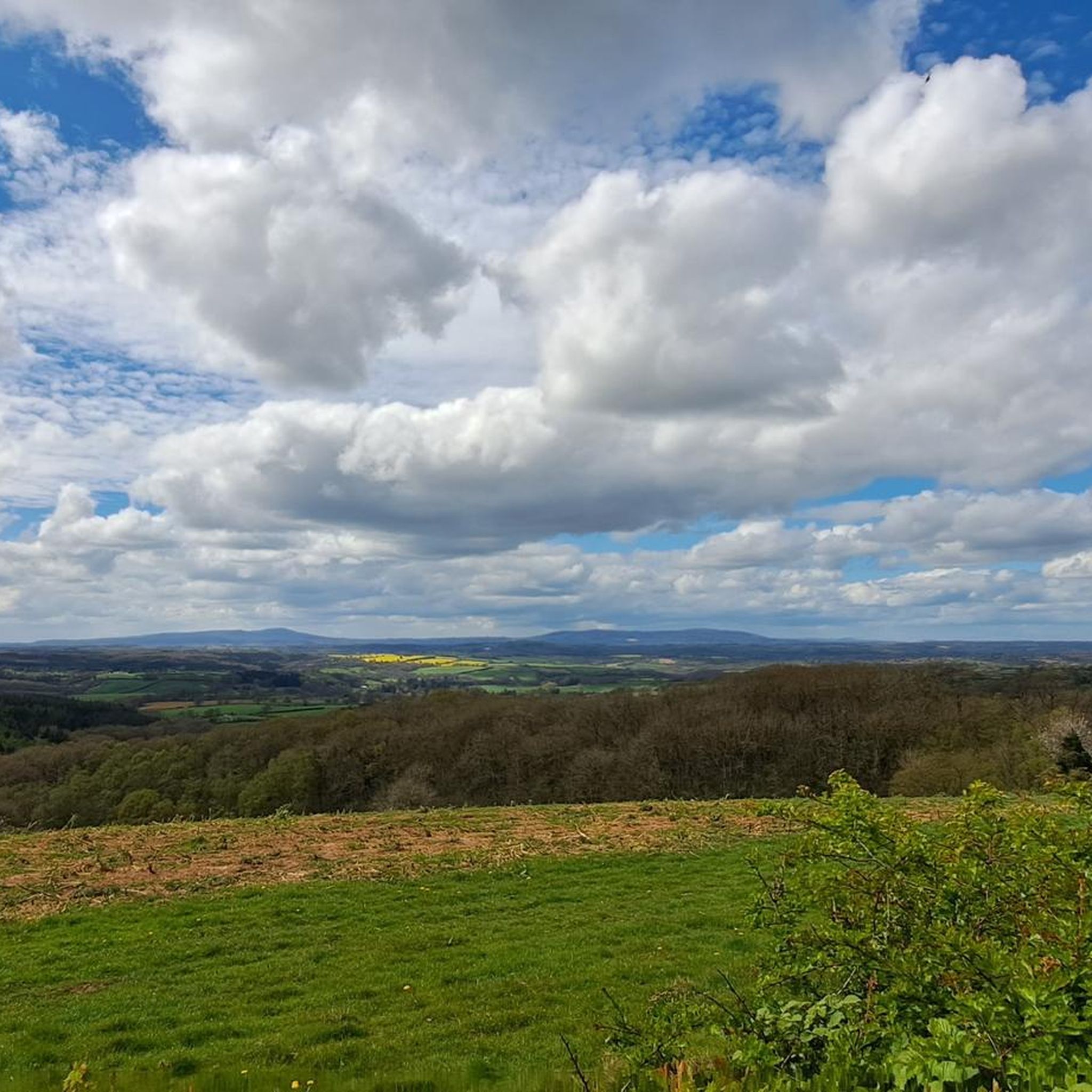
- Another must-see spot is Kinver Edge, a high sandstone ridge adorned by heathland and woodlands. A ramble along the escarpment rewards visitors with dramatic views that include the Clent Hills, Shropshire Hills, Wenlock Edge, and the Malvern Hills.
- Visitors also love Chaddesley Wood National Nature Reserve, an ancient woodland with parts dating back to the Ice Age. This reserve features mature oak, hazel coppice, and rare plant species, providing habitat for various birds and invertebrates.
- Kidderminster is known for its ancient woodlands, sandstone formations, and diverse nature reserves. The area offers a variety of natural monuments to see and explore, from historical cave dwellings to significant wetland ecosystems.
- The natural monuments around Kidderminster are appreciated by the komoot community, with 86 upvotes and 24 photos shared by visitors.
Last updated: August 22, 2026
Kinver Edge
Highlight • Historical Site
The escarpment's heathland is inhabited by all manner of flora and fauna. You can often spot adders and common lizards, as well as bird species such as skylarks, buzzards and great spotted woodpeckers.
The Edge's famous rock houses are cave dwellings that were excavated into the scarp's sandstone. One of the rocks, known as Holy Austin, was inhabited as recently as the 1960s. Today, they are owned by the National Trust and are open to the public.
Tip by

The Four Stones, Clent Hills
Highlight • Viewpoint
Tip by

Sign up now to discover places like this
Get recommendations on the best single tracks, peaks, & plenty of other exciting outdoor places.
Sign up for free
Chaddesley Wood National Nature Reserve
Highlight • Natural Monument
Visitors to the eastern half of the nature reserve will find themselves in ancient woodland that is predominantly mature oak with hazel coppice. The understorey also contains holly, rowan and other berry-bearing shrubs that are popular with winter thrushes such as fieldfares. Midland hawthorn thrives here – a rare shrub that is identified by the two seeds in its berries as opposed to the normal one. Open glades are important for invertebrates and encourage shrubby growth, which provides nesting cover for birds. Some old and dead oaks are retained for hole-nesting birds, fungi and invertebrates. At the right time of year the wood is full of birdsong and lucky visitors may catch a glimpse of the elusive woodcock.
There are also two areas of meadow, although these are only accessible on special open days. Hockley Meadow and Black Meadow are old pastures with wildflowers such as knapweed, dyer’s greenweed, pepper saxifrage and adder’s-tongue fern. The meadows are grazed to maintain their floral interest.
The western half of the reserve is a largely planted woodland of broad-leaved species and extensive areas of conifer. The conifers wouldn’t normally grow here and we’re gradually clearing these and replacing them with native hardwoods that are more suitable to the local geology and attract summer migrants like chiffchaff and blackcap. Crossbills sometimes breed in the conifer plantations – their unusual beak structure of crossed tips allows them to feed on the seeds.
A Worcestershire speciality, land caddis, occurs at Chaddesley Woods. A national rarity, this is the only one of almost two hundred species of caddis fly that spends its entire life-cycle on land. It burrows in leaf litter and adults only live for a couple of weeks in autumn.
Tip by

Worcestershire Natural Flood Management Project – Leaky Dams in Wyre Forest
Highlight • Natural Monument
The aim of this project is to reduce flooding in
the Dowles Brook catchment, by implementing at large number of small scale, natural interventions in upstream areas to help slow the flow of water and hold it back during times of high flows. These measures involve working on the tributaries of the Dowles Brook and could include things such as planting hedges, creating wetland areas. attenuation ponds, leaky dams, soll aeration and other land management techniques
The intention is to slow the flood peak on the
Dowdes so it does not coincide with the flood
peak on the River Severn at Bewdley.
Water moving at speed through the landscape is incredibly destructive and leads to erosion, soil loss and widespread damage, therefore slowing down the water has a wealth of positive impacts.
It is the intention that many more features will be installed over the riext few years with the aim of slowing the flow throughout the catchment.
If you would like more information, or are
a landowner who is keen to get involved.
please contact the NFM Project Officer al
Worcestershire County Council.
worcestershire.gov.uk/NFM
Natural Flood Management - Leaky Dams
Trees are sourced from the immediate stream side and used to build a lattice. Over time, especially in high flow, smaller woody debris accumulates naturally, and this increases the effectiveness of the leaky dam.
The dars are wedged behind living tree stumps to prevent them moving or floating away, over time they bed in and naturalise as part of the landscape.
Leaky dams work with nature, providing a food source and habitat for wildlife. This timber lattice allows wildlife, such as fish, to move freely upstream and downstream.
Leaky dams are constructed to allow free passage of water in normal flows, and only hold water back when required during high rainfall. The backed up water is pushed out of the channel into appropriate sites upstream where silts are deposited.
A single structure has little impact, but a series of leaky dams at various locations can help reduce the risk of flooding downstream.
Felling by the river bank allows more sunlight to reach the watercourse and its banks. This leads to the growth of marginal vegetation, creating further food sources and habitats for wildlife.
Tip by

Redstone Caves
Highlight • Natural Monument
The Geopark Way, a long-distance footpath specialising in geological marvels in the area, runs unsurprisingly right past these caves.
Tip by

Sign up for free to discover even more natural monuments around Kidderminster.
Sign up for free
Already have an account?
Start today with a free account
Your next adventure awaits.
Login or Signup

Tips from the Community

The Wyre Forest Beaver enclosure is worth stopping at. Can't guarantee to see any but you never know 😁
0
0


Worth a visit not only at sunset!
1
0


The Four Stones were erected by Lord Lyttelton of Hagley Hall in the 18th century. Brilliant views over nearby Walton Hill and further towards the Cotswolds, Shropshire Hills and the Welsh Borders.
0
0

Geological overview Just south of Stourport a magnificent river cliff of fine grained red sandstone is seen. Although mainly homogenous in terms of geology, there are white streaks and thin bands of coarse material running throughout the section. The soft sandstone of Redstone Rock is easily carved and there is evidence of human-made habitation in the cliff face since Stone Age times. The caves that can be seen today were mostly made in the 12th century, when a hermitage was established there, conveniently located for the hermits to be on hand to offer blessings and prayers for passers-by in return for alms. It was said to house up to 500 men, who may have also manned the ferry crossing, which was there due to the presence of a ford until the river was dredged. The caves were later used as domestic dwellings and were inhabited almost continuously until the mid twentieth century. Source: Geopark.org
0
0

The Four Stones is a striking monument at the top of the Clent Hills. While they look prehistoric, they were erected around 1763 at the behest of an eccentric landowner. Nevertheless, the characterful stones are supposedly aligned with the solstice sunset and offer a magnificent view at all times of the year.
3
1
Frequently Asked Questions
What are some of the most popular natural monuments around Kidderminster?
Visitors frequently enjoy The Four Stones, Clent Hills, known for its striking monument and magnificent views. Kinver Edge is also very popular for its high sandstone ridge, heathland, and the unique Holy Austin Rock Houses. Another favorite is Chaddesley Wood National Nature Reserve, an ancient woodland with rich biodiversity.
What unique geological features can I explore near Kidderminster?
The region offers several distinctive geological sites. Kinver Edge features a prominent sandstone ridge and ancient cave dwellings carved into the rock. Habberley Valley Local Nature Reserve boasts Peckett Rock, a dramatic 120-foot vertical red sandstone survival. Further afield, the Redstone Caves, carved from Triassic sandstone, offer a fascinating glimpse into the area's geological past and human history.
Are there family-friendly natural monuments around Kidderminster?
Yes, several natural monuments are suitable for families. The Four Stones, Clent Hills offers a gentle climb and good views, making it accessible for most. The vast Wyre Forest National Nature Reserve provides extensive opportunities for family walks and exploring nature. Many local nature reserves like Spennells Valley and Burlish Top also have improved footpaths ideal for leisurely family strolls.
Where can I go for a walk or hike near these natural monuments?
You can enjoy rambling along the escarpment at Kinver Edge, which offers dramatic views. The Chaddesley Wood National Nature Reserve provides trails through ancient woodland. For more extensive hiking, the Wyre Forest National Nature Reserve offers vast ancient woodlands with numerous hidden trails. Habberley Valley Local Nature Reserve is also great for nature walks, with the dramatic Peckett Rock providing a rewarding climb.
What kind of wildlife can I expect to see at Kidderminster's natural monuments?
The natural monuments around Kidderminster are rich in biodiversity. At Kinver Edge, you might spot adders, common lizards, skylarks, buzzards, and great spotted woodpeckers. Habberley Valley is home to all three types of woodpecker, buzzards, tawny owls, sparrowhawks, adders, slow worms, common lizards, and rare invertebrates. Spennells Valley and Blake Marsh are important for wetland birds like snipe and water rail, while Wyre Forest is known for pearl-bordered fritillary butterflies and diverse woodland species.
Are there any historical sites integrated with the natural monuments?
Yes, history is often intertwined with nature in this region. Kinver Edge features the Holy Austin Rock Houses, ancient cave dwellings inhabited until the 1960s. The Redstone Caves, carved from Triassic sandstone, were once a 12th-century hermitage and later housed up to 500 men. Chaddesley Wood National Nature Reserve is an ancient woodland with parts dating back to the Ice Age, possibly mentioned in the Domesday Book.
What outdoor activities, besides walking, can I do near these natural monuments?
The area around Kidderminster offers various outdoor activities. You can find excellent routes for gravel biking, running, and cycling. For gravel biking, consider routes like 'The Bonded Warehouse – Canal Towpath Near Wombourne loop from Kidderminster' or 'Kinver Clock Tower – Bratch Locks loop from Kidderminster'. Running enthusiasts can explore 'Weir loop from Kidderminster' or 'Canal Towpath Near Wombourne – Scenic Canal Towpath loop from Kidderminster'. Cyclists have options like 'Cookley Tunnel – Canal Towpath Near Wombourne loop from Kidderminster'. You can find more details on these activities in the Gravel biking around Kidderminster, Running Trails around Kidderminster, and Cycling around Kidderminster guides.
Are there any natural monuments focused on wetland ecosystems?
Yes, Spennells Valley Local Nature Reserve, located southeast of Kidderminster, is a significant wetland site along the Hoo Brook. It features marshland, dry woodland, and damp woodland, with nationally rare black poplar. Blake Marsh Local Nature Reserve also offers marshland and wet woodland habitats, supporting southern marsh orchids and various wetland creatures. Stourvale Local Nature Reserve is another wetland site bordered by the River Stour, forming part of the larger Stour Valley wetland corridor.
Where can I find open acid grassland or heathland habitats?
Habberley Valley Local Nature Reserve is largely composed of open acid grassland and heathland in its southern parts, transitioning to birch and oak woodland. Kinver Edge also features extensive heathland. Additionally, Burlish Top Local Nature Reserve is recognized for having the best quality acid grassland in the county, supporting a variety of wildlife including common lizards and rare solitary bees.
What is the Wyre Forest National Nature Reserve known for?
The Wyre Forest National Nature Reserve is a vast and ancient woodland, covering over 6,500 acres. It's characterized by its ancient trees, hidden trails, and abundant wildlife, including the rare pearl-bordered fritillary butterflies. It's also part of a natural flood management project, utilizing leaky dams to help slow water flow and reduce erosion, which you can learn more about at the Worcestershire Natural Flood Management Project – Leaky Dams in Wyre Forest highlight.
Are there any nature reserves near Kidderminster that are managed for conservation?
Many of the natural monuments are actively managed for conservation. Chaddesley Wood National Nature Reserve is a prime example, with ongoing efforts to replace conifer plantations with native hardwoods. Spennells Valley Local Nature Reserve has seen recent projects to expand the reserve and construct ponds to enhance biodiversity. The Wyre Forest also incorporates natural flood management techniques to protect its ecosystem. You can find more information about Habberley Valley, Spennells Valley, Burlish Top, and Stourvale nature reserves on the Wyre Forest District Council website.
What do visitors enjoy most about the natural monuments around Kidderminster?
Visitors particularly appreciate the stunning views, such as those from The Four Stones, Clent Hills, and the panoramic vistas from Kinver Edge. The unique historical aspect of the rock houses at Kinver Edge and the Redstone Caves also captivates many. The tranquility and rich biodiversity of ancient woodlands like Chaddesley Wood National Nature Reserve and the vast Wyre Forest are also highly valued for immersive nature experiences.
Most popular routes around Kidderminster
Most popular attractions around Kidderminster

Get inspired with the komoot mobile app


Explore more
Extend your search for the best caves by checking out these guides of the top ones around Kidderminster:
