Top 11 Natural Monuments around Meløy
Best natural monuments around Meløy include a diverse landscape of glaciers, alpine peaks, and an extensive island archipelago. This region in Northern Norway features deep fjords and mountains rising directly from the sea. Meløy offers a range of natural features for exploration, from glacial tongues to coastal islands. The area is characterized by its dramatic contrasts and varied terrain.
Best natural monuments around Meløy
- The most popular natural monument is Svartisen Glacier, a natural monument that is Norway's second…
Last updated: October 15, 2026
Svartisen Glacier
Highlight • Natural Monument
First we took the Isprins ferry across the Hollandsfjord. From the pier to the “Engabreen” tongue …
Translated by Google •
Tip by

Svartisen Glacier and Lake
Highlight • Natural Monument
Translated by Google •
Tip by

Sign up now to discover places like this
Get recommendations on the best single tracks, peaks, & plenty of other exciting outdoor places.
Svartisvatnet Glacial Lake
Highlight • Lake
Translated by Google •
Tip by
Finnes Rock Spires
Highlight • Natural Monument
Tip by

Finnesfjellet
Highlight • Summit
Translated by Google •
Tip by

Sign up for free to discover even more natural monuments around Meløy.
Already have an account?
Tips from the Community

The Finnes are impressive rocky peaks that rise about 25 meters above the ground. They form a stunning group of towers between which you can admire different panoramic views.
0
0

The parking situation directly in Finnes at the start of the hike is very bad and only a few normal cars can find space at all. Instead, we found a nice place for our camper a little outside the village (plus code for location => XPCV+34V Finnes, Norway). From the parking lot you can even access the sea over the stones and cool off after the hike.
0
0
The parking situation directly in Finnes at the start of the hike is very bad and only a few normal cars can find space at all. Instead, we found a nice spot for our camper a little outside the village (plus code for location => XPCV+34V Finnes, Norway). It is directly below the rocky peaks and can even be seen from above. From the parking lot you can even access the sea over the rocks and cool off after the hike.
0
0

HISTORY: The area around Meløy has been completely or partially covered by glaciers several times. Around 20,000 years ago, the inland ice was at its greatest extent during the last ice age. In contrast, the glacier was completely ice-free 8,000 and 6,000 years ago. It was only as a result of large amounts of precipitation and a colder climate that the glacier began to grow again 2,500 years ago. In 1750, the glacier tongue was around two kilometers closer to the fjord than it is today. This can be attributed to the visible moraine ridge left by the glacier north and west of Engenbrevatn. The Østertal ice split into two glacier arms around 100 years ago. The eastern one reached as far as the Svartisen glacier lake. Over the next 50 years, the glacier retreated considerably and no longer reached the lake. In 1910 the glacier front was only 50 metres from the glacier lake, but by 1945 it was already 1000 metres away. As the glacier retreated, another glacier lake was formed on the western edge of the glacier arm. As the ice continued to retreat, the lake grew larger from year to year.
1
1
The Svartisen ("black ice") is the second largest glacier in Norway at 370 square kilometers and is located in Nordland Fylke, just below the Arctic Circle, in the impressive Saltfjellet-Svartisen National Park northwest of the town of Mo i Rana. It has a total of 60 glacier arms. The Glomtal lies between the two main glaciers, the East (Østertaleis) and the West Ice. The Svartisen extends almost all the way down into the Holandsfjord, making it the glacier closest to sea level in Europe.
2
0

Good shoes, sure-footed (sometimes very slippery)
0
0

If you are on the coastal path, you should definitely make a detour here. First we took the Isprins ferry across the Hollandsfjord. From the pier to the “Engabreen” tongue of the second largest Norwegian glacier, Svartisen, it's a relaxed 90 minutes. The panorama is breathtaking throughout. There are a few insurance policies on the mountain itself. Surefootedness and good footwear are essential.
4
1
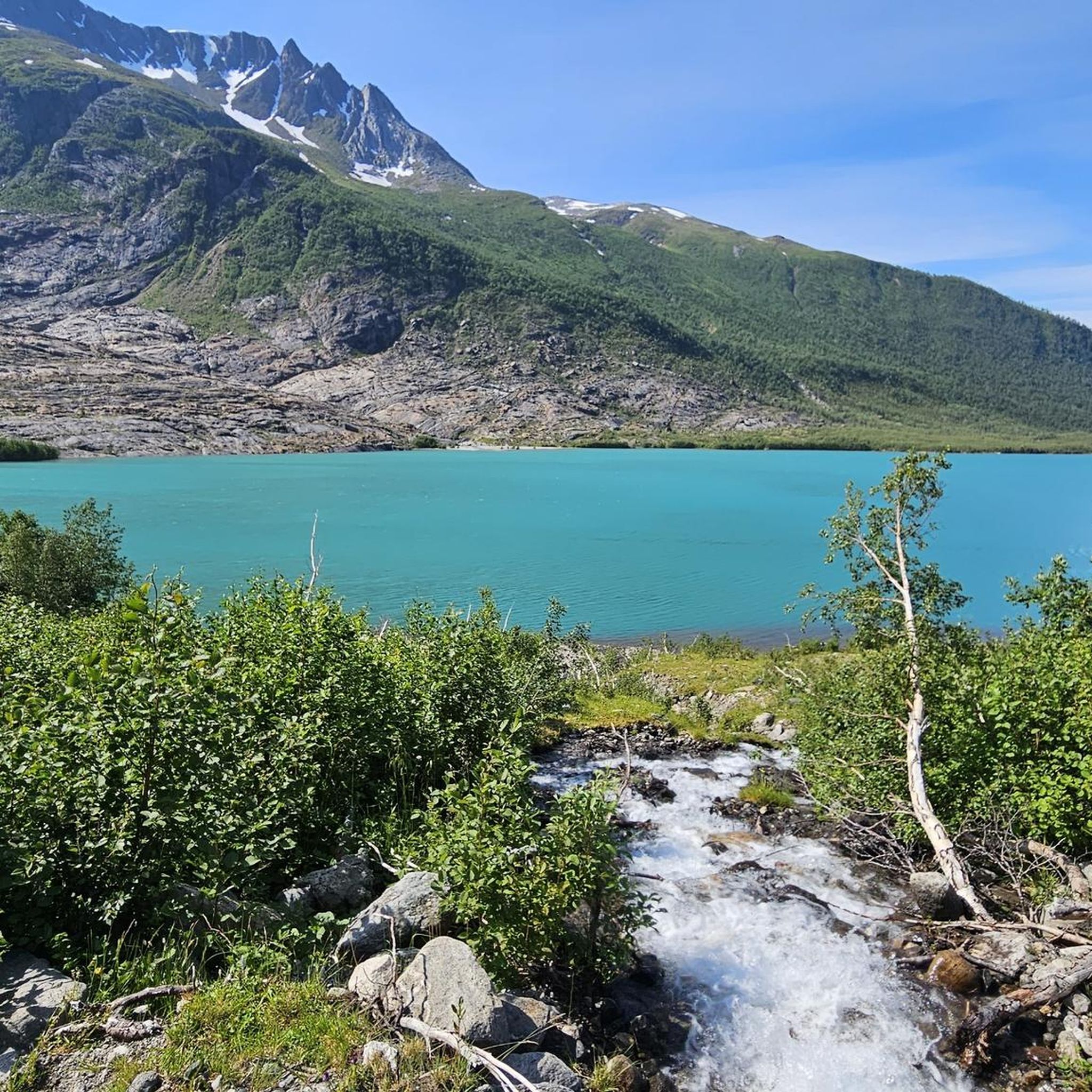
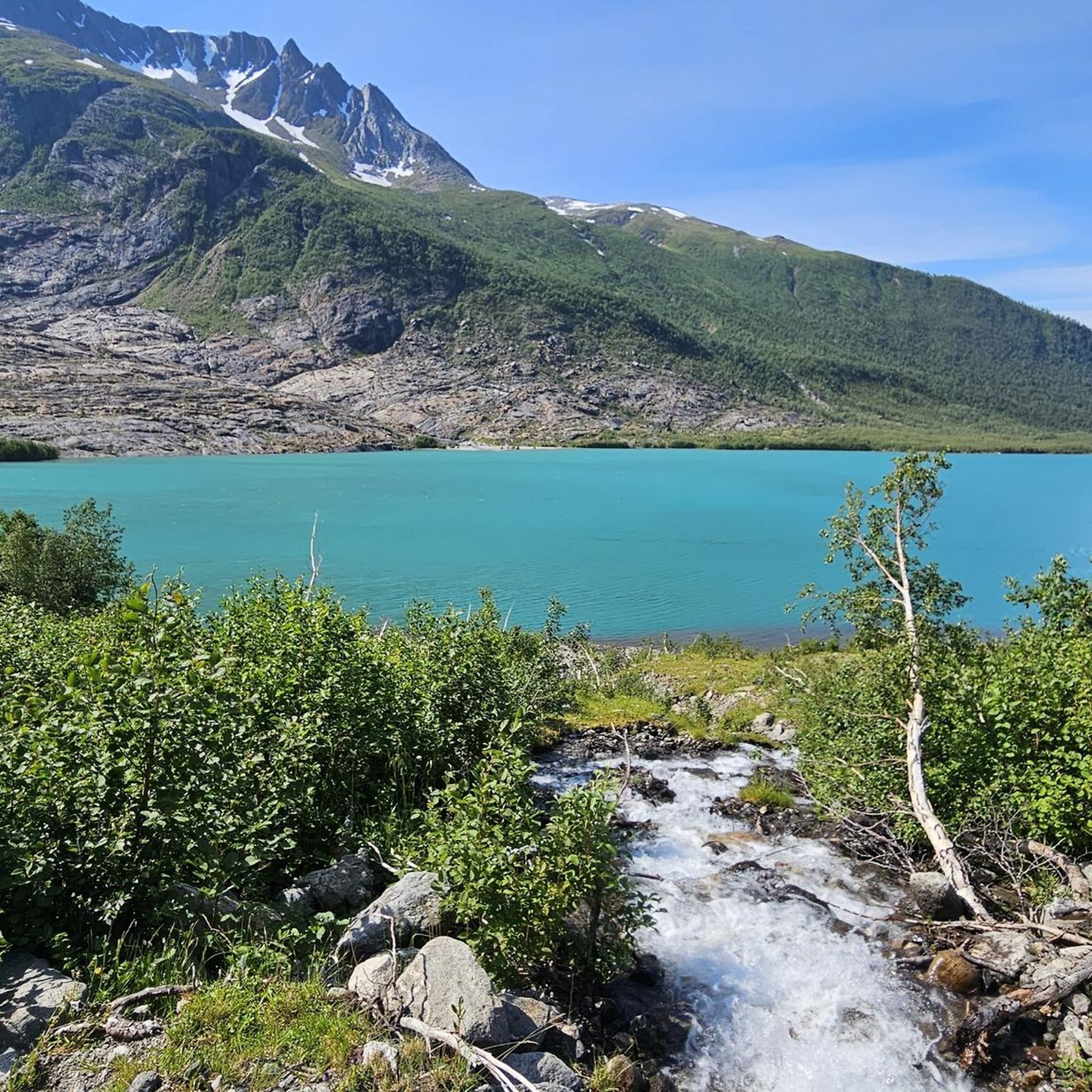
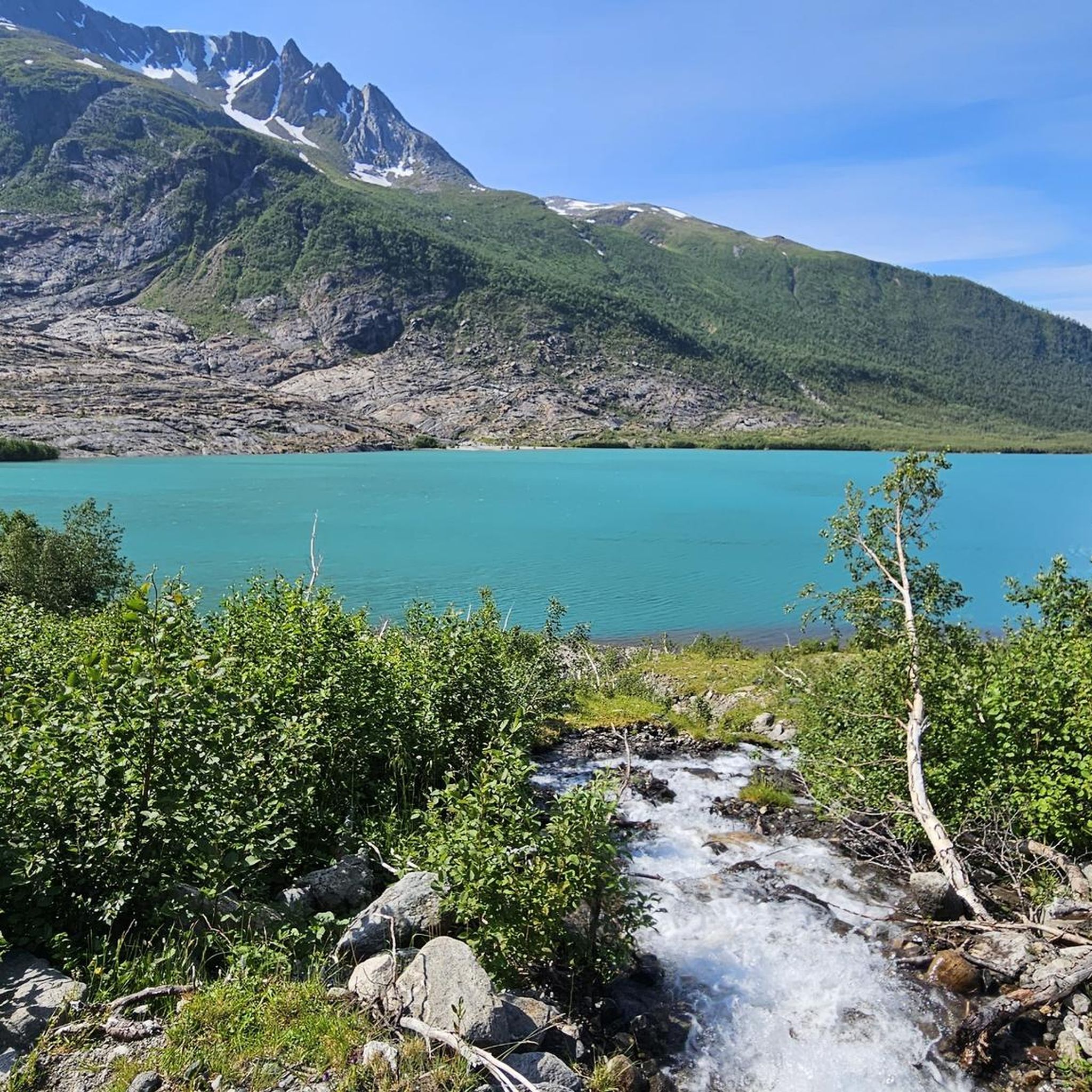
Crystal clear lake that is fed by the meltwater of the Svartisen glacier.
1
0
Frequently Asked Questions
What makes the Svartisen Glacier a significant natural monument in Meløy?
The Svartisen Glacier is Norway's second-largest glacier and a prominent natural monument in Meløy. Its Engabreen arm extends impressively towards Holandsfjorden, making it one of the most accessible glacier tongues in Europe. It's notable for having its lowest point only 20 meters above sea level, making it the deepest glacier on the European mainland. Visitors can take guided glacier hikes or explore the surrounding area, including the Svartisvatnet Glacial Lake, which is fed by its meltwater.
Beyond glaciers, what other natural features can I explore in Meløy?
Meløy offers a diverse range of natural features. You can explore the majestic Meløy Alps, which are mountains rising steeply from the fjords, or discover the vast coastal archipelago with over 755 islands and islets. The region is also deeply cut by several fjords like Glomfjorden, Bjærangsfjorden, and Holandsfjorden, where sheer mountain walls dramatically rise from the water.
Are there hiking opportunities near Meløy's natural monuments?
Yes, Meløy offers numerous hiking opportunities. For instance, you can hike to the Rødøyløva Summit, which features Sherpa-built stone stairs and offers extensive views along the Helgeland coast. There are also trails around the Svartisen Glacier, including routes to the glacier tongue and the glacial lake. For more options, you can explore various hiking routes in the region, such as those found in the Hiking around Meløy guide.
What kind of activities can I do in Meløy's coastal archipelago?
Meløy's coastal archipelago, stretching from Bolgværet to Støttvær, is considered a paddler's paradise. Its sheltered waters and numerous islands are ideal for kayaking and boating, allowing you to explore picturesque fishing villages and secluded harbors. Rib sea rafting trips are also available for a faster way to experience the unique coastal landscape and observe wildlife like sea eagles.
When is the best time of year to visit Meløy's natural monuments?
The best time to visit largely depends on the activities you plan. Summer (June to August) is ideal for hiking, kayaking, and exploring the glaciers and islands, with longer daylight hours and milder temperatures. Winter offers unique experiences in the Meløy Alps for skiing and freeriding, with deep snow and stunning views. Guided glacier hikes on Engabreen are available both during the day and under the midnight sun in summer.
How can I reach the Svartisen Glacier?
To reach the Engabreen arm of the Svartisen Glacier, you typically take a short ferry ride across the Holandsfjord. From the pier, it's a relaxed hike to the glacier tongue. For the Svartisen Glacier Lake, a road leads up to it from Mo i Rana, and in summer, you can take a boat across the fjord.
Are there family-friendly natural monuments or activities in Meløy?
Yes, Meløy offers options for families. The hike to the Engabreen arm of the Svartisen Glacier is generally accessible for families, though sure-footedness is recommended closer to the glacier. Exploring the coastal archipelago by boat or kayak can also be a memorable family activity, offering calm waters and opportunities for wildlife spotting. The Svartisvatnet Glacial Lake also provides a unique and accessible perspective on the glacial environment.
What outdoor sports can I do near Meløy's natural monuments?
Besides hiking, Meløy offers opportunities for various outdoor sports. The Meløy Alps are popular for ski touring and freeriding in winter, with the Glomfjord Alpine Centre providing access to excellent mountain areas. The coastal areas are perfect for kayaking and boating. You can also find numerous running trails and cycling routes throughout the region, catering to different difficulty levels.
What do visitors enjoy most about Meløy's natural monuments?
Visitors frequently highlight the breathtaking panoramas and the unique experience of getting close to the mighty Svartisen Glacier. The dramatic contrasts of the landscape, from towering glaciers to alpine peaks and the sprawling island archipelago, are also highly appreciated. The Sherpa-built stairs to Rødøyløva Summit are also a popular feature, making the ascent enjoyable and rewarding with magnificent views.
Are there any challenging natural monuments for experienced hikers?
For experienced hikers, the ascent to Finnesfjellet offers a challenging experience with rewarding views. The trails closer to the Svartisen Glacier, especially if venturing beyond the marked paths over boulders, also require sure-footedness and good orientation. Some of the longer hiking routes in the region are rated as difficult, such as the Svartisen Glacier Tongue loop from Halsa.
What unique geological features can be observed in Meløy?
Meløy's landscape is a testament to glacial activity. You can observe the deep fjords carved by ancient glaciers, the polished rocks along the Engabreen hike, and the unique formation of the Svartisen Glacier itself, which is the deepest glacier on the European mainland. The crystal-clear Svartisvatnet Glacial Lake, fed by meltwater, also showcases the region's distinct geological processes.
Most popular routes around Meløy
Most popular attractions around Meløy

Get inspired with the komoot mobile app


Explore more
Extend your search for the best caves by checking out these guides of the top ones around Meløy:
