Top 20 Natural Monuments around Kontich
Best natural monuments around Kontich are found within the municipality's green spaces, which are recognized for their ecological value. Kontich, located in the province of Antwerp, Belgium, features natural areas that provide opportunities for nature observation and recreation. These sites contribute to the region's natural landscape, offering diverse habitats and scenic views. The area is characterized by its waterways and preserved natural corridors.
Best natural monuments around Kontich
- The most popular natural monuments is Confluence of the Dijle and Nete…
Last updated: August 22, 2026
Confluence of the Dijle and Nete = Rupel
Highlight • River
Translated by Google •
Tip by

The Putten van Lacourt
Highlight • Lake
Translated by Google •
Tip by

Sign up now to discover places like this
Get recommendations on the best single tracks, peaks, & plenty of other exciting outdoor places.
Sign up for free
Pond at Fort III Borsbeek
Highlight • Lake
Translated by Google •
Tip by
Nature area with water features
Highlight • Lake
Translated by Google •
Tip by

Benedenvliet - Schelle
Highlight • River
Translated by Google •
Tip by
Sign up for free to discover even more natural monuments around Kontich.
Sign up for free
Already have an account?
Start today with a free account
Your next adventure awaits.
Login or Signup
Tips from the Community

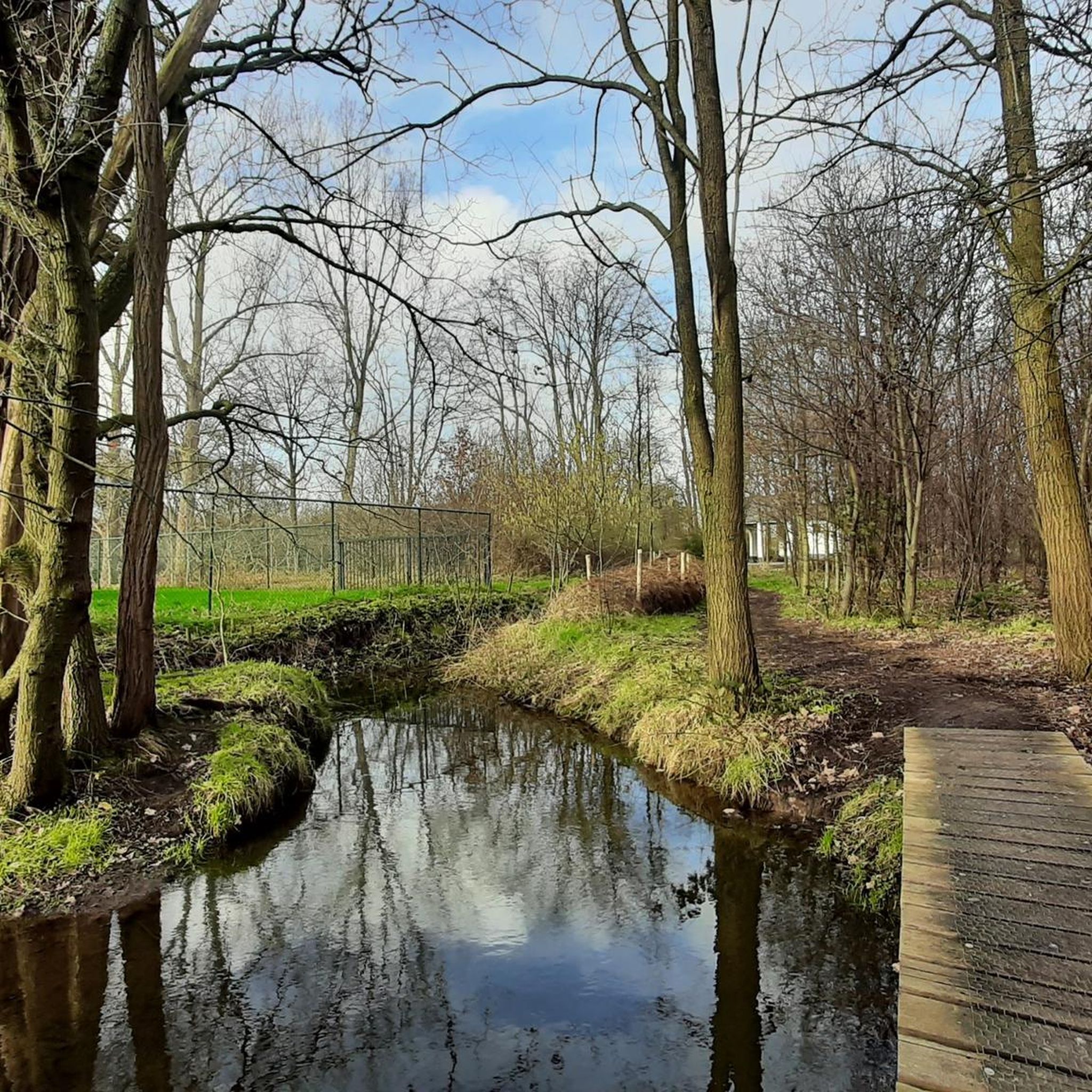
Here you know why water has an attraction...
2
0


On May 7, 1923, the Rivierenhof opened its gates to the general public. It is the oldest provincial domain in Belgium. Later all other provinces followed suit. History: In 1921 the last noble heirs decided to sell the domain. Thanks to the alert actions of provincial registrar Jozef Schobbens, the province purchased the domain as a green lung for the already heavily populated Deurne-Borgerhout region where many workers lived. It was hoped that the Rivierenhof would be able to offer them healthy air, relaxation and tranquility. The province expanded the park from 40 to 135 hectares. Ponds were dug, lands were raised, castles were renovated and picturesque shelters were built. Bridges, a rose garden and sports fields were constructed. All this to allow everyone to enjoy the fresh greenery as much as possible. 100 years later, the Rivierenhof is still the most beautiful park in the entire province, where visitors from near and far admire everything this special place has to offer.
5
0

The "Samenvloeiing van Dijle en Nete = Rupel" is a place in Belgium which is located where the rivers Dijle and Nete join to form the river Rupel. It is located in the Flemish region, in the province of Antwerp, in the city of Rumst. This site is known for its natural beauty and for being a meeting point between the waters of the two rivers. The confluence of the rivers creates a striking and fascinating landscape, with large expanses of water joining and mixing. The area around the Samenvloeiing van Dijle en Nete = Rupel also offers opportunities to enjoy the surrounding nature, with scenic trails and green areas that invite for walks and hikes. It's a popular spot with nature lovers and those looking to spend time outdoors.
5
0

The Fort of Borsbeek is a brick fort from the Antwerp fortification belt. The buildings are an important hibernation site for bats. You can discover the varied nature around the fort via a beautiful walking route. Some parts of Fort Borsbeek are accessible for strollers, but the nature walk itself is not accessible for wheelchair users or strollers. (Nature point)
13
0
Always nice to walk on such a butterfly path without the risk of getting wet feet.
12
0
Watch out for rainy weather. The paths can be under water.
8
0
There is a lot to experience in the oldest fort of the Great Wall. The fort is free to visit, but the underground parts are generally not accessible. In the summer months, the fort really comes to life: you can relax in the summer bar, enjoy fun entertainment in the caravan shed, play a game of disc golf, encourage your children in the play trail and fully discover the fort thanks to guided walks. Cyclists can discover the fort together with the other Brialmont forts via the Brialmont route or create their own route thanks to the cycling junctions. Fort 3 Borsbeek is located at junction 5.
13
0
Frequently Asked Questions
What are the most popular natural monuments around Kontich?
The most popular natural monument is the Confluence of the Dijle and Nete = Rupel, where two rivers merge to form the Rupel, offering a striking landscape. Other highly regarded spots include The Putten van Lacourt, a tranquil lake, and the Pond at Fort III Borsbeek, which combines natural beauty with historical significance.
Are there family-friendly natural monuments in the Kontich area?
Yes, several natural monuments are suitable for families. The Confluence of the Dijle and Nete = Rupel and the Zennegat Flood Area are both categorized as family-friendly. The Pond at Fort III Borsbeek also offers varied nature and historical elements that can be engaging for families, though some parts of its nature walk may not be accessible for strollers.
What kind of natural features can I expect to see in Kontich's natural areas?
Kontich's natural areas are characterized by diverse features. You'll find river confluences, tranquil lakes like The Putten van Lacourt, and flood areas such as the Zennegat Flood Area with its gullies, mudflats, and salt marshes. The Oude Spoorwegberm offers a unique ecological corridor with varied microhabitats, from dry to wet, and dense thickets of deciduous trees. The Edegemse Beekvallei features a climate forest, an oak avenue, wadis, pollard willows, ponds, and hedgerows.
Are there opportunities for walking or cycling in Kontich's natural monuments?
Absolutely. The Oude Spoorwegberm is freely accessible year-round for walking and cycling on designated paths, including the 'Langs 7 waterlopen' cycling route. The Edegemse Beekvallei also offers pleasant walking paths. For more structured routes, you can explore various cycling routes around Kontich or running trails that pass through or near these natural areas.
Can I bring my dog to the natural monuments around Kontich?
Yes, dogs are generally welcome in the natural areas around Kontich. Both the Oude Spoorwegberm and the Edegemse Beekvallei permit dogs, provided they are kept on a leash.
What wildlife can be observed in Kontich's natural areas?
The diverse habitats support various wildlife. In the Edegemse Beekvallei, you might spot buzzards, kestrels, waterfowl, amphibians in spring, and various insects like butterflies and dragonflies, as well as warblers and swallows in summer. The Pond at Fort III Borsbeek is an important hibernation site for bats. The Zennegat Flood Area provides an ideal habitat for rare plants and animals.
What is the Oude Spoorwegberm and why is it significant?
The Oude Spoorwegberm (Old Railway Embankment) is a unique ecological corridor in Flanders, utilizing part of a former railway line. It's one of the longest and narrowest nature reserves in Belgium, featuring a diverse range of microhabitats and rich plant life, including marsh marigold and various spring flora. It's significant for its biodiversity and as a green space for recreation.
What is the Edegemse Beekvallei known for?
The Edegemse Beekvallei is an important open landscape and ecological corridor between Edegem and Kontich, crucial for wildlife like migrating deer. It's known for its 7-hectare climate forest, established with over 15,000 trees, and its small-scale landscape elements like the Potsdijk oak avenue, wadis, pollard willows, and ponds. It offers pleasant walking opportunities and supports diverse wildlife.
Are there any historical sites near the natural monuments?
Yes, the Pond at Fort III Borsbeek is situated near a historical fort, which is part of the Antwerp fortification belt. The fort's surroundings offer varied nature and the fort itself is an important hibernation site for bats. The Nature area with water features is also part of the Rivierenhof, the oldest provincial domain in Belgium, with a rich history dating back to 1923.
What is the best time of year to visit the natural monuments around Kontich?
The natural monuments around Kontich offer beauty throughout the year. Spring is ideal for observing rich spring flora, such as in the Oude Spoorwegberm, and amphibians in the Edegemse Beekvallei. Summer brings butterflies, dragonflies, and various birds. Autumn offers scenic walks with changing foliage, and even winter provides opportunities for quiet exploration, especially on designated paths.
What are some specific walking routes or trails I can explore?
You can explore the Oude Spoorwegberm using walking junction points or follow the 'Langs 7 waterlopen' cycling route, which is also suitable for walking. The Edegemse Beekvallei has freely accessible paths, and a recently opened boardwalk in the Edegemse section enhances accessibility. For more options, consider the various running trails around Kontich, many of which are suitable for walking.
What do visitors enjoy most about the natural monuments in Kontich?
Visitors appreciate the tranquility and natural beauty, especially on weekdays at places like The Putten van Lacourt. The striking landscapes formed by merging waters at the Confluence of the Dijle and Nete = Rupel are also highly valued. Many enjoy the opportunities for walking and cycling, the diverse plant and animal life, and the combination of nature with historical elements found at sites like the Pond at Fort III Borsbeek.
Most popular routes around Kontich
Most popular attractions around Kontich

Get inspired with the komoot mobile app


Explore more
Extend your search for the best caves by checking out these guides of the top ones around Kontich:
