Top 12 Natural Monuments around Cartura
Best natural monuments around Cartura are primarily found in the surrounding region, particularly within the Euganean Hills Regional Park. Cartura, a comune in the Province of Padua, Italy, is characterized by its agricultural landscapes and proximity to these significant natural and historical sites. The area offers a blend of natural beauty and cultural heritage, making it a point of interest for those exploring the Veneto region.
Best natural monuments around Cartura
- The most popular natural monuments is Monte Ceva Summit…
Last updated: June 28, 2026
Valsanzibio Gardens
Highlight • Natural Monument
Translated by Google •
Tip by

Monte Ceva Summit Cross
Highlight • Summit
Translated by Google •
Tip by

Sign up now to discover places like this
Get recommendations on the best single tracks, peaks, & plenty of other exciting outdoor places.
Sign up for free
Barbarigo-Pizzoni Ardemani Garden
Highlight • Historical Site
Translated by Google •
Tip by

Montirone Park, Abano — The Ancient Thermal Springs
Highlight • Historical Site
In the heart of Abano, at the end of the pedestrian zone, a tall colonnade leads us into this small park where …
Translated by Google •
Tip by

Valsanzibio Monumental Garden
Highlight • Natural Monument
Translated by Google •
Tip by

Sign up for free to discover even more natural monuments around Cartura.
Sign up for free
Already have an account?
Start today with a free account
Your next adventure awaits.
Login or Signup

Other adventures around Cartura

Tips from the Community

One of the oldest garden complexes in Italy with ancient trees. Worth a visit for nature lovers.
0
0

A magical place in the heart of the Euganei Hills.
0
0

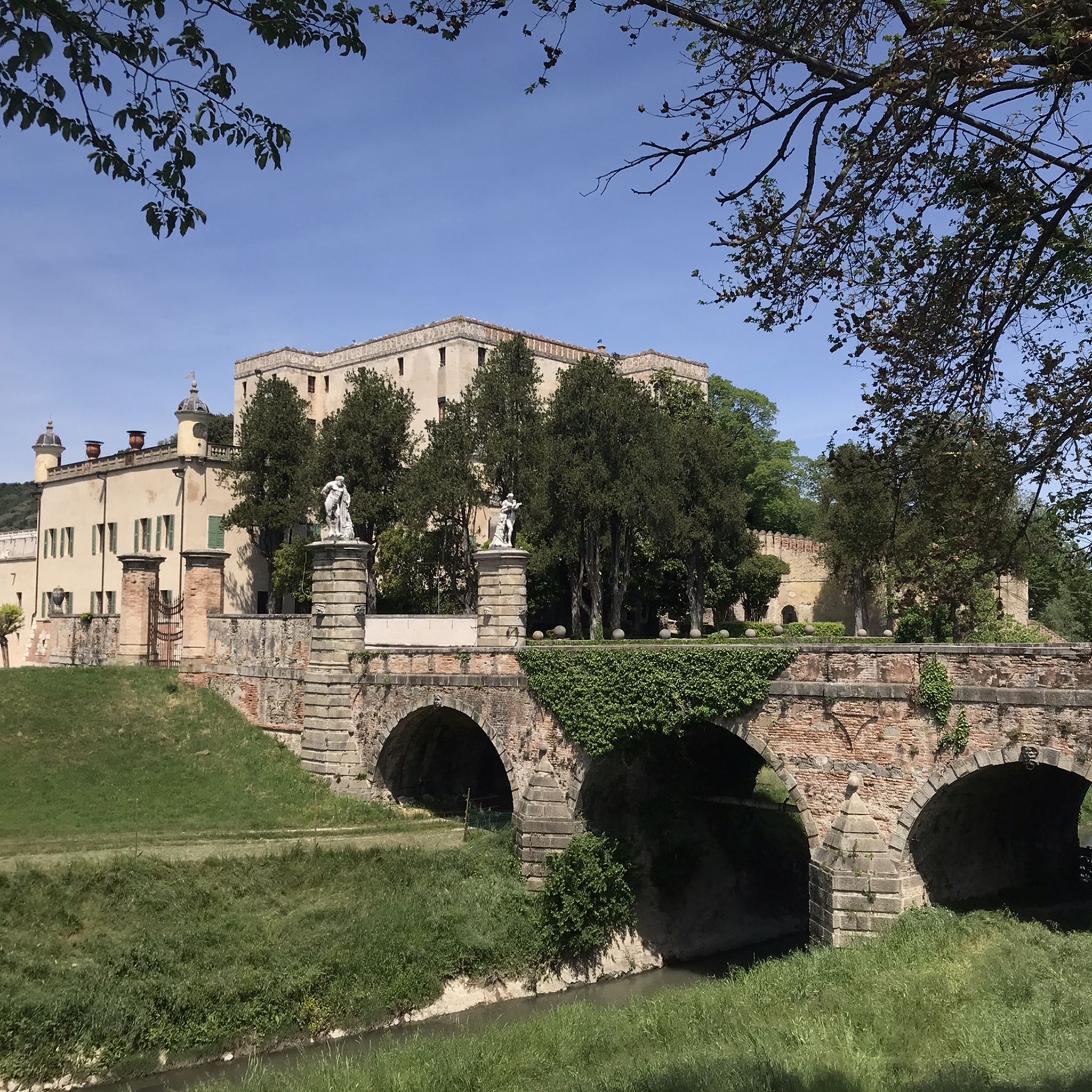
Valsanzibio was brought to splendor in the second half of the 17th century by the Venetian nobleman Zuane Francesco Barbarigo and his son Antonio following a solemn vow made in 1631 to escape the plague (1630/31). The eldest son, Gregory, a cardinal and future saint, inspired the lofty symbolism of the monumental layout by the papal architect and fountain designer Luigi Bernini and wanted the garden of Valsanzibio to be a monumental emblem of the path to perfection that leads man from Error to Truth, from Ignorance to Revelation. Over sixty statues, mostly by Merengo, and an equal number of smaller sculptures are integrated into the architecture, waterfalls, fountains, and water features on 15 hectares of unspoiled hillside nature.
1
0

The Colle del Montirone The monumental entrance designed by Jappelli testifies to the importance of this small hill, which was once rich in natural thermal springs that bubbled forth at a temperature of 80°C. Today, the stone pools can still be seen here, a symbol of the millennia-old thermal tradition of the town of Abano. The Doric column, topped with a chalice entwined by a serpent, was also designed by Giuseppe Jappelli in 1825, on the occasion of Emperor Franz I of Austria's visit. Text / Source: Abano.it / La città di Abano Terme https://www.abano.it/de/Abano-Terme/
14
0
Parco Montirone, Abano / The Ancient Thermal Springs In the heart of Abano, at the end of the pedestrian zone, a tall colonnade leads us into this small park where steaming thermal water flows among the greenery of plants and trees. A tall colonnade leads us into this small park, situated on a green hill where the temple of the god Aponus once stood near Abano's ancient thermal spring. Today, the thermal water flows once again in the stone thermal pools. The cradle of Abano's thermal baths: More than two thousand years ago, in the time of the ancient Romans, a sacred temple dedicated to the god Aponus and a small shop selling pottery stood on this small hill. Many came here to be treated with the precious thermal water, which flowed freely at a temperature of approximately 80°C. ... Soon, villas and thermal palaces sprang up around the small hill, and the Abano thermal baths became famous among patricians and soldiers, as well as emperors, for their "magical" qualities: Tiberius himself wanted to stop at the Temple of Aponus to consult the oracle of Geryon. After receiving a positive result, he threw his golden dice into the fountain before departing for Illyria. Today, the ancient pools, which held steaming thermal water until the second half of the 20th century, have been restored to their former glory: The water flows again in the five stone pools—two large and three small—at a temperature of about 70°C. A high colonnade in the Corinthian order leads to the park with the Montirone springs. At the entrance stands the Doric column surmounted by a chalice coiled in the shape of a snake, designed in 1825 by the Venetian architect Giuseppe Jappelli to house the passage of Emperor Franz I of Austria. Text / Source: Blog Abano.it / It Portale delle Terme https://blog.abano.it/it/il-colle-del-montirone-e-le-sue-antiche-sorgenti-termali/
14
0


The Euganean Hills always have surprises in store...
1
0
A really beautiful hike, enchanted paths, great view at the top. I wouldn't classify it as easy though. If it has rained a few days before, at least the ascent is muddy and slippery, and further up it is difficult to walk because it is very rocky. The descent is also steep and rocky at the beginning.
3
0
Frequently Asked Questions
What are the most notable natural monuments near Cartura?
The most notable natural monuments around Cartura are primarily found within the surrounding Euganean Hills Regional Park. Highlights include the challenging ascent to Monte Ceva Summit Cross, offering a 360-degree panorama, and the historically significant Valsanzibio Gardens, known for its botanical garden, fountains, and labyrinth.
Are there any family-friendly natural monuments around Cartura?
Yes, several natural monuments near Cartura are suitable for families. The Valsanzibio Gardens and Barbarigo-Pizzoni Ardemani Garden both feature labyrinths and beautiful grounds that children often enjoy. Additionally, Montirone Park, Abano — The Ancient Thermal Springs offers a pleasant setting with historical context and steaming thermal pools.
What kind of natural scenery can I expect to see near Cartura?
Near Cartura, particularly in the Euganean Hills Regional Park, you can expect diverse natural scenery. This includes panoramic views from summits like Monte Ceva, lush botanical gardens, and unique geological formations such as the Former Perlite Quarry, which showcases the region's volcanic history.
Are there historical sites combined with natural monuments in the area?
Absolutely. The region around Cartura is rich in sites that blend natural beauty with historical significance. The Valsanzibio Gardens and Barbarigo-Pizzoni Ardemani Garden are historic villas with meticulously designed natural landscapes. Montirone Park, Abano — The Ancient Thermal Springs is another prime example, featuring ancient Roman thermal springs and a monumental entrance.
What outdoor activities can I do near these natural monuments?
The area around Cartura and the Euganean Hills Regional Park offers various outdoor activities. You can find numerous hiking trails, including challenging routes like the 'Sentiero Cava Monte Croce and Sentiero delle Creste'. There are also running trails and road cycling routes that allow you to explore the agricultural landscapes and natural beauty.
Are there any challenging hikes among the natural monuments?
Yes, for those seeking a challenge, the ascent to Monte Ceva Summit Cross is known to be quite demanding. The path can be muddy and rocky, requiring appropriate footwear. It offers a rewarding 360-degree panorama at the top but is not recommended for young children or those unfamiliar with walking on uneven terrain.
What makes the Former Perlite Quarry a natural monument?
The Former Perlite Quarry is considered a natural monument due to its geological significance. It's a testament to the Euganean Hills' complex volcanic history, showcasing perlite, a volcanic material formed from rhyolitic lavas that underwent a hydration process. This site provides insight into the region's unique geological past.
Can I visit the natural monuments by public transport from Cartura?
While Cartura itself is characterized by agricultural landscapes, the primary natural monuments are located in the surrounding Euganean Hills Regional Park. Public transport options to specific trailheads or garden entrances within the park may vary. It's advisable to check local bus schedules or consider driving for more direct access to these sites.
What do visitors enjoy most about the natural monuments near Cartura?
Visitors frequently praise the stunning panoramic views from summits like Monte Ceva. The intricate designs and historical ambiance of the gardens, such as Barbarigo-Pizzoni Ardemani Garden, are also highly appreciated. The blend of natural beauty with rich history, like at Montirone Park, offers a unique experience.
Are there any natural monuments with water features or springs?
Yes, Montirone Park, Abano — The Ancient Thermal Springs is a significant natural monument featuring steaming thermal water flowing in restored stone pools. The Barbarigo-Pizzoni Ardemani Garden is also noted for its many streams and water elements within its expansive grounds.
What should I know before visiting Monte Ceva Summit Cross?
Before heading to Monte Ceva Summit Cross, be aware that the ascent is challenging, with muddy and rocky sections. Trekking shoes are highly recommended. The climb can take approximately two hours to the iron cross, offering a beautiful 360-degree panorama. It's not suitable for young children due to the difficulty of the path.
Are there any natural monuments that are also botanical gardens?
Yes, the Valsanzibio Gardens is a notable natural monument that functions as a botanical garden, featuring a rich variety of plants alongside its historical fountains and labyrinth. The Barbarigo-Pizzoni Ardemani Garden also boasts extensive and beautifully maintained botanical elements.
Most popular routes around Cartura
Most popular attractions around Cartura

Get inspired with the komoot mobile app


Explore more
Extend your search for the best caves by checking out these guides of the top ones around Cartura:
