Top 14 Natural Monuments around Locusantu/Luogosanto
Natural monuments around Locusantu/Luogosanto, also known as Locusantu, are characterized by unique granite formations and Mediterranean vegetation in the heart of Gallura, Sardinia. The region features geological wonders and ancient sites that integrate natural rock formations. Visitors can explore a landscape shaped by centuries of natural erosion, offering diverse natural features. This area provides opportunities to appreciate the local arboreal landscape and significant natural landmarks.
Best natural monuments around Locusantu/Luogosanto
- The most popular natural monument is Giant’s Tomb of Coddu…
Last updated: June 28, 2026
Giant’s Tomb of Coddu Vecchiu
Highlight • Historical Site
Translated by Google •
Tip by

Li Muri Necropolis
Highlight • Historical Site
Translated by Google •
Tip by

Sign up now to discover places like this
Get recommendations on the best single tracks, peaks, & plenty of other exciting outdoor places.
Sign up for free
Giants' Tomb of Li Lolghi
Highlight • Historical Site
All I can say is:
It is really impressive what this culture was able to build so many thousands of years ago.
Translated by Google •
Tip by

Moon Valley
Highlight • Natural Monument
Translated by Google •
Tip by

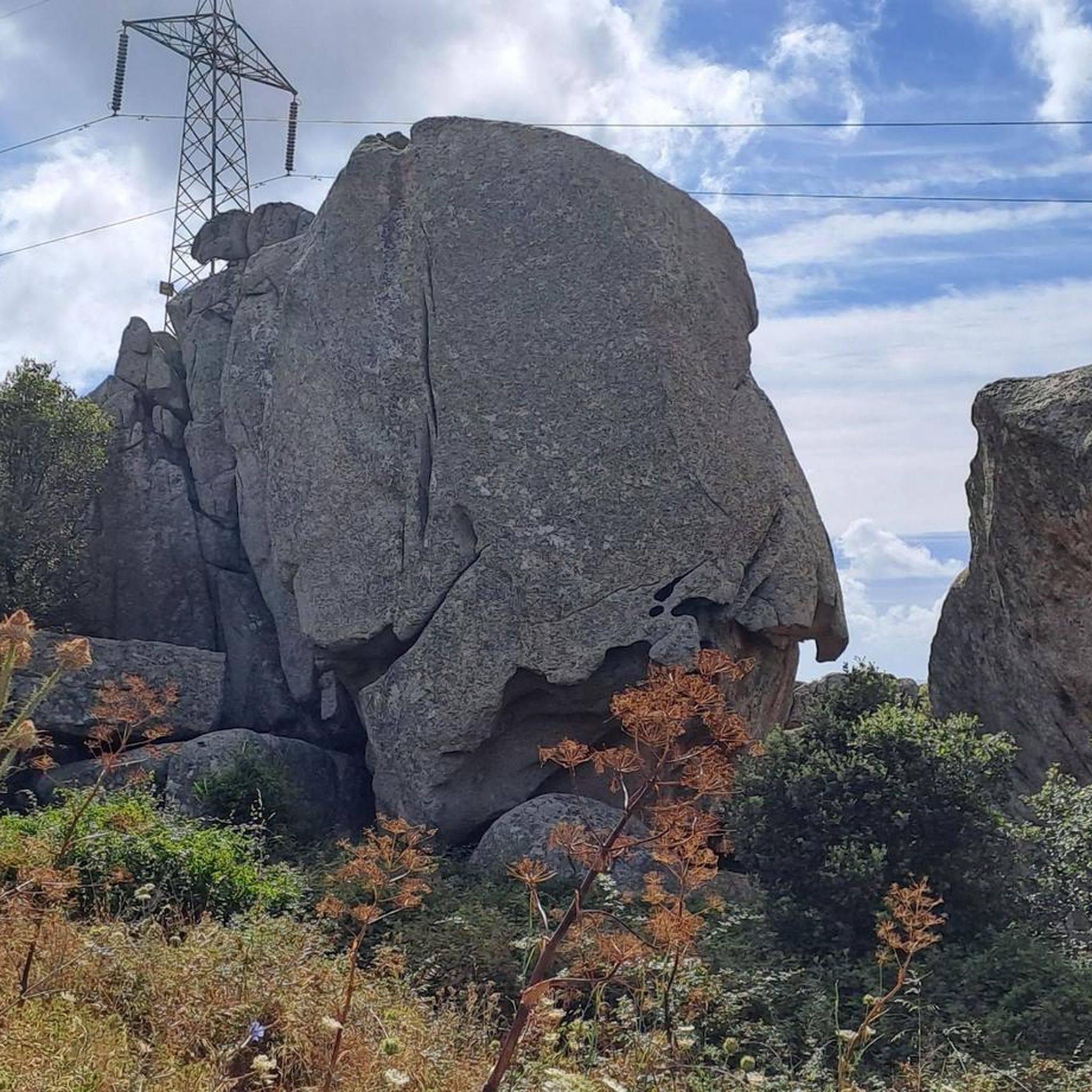
Rena Majore Rock Formation
Highlight • Natural Monument
Translated by Google •
Tip by

Sign up for free to discover even more natural monuments around Locusantu/Luogosanto.
Sign up for free
Already have an account?
Start today with a free account
Your next adventure awaits.
Login or Signup
Tips from the Community

A beautiful Nuragic giant's tomb, not far from Arzachena, nestled in a lovely landscape with orchards. It lies close to the road from Arzachena to Luogosanto.
0
0

The cost of visiting each excavation site is €4 (as of April 2024) and it is open from 10 a.m.
0
0
I can't add anything more informative to Jenny's detailed explanations. I'll just say this: It's really impressive what this culture was able to build so many thousands of years ago.
2
0
I can't add anything more informative to Jenny's detailed explanations. All I can say is: It is really impressive what this culture was able to build so many thousands of years ago.
3
0

The Li Lolghi Giant Tomb stands majestically on a hilltop in the Li Muri region. The large Nuragic collective tomb with a total length of 27 m is the result of two construction phases. In the early Bronze Age (around 1800 BC) a tomb consisting of an elongated dolmen (allèe couverte) was erected; Later, during the Middle Bronze Age (between 1600 and 1400 BC), a long burial passage was added at a lower level than the oldest part of the tomb, ending with a two-story aedicule, presumably intended for receiving war offerings . The deceased was probably buried from above by removing one of the cover plates of the burial chamber. At the same time the exedra was added, a semi-circular space formed by slabs fixed to the floor and at the center of which there is a large monolithic arched stele 3.75 m high, decorated with the usual frame in relief. At the base is a hatch brought into the tomb by the offerings. The entire part behind the exedra, including the funerary gallery and the allée coverte, was enclosed in a large mound of earth and stones, the remains of which are still visible today. During the excavation of the monument, numerous finds, especially ceramics, from the two construction phases of the tomb were found. The nature of the vessels and their location suggest that they served as offerings at meals honoring the deceased. The tombs of the giants also serve as places of worship honoring their ancestor, but also as symbols of ownership and control over the territory, as suggested by the grandeur of these monuments. Source: https://www.gesecoarzachena.it/?page_id=1548
1
0
The Li Muri Necropolis is the oldest site in the Arzachena area. It dates from around 6,000 years ago, i.e. from the Neolithic period. The burial circles are among the oldest evidence of Western European megalithism and bear close comparisons with southern Corsica. Burials of this type are also found in the French and Spanish Pyrenees, while in Sardinia it seems to be widespread only in the Gallura region, particularly in the Arzachena region. The necropolis consists of four burial circles touching each other with variable widths between about 5 and 8.5 meters in diameter. They are delimited by small slabs fastened with a knife and arranged in concentric circles, which served to house a mound of stones and earth that encircled the tombs, giving them the appearance of four artificial mounds. Within each circle was a small rectangular stone chest containing one or at most two deceased in a crouched posture. Each burial was accompanied by a set of valuable objects: flint blades, necklaces of unspecified stone, spheroid buttons (perhaps set in sticks for use as weapons or scepters), axes of polished hardstone, and in one case a sophisticated soapstone chalice indicate this that the deceased were prominent figures in the community. Traces of red ocher, a substance symbolizing regeneration and used to clean or symbolically cover human remains, have been found in the tombs. Two large granite menhirs, stone monuments set vertically into the ground with the function of tombstones or symbolic representations of deities or the soul of the deceased, were placed between one circle and another. Outside the circles there are also small square stone boxes, presumably intended to collect grave goods. A fifth circle differs from the others both in its secluded location and in the features of the tomb at its center. The finds found prove a first use in the Neolithic, which is evidenced by fragments of flint blades and beads of a necklace made of steatite; In the Bronze Age (around 1600 BC), this circular grave would then have been converted into an allée couverte, i.e. a communal grave. https://www.gesecoarzachena.it/?page_id=1558
0
0
The giant tomb of Coddu 'Ecchju is a magnificent example of Nuragic funerary architecture. It is an imposing communal tomb, likely containing the remains of the deceased from the nearby village of La Prisgiona. This Bronze Age monument was constructed in two phases: The exedra was added to a gallery tomb (10.50 m long) or semicircular chamber built around 1800 BC (probably between 1600 and 1400 BC). This chamber was enclosed by a series of slabs set into the ground, with a large, arched stele (4.04 m high) in the center, decorated with a relief frame and featuring a small door at its base, likely used for placing offerings inside the tomb. The deceased was probably buried from above by removing one of the slabs covering the corridor. The burial of the deceased was likely carried out from above by removing one of the slabs covering the corridor. ``` The burial chamber was enclosed within a large mound of earth and stones, encompassing the area behind the exedra. This mound served the practical function of housing the mound itself, but also defined the ceremonial space where ancestor rites were performed, as evidenced by the numerous ceramic vessels found in the area. Ancestor worship was of great importance in the Nuragic culture. Source: https://www.gesecoarzachena.it/?page_id=1246
1
0

Giant tomb from the Bonnanaro culture
0
0
Frequently Asked Questions
What are some unique natural features to explore in Locusantu/Luogosanto?
Locusantu/Luogosanto is known for its distinctive granite formations, sculpted by centuries of erosion into 'natural statues' that often resemble plants and animals. You can also find significant ancient trees like The Cork Oak of Crisciuleddu, and unique geological features integrated into historical sites such as the natural cave at Eremo di San Trano.
Are there any viewpoints offering panoramic views of the region's natural beauty?
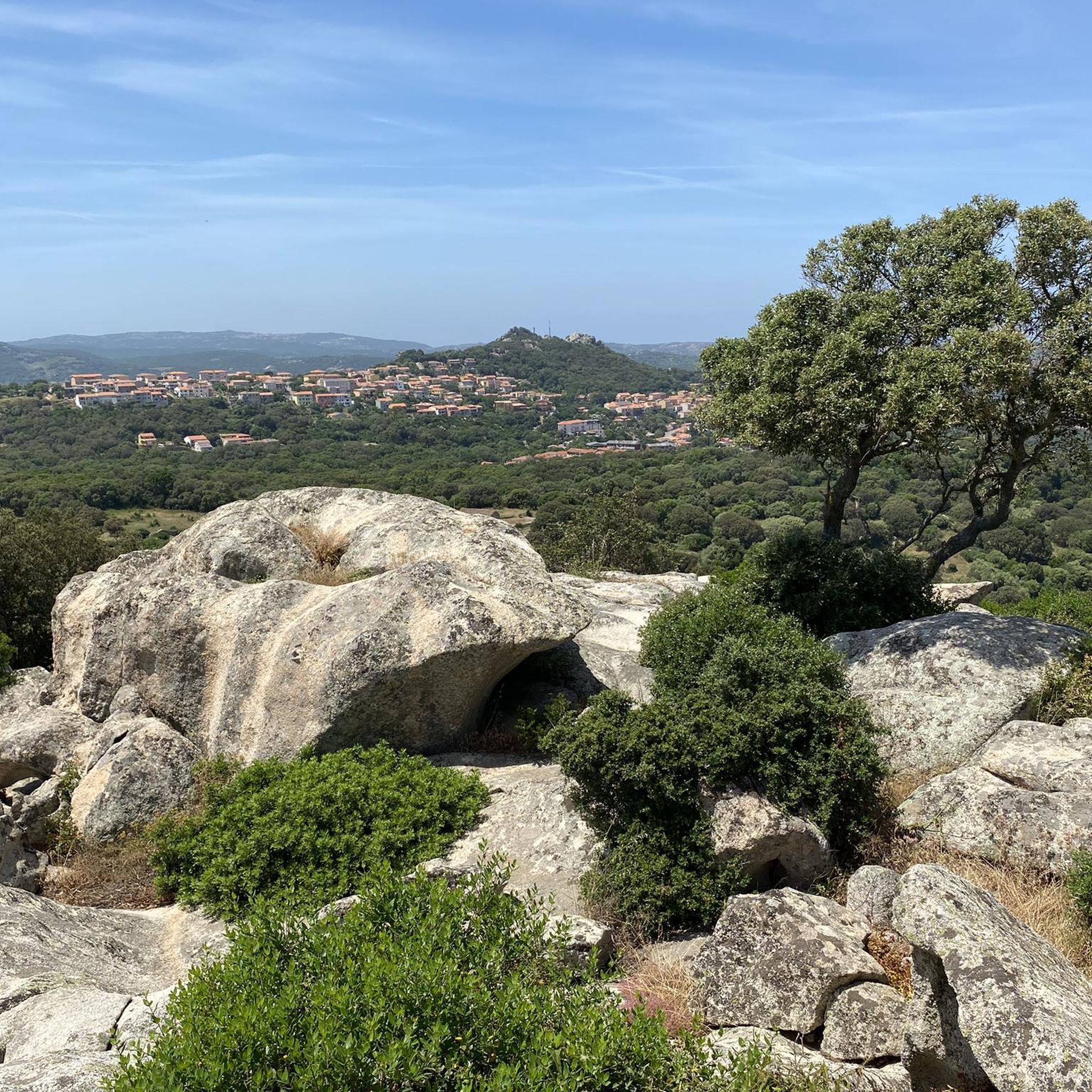
Yes, the region offers several stunning viewpoints. The Belvedere de La Petra Niedda provides expansive panoramas that, on clear days, can stretch all the way to the mountains of Corsica. Additionally, the Punta di l'Omu, a rocky ridge with an anthropomorphic shape, is visible from the belvedere near the Basilica and offers a unique natural landmark to observe. The Moon Valley and Rena Majore Rock Formation are also noted for their impressive views.
What kind of hiking opportunities are available near the natural monuments?
You can find various hiking opportunities. The area around Monti Gjuanni, Monti Casteddu, and Monti Ruju forms a park with pleasant walks and challenging hikes. For specific routes, consider the Scenic walk around Lake Liscia (easy, 6.9 km) or the View of Monte Pulchiana loop (easy to moderate, 4.3-6.4 km). There's also an easy 7.2 km loop connecting the Li Muri Necropolis and Giants' Tomb of Li Lolghi.
Are there family-friendly natural monuments or activities in the area?
Yes, several natural monuments are suitable for families. The 'Natural Statues' of Eroded Granite near the Basilica are easily accessible and provide a beautiful setting for a leisurely stroll, captivating children with their imaginative shapes. The Giant’s Tomb of Coddu Vecchiu is also categorized as family-friendly, offering an engaging historical and natural experience.
What historical or archaeological sites are considered natural monuments in Locusantu/Luogosanto?
Locusantu/Luogosanto features several historical sites that are also recognized as natural monuments due to their integration with the landscape or their ancient origins. These include the Giant’s Tomb of Coddu Vecchiu, a significant Nuragic funerary monument, and the Li Muri Necropolis, the oldest site in the Arzachena area dating back 6,000 years with unique burial circles. The Giants' Tomb of Li Lolghi is another impressive Nuragic collective tomb.
What is the best time of year to visit the natural monuments in Locusantu/Luogosanto?
While specific seasonal data isn't provided, the Mediterranean climate of Sardinia generally makes spring (April-May) and autumn (September-October) ideal for visiting natural sites. During these periods, the weather is typically mild and pleasant for outdoor activities like hiking and exploring, avoiding the intense heat of summer.
What cycling routes are available near the natural monuments?
For cyclists, there are various routes. Road cyclists can explore options like The Monte Pulchiana road from Luogosanto (difficult, 48.8 km) or the Rena Majore Rock Formation loop (moderate, 37.2 km). Touring cyclists have routes such as the Moon Valley loop from Aglientu (difficult, 62.9 km).
Is Monte Pulchiana accessible, and what can I expect to see there?
Monte Pulchiana is recognized as a significant natural monument in the area. While specific details about its features are not extensively detailed, its designation suggests geological importance and visual appeal. You can find hiking routes that offer views of Monte Pulchiana, such as the View of Monte Pulchiana loop from La punta, which is an easy 4.3 km walk.
What do visitors enjoy most about the natural monuments in Locusantu/Luogosanto?
Visitors particularly appreciate the unique geological formations and the historical significance intertwined with nature. Many find the ancient architecture of sites like the Giant’s Tomb of Coddu Vecchiu to be 'magnificent' and 'impressive,' offering a glimpse into civilizations long past. The 'impressive rock' formations, such as the Rena Majore Rock Formation, also invite personal interpretation and captivate the imagination.
Are there any natural monuments that resemble specific shapes or figures?
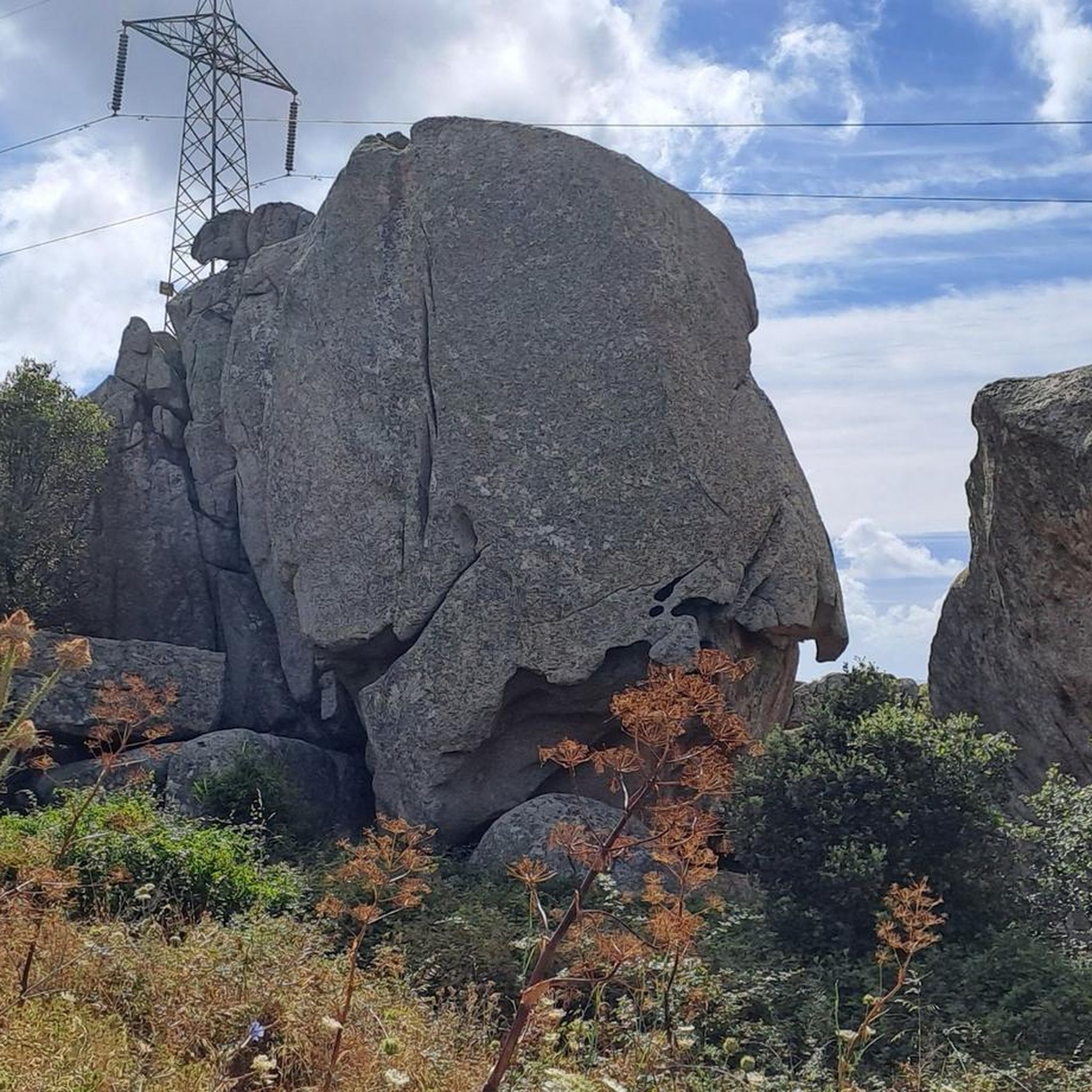
Yes, the region is famous for its naturally sculpted rock formations. Along the panoramic terrace near the Basilica, you can find 'natural statues' of eroded granite that often resemble plants and animals. Additionally, Punta di l'Omu is a rocky ridge distinguished by its characteristic anthropomorphic shape, resembling a human figure, making it a fascinating natural landmark.
What is the significance of the Li Muri Necropolis?
The Li Muri Necropolis is the oldest site in the Arzachena area, dating back approximately 6,000 years to the Neolithic period. It features unique burial circles, which are among the oldest evidence of Western European megalithism. These circles housed small rectangular stone chests for the deceased, accompanied by valuable objects, indicating prominent figures in the community. It's a significant historical and natural monument.
Can I find any ancient trees or significant flora in the area?
Yes, the region is home to notable flora. The majestic The Cork Oak of Crisciuleddu stands as a testament to the rich arboreal landscape of Luogosanto. This ancient tree represents the enduring natural heritage and provides an opportunity to appreciate the local vegetation.
Most popular routes around Locusantu/Luogosanto
Most popular attractions around Locusantu/Luogosanto

Get inspired with the komoot mobile app


Explore more
Extend your search for the best caves by checking out these guides of the top ones around Locusantu/Luogosanto:
