Top 20 Natural Monuments around Piedimonte Etneo
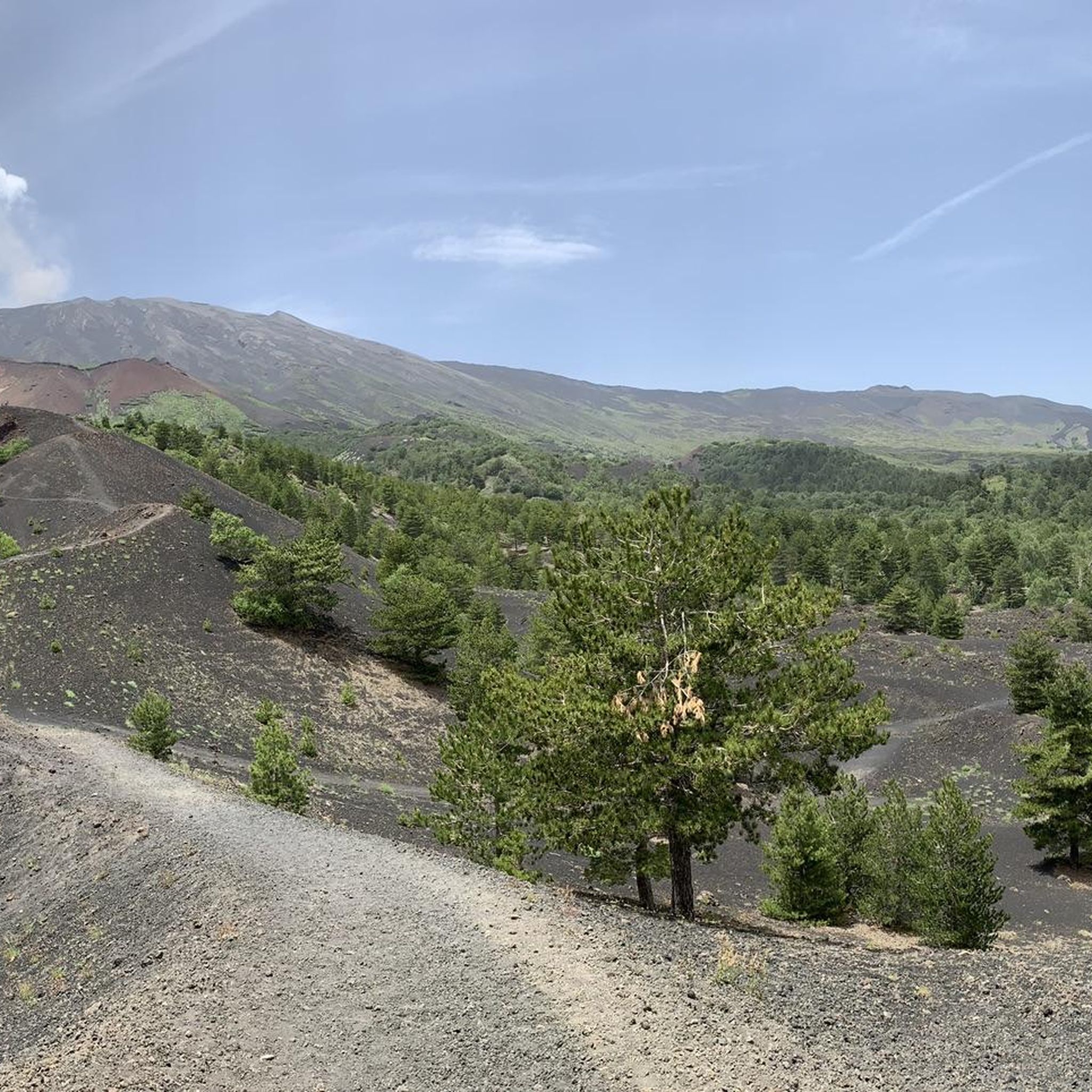
Best natural monuments around Piedimonte Etneo are centered on the slopes of Mount Etna, Europe's highest active stratovolcano. This region offers a unique blend of volcanic landscapes, diverse ecosystems, and significant geological formations. Piedimonte Etneo provides access to various parts of the Etna Park, making it a compelling destination for exploring volcanic features. The area showcases the powerful and ever-changing natural features of this iconic volcano.
Best natural monuments around Piedimonte Etneo
- The most popular natural monuments is Summit Craters…
Last updated: October 14, 2026
Summit Craters of Mount Etna
Highlight • Volcano
Translated by Google •
Tip by

Piccolo Rifugio (Etna South)
Highlight • Volcano
The jeep tour oh up is highly recommended.
Attention: If it is …
Translated by Google •
Tip by

Sign up now to discover places like this
Get recommendations on the best single tracks, peaks, & plenty of other exciting outdoor places.
Silvestri Inferior Craters
Highlight • Volcano
Not quite the …
Translated by Google •
Tip by

Laghetto Crater
Highlight • Volcano
Translated by Google •
Tip by

Alcantara Gorge
Highlight • Gorge
Translated by Google •
Tip by

Sign up for free to discover even more natural monuments around Piedimonte Etneo.
Already have an account?
Start today with a free account
Your next adventure awaits.

Tips from the Community

It's completely unclear which point on the river is being referred to here, and what condition the river is in. Consequently, the (repetitive) tips are of little use. In winter, after rain, while descending the path on the western side, which was in a disastrous state (!), I encountered a raging torrent below, making it nearly impossible to reach the entrance of the gorge!
0
0

Sensational scenery and a sensational view. A must-see.
4
0

Beautiful, but depending on the time of day, it can get very crowded. It's best to come in the morning. The cool water of the Alcantara is a relief on hot days 😃
2
1

Such a beautiful piece of earth!
3
3

What is crazy is that the ground is still warm to hot 23 years after the eruption in 2001.
1
0

"Hike" is definitely an exaggeration. It is a walking path and at the same time worth seeing. Look for the Communal Entrance if you do not want to take guided tours etc. When buying the entrance ticket, make sure that you buy at least the orange route (6€). The €2 entrance ticket only allows you to access the beach via the stairs. If you are too lazy to walk or have difficulty walking, you can buy a ticket for the elevator to the river. But then you have to take the elevator and are not allowed to use the stairs, even though the price for the elevator is many times higher.
6
2

Very cold water all year round. Very busy in summer. After rain in winter, the gorge is partially closed due to the risk of floods.
2
3

Pack swimming trunks and bathing shoes
1
2
Frequently Asked Questions
What unique geological features can I explore around Piedimonte Etneo?
The region around Piedimonte Etneo is dominated by Mount Etna, offering a diverse range of volcanic features. You can explore various craters, such as the Summit Craters of Mount Etna, known for continuous eruptive activity, or the Laghetto Crater. The Silvestri Inferior Craters, formed in 1892, are easily accessible and showcase a unique interplay of colors. Further afield, the vast Valle del Bove offers a dramatic insight into Etna's eruptive history, and the Monti Sartorius are a series of seven subsidiary craters with an accessible nature trail.
Are there any specific natural monuments known for their historical volcanic activity?
Yes, several natural monuments highlight Etna's volcanic history. The Silvestri Inferior Craters were formed during an eruption in 1892 and are easily accessible. The Monti Sartorius, located within Etna Park, are a series of seven distinct craters resulting from the 1865 eruption, offering an easy hike through their unique formations. The Barbagallo Craters were developed during the 2002/2003 eruption and are still warm in places, with steam rising from the ground.
What makes Mount Etna a significant natural monument?
Mount Etna is Europe's highest active stratovolcano and a UNESCO World Heritage site, renowned for its almost continuous eruptive activity. Its significance lies in its diverse volcanic features, including summit craters, cinder cones, lava flows, and lava caves. It serves as a living laboratory for geological and ecological studies, with landscapes transitioning from coastal areas to dense forests and lunar-like terrain near the summit. You can learn more about its global significance on the UNESCO website.
Is there a unique natural phenomenon like a glacier near Piedimonte Etneo?
Yes, within the Etna Park, though not directly in Piedimonte Etneo, you can find the Grotta del Gelo (Cave of Frost). This lava cave is unique for containing a perennial glacier, making it the southernmost glacier in Europe. It's a remarkable natural curiosity, showcasing the unexpected juxtaposition of ice within a volcanic environment.
Are there family-friendly natural monuments or trails suitable for families?
Absolutely. The Silvestri Inferior Craters are easily accessible from a large parking lot, making them a great option for families. The Monti Sartorius Nature Trail also offers an easy hike suitable for various fitness levels, allowing families to explore volcanic formations and birch forests in a relatively accessible setting.
What kind of hiking trails are available near Piedimonte Etneo's natural monuments?
The area offers a variety of hiking trails, ranging from easy to difficult. You can find moderate trails like the 'Grotta di Serracozzo e Serra delle Concazze – loop in the Parco dell'Etna' or the 'Monti Sartorius Nature Trail' which is an easy option. For more challenging hikes, consider 'Pizzi Dèneri from Rifugio Citelli'. You can find more details and routes in the Hiking around Piedimonte Etneo guide.
What should I wear when visiting the natural monuments, especially Mount Etna?
When visiting Mount Etna and its natural monuments, it's crucial to dress in layers. Even if it's warm at lower altitudes, temperatures can drop significantly at higher elevations, especially near the summit craters. Visitors often recommend wearing warm clothing, even in summer, as it can be as cold as 4°C at the top when it's 25°C at the beach. Sturdy hiking boots are essential for navigating volcanic terrain, and don't forget enough water.
What is the best time of year to visit the natural monuments around Piedimonte Etneo?
The best time to visit depends on the experience you seek. Spring and autumn generally offer pleasant temperatures for hiking and exploring. However, Mount Etna's conditions can vary greatly by season; snow can be present in autumn and winter, making some areas more challenging to access. Always check current conditions before planning your visit, as even in summer, winter-like conditions can prevail at higher altitudes.
How can I reach the natural monuments from Piedimonte Etneo?
Piedimonte Etneo serves as a gateway to Etna Park. While specific public transport options to all trailheads might be limited, many natural monuments, like the Silvestri Inferior Craters, are located right next to roads and have large parking lots nearby. For higher altitudes, you might use cable cars or bus services from mountain stations. It's advisable to research specific access points and transport options for the monument you plan to visit.
What do visitors find most impressive about the natural monuments in this region?
Visitors are consistently awestruck by the sheer scale, vastness, and raw power of nature on Mount Etna. Many describe the experience as 'wild, almost otherworldly,' feeling 'infinitely small and humble towards nature.' The breathtaking views from the craters, the unique interplay of colors between volcanic ground and vegetation, and the special experience of being on an active volcano are frequently highlighted as truly impressive.
Are there other outdoor activities I can do near these natural monuments?
Beyond exploring the natural monuments, the region around Piedimonte Etneo offers a range of outdoor activities. You can find numerous mountain biking trails, such as the 'Pineta di Linguaglossa – Piano Provenzana loop,' or cycling routes like the 'Ragabo Refuge – Mareneve Road Switchbacks loop.' For more options, explore the MTB Trails around Piedimonte Etneo or Cycling around Piedimonte Etneo guides.
Can I explore these natural monuments with my dog?
While many outdoor areas are dog-friendly, regulations within protected areas like Etna Park can vary. It's generally recommended to keep dogs on a leash. For specific trails and higher-altitude areas, it's best to check the current rules and restrictions of the Parco dell'Etna before your visit to ensure a safe and compliant experience for you and your pet.
Most popular routes around Piedimonte Etneo
Most popular attractions around Piedimonte Etneo

Get inspired with the komoot mobile app


Explore more
Extend your search for the best caves by checking out these guides of the top ones around Piedimonte Etneo:
