Top 20 Natural Monuments around Imola
Natural monuments around Imola offer diverse landscapes where the Apennines meet the Po Plain. The region features hilly slopes, ancient forests, and unique geological formations. Visitors can explore a variety of natural sites, from relic woodlands to expansive regional parks. The area provides opportunities to experience distinct natural features and local biodiversity.
Best natural monuments around Imola
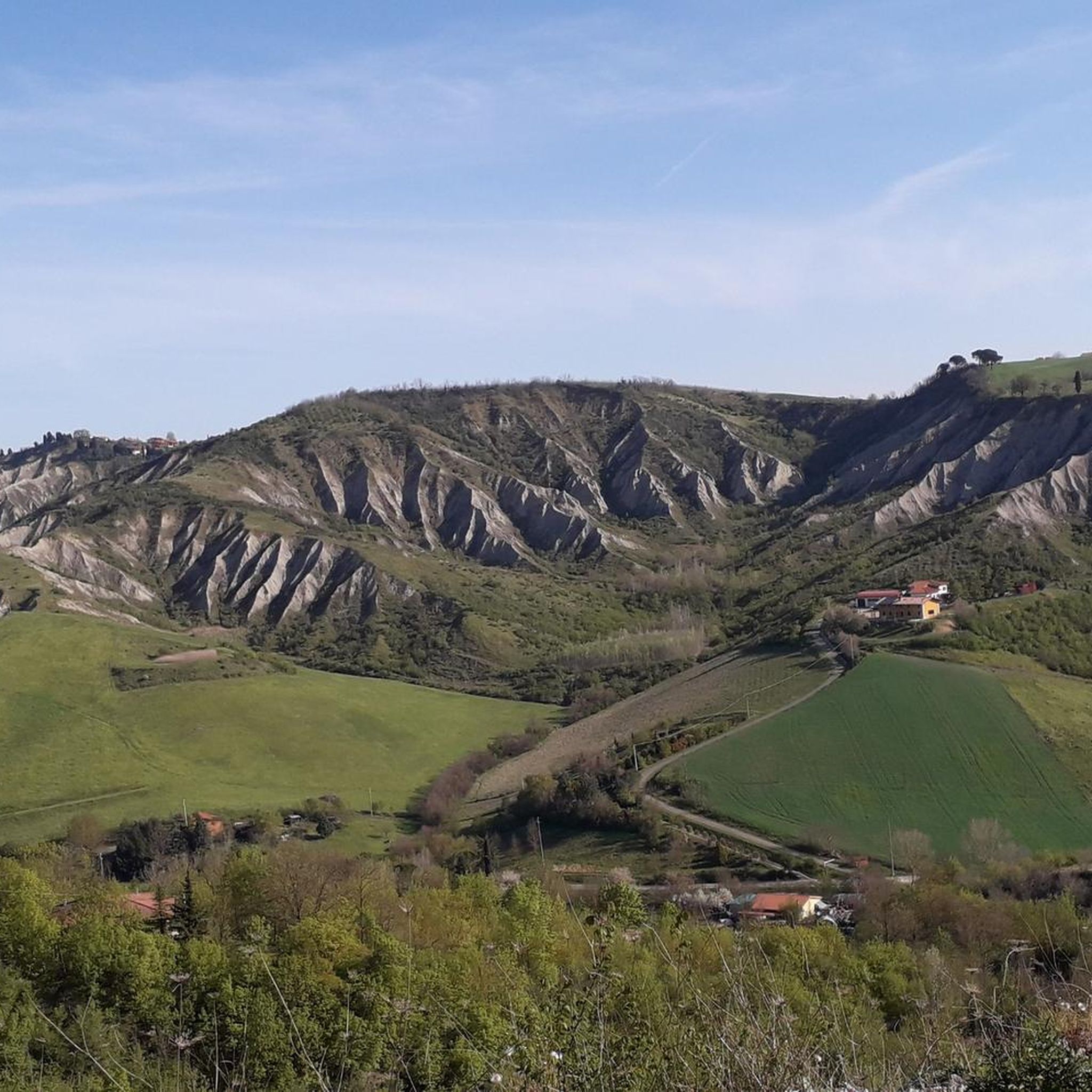
- The most popular natural monuments is Ridge of the Calanchi between Fiagnano and Monte del Re, a trail that features a suggestive…
Last updated: April 30, 2026
Santerno Cycle Path Ford at La Casa del Fiume
Highlight • Structure
Translated by Google •
Tip by

Fegatella Spring
Highlight • Natural Monument
Translated by Google •
Tip by

Sign up now to discover places like this
Get recommendations on the best single tracks, peaks, & plenty of other exciting outdoor places.
Sign up for free
Parco delle Acque Minerali
Highlight • Forest
It is …
Translated by Google •
Tip by
Monte Mauro Hermitage
Highlight • Religious Site
Translated by Google •
Tip by
Grotta Tanaccia
Highlight • Cave
Translated by Google •
Tip by
Sign up for free to discover even more natural monuments around Imola.
Sign up for free
Already have an account?
Start today with a free account
Your next adventure awaits.
Login or Signup

Other adventures around Imola

Tips from the Community

the cute cat EremoMonte Mauro
0
0

Area with numerous singletracks and well-rideable trails
0
0

July 2024: the ford is impassable due to a landslide on the road on the Borgo Tossignano side.
0
0

The Mineral Water Park is the historic green lung of Imola. Mainly known for its recreational and sporting function, it also has an undoubted botanical and historical value. It is located a short distance from the city center and is nowadays entirely surrounded by the “Enzo e Dino Ferrari” racetrack. It originated from the discovery of Dr. Gioacchino Cerchiari, which occurred in 1830, of the healing sulphurous water springs which made the place immediately popular. The first arrangement of the area into a real park dates back to 1871, with the creation of avenues and flowerbeds according to the so-called "English" model. Currently the park extends over 11 hectares and has a rich heritage of tree species, both native and exotic. Recent interventions have aimed to enhance this heritage by providing the park with two play areas and an educational path of a geological nature, and by redeveloping some historical areas: the area of the ancient springs (indicated by the restoration of the original cisterns), the monumental staircase that leads from Viale Atleti Azzurri d'Italia leads to the Belvedere, and the entrances to the park. In particular we highlight the one to the north, called 'Piazzetta della Fontana' from the ceramic work of the artist Mannes Laffi, and the one to the south, or Piazzetta delle Querce', characterized by paving in stone slabs and cubes which reflect the park logo : an oak leaf. (Source: https://visitareimola.it/vivere/tempo-libero/natura/parco-acque-minerali/ )
0
0

Suggestive point of reflection, the view is also beautiful
2
0

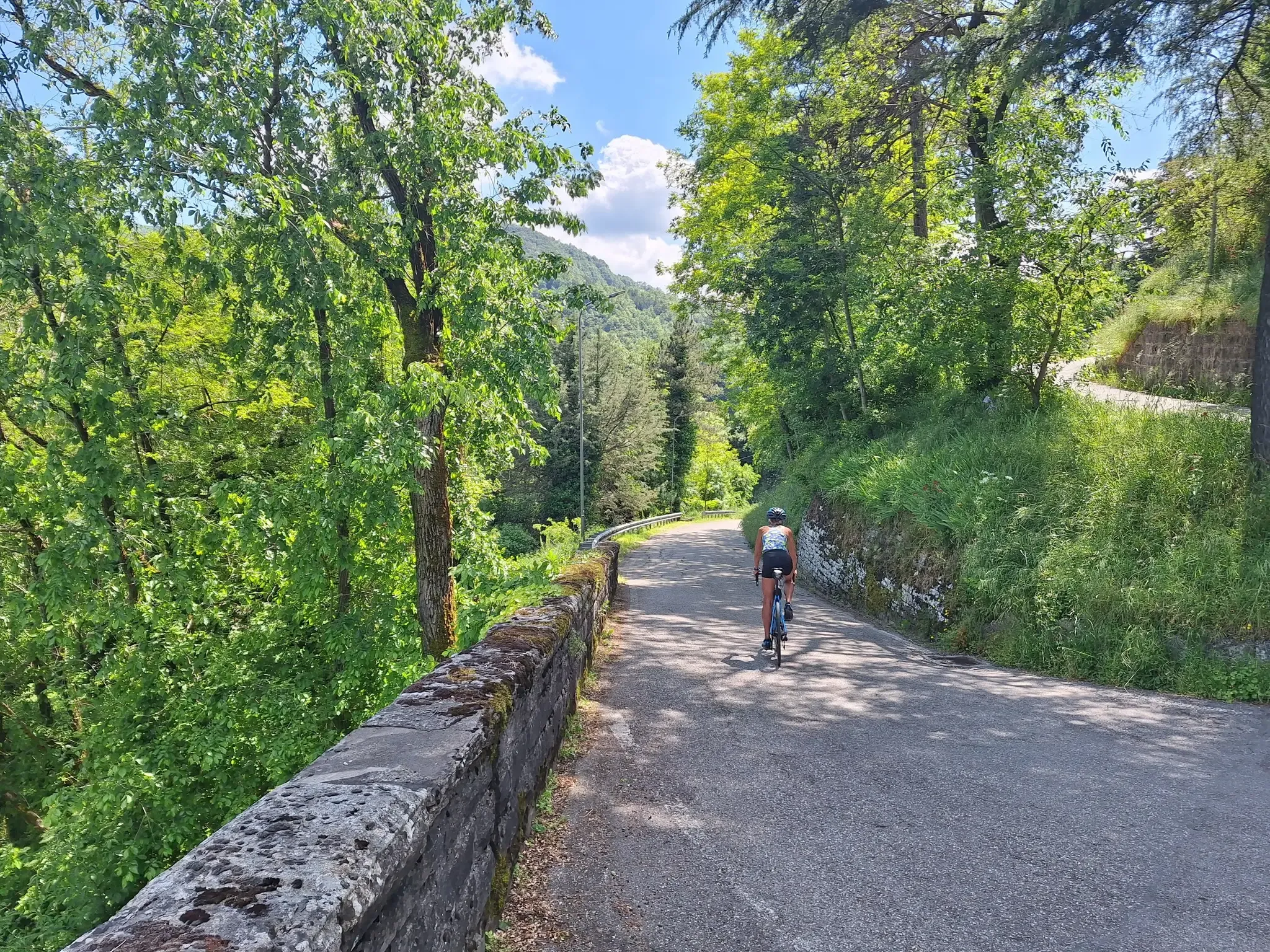
I would like to point out that at the moment the cycle path is only passable from Imola to Borgo Tossignano due to the flood. Even the ford is unusable.
2
0

Puuh, very exhausting to lift your bike over these steps!
1
0
Frequently Asked Questions
What unique geological features can I explore around Imola?
The region around Imola is rich in distinctive geological formations. You can explore the unique 'sabbie gialle' (yellow sands) at Bosco della Frattona, which are marine deposits from about a million years ago. Further afield, the Ridge of the Calanchi between Fiagnano and Monte del Re offers a suggestive gully with exposed sections and spectacular panoramic views. Additionally, the nearby Parco Regionale della Vena del Gesso Romagnola, a UNESCO World Heritage site, features a 25-kilometer-long silver chalk ridge with an extensive karst landscape of sinkholes, blind valleys, and caves.
Are there family-friendly natural monuments in the Imola area?
Yes, several natural monuments are suitable for families. Parco delle Acque Minerali is a historic green lung of Imola with recreational and educational paths, two play areas, and a rich variety of tree species. The Fegatella Spring is also considered family-friendly, offering a historical site with unique salt-chromium-ionic water. Parco Tozzoni, with its wide grassy clearings and network of dirt paths, is another excellent choice for walks and outdoor activities with children.
What kind of outdoor activities can I do near Imola's natural monuments?
The natural monuments around Imola offer diverse opportunities for outdoor activities. You can enjoy hiking, running, and cycling in Parco Tozzoni, or explore marked trails for nature enthusiasts and birdwatchers at Bosco della Frattona. For more adventurous activities, the Parco Regionale della Vena del Gesso Romagnola is ideal for trekking, mountain biking, and even guided speleological visits in its caves. For specific routes, you can find many options in the Hiking around Imola and Cycling around Imola guides.
Where can I find historical or cultural natural sites near Imola?
Imola offers natural sites with significant historical and cultural value. The Fegatella Spring is a historic site known for its healing waters, appreciated since 1337. Parco delle Acque Minerali, originally developed around healing sulphurous water springs discovered in 1830, boasts botanical and historical value. Additionally, the Monte Mauro Hermitage offers a suggestive point of reflection with a beautiful view, combining natural beauty with historical and religious significance.
Are there any natural monuments around Imola that offer panoramic views?
Yes, several natural monuments provide excellent panoramic views. The Ridge of the Calanchi between Fiagnano and Monte del Re is particularly noted for its spectacular and panoramic vistas. Parco Tozzoni also offers serene environments with panoramic views of the surrounding area. Furthermore, the Monte Mauro Hermitage provides a splendid view over the Zattaglia valley.
What is Bosco della Frattona and why should I visit it?
Bosco della Frattona is a 19-hectare Natural Reserve near Imola, considered a 'relic forest' that represents ancient woodlands. It's an ideal spot for nature enthusiasts, birdwatchers, and those interested in geology and paleontology due to its diverse flora, typical hilly fauna, and unique 'sabbie gialle' geological substrate. Visitors can explore a marked trail and learn more at its environmental education center. For more information, you can visit the Wikipedia page.
What is Parco Tozzoni like for visitors?
Parco Tozzoni is a public park located on the foothills southwest of Imola, spanning nearly 8 hectares. It features a mix of wooded areas, grassy clearings, and century-old trees. An extensive network of dirt paths makes it easily accessible for walking, running, and cycling. It's particularly appealing during summer months due to its natural coolness and offers serene environments for relaxation and recreation with panoramic views. You can find more details on visitareimola.it.
Can I find challenging trails or routes among the natural monuments?
Yes, for those seeking more challenging experiences, the Ridge of the Calanchi between Fiagnano and Monte del Re features exposed and narrow sections, requiring caution, especially on windy days or with wet ground. The Monte Mauro Hermitage is also part of an area with challenging trails suitable for mountain biking. The Parco Regionale della Vena del Gesso Romagnola offers trekking and mountain biking routes that can be quite demanding due to its karst landscape.
What is the best time to visit the natural monuments around Imola?
The natural monuments around Imola can be enjoyed throughout the year, but certain seasons offer unique advantages. Spring and autumn are ideal for hiking and exploring the diverse flora, with autumn providing beautiful foliage. Summer months are pleasant for visiting parks like Parco Tozzoni due to its natural coolness. However, some trails, like the Ridge of the Calanchi, are not recommended in winter or with very wet ground due to clayey mud.
Are there any natural monuments recognized for their global importance near Imola?
Yes, the Parco Regionale della Vena del Gesso Romagnola, located between Imola and Faenza, is recognized as a UNESCO World Heritage Site. Its global importance stems from its exceptional evaporitic karst and extensive cave systems, making it a unique geological and biodiversity hotspot.
Are there opportunities for birdwatching or observing wildlife?
Bosco della Frattona is an excellent location for birdwatching and wildlife observation. It boasts a rich fauna typical of the hilly region, including squirrels, hares, foxes, roe deer, several bat species, and numerous bird species, such as rare woodpeckers. The diverse flora also supports a vibrant ecosystem, making it a prime spot for nature observation.
What kind of trees and plants can I expect to see in the natural monuments?
The natural monuments around Imola feature a rich variety of flora. Bosco della Frattona is home to oaks, field maples, black locusts, hornbeams, and a rich undergrowth. Parco Tozzoni showcases century-old trees like oaks, cypresses, firs, and cedars, along with ornamental species. The Parco Regionale della Vena del Gesso Romagnola includes species like downy oak, Turkey oak, flowering ash, and maple, alongside Mediterranean influences such as holm oak, and even rare plant species like the Persian fern.
Most popular attractions around Imola

Get inspired with the komoot mobile app


Explore more
Extend your search for the best caves by checking out these guides of the top ones around Imola:
