Top 20 Natural Monuments around les Gavarres
Natural monuments around les Gavarres are found within a protected natural area in Catalonia, Spain. This massif is characterized by its undulating slopes and dense Mediterranean forests, forming a significant ecological and historical landscape. The region offers diverse natural features, from ancient woodlands to prominent peaks and geological formations. It provides opportunities to explore the typical Mediterranean woodland ecosystem and observe local flora and fauna.
Best natural monuments around les Gavarres
- The most popular natural monuments is Dolmen of the…
Last updated: June 27, 2026
Dolmen of the Cova d'en Daina
Highlight • Historical Site
Translated by Google •
Tip by

Castell de Palagret
Highlight • Castle
Translated by Google •
Tip by

Sign up now to discover places like this
Get recommendations on the best single tracks, peaks, & plenty of other exciting outdoor places.
Sign up for free
Montigalar Summit
Highlight • Summit
Tip by

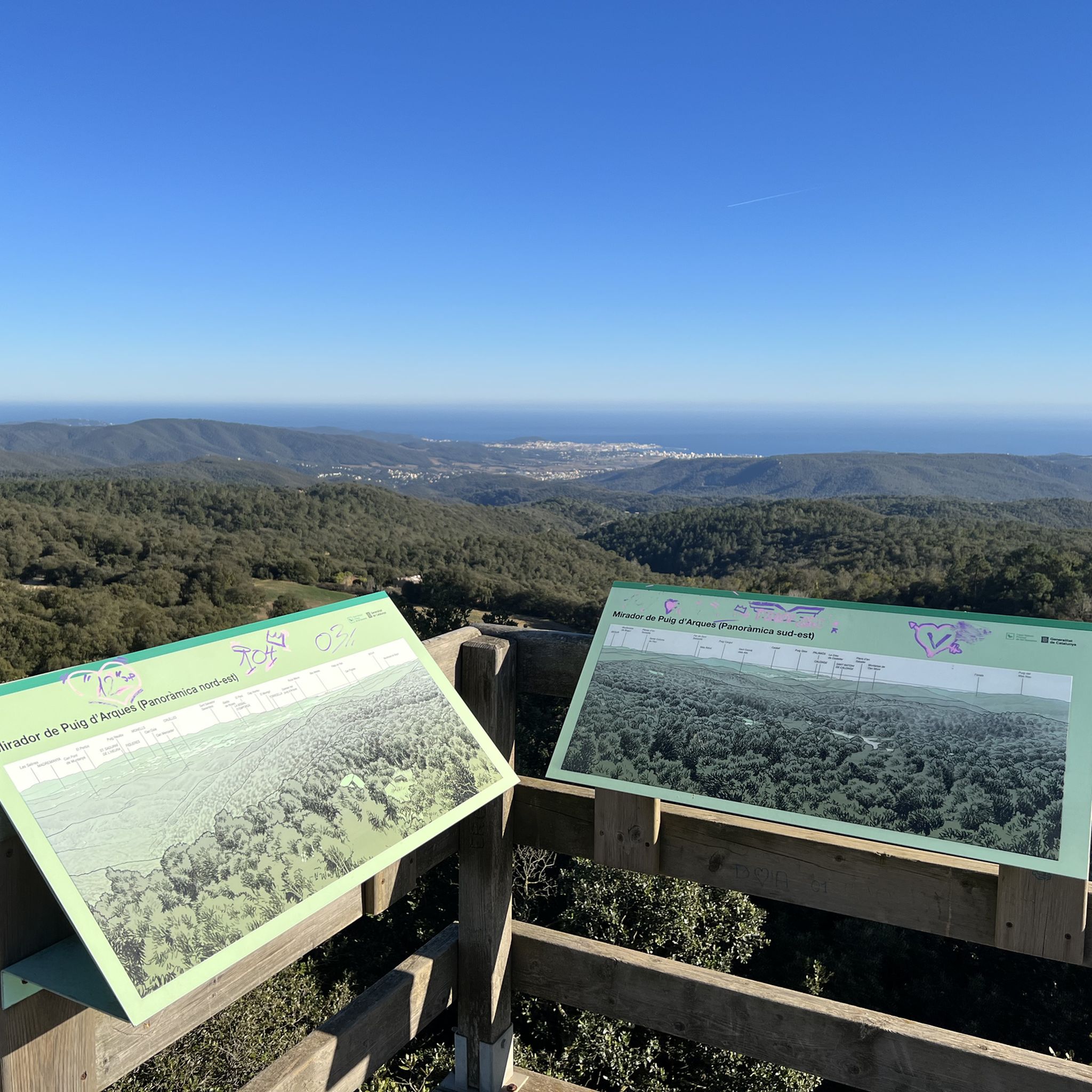
Puig d'Arques
Highlight • Summit
Translated by Google •
Tip by

El Surolí Tree
Highlight • Natural Monument
Translated by Google •
Tip by

Sign up for free to discover even more natural monuments around les Gavarres.
Sign up for free
Already have an account?
Start today with a free account
Your next adventure awaits.
Login or Signup
Other adventures around les Gavarres

Tips from the Community

The dolmen has the shape of a rectangular burial chamber, composed of large vertical stone slabs (orthostats) that support a horizontal upper slab (cover). It is surrounded by a tumulus, an accumulation of earth and stones that originally covered the entire structure, giving it the appearance of a small hill. It is approximately 7.5 metres long, with an inner chamber of 2 metres. Its entrance faces southeast, probably for astronomical or ritual reasons. It was used as a collective tomb, where the ancient inhabitants deposited the remains of the deceased along with offerings, tools, pottery and other funerary objects.
3
0
It was first documented in the 19th century, when the first archaeological investigations in the area began. The objects found in the dolmen, such as pottery and flint tools, have helped to understand the funerary and social customs of its builders. Legends related to witches and magic rituals circulate around the dolmen, common in the popular stories of the area. Like many dolmens, its orientation could be related to the position of the sun during the solstices, which reinforces its symbolic and spiritual importance.
3
0
It is one of the best preserved megalithic monuments in the region. This dolmen, built during the late Neolithic or Chalcolithic period (around 2,700-2,200 BC), is an impressive testimony to the funerary and spiritual practices of the prehistoric communities that inhabited this area.
4
0

There are also dolmens in Spain!
0
0

Impressive dolmen that is located a few meters from the center of Romanyà de la Selva and that makes us imagine the first hominids living in this maritime area of the Gavarres.
1
0

The castle of Palagret or Mabarrera is in the middle of the Palagret valley, at the top of a small hill, 178 m high, in the northernmost foothills of the Gavarres massif to the south-east of the Celrà center and to the south- west of Juià. Strategically located to control the Roman-era road that allowed access to Girona from the Baix Empordà through the Gavarres. Important medieval vestiges of the licorella walls of a rectangular construction as well as pre-Romanesque elements are preserved from the castle. The preserved remains could be dated to the 10th and 11th centuries,[1] and its last occupants left the premises between the end of the 15th century and the beginning of the 16th.[2] It is a building in Celrà (Gironès) declared a cultural asset of national interest.
0
0

It is a tree that is located one kilometer from the Sanctuary of Los Angeles. The surolí is a mixture of cork oak and holm oak and there are some specimens in Las Gavarras. This one in particular was the testimony of a love story: Legend has it that once upon a time there was a couple in love who loved each other very much. They had considered getting married but the boy had to do the service and was assigned far away from his mistress. The girl, sad, prayed to the Mother of God that her beloved would return soon and every time she passed in front of the surolí she threw stones. At the third time, the stone stuck. At the age of three, the boy returned and they were able to get married. From there the tradition was born that all single boys and girls went to the surolí to throw stones at it. They had to throw so many stones for it to stay hooked, so many years would pass until they found a husband or wife.
1
0

Montigalar (467m) or Montigalar Gros (to differentiate it from Montigalar Petit (377m) which is 720m to the SW) is a mountain in the Gavarres that is included in the list of 100 peaks of the F.E.E.C. https://www.feec.cat/activitats/100-cims/cim/montigalar/ At its rocky summit we find a geodesic vertex and some andromines that certain hikers like to decorate the mountain tops. If the day is clear we will be able to enjoy some magnificent panoramas, so towards the NE we could distinguish Sant Salvador Saverdera, El Perní, the Bay of Roses, El Puig Rodó, Montplà (Montgrí), among others...
0
0
Frequently Asked Questions
What are some of the most popular natural monuments to visit in Les Gavarres?
Visitors frequently enjoy the Dolmen of the Cova d'en Daina, a well-preserved megalithic monument. Other popular spots include Puig d'Arques, which offers extensive views, and the Montigalar Summit, known for its panoramic vistas, sometimes extending to the sea.
What kind of natural landscapes and features can I expect to see in Les Gavarres?
Les Gavarres is characterized by its dense Mediterranean forests, primarily composed of cork oak and holm oak, with diverse flora like *ginesta* and unique orchids. You'll also find undulating slopes, prominent peaks like Puig Gavarra and Puig d'Arques, and ancient geological formations of slate, schist, and granite.
Are there historical or archaeological natural monuments to explore in Les Gavarres?
Yes, Les Gavarres has a rich prehistoric legacy. You can explore numerous megalithic monuments, including the impressive Dolmen of the Cova d'en Daina and the menhir at La Murtra. These sites offer a glimpse into the region's 5,000-year human history, often integrated beautifully into the natural landscape.
Are there any viewpoints offering panoramic views of Les Gavarres?
Absolutely. Puig d'Arques, one of the highest points, provides stunning views across Les Gavarres, La Costa Brava, Gironès, and l'Empordà. The Montigalar Summit also offers spectacular panoramas, sometimes reaching the Mediterranean Sea. Additionally, the Mare de Déu dels Àngels Sanctuary, while a historical site, doubles as a natural viewpoint.
Is Les Gavarres suitable for family visits?
Yes, Les Gavarres offers family-friendly options. The gentle topography of many areas makes routes accessible. For instance, the El Surolí Tree is a unique natural monument with a charming local legend that can be an engaging stop for families. There are also easy hiking routes available, such as the 'Fonteta to Fitor and Tres Peus Route' mentioned in the Hiking around les Gavarres guide.
What is the best time of year to visit the natural monuments in Les Gavarres?
The best time to visit Les Gavarres is generally during spring (March to May) and autumn (September to November). During these seasons, the weather is mild and pleasant for outdoor activities, and the natural beauty of the forests is at its peak, with vibrant flora in spring and rich colors in autumn. Summer can be hot, while winter is cooler but still suitable for hiking on clear days.
What outdoor activities can I do near these natural monuments?
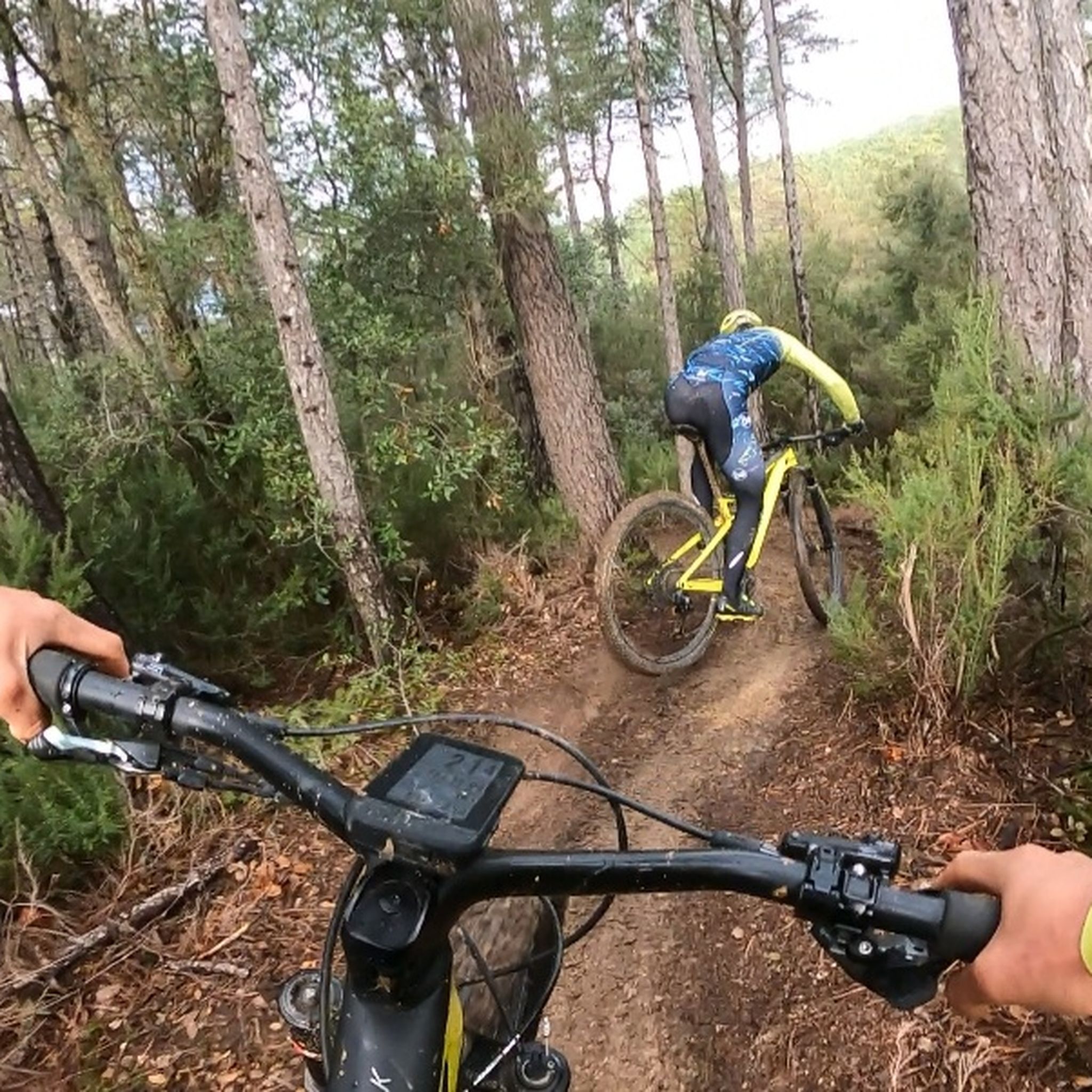
Les Gavarres offers a variety of outdoor activities. You can explore numerous trails for hiking, running, and mountain biking. The dense forests provide shaded routes, and the peaks offer rewarding views. The 'Dolmens Route' is specifically designed for those interested in combining natural beauty with ancient history.
Are there specific rules for visiting with dogs in Les Gavarres?
While Les Gavarres is a natural park, specific detailed rules for dogs are not provided in the guide data. Generally, in protected natural areas, it's advisable to keep dogs on a leash to protect wildlife and ensure a pleasant experience for all visitors. Always clean up after your pet. For official regulations, you might check the Consorci de les Gavarres website.
What kind of wildlife can I observe in Les Gavarres?
Les Gavarres is a haven for biodiversity. You might spot various bird species, including European nightjars, lesser spotted woodpeckers, owls, and hawks. Mammals such as wild boars, badgers, southwestern water voles, weasels, and polecats also inhabit the area, along with 14 species of endangered bats. The diverse forest ecosystems provide crucial habitats for this rich fauna.
What do visitors enjoy most about the natural monuments in Les Gavarres?
Visitors particularly appreciate the tranquility and natural beauty of the area. The opportunity to explore ancient historical sites like the Dolmen of the Cova d'en Daina, combined with the stunning panoramic views from summits like Puig d'Arques and Montigalar Summit, are frequently highlighted. The network of walking and cycling routes allowing immersion in the diverse Mediterranean forests is also a major draw.
Are there any castles or historical ruins that are considered natural monuments in the area?
Yes, Castell de Palagret is a notable historical site within the natural landscape. Although in ruins, it offers a spectacular setting and incredible views over the Palagret creek valley, making it a worthwhile stop for those interested in both history and natural beauty.
How accessible are the natural monuments in Les Gavarres for different fitness levels?
The natural monuments in Les Gavarres cater to various fitness levels. While some summits like Montigalar Summit might require a moderate effort, the overall gentle topography of the Gavarres mountains means many routes are accessible. There are easy hiking options, such as the 'Romanyà Church – Dolmen of the Cova d'en Daina loop', which is an easy 3.4 km route mentioned in the Hiking around les Gavarres guide.
Most popular routes around les Gavarres
Most popular attractions around les Gavarres

Get inspired with the komoot mobile app


Explore more
Extend your search for the best caves by checking out these guides of the top ones around les Gavarres:
