Top 14 Natural Monuments in the Guadalupe Mountains
Best natural monuments in the Guadalupe Mountains showcase a landscape shaped by an ancient marine fossil reef from the Permian period. This region features diverse ecosystems, ranging from Chihuahuan Desert lowlands to montane forests. Dramatic elevation changes contribute to its varied natural features, making it a significant destination for exploring geological formations and unique environments. The park's natural monuments include geological wonders and unique ecosystems.
Best natural monuments in the Guadalupe Mountains
- The most popular natural monuments is Carlsbad Caverns, a cave that features more than 119 caves with stunning formations. It offers extensive cave formations and trails for exploration.
- Another must-see spot is Devil's Hall, a challenging canyon that involves scrambling. This narrow canyon is characterized by unique rock formations and scenic vistas.
- Visitors also love Guadalupe Peak, a summit known as the "Top of Texas." It offers panoramic views of the surrounding mountains and the expansive desert.
- Guadalupe Mountains is known for its caves, canyons, and summits. The region offers a variety of natural monuments to see and explore, including ancient reef formations and unique desert oases.
- The natural monuments in the Guadalupe Mountains are appreciated by the komoot community, with 8 upvotes and 36 photos shared across the highlights.
Last updated: July 10, 2026
Carlsbad Caverns
Highlight • Cave
There is also a bat flight program from May through October, which takes place at the Bat Flight Amphitheater, located at the Natural Entrance to Carlsbad Cavern. The start time for the program changes as the summer progresses and sunset times change.
Camping at Carlsbad Caverns National Park is allowed only in the backcountry. You need to obtain a free backcountry use permit at the visitor center on the day you arrive. Backcountry camping is only allowed west of Rattlesnake Canyon trailhead off the Desert Scenic Loop Road and south of the Guadalupe Ridge Trail to the park boundary for approximately two miles, after which camping is allowed both north and south of the trail.
Tip by

Devil's Hall
Highlight • Canyon
Tip by

Sign up now to discover places like this
Get recommendations on the best single tracks, peaks, & plenty of other exciting outdoor places.
Sign up for free
Guadalupe Peak
Highlight • Summit
Tip by

Carlsbad Caverns Cave Interior
Highlight • Cave
Tip by

Smith Spring
Highlight • Natural Monument
Tip by
Gypsum Sand Dunes
Highlight • Natural Monument
Translated by Google •
Tip by

The Grotto
Highlight • Cave
Tip by
Permian Reef Trail (Switchback Section)
Highlight (Segment) • Trail
Tip by
Bush Mountain
Highlight • Summit
Tip by
Hunter Peak
Highlight • Summit
Tip by
Sign up for free to discover even more natural monuments in the Guadalupe Mountains.
Sign up for free
Already have an account?
Start today with a free account
Your next adventure awaits.
Login or Signup
Popular around Guadalupe Mountains

Other adventures in the Guadalupe Mountains

Tips from the Community

Very impressive. Nice visitor center. Great place
1
0

Must do if the weather is right. Mid fall to early spring is the best time. Can take as little as 5 hours if you are reasonably fit (like 9 minute mile).
0
0

Also known as the Salt Basin Dunes, These dunes are truly special because they are made of gypsum, a mineral that makes them bright white, almost like snow! Unlike regular sand, gypsum sand is softer and cooler to the touch. The dunes are still growing and moving, sometimes shifting many feet each year.
0
0

This steep section of the Permian Reef Trail takes you up to the top of Wilderness Ridge through an ancient, fossilized reef known as the Capitan Reef. The trail was designed to showcase preserved Permian age geologic and fossil features in the park; you can download a NPS guide to the marked fossils along this trail ( http://npshistory.com/brochures/gumo/permian-reef-trail.pdf ). As you ascend this challenging, but fun, section of trail you get increasingly great views of the large imposing cliff-sides that comprise the bulk of the ancient reef and down into McKittrick Canyon. As you climb, you will pass by some amazing geologic features like a free-standing natural rock pillar, numerous fossils, the striking rounded rock rim of the Wilderness Ridge, and sweeping views across the park.
1
0
Deep in McKittrick Canyon is a small, shaded spot that houses a small, unique-looking cave at the base of rounded cliff. There are a few wooden picnic tables near the Grotto, making it a great place to stop for lunch or a snack on your hike.
1
0
The remote Bush Mountain is deep in the Guadalupe Mountains Wilderness and can only be accessed by hiking or horse-packing. Standing at 8,631 feet, Bush Mountain is the second highest peak in Texas. Many who hike Bush Mountain choose to make it an overnight trip; there is a wilderness campground and radio tower below the southeast side of the summit. Regardless of whether you make it a day hike or part of a backpacking trip, Bush Mountain is a great summit with lovely views of the mountains and desert surrounded by scrubby pine trees and grasses.
1
0
Hunter Peak stands at 8,368 feet and was named after two ranchers, J. C. Hunter and J. C. Hunter, Jr., who owned much of the land that is now a part of the park. Hunter Peak has some of the best views in the Guadalupe Mountains National Park. Sweeping views of the vast desert are to the south, to the north are views of the Bowl, and to the west are phenomenal views of Guadalupe Peak. Hunter Peak is a proud summit and a great place to take in the some of the best views in Guadalupe National Park.
1
0
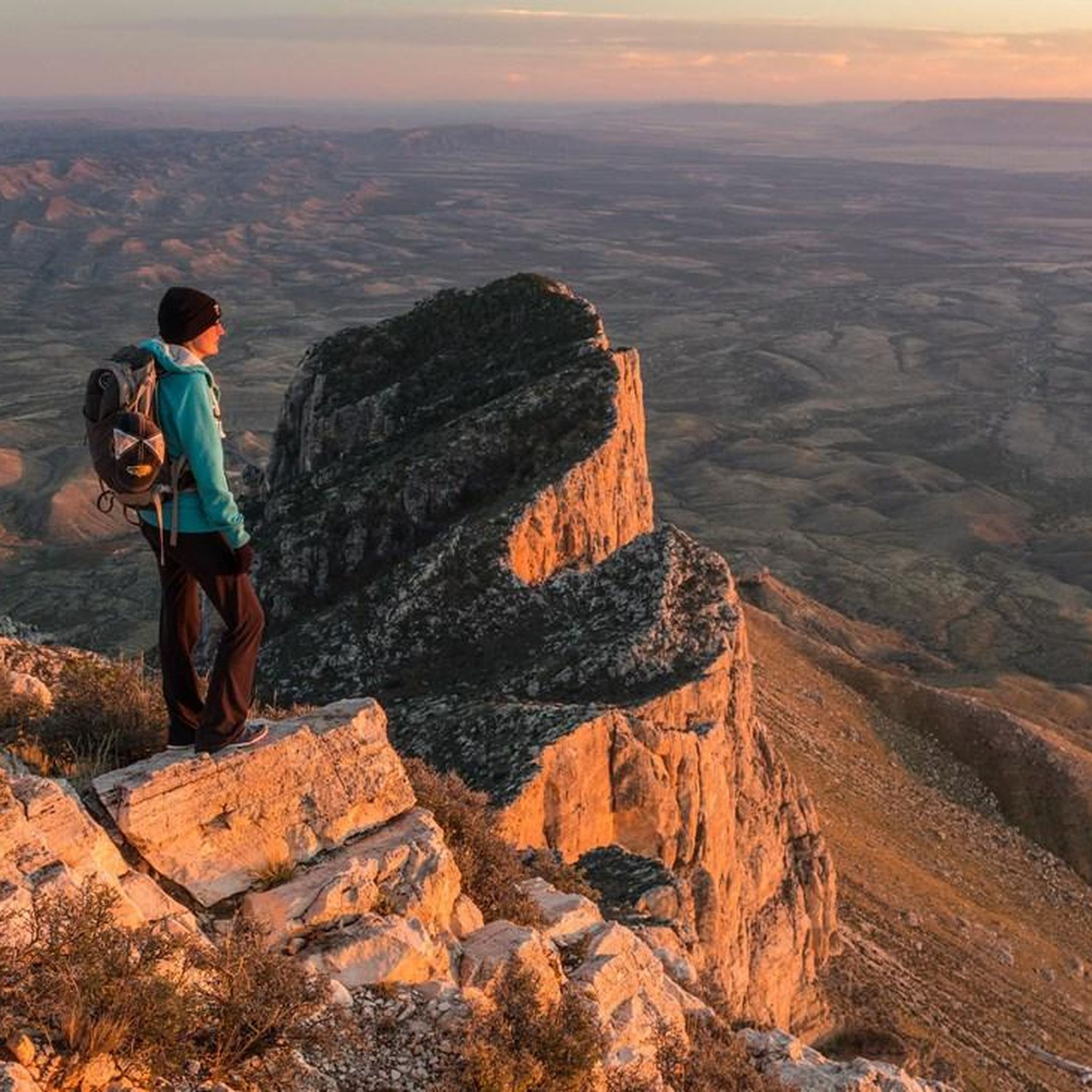
Also known as the "Top of Texas," Guadalupe Peak stands at 8,751 feet and is the highest point in the state of Texas. The summit hosts not only spectacular, panoramic views of the surrounding mountains, including the sheer cliffs of El Capitan, and the expansive desert, but it also has a monument marking its status as Texas's highest peak. This is a great place to eat a snack, snap some photographs, and relax after the strenuous hike.
1
0
Frequently Asked Questions
What are some of the most popular natural monuments to visit in the Guadalupe Mountains?
Visitors frequently explore Carlsbad Caverns, known for its extensive cave formations and bat flight program. Another popular choice is Guadalupe Peak, the highest point in Texas, offering panoramic views. For a challenging adventure, Devil's Hall provides a unique canyon experience with scrambling.
Are there any family-friendly natural monuments or activities in the Guadalupe Mountains?
While many trails are challenging, the Gypsum Sand Dunes offer a unique and accessible landscape for families to explore. For a less strenuous experience, the Carlsbad Caverns Visitor Center provides exhibits and a park film, and the Big Room Trail within Carlsbad Caverns is generally manageable for various fitness levels.
What kind of geological features can I expect to see in the Guadalupe Mountains?
The Guadalupe Mountains are renowned for being the remnants of an ancient marine fossil reef from the Permian period, known as the Capitan Reef. You'll encounter dramatic limestone formations like Guadalupe Peak and El Capitan, deep canyons such as Devil's Hall, and extensive cave systems like Carlsbad Caverns. The Gypsum Sand Dunes also present a striking contrast with their bright white sands.
What is the best time of year to visit the natural monuments in the Guadalupe Mountains?
Mid-fall to early spring is generally considered the best time to visit, especially for strenuous hikes like Guadalupe Peak, due to more moderate temperatures. McKittrick Canyon is particularly stunning in the fall for its vibrant foliage. Summer can be very hot, making early morning or late afternoon visits preferable for outdoor activities.
Are there opportunities for wildlife spotting near these natural monuments?
Yes, the diverse ecosystems, ranging from Chihuahuan Desert lowlands to montane forests, support a rich array of plant and animal species. Smith Spring, an oasis in the desert, is an excellent spot to observe animals that rely on this vital water source. Birdwatching is also a popular activity throughout the park.
What outdoor activities, particularly hiking, can I do near the natural monuments?
The Guadalupe Mountains offer numerous hiking opportunities. You can find a variety of trails, from easy strolls to challenging ascents. For more information on specific routes and their difficulty, you can explore the Hiking in the Guadalupe Mountains guide, which includes routes like The Bowl Loop and the Guadalupe Peak Trail. For easier options, check the Easy hikes in the Guadalupe Mountains guide.
What should I know about visiting Carlsbad Caverns?
Carlsbad Caverns features over 119 caves. You can explore the Big Room Trail and Natural Entrance Trail at your own pace or join a guided tour. From May through October, a bat flight program takes place at the Bat Flight Amphitheater. Backcountry camping is permitted in designated areas with a free permit obtained at the visitor center.
What makes Devil's Hall a unique hiking experience?
Devil's Hall is a challenging hike through a narrow canyon characterized by unique rock formations. The trail involves some scrambling, especially through the 'hall' itself, which acts as a natural wind tunnel. It's an adventurous and rewarding experience, but remember to bring plenty of water and snacks.
Where can I find an oasis in the desert within the Guadalupe Mountains?
Smith Spring is a notable oasis in the desert foothills. It's heavily vegetated and stands in stark contrast to the surrounding dry, rocky landscape. It's a fantastic spot to relax in the shade, take photographs, and observe wildlife drawn to this important water source.
What is the significance of the Permian Reef Trail?
The Permian Reef Trail (Switchback Section) allows hikers to traverse parts of the ancient Capitan Reef, a fossilized marine reef that formed approximately 265 million years ago. This geological marvel is considered one of the best-preserved fossil reefs globally, offering a unique glimpse into prehistoric marine environments.
Are there any specific viewpoints for panoramic scenery?
Yes, Guadalupe Peak, also known as the 'Top of Texas,' offers spectacular panoramic views of the surrounding mountains, including the sheer cliffs of El Capitan, and the expansive Chihuahuan Desert. Many other trails and summits like Bush Mountain and Hunter Peak also provide excellent viewpoints.
What should I know about visiting the Carlsbad Caverns Visitor Center?
The Carlsbad Caverns Cave Interior highlight refers to the extensive visitor center, which is an essential first stop. It offers hands-on exhibits, a park film, a gift shop, a restaurant, and a bookstore, providing valuable information before you explore the caverns themselves.
Most popular routes in the Guadalupe Mountains
Most popular attractions in the Guadalupe Mountains

Get inspired with the komoot mobile app


