The best MTB trails around El Burgo Ranero
4.0
(2)
57
riders
6
rides
Mountain bike trails around El Burgo Ranero are situated within the predominantly flat, agricultural landscape of the "Tierra de Campos" and "moors of León" in southeast León. This region is characterized by vast, cultivated plains and open terrain, offering long, straight paths suitable for endurance cycling. The area is part of the historic Camino de Santiago, providing a network of rural tracks with gradual inclines rather than significant mountainous features.
Best mountain bike trails around El Burgo Ranero
- The most…
Last updated: July 4, 2026
4.0
(2)
45
riders
Hard mountain bike ride. Very good fitness required. Suitable for all skill levels.
2
riders
Moderate mountain bike ride. Good fitness required. Suitable for all skill levels.

Sign up for free
3
riders
55.7km
04:27
300m
300m
Moderate mountain bike ride. Good fitness required. Suitable for all skill levels.
2
riders
51.8km
03:57
290m
290m
Moderate mountain bike ride. Good fitness required. Suitable for all skill levels.
2
riders
55.0km
04:00
250m
250m
Moderate mountain bike ride. Good fitness required. Suitable for all skill levels.
Our route recommendations are based on thousands of hikes, rides, and runs completed by other people on komoot.
Start today with a free account
Your next adventure awaits.
Login or Signup
Popular around El Burgo Ranero

Tips from the Community

A stopover town that knows exactly what it is: a necessary pause. There's no artifice here, just routine, backpacks, bikes leaning against the wall, and glances exchanged without questions. San Martín doesn't try to impress you; it welcomes you, helps you clear your head, and lets you move on. And that, on the road, is worth more than a thousand promises.
0
0
Located beside the Torío River, this modern church marks the southern entrance to León with a simplicity that contrasts with the mountains in the background. It was built on the site where locals used to gather to cross the river when the old bridge overflowed. Every year, during the neighborhood festival, the bells ring at dusk, their sound mingling with the echo of the water. A small church that preserves the peaceful spirit of the river people.
1
0
The church tower of Valverde de la Virgen is visible from several rural roads in the area, ideal as a landmark and cultural stop on MTB or gravel routes. Its slender and sober silhouette stands out among the open landscape of León. Access by bike is easy, with paved terrain or compacted tracks depending on the approach to the route. It's a good excuse to stop, take a photo, and recharge your batteries before continuing on to destinations such as La Virgen del Camino or San Miguel del Camino. A good place to combine culture, easy riding, and plateau scenery.
0
0

A beautiful, lively square right at the entrance to the old town of Leon.
4
0

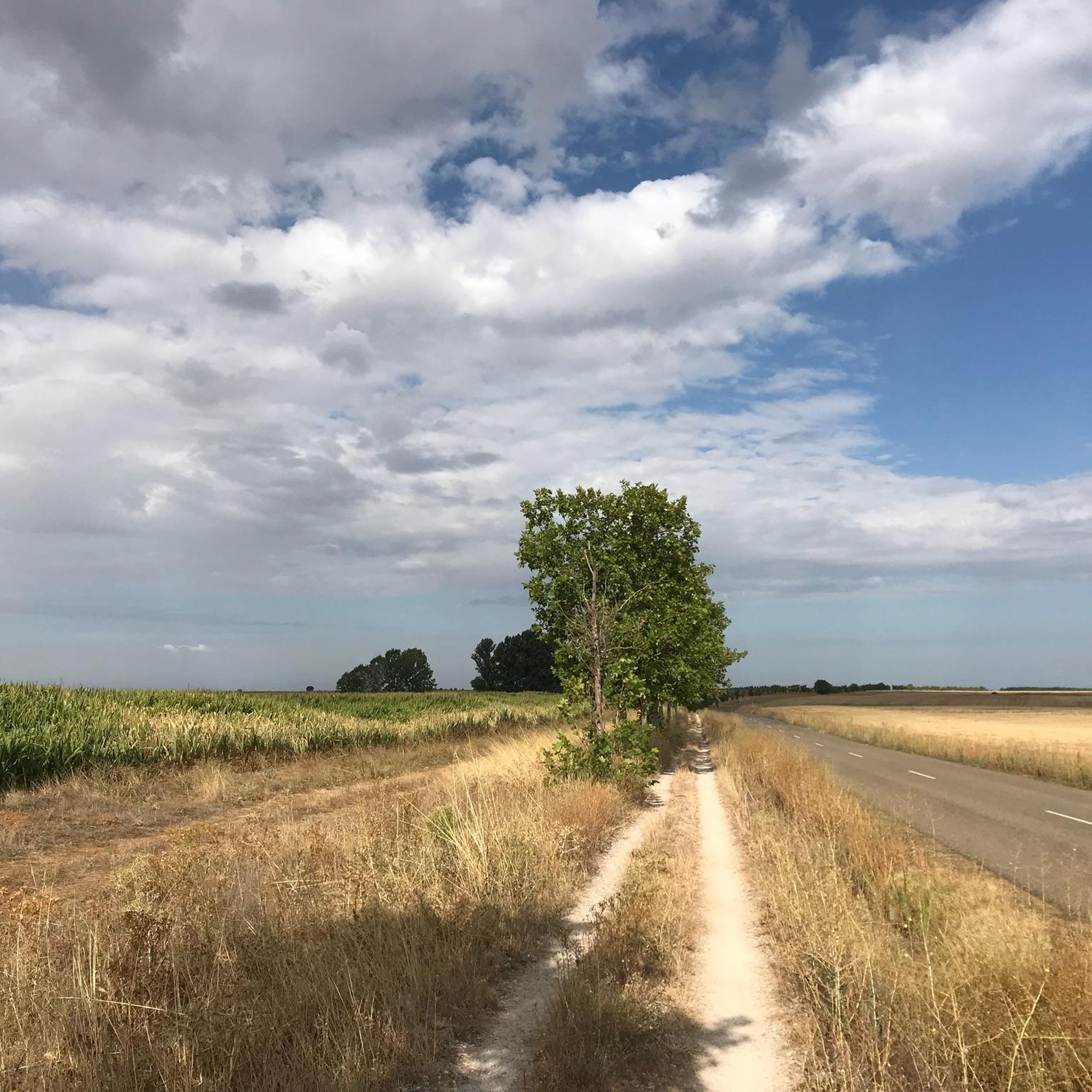
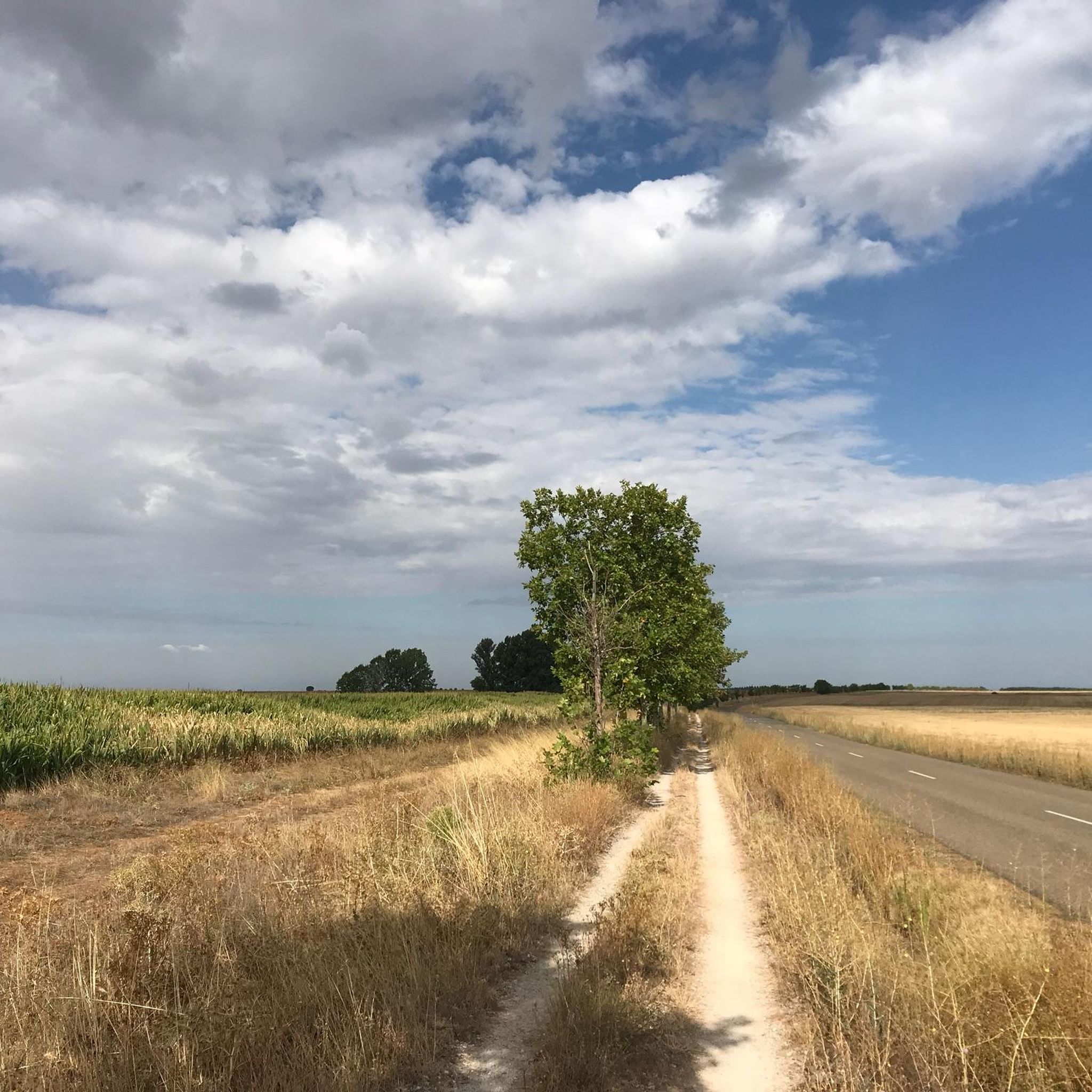
The Meseta is a vast plateau in Spain, which forms an important part of the route of the Camino Francés to Santiago de Compostela. The Meseta is known for its endless cornfields and wide views.
3
0
EL LEÓN DE SALEAL: We go back to Roman times to understand part of the theme of this sculpture. Cloacina, in Roman mythology, was the goddess who ruled over the Cloaca Máxima, the sewer system of Rome. The sewer name comes from the name of this goddess, because thanks to the origin of sewer systems, a quality of life was achieved in terms of sanitation of urban environments and public health from the beginning to the present day. It should be remembered that the origin of the name of this city and province of León comes from the word legio ("legion"). Legio VII Gemina was the Roman camp that settled here and with it the origin of the city of León. A lion with strength and claws as a symbol of the sanitation system (the modern version of Cloacina Máxima) in constant renewal and maintenance. The goal was achieved: to do something symbolic and reflect the efforts and human work of so many years, to give solidity to our public health and the health of the environment.
6
0
The Arco de San Benito is an impressive monument in Sahagún, located in the region of Castilla y León, Spain. It was built around 1662 by the architect Felipe Berrojo to replace the old Romanesque portal of the Monasterio de San Benito. The arch is designed as a triumphal arch, under which the N-120 passes, and is also known as "la puerta de Sahagún" (the gate of Sahagún). The monument is richly decorated with a central shield, inscriptions and sculptures of Saints Facundo and Primitivo. At the top is the royal shield, and there are also sculptures of Alfonso III and Alfonso VI, who were important protectors of the monastery.
8
0
Very well done how the lion climbs out of the drain here
5
0
Frequently Asked Questions
What is the typical terrain and difficulty for mountain biking in El Burgo Ranero?
The terrain around El Burgo Ranero is characterized by vast, cultivated plains and open landscapes, part of the "Tierra de Campos." Routes generally feature long, straight paths with gradual inclines, making them suitable for endurance cycling and gravel biking rather than technical mountain biking. Most routes are classified as moderate, with one difficult option for longer distances.
Are there any easy mountain bike trails suitable for beginners in El Burgo Ranero?
While there are no routes explicitly classified as 'easy' in the guide, the region's generally flat and open terrain, particularly along sections of the Camino de Santiago, offers less technical riding. Routes like the Bercianos del Real Camino – Meseta Central loop from Calzadilla de los Hermanillos are moderate and cover 32.9 km, providing a good option for those looking for a less strenuous ride through cultivated plains.
Are there any challenging mountain bike routes for experienced riders?
For experienced riders seeking a significant challenge, the Casa Botines Gaudí Museum – La Virgen del Camino loop from Palanquinos is a difficult route spanning 142.6 km. This extensive ride offers a long-distance endurance experience across the plains, requiring considerable stamina.
What interesting sights or attractions can I find along the mountain bike trails?
The routes often traverse historical areas and offer glimpses of local heritage. You can explore sites like the San Benito Arch and Ruins of the Monastery of San Benito, or the Hermitage of Our Lady of Perales. The region also features unique natural points like the Reliegos Meteorite Impact Site.
Are the mountain bike routes around El Burgo Ranero suitable for families?
The generally flat and less technical nature of the trails, particularly the rural tracks and sections of the Camino de Santiago, can be suitable for families looking for longer, less challenging rides. Routes like the Historic Monuments of Sahagún – Meseta Central loop from Cea offer wide horizons and quiet stretches, ideal for a family outing.
Can I bring my dog on the mountain bike trails around El Burgo Ranero?
Many rural tracks and sections of the Camino de Santiago are generally accessible for dogs, especially in open, agricultural areas. However, it's always advisable to keep your dog on a leash, particularly near cultivated fields or livestock, and to check local regulations for specific areas or nature reserves you might pass through.
Are there circular mountain bike routes available?
Yes, several routes are designed as loops, allowing you to start and finish in the same location. Examples include the Historic Monuments of Sahagún – Meseta Central loop from Sahagún and the Historic Monuments of Sahagún – El Burgo Ranero loop from Sahagún, both offering moderate rides through the Meseta Central.
When is the best time of year to go mountain biking in El Burgo Ranero?
The region experiences hot, dry summers and cold winters. Spring (April-June) and autumn (September-October) generally offer the most pleasant temperatures for cycling, avoiding the intense summer heat and potential winter chill. These seasons also provide beautiful views of the changing agricultural landscape.
Are there places to eat or stay near the mountain bike trails?
El Burgo Ranero is a stop on the Camino de Santiago, meaning it has basic amenities for pilgrims and travelers. You can find small cafes, bars (like Bar Elvis), and albergues (pilgrim hostels) or guesthouses in the village and surrounding towns like Sahagún. These provide opportunities for refreshments and accommodation.
Is parking available at the trailheads?
Given the rural nature of the area and its connection to the Camino de Santiago, parking is generally available in the villages where routes often start or pass through, such as El Burgo Ranero, Palanquinos, or Calzadilla de los Hermanillos. Look for designated parking areas or suitable roadside spots, being mindful not to obstruct local traffic or agricultural access.
Most popular attractions around El Burgo Ranero

Get inspired with the komoot mobile app


Explore more
Browse the best MTB trails in other regions.
