The best gravel rides around Marest-Dampcourt
4.8
(3)
7
riders
2
rides
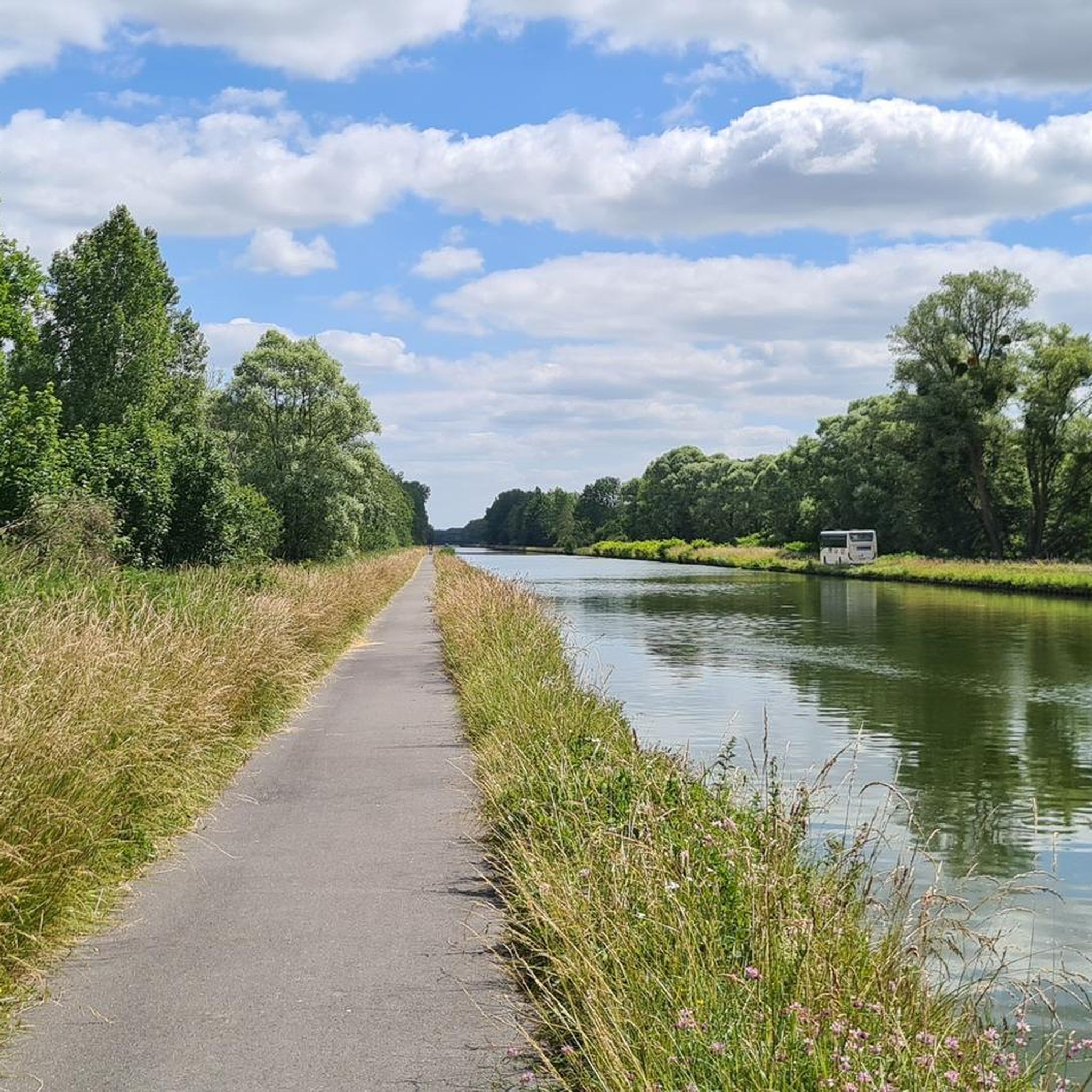
Gravel biking around Marest-Dampcourt offers routes through the Oise Valley, an alluvial flood plain known for its natural features. The area includes the Natura 2000 site "La Pâture de Dampcourt," which features rare open peatland sectors. These environments provide varied terrain and diverse scenery suitable for gravel exploration.
Best gravel bike trails around Marest-Dampcourt
- The most popular gravel bike trail is Noyon to Compiègne – Tour de l'Oise gravel, a 41.8 miles (67.3 km) trail that takes 5 hours…
Last updated: July 10, 2026
1
riders
66.6km
04:18
400m
410m
Hard gravel ride. Good fitness required. You may need to push your bike for some segments of this route.
5.0
(1)
2
riders
65.2km
04:06
460m
460m
Hard gravel ride. Very good fitness required. Mostly paved surfaces. Suitable for all skill levels.

Sign up for free
4.5
(2)
4
riders
48.3km
02:53
310m
310m
Moderate gravel ride. Good fitness required. Mostly paved surfaces. Suitable for all skill levels.
Our route recommendations are based on thousands of hikes, rides, and runs completed by other people on komoot.
Start today with a free account
Your next adventure awaits.
Login or Signup




Tips from the Community

In the heart of the Compiègne forest, the Armistice Glade marks the place where the armistice was signed on November 11, 1918, and then that of June 22, 1940. The site today includes the memorial with the “Armistice Wagon” (recreated car), the statue of Marshal Foch and the Alsace-Lorraine monument.
0
0
Located along the canal in Longueil-Annel, the Cité des Bateliers (Watermen's City) showcases the history of boatmen and local river life. The museum, housed in a former boatman's house and barges, showcases the daily lives of families who lived by the rhythm of navigation.
0
0

Perfect for a picnic in the castle grounds!
0
0

Anecdote: A bitter historical turning point occurred in 1940, when Adolf Hitler chose the exact same spot to sign the French surrender to Nazi Germany — in the same train car. He literally reenacted the 1918 scene, but with the roles reversed. Shortly afterwards, he had the car shipped to Berlin as a trophy. The site was partly destroyed, but was redeveloped as a memorial site after the war.
7
0
The Clairière de l'Armistice, or Armistice Place, is a clearing deep in the Compiègne Forest in northern France. It was here that the armistice ending World War I was signed on 11 November 1918. The signing took place in a railway carriage belonging to Marshal Foch, who had been brought to this remote location especially for discretion.
7
0


In good weather, the garden is peaceful for relaxing or strolling. The cherry on the cake is inside the castle: beautiful reconstructions and conservations
0
0
Frequently Asked Questions
How many gravel bike trails are available around Marest-Dampcourt?
There are 4 gravel bike trails around Marest-Dampcourt. These include 1 easy, 2 moderate, and 1 difficult route, offering options for various skill levels.
What do other gravel bikers enjoy about the trails in Marest-Dampcourt?
The trails around Marest-Dampcourt are highly rated by the komoot community, with an average score of 4.8 stars from over 4 reviews. Riders often praise the unique natural features, especially the rare open peatland sectors within the Natura 2000 site "La Pâture de Dampcourt," and the diverse scenery of the Oise Valley.
Are there easy gravel bike routes suitable for beginners in Marest-Dampcourt?
Yes, there is one easy gravel bike route available: L'EuroVélo 3/Scandibérique – Kirche in Chauny loop from Caumont. This 23.1 km (14.3 miles) loop is a good option for those new to gravel biking or looking for a more relaxed ride.
Are there any circular gravel bike routes around Marest-Dampcourt?
Yes, several routes are circular. For example, the difficult Schleuse bei Appilly – Château de Blérancourt loop from Appilly covers 65.2 km (40.5 miles), and the moderate Coucy-le-Château-Auffrique – Château de Coucy loop from Sinceny is 48.3 km (30.0 miles) long. The easy L'EuroVélo 3/Scandibérique – Kirche in Chauny loop from Caumont is also a circular option.
What kind of landscapes can I expect to see on a gravel bike ride in Marest-Dampcourt?
Gravel biking in Marest-Dampcourt offers diverse scenery within the Oise Valley. You'll encounter the unique ecosystems of the Natura 2000 natural site "La Pâture de Dampcourt," known for its rare open peatland sectors. This area provides varied terrain and opportunities to observe local biodiversity.
What are some notable natural features or wildlife I might encounter?
The region is part of a Natura 2000 site, "La Pâture de Dampcourt," which is an alluvial flood plain with rare open peatland sectors. This biodiverse environment supports species like the Large Copper butterfly, the Scarce Aeshna dragonfly, and the Bluethroat bird. Keep an eye out for these unique inhabitants while exploring the trails.
Are there any specific attractions or landmarks along the gravel routes?
While the primary attraction is the natural landscape, some routes pass near historical sites. For instance, the Schleuse bei Appilly – Château de Blérancourt loop from Appilly explores the area around the Château de Blérancourt. You can also find nearby attractions like the Notre-Dame de Noyon Cathedral or Étang Montplaisir, which are accessible from some routes.
What is the best time of year for gravel biking in Marest-Dampcourt?
The region's natural features, including its peatlands, suggest that spring and autumn might offer the most pleasant conditions for gravel biking, with milder temperatures and vibrant natural colors. Summer can also be enjoyable, but always check local weather forecasts.
Are there any specific permits required for cycling in the Aisne department?
Generally, no specific permits are required for cycling on public paths and trails in the Aisne department. However, if you plan to venture into very specific protected areas or private lands, it's always wise to check local regulations. The Natura 2000 site "La Pâture de Dampcourt" is a protected area, but public access for activities like cycling is typically permitted on designated trails.
Where can I find more information about the Natura 2000 site "La Pâture de Dampcourt"?
You can learn more about the unique natural features and ecological importance of "La Pâture de Dampcourt" by visiting the official tourism website for the Hauts-de-France region: tourisme-en-hautsdefrance.com.
Are there any routes that connect towns or offer longer journeys?
Yes, the difficult Noyon to Compiègne – Tour de l'Oise gravel route is a substantial 67.3 km (41.8 miles) trail that connects two towns, offering a longer ride through the Oise Valley.
Most popular routes around Marest-Dampcourt
Most popular attractions around Marest-Dampcourt

Get inspired with the komoot mobile app


Explore more
Browse the best Gravel rides in other regions.
