Top 7 Castles around Celleno
Best castles around Celleno are found in a region known for its historical depth and dramatic landscapes. Celleno, located in Lazio, Italy, features the captivating "ghost town" of Celleno Vecchio, where the Orsini Castle stands as a significant historical structure. This area offers panoramic views of the Valle dei Calanchi and the Tuscia Viterbese, providing a unique backdrop for exploring ancient fortifications. The castles here offer a tangible link to Etruscan, Roman, and medieval history.
Best castles around Celleno
- The…
Last updated: October 4, 2026
Orsini Castle and Clock Tower, Celleno Antico
Highlight • Castle
Translated by Google •
Tip by

Porta Romana of Vitorchiano
Highlight • Historical Site
Translated by Google •
Tip by

Sign up now to discover places like this
Get recommendations on the best single tracks, peaks, & plenty of other exciting outdoor places.
Fortress of the Popes
Highlight • Castle
From the thirteenth century onwards …
Translated by Google •
Tip by

View of Roccalvecce Village and Castello Costaguti
Highlight • Viewpoint
Translated by Google •
Tip by
Baglioni Santacroce Castle
Highlight • Castle
Translated by Google •
Tip by

Sign up for free to discover even more castles around Celleno.
Already have an account?
Start today with a free account
Your next adventure awaits.

Tips from the Community

Castello Baglioni, built in the 13th century, is not located in a raised position and its mass emerges only for its grandeur. The village was originally inhabited by the families of the castle garrison and remained for a long time of limited size and enclosed within the fortification: still in the 19th century, according to cadastral records, it consisted of no more than thirty houses. To learn more 👇🏻 retedimorestorichelazio.it/dimora/vt/graffignano/castello-baglioni/ https://share.google/YpRf6kRfscjZSd4Ud
0
0

According to the classic Castrum system, the town of Graffignano developed following the construction of the Castle, built in a strategic position to protect supplies, not only food, between Viterbo and Umbria. In the 13th century, the castle was entrusted to the care of the Baglioni family, already owners of Castel di Piero, now San Michele in Teverina, without however experiencing significant periods of prolonged tranquility: it changed hands several times until it was conquered by Pandolfo degli Anguillara, mayor of Viterbo; whose objective was to weaken the hated Orvietani. The Baglioni family was therefore forced to submit to Viterbo to safeguard their safety. In the first half of the 16th century, Pope Clement VII confiscated the fiefdom due to the continuous internal struggles of the Baglioni family, only to return it to them after a short period. In the seventeenth century the entire fiefdom was acquired by the Borromeo family, but less than a century later, the entire Graffignano, recently transformed into a principality, was sold to Scipione Publicola di Santacroce. In the Republican era the castle became part of the assets of the Municipality of Graffignano, which takes care of it. (c) https://discovertuscia.it/luoghi/graffignano-2/castello-baglioni-santacroce/
0
0
The gate bears the coat of arms of Vitorchiano with the inscription SPQR (for which the village received permission from Rome). The gate is part of the old wall that extends for about two hundred and fifty metres on the south side of Vitorchiano. The tower above the gate dates from the 13th century. The old city walls (Le Mura Castellane) have several towers, each built of peperino stone and dovetail battlements with loopholes in between.
0
0

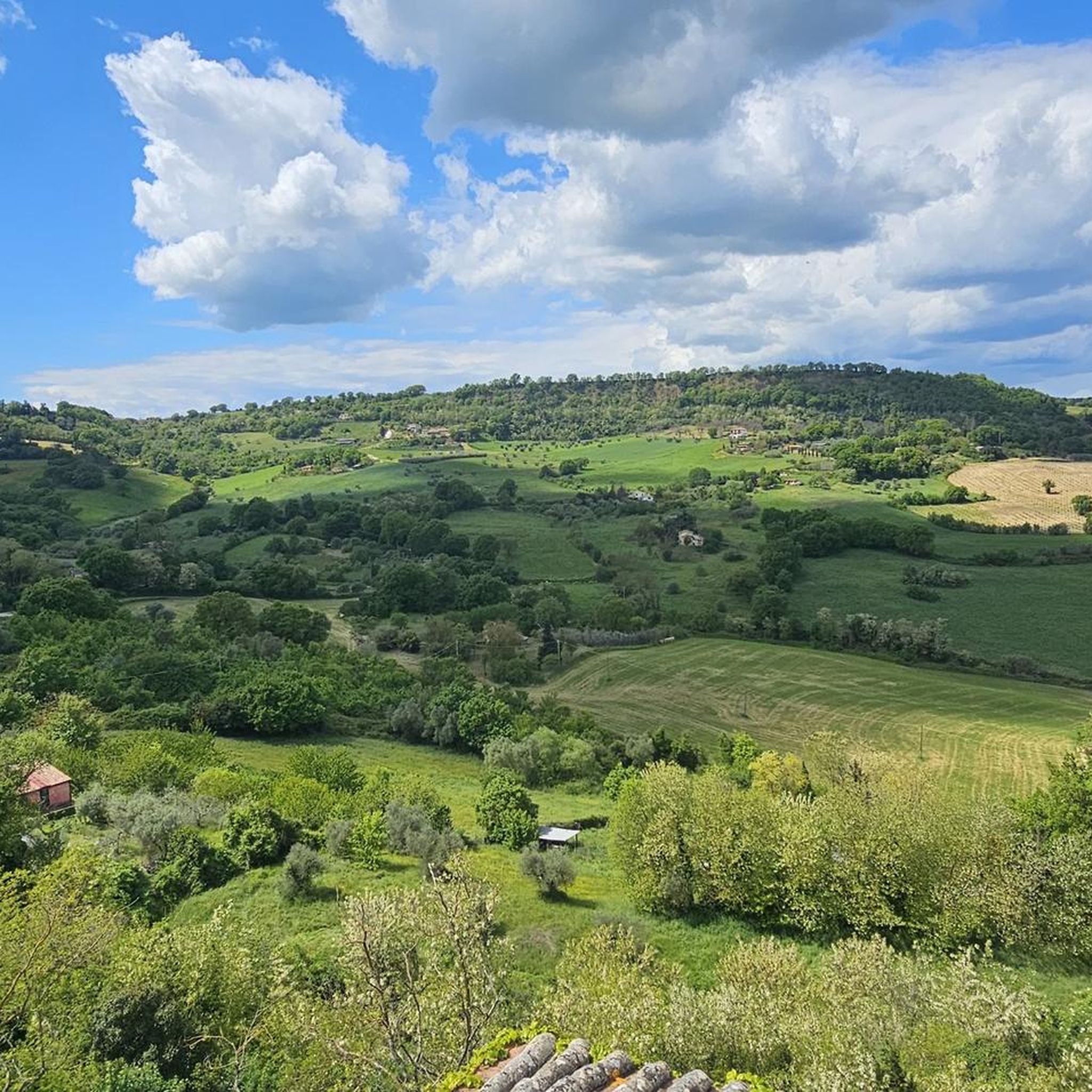
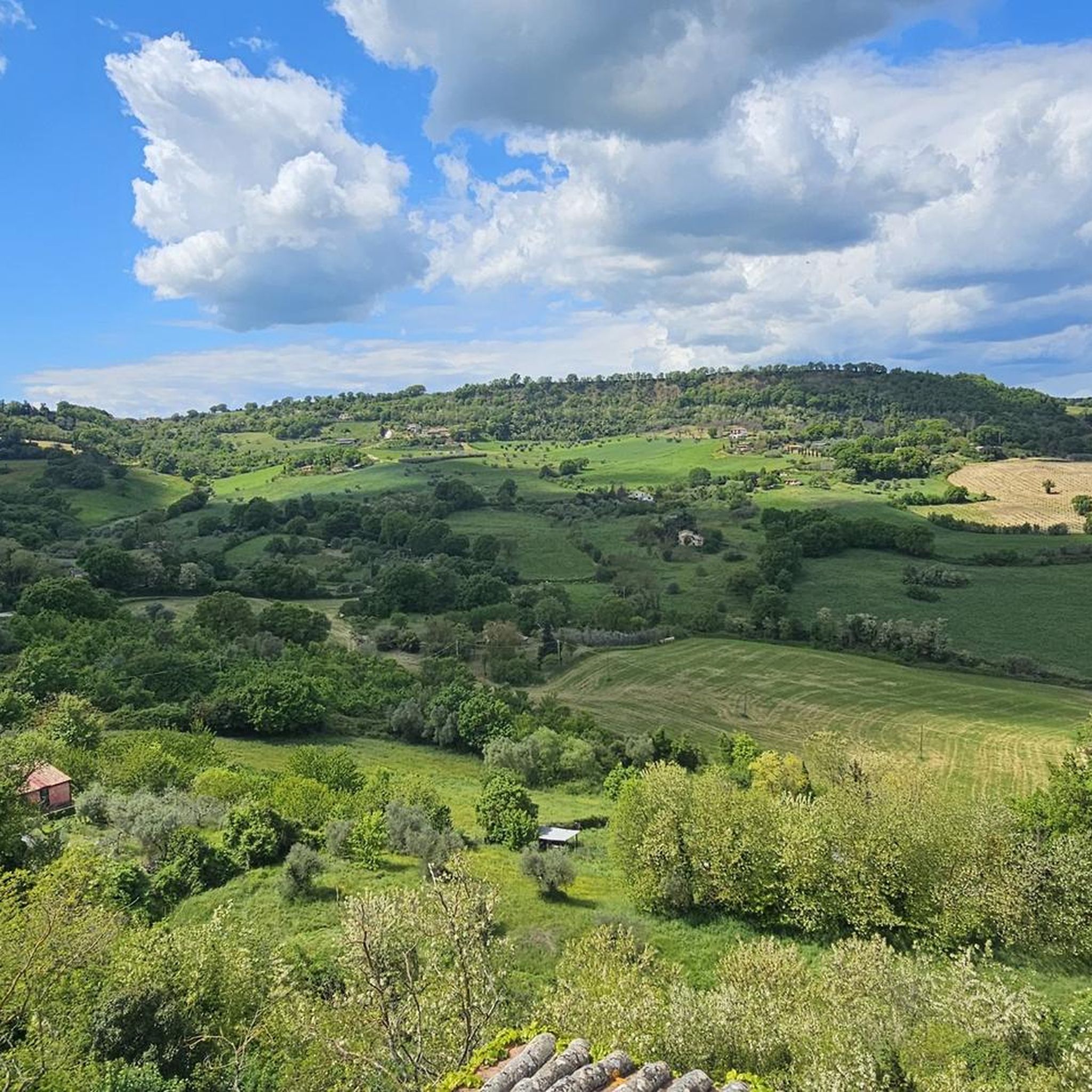
The small village of Roccalvecce has an enchanting location between fields, forests and rock faces. From far away you can see the dominant castle of Costaguti. The Marquis Giovangiorgio Afan de Rivera lives there, a young man in his thirties who now runs a B&B there. The village is originally Etruscan. A fortified castle was built there in the Middle Ages, which later came into the hands of various important families: Monaldeschi, Gatti, Colonna, Chigi. From the 17th century onwards, the Costaguti family became the owner. This family originally came from Genoa, and still owns the castle. Next to the castle there is a church that used to be the property of the castle, but has now been transferred to the curia. Outside the castle, the village is deserted. Many houses are no longer inhabited or are for sale. There are no shops anymore, only a post office that is only open half a day a week. Nevertheless, the village has many assets. The location is very central between Viterbo and Orvieto, from the village you have beautiful panoramic views.
0
0
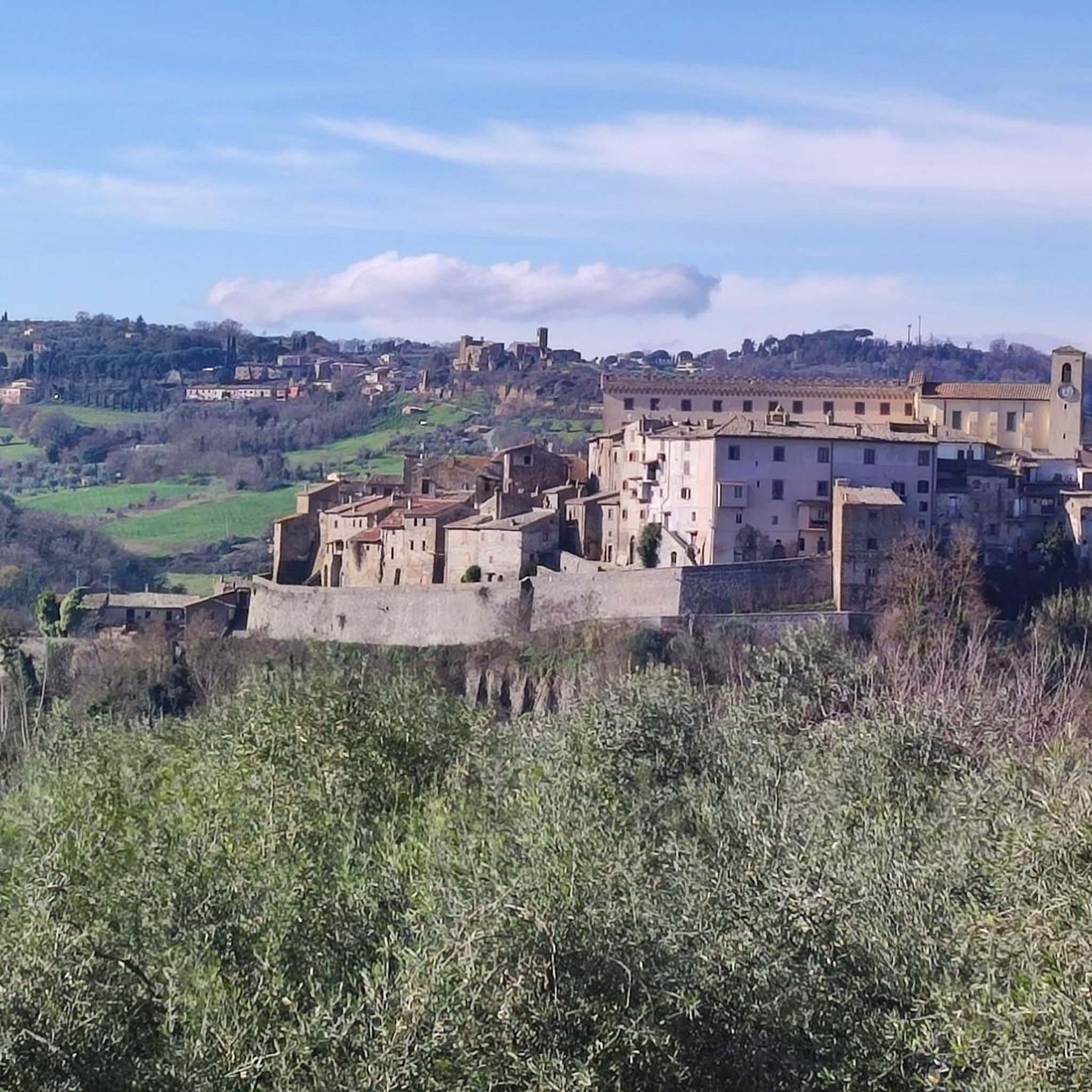
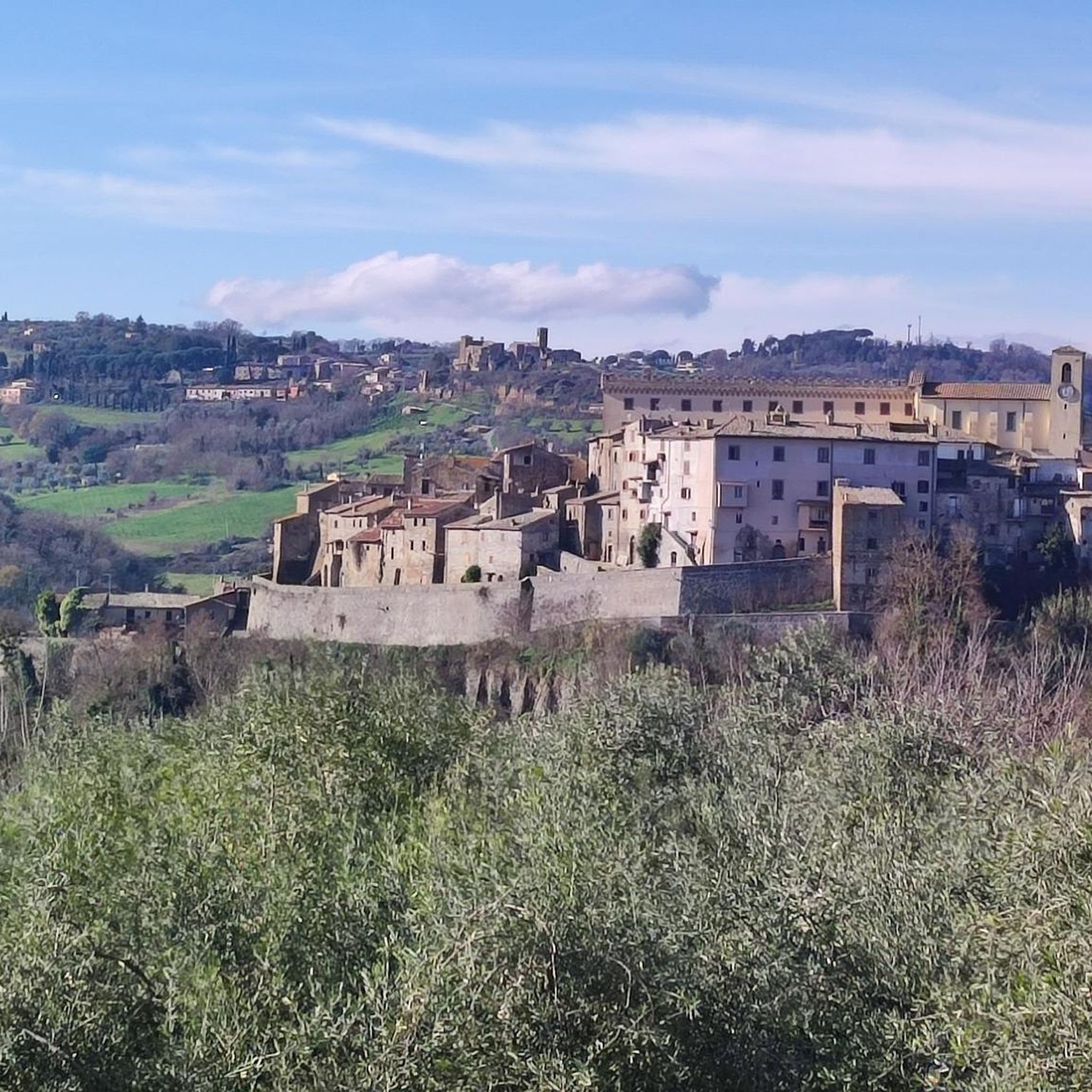
Past the old monastery you will arrive at the old borgo. The elevated old village has been depopulated since the 19th century and has become a real ruin due to erosion and earthquakes. In 1951 it was completely abandoned. Only the old market square and the castle are accessible, the old houses are completely dilapidated and overgrown with plants over the years. The Orsini castle at the entrance of Celleno antico is the most beautiful building in the borgo. It has a large watchtower and the castle is surrounded by a deep moat. It was recently restored and inhabited by the artist Enrico Castellani. This artist was internationally known (he also studied in Brussels) and died on 1 December 2017. On the old market square you can see a beautiful rectangular bell tower, in 3 layers and made of tuff. Only the walls of the old church San Carlo (17th century), left of the castle, remain. Close to the market square is the church of San Donato from the year 1000 in Romanesque style, with a very beautiful portal in basalt stone.
0
0
Recent archaeological discoveries have confirmed the Etruscan origins (4th-3rd centuries BC) of Celleno Vecchio, a settlement that enjoyed a great position, i.e. the ancient communication route between Orvieto, Bagnoregio and Ferento. Ancient sources provide evidence that this medieval settlement is one of the fortified villages built by the Counts of Bagnoregio between the 10th and 11th centuries. At that time, the village must have consisted of a number of dwellings at the end of the tuff, protected by cliffs on three sides, surrounded by walls and a small fortress, which is now the Orsini Castle, to protect the only access route. At the end of the 12th century, after the destruction of Ferento, the municipality of Viterbo began a rapid expansion in the Tiber Valley, also acquiring Celleno, which in 1237 was one of the castles of the Viterbo area governed by a Podest (high official) appointed by the local government. At the end of the 14th century, the city center fell into the hands of the Gatti family, one of the most powerful families in Viterbo. During this period, the medieval fortress was completely renovated and converted into a fortified stately home that can still be seen today. The Gatti family ruled Celleno until the last heir, Giovanni Gatti, who was killed on the orders of Pope Alexander VI (Borgia) for refusing to return the castle. At the beginning of the 16th century, the municipality fell into the hands of the Orsini family. Interestingly, the castle still bears the name of this family. Only towards the end of the 16th century was the church able to incorporate Celleno into its possessions until the unification of Italy. In modern times, Celleno Vecchio was often affected by earthquakes and landslides, until it was finally abandoned in the 1930s. Today it is a small, charming and evocative ghost village, characterized by ruins and vegetation, with beautiful views of the surrounding landscape.
0
0

Beautiful perfectly preserved medieval village
0
0

The medieval town of Vitorchiano still has all the historical features of its birth which took place around the year one thousand. Walking inside means immersing yourself in a context full of charm and beauty.
1
0
Frequently Asked Questions
What is the most significant historical site in Celleno?
The most significant historical site in Celleno is the Orsini Castle and Clock Tower, located within Celleno Vecchio, often referred to as the 'Ghost Town.' This castle is the best-preserved building in the ancient village, boasting a large watchtower and a deep moat, and offers a tangible link to Celleno's Etruscan, Roman, and medieval past.
Are there other notable castles or historical fortifications near Celleno?
Yes, beyond Celleno, you can explore the Fortress of the Popes in Montefiascone, an ancient fortress built in the 12th century and extended by various popes. Another interesting site is Porta Romana of Vitorchiano, a historical gate that is part of the perfectly preserved medieval town walls of Vitorchiano.
What kind of experience can I expect when visiting Celleno Vecchio and the Orsini Castle?
Visiting Celleno Vecchio offers a unique 'Ghost Town' atmosphere, where time seems to have stood still. You can explore narrow streets and ancient stone houses, experiencing a surreal environment. The Orsini Castle is central to this experience, providing historical immersion and splendid panoramic views of the Valle dei Calanchi and the Tuscia Viterbese landscape.
Are there any castles or historical sites suitable for families near Celleno?
Many of the historical sites around Celleno, including the medieval town of Vitorchiano with its Porta Romana, are considered family-friendly. Exploring the 'Ghost Town' of Celleno Vecchio and its Orsini Castle can also be an engaging experience for families, offering a glimpse into history amidst a unique setting.
What are the best viewpoints to see castles or the surrounding landscape?
From the Orsini Castle and the surrounding ancient village of Celleno Vecchio, you can enjoy splendid panoramic views of the Valle dei Calanchi and the lush Tuscia Viterbese. Additionally, the View of Roccalvecce Village and Castello Costaguti offers beautiful vistas of the dominant castle and the enchanting landscape.
What outdoor activities can I do near the castles around Celleno?
The area around Celleno offers various outdoor activities. You can find numerous running trails, such as the 'Celleno Ghost Town loop from Celleno Antica,' or explore road cycling routes like 'Montefiascone – Poppy Field on Strada Teverina loop.' For mountain biking, options include 'Vitorchiano – Corviano Waterfall and Ford loop.' You can find more details on these activities at komoot.com/guide/3856487/castles-around-celleno.
Are there hiking trails near these castles?
Yes, there are several hiking opportunities. For instance, the 'Celleno Ghost Town loop from Celleno Antica' is a moderate running trail that can also be enjoyed as a hike, allowing you to explore the unique landscape around Celleno Vecchio. For more options, refer to the running and MTB guides linked from komoot.com/guide/3856487/castles-around-celleno.
What cultural events or museums are associated with the Celleno area?
Celleno Vecchio, with its castle, serves as a backdrop for cultural events like the 'Notte dell'Arpia' musical event and the 'Teverina Buskers' International Street Artists Festival. Additionally, the nearby Church of San Carlo houses the 'Museo delle Macchine Parlanti' (Talking Machines Museum), featuring gramophones and ancient musical instruments, enriching the cultural experience.
What is the best time of year to visit the castles around Celleno?
The region generally enjoys pleasant weather, making spring and autumn ideal for exploring the castles and ghost town. These seasons offer comfortable temperatures for walking and enjoying the panoramic views without the intense heat of summer.
Is there parking available near the castles, especially Celleno Vecchio?
While Celleno Vecchio is a 'ghost town,' access is typically via the scenic Via del Ponte or Piazza del Mercato. Parking is generally available in the modern town of Celleno, from where you can walk to the ancient village and the Orsini Castle.
Can I visit Corviano Castle, and what are its notable features?
Yes, Corviano Castle is a fortified palace built on the edge of a cliff, preceded by a defensive moat. While some northern walls have disappeared due to collapses, the surviving circular walls are clearly recognizable. You can observe the entrance portal with remnants of door closing mechanisms and beautiful pointed arch windows and slits in the walls.
What makes the medieval village of Vitorchiano special?
Vitorchiano is a perfectly preserved medieval village that has retained all its historical features since its origins around the year one thousand. Its old wall, featuring the Porta Romana with the town's coat of arms, and its towers built of peperino stone, offer a charming and beautiful context for exploration.
Most popular attractions around Celleno

Get inspired with the komoot mobile app


Explore more
Looking for the best castles somewhere else? Discover other guides around Celleno:
