Top 4 Castles around Carouge (GE)
Best castles around Carouge (GE) are found in the wider region surrounding this charming Swiss town, known for its unique 18th-century Sardinian architecture and vibrant cultural scene. While Carouge itself is recognized for its artisanal workshops and cultural landmarks, the surrounding area features notable historical defensive structures. These sites offer a glimpse into the medieval history of the Geneva region, providing historical context to the natural landscape.
Best castles around Carouge (GE)
- The most popular castles is Commandery of Compesières…
Last updated: June 30, 2026
Commandery of Compesières
Highlight • Castle
Translated by Google •
Tip by

Château de Rouelbeau Ruins
Highlight • Castle
Translated by Google •
Tip by

Sign up now to discover places like this
Get recommendations on the best single tracks, peaks, & plenty of other exciting outdoor places.
Sign up for free
Château de Voltaire
Highlight • Castle
Admission costs 9 euros.
You can visit the castle and the park.
Among other things, the castle displays lavishly set tables, each one a still life.
Translated by Google •
Tip by

Bourdigny-Dessus Vineyards
Highlight (Segment) • Natural
Translated by Google •
Tip by

Start today with a free account
Your next adventure awaits.
Login or Signup

Tips from the Community


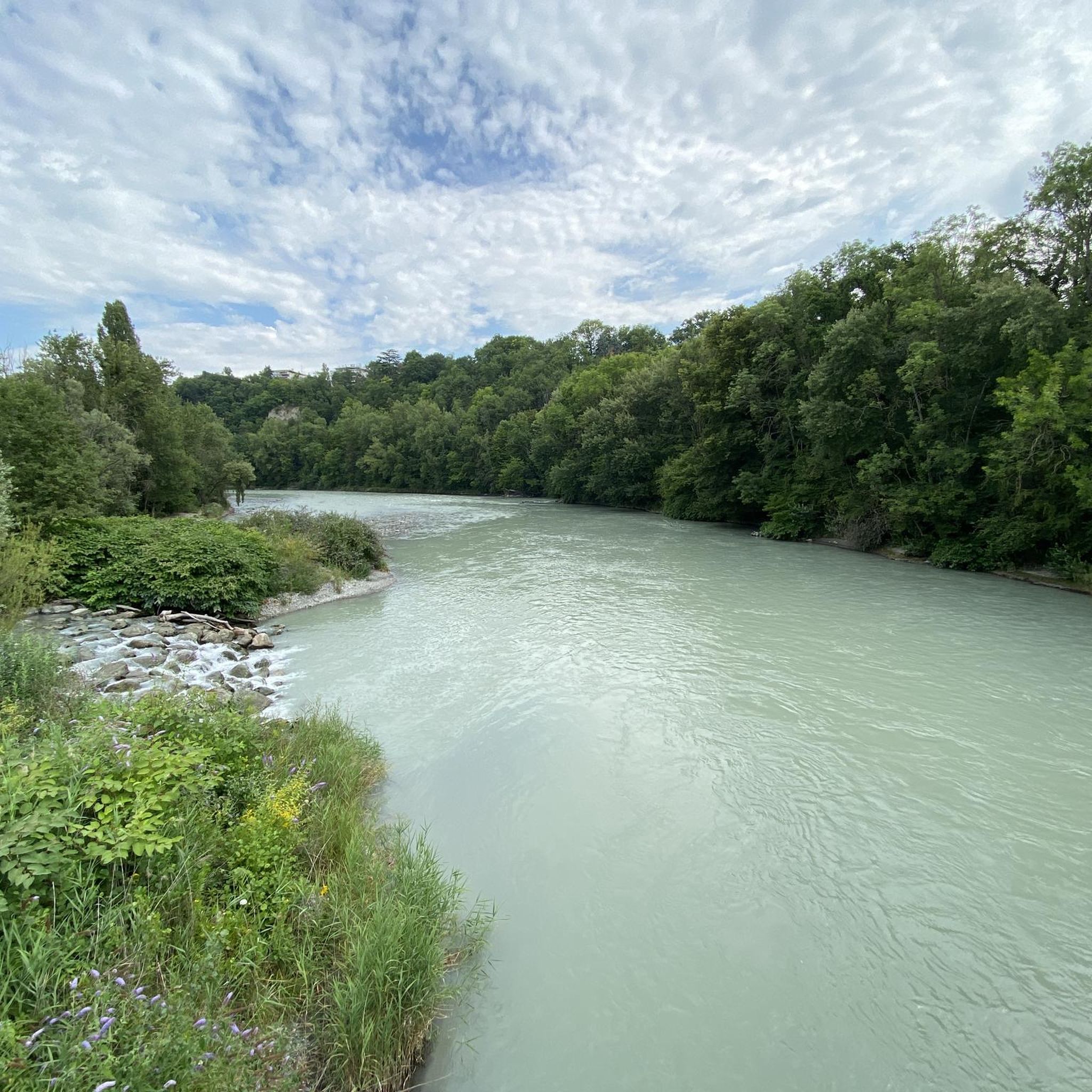
The town of Bourdigy-Dessus is part of the commune of Satigny. This village is surrounded by vineyards and has a beautiful castle that bears its name, or Château Barillet.
0
0

The philosopher Voltaire lived in this castle for more than 20 years. Admission costs 9 euros. You can visit the castle and the park. Among other things, the castle displays lavishly set tables, each one a still life.
1
0

Beautiful 18th century residence where Voltaire lived for 20 years, from 1755. The philosopher had a notable influence on Ferney: "When Voltaire bought the estate in 1759, Ferney had only 150 inhabitants. He had its marshes drained and developed many craft workshops there: tile-making, watchmaking, silk-making, etc. He took advantage of his fame to export his local products throughout Europe. When he died in 1778, Ferney had 1,500 inhabitants." (Wiki) Opening hours: From April 1 to September 30: 10 a.m. - 6 p.m. From October 1 to March 31: 10 a.m. - 5 p.m.
0
0

Permanent house of Compesières, occupies a special place among the castles of the region due to its role as Commander Johanniter. Of the original ensemble, only the residential wing has survived. The church and economic buildings were replaced by new buildings in the Middle Ages, and the outer walled enclosure that once protected the entire building complex has disappeared today.
0
0
It is a ruined fortress and a site of national importance. The ruins are surrounded by water, they can still be accessed by a footpath. The fortress was built in the 14th century.
1
0

In the wide and more fertile plain between Geneva and St-Julien, various castles and permanent houses were built in the high and late Middle Ages. The sovereign center of the area was the Saconnez d'Arve castle, of which only a round tower stands today, probably the corner tower of an originally much larger complex. A kilometer further to the south is the Compesières permanent house, which occupies a special position among the castles in the area due to its role as a Johanniter commander. Only the residential wing has survived from the original overall complex. The church and the economic buildings were replaced by new buildings in the Middle Ages, and the outer fortified wall that once protected the entire building complex has disappeared today.
16
2
Frequently Asked Questions
What kind of historical sites can I expect to find around Carouge (GE)?
While Carouge itself is known for its unique architecture, the surrounding area features notable historical defensive structures. You can explore sites like the Commandery of Compesières, a former Johanniter commandery with a surviving residential wing, or the Château de Rouelbeau Ruins, a 14th-century ruined fortress surrounded by water. There's also the Château de Voltaire, the historical residence of the philosopher Voltaire.
Are there any family-friendly castles or historical sites to visit near Carouge (GE)?
Yes, several sites are suitable for families. The Commandery of Compesières and the Château de Rouelbeau Ruins are both listed as family-friendly, offering historical exploration in an outdoor setting. The Château de Voltaire also welcomes families to visit its castle and park.
What outdoor activities can I do near these castles?
The region around Carouge (GE) offers various outdoor activities. You can find numerous hiking and cycling routes. For instance, you can explore routes like the 'Exploration of Carouge — loop to the Pont de Sierne and along the Arve' for hiking, or the 'Bardonnex Vineyards Loop' for cycling. You can find more details on these and other routes in the Hiking around Carouge (GE) and Cycling around Carouge (GE) guides.
Are there any natural features or viewpoints near the castles?
While the castles themselves are historical structures, they are often situated within scenic landscapes. For example, the Château de Rouelbeau Ruins are surrounded by water, offering a picturesque setting. The region also features vineyards, such as those around Bourdigy-Dessus, which provide pleasant natural surroundings and views.
What is the best time of year to visit the castles around Carouge (GE)?
The castles and historical sites around Carouge (GE) can be visited throughout the year. However, spring and autumn generally offer pleasant weather for exploring the outdoor ruins and parks. Summer is also popular, though it can be warmer. For indoor attractions like the Château de Voltaire, opening hours may vary seasonally, so it's advisable to check in advance.
Can I visit the castles using public transport from Carouge (GE)?
Public transport options are available to reach areas near the castles, though direct access to every site might require some walking. Carouge (GE) is well-connected within the Geneva region, and local buses or trams can take you to nearby towns or villages from which you can access the sites. Specific routes would depend on your chosen destination.
Is parking available at the castles around Carouge (GE)?
Parking availability varies by site. For locations like the Château de Voltaire, dedicated parking facilities are typically provided. For more rural or ruined sites like the Château de Rouelbeau Ruins, you might find parking in nearby villages or designated areas, often requiring a short walk to the site itself.
Are there any dog-friendly castles or walks near Carouge (GE)?
Many of the outdoor historical sites and surrounding natural areas are dog-friendly, especially for walks. The grounds around the Château de Rouelbeau Ruins and the park at Château de Voltaire are generally accessible for dogs on a leash. Always check specific site regulations before your visit, especially for indoor areas.
What is the historical significance of the Commandery of Compesières?
The Commandery of Compesières holds a special place due to its past role as a Johanniter commandery. It was one of several castles and permanent houses built in the fertile plain between Geneva and St-Julien during the High and late Middle Ages. While much of the original complex has changed, the surviving residential wing offers a glimpse into its medieval history.
Are there any cafes or pubs near the castles for refreshments?
While the castles themselves may not have on-site cafes, you will typically find options for refreshments in the nearby towns and villages. Carouge (GE) itself is known for its vibrant cultural scene with numerous cafes and restaurants. For sites further afield, look for establishments in the closest settlements.
How long should I allocate to visit a castle or historical site?
The time needed for a visit varies. For a site like the Château de Rouelbeau Ruins, you might spend 1-2 hours exploring the ruins and surrounding area. For the Château de Voltaire, which includes indoor exhibits and a park, you could easily spend 2-3 hours. Consider additional time if you plan to combine your visit with a walk or cycle.
What is the Château de Voltaire known for?
The Château de Voltaire is renowned as the historical residence where the famous philosopher Voltaire lived for over 20 years. This 18th-century residence offers visitors a chance to explore the castle and its park, with displays that include lavishly set tables, providing insight into his life and times.
Most popular routes around Carouge (GE)
Most popular attractions around Carouge (GE)

Get inspired with the komoot mobile app


Explore more
Looking for the best castles somewhere else? Discover other guides around Carouge (GE):
