Top 8 Caves around Käbschütztal
Best caves around Käbschütztal are located in a municipality in Saxony, Germany. This region is characterized by its historical mining tunnels and quarries, which offer insights into past industrial activities and geological formations. These underground sites provide unique natural features and cultural significance for visitors. Exploring these locations offers a direct connection to the area's rich history.
Best caves around Käbschütztal
- The most popular caves is Old Miltitz Limestone Mine, a cave that operated for centuries, with underground mining…
Last updated: June 28, 2026
Old Miltitz Limestone Mine
Highlight • Cave
Even if the mine was first mentioned in a document in 1571, …
Translated by Google •
Tip by

Portal of the Aufschlagsrösche Emanuel Erbstolln
Highlight • Structure
Translated by Google •
Tip by

Sign up now to discover places like this
Get recommendations on the best single tracks, peaks, & plenty of other exciting outdoor places.
Sign up for free
Oberer Sonnenaufgang Stolln
Highlight • Historical Site
Translated by Google •
Tip by

Schönbergscher Stollen Tunnel Entrance
Highlight • Structure
Translated by Google •
Tip by
Guter Börnichen Erbstolln mining field
Highlight • Historical Site
Here you can read all about mining in Nossen and the surrounding area. You can also find a contact for a possible guided tour.
Translated by Google •
Tip by

Sign up for free to discover even more caves around Käbschütztal.
Sign up for free
Already have an account?
Start today with a free account
Your next adventure awaits.
Login or Signup

Tips from the Community

Guided tours are available on Sundays at 1:30 p.m. or upon request. Absolutely worth seeing and a haven for cave divers.
0
0

https://nossen-bergbau.de Here you can read all about mining in Nossen and the surrounding area. You can also find a contact for a possible guided tour.
0
0

you can take a stop here
0
1

In 1850, Schönberg had the tunnel built. Its length is 238 m. Inside, the corridor divides into two large halls up to 10 m high. The lime kiln for processing the broken stone was on the bank path next to the Triebisch (approx. 50 m to the right). In 1905 the tunnel was kept and secured. In 1940 the tunnel was opened for air raid protection purposes. In 1979, members of the state security service searched for the legendary amber room in the tunnel, without any result. Today it is home to various rare species of bats.
3
0
The considerable ore deliveries from the Emanuel Erbstolln mine in the first third of the 19th century led to the realization of a project from 1834 to open up the drainage water from the Reinsberg mill for hydropower machines in the Riedel art and drive shaft. With the help of four light holes, the Rösche was produced from the Mühlgraben in the opposite location to the Lehnholzbachtälchen. In this brook valley there was a small artificial pond, from which a rosette led to the Riedel pit. The 1,827 m long Röschentour was completed in 1843. The total cost was total 49,521 talers.
3
0

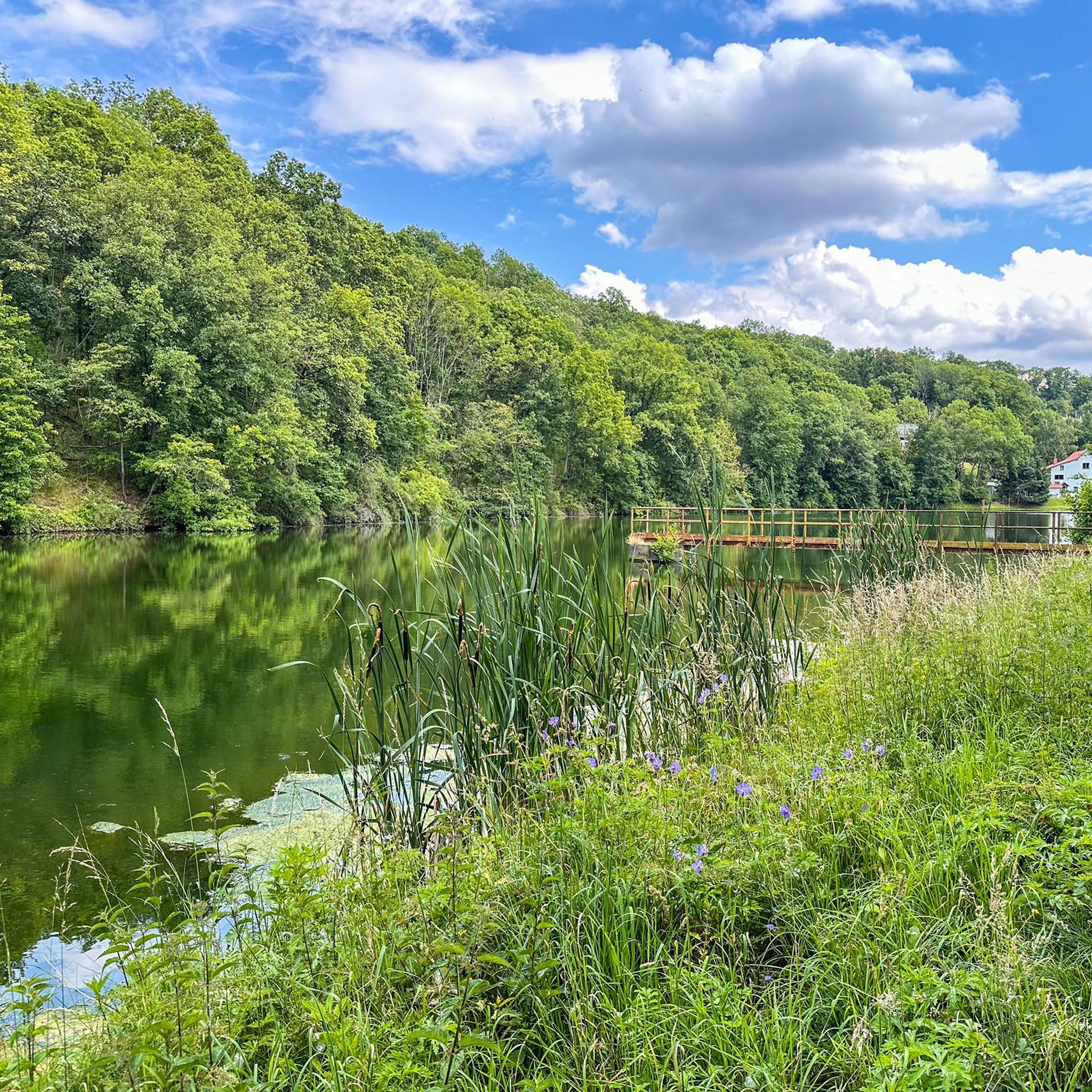
Well maintained mining tradition in the Old Revier
1
1

The former Miltitz lime mine can now be viewed and dived as a visitor mine. Information at https://www.kalkbergwerk.de/ Even if the mine was first mentioned in a document in 1571, lime was probably mined there more than 100 years earlier. Only in the 19th century was mining moved underground and tunnels were built at a depth of up to 60 meters. During World War II, the tunnels were prepared for the underground production of aviation fuel and other small parts. Work on this began in 1943, for example the installation of the technical systems, but also the camouflage of the outdoor area. Concentration camp prisoners in particular were used for the work.
2
0

Frequently Asked Questions
What is the historical significance of the underground sites in Käbschütztal?
The region's underground sites, primarily former mines and tunnels, hold significant historical value. For instance, the Old Miltitz Limestone Mine operated for centuries, with underground mining starting in the 19th century. It was tragically used as an underground production site during WWII. The Hohburg Tunnel, created in the 18th century, was used for carriages during court festivals and later as a film location. Other sites like the Oberer Sonnenaufgang Stolln and Upper Barbara Adit also showcase the area's rich mining heritage.
Are there any visitor-friendly former mines in the Käbschütztal area?
Yes, the Old Miltitz Limestone Mine is now a visitor mine where you can take guided tours through impressive chambers. It offers insights into limestone and silver mining history. You can find more information about the mine's history on Wikipedia.
Are there any child-friendly underground attractions in Käbschütztal?
The Old Miltitz Limestone Mine is generally accessible with large halls and a flat floor, making it suitable for families with children. The Hohburg Tunnel is also considered a small adventure and is easily accessible for a walk, offering a unique passage that children might enjoy exploring with a flashlight.
What kind of unique natural features can I expect to see in the caves around Käbschütztal?
While many sites are man-made, they often interact with natural geology. The Old Miltitz Limestone Mine features limestone transformed into marble due to contact metamorphosis. The Schönbergscher Stollen Tunnel Entrance, originally built in 1850, is now home to various rare species of bats, offering a glimpse into local wildlife.
What outdoor activities can I do near these caves?
The Käbschütztal region offers various outdoor activities. You can find numerous routes for hiking, mountain biking, and gravel biking. For example, there are several hiking loops like the 'Leutewitz Pond – Ruins of Schwarzes Gut loop' or the 'Forest trail near Coswig – Käbschütztalweg loop'. You can explore more options on the Hiking around Käbschütztal guide, the MTB Trails around Käbschütztal guide, or the Gravel biking around Käbschütztal guide.
Are there any caves or tunnels that are wheelchair accessible?
The Old Miltitz Limestone Mine is noted for its large halls and flat floor, which makes it relatively accessible for visitors. It's advisable to contact the mine directly for specific accessibility information and to confirm suitability for wheelchairs.
What equipment should I bring when exploring the tunnels and caves in Käbschütztal?
For sites like the Hohburg Tunnel, a flashlight is highly recommended as it can be quite dark inside. For guided tours at the Old Miltitz Limestone Mine, specific equipment might be provided or recommended by the operators. Generally, comfortable walking shoes and appropriate clothing for cooler, damp underground environments are advisable.
Can I visit the Portal of the Aufschlagsrösche Emanuel Erbstolln?
Yes, the Portal of the Aufschlagsrösche Emanuel Erbstolln marks the entrance to a significant historical drainage tunnel. While the full 1,827-meter tunnel might not be publicly accessible, the portal itself is a notable historical site to visit and appreciate the engineering of the past.
What is the best time of year to visit the caves and underground sites in Käbschütztal?
Underground sites like mines and tunnels maintain a relatively constant temperature year-round, making them suitable for visits in any season. However, if you plan to combine your visit with hiking or cycling in the surrounding area, spring through autumn generally offers more pleasant weather conditions for outdoor activities.
Are there any lesser-known historical mining sites to explore besides the main visitor mine?
Beyond the Old Miltitz Limestone Mine, you can explore other historical mining sites such as the Oberer Sonnenaufgang Stolln, which has a staircase leading to its mouth and a history dating back to 1764. The Upper Barbara Adit, first mentioned in 1546, is also a significant historical site, with visits sometimes possible through local mining associations.
What is the Hohburg Tunnel and why is it interesting?
The Hohburg Tunnel is an approximately 100-meter-long man-made passage driven through rock in the early 18th century. It's interesting for its historical use for carriages during court festivals and its unique role as a filming location for the DEFA Indian film "The Sons of the Great Bear" in the 1960s. It offers an easy and adventurous detour for hikers and cyclists in the area.
What do visitors enjoy most about the caves and underground sites in Käbschütztal?
Visitors appreciate the direct connection to the region's rich history, particularly the mining heritage. The impressive chambers of the Old Miltitz Limestone Mine and the unique experience of exploring historical tunnels like the Hohburg Tunnel are often highlighted. The komoot community has shared over 25 photos and given more than 50 upvotes across various highlights, indicating a strong appreciation for these unique sites.
Most popular routes around Käbschütztal
Most popular attractions around Käbschütztal

Get inspired with the komoot mobile app


Explore more
Extend your search for the best caves by checking out these guides of the top ones around Käbschütztal:
