Top 6 Lakes around Loures
Lakes around Loures primarily consist of man-made features integrated into historical estates and urban parks. While natural lakes are not a prominent feature directly within the municipality, visitors can find serene water bodies within landscaped gardens. These include historical examples like the lake at the Palace of Correio-Mor, which is part of a Baroque architectural complex. The area offers various artificial lakes within green spaces, providing tranquil environments for visitors.
Best lakes around Loures
- The most popular lakes is Amália…
Last updated: June 19, 2026
Gulbenkian Garden
Highlight • Forest
Translated by Google •
Tip by

Amália Rodrigues Garden Lake
Highlight • Lake
Tip by

Sign up now to discover places like this
Get recommendations on the best single tracks, peaks, & plenty of other exciting outdoor places.
Sign up for free
Quinta das Conchas and Lilases Park
Highlight • Forest
Tip by

Pond at Quinta de Molha-Pão
Highlight • Lake
Quinta do Molha-Pão near the village of Tala, Sintra, stands out for its rich architectural heritage, inserted in a walled area and 37 hectares, spreads over a …
Translated by Google •
Tip by

Ilha Mágica do Lido Park
Highlight • Rest Area
It was built in 2005 and is located in the parish of Venteira, between Ribeira de Carenque and Ribeira da Amadora. Its theme is water and extreme sports.
Translated by Google •
Tip by
Sign up for free to discover even more lakes around Loures.
Sign up for free
Already have an account?
Start today with a free account
Your next adventure awaits.
Login or Signup
Tips from the Community

The Gulbenkian Garden, located in the center of Lisbon next to the Calouste Gulbenkian Foundation, is one of the most emblematic green spaces of modern Portuguese urbanism. It was designed in the 1960s by landscape architects Gonçalo Ribeiro Telles and António Viana Barreto and inaugurated in 1969.
5
0

The Gulbenkian Garden is an oasis of nature and peacefulness in the city of Lisbon, the perfect place to escape from the hustle and bustle of the city. The garden's history goes back several centuries: it began as a recreational farm (in the 18th century), became Santa Gertrudes Park (in the 19th century) and, years later, became Lisbon's first Zoo. In the 20th century, the Zoo became a local fair, and later the venue was acquired by the Gulbenkian Foundation. Thus, was born the Gulbenkian Garden, a project by landscape architects António Viana Barreto and Gonçalo Ribeiro Telles.
1
1
The park has three distinct areas: the Central Nave of Quinta das Conchas, the Woods and the Lilacs. The Central Nave, the largest area, is made up of large lawns dotted with trees and offers open views, which invite you to play ball and have picnics on the grass. It is bordered at the highest point by a group of olive and olive trees and, at the bottom, next to the large lake, there is a mass of large eucalyptus trees, classified as a grove of trees of public interest, where there are picnic tables, in an excellent area for relaxing. The Woods, a denser forest area with more intact nature, is made up of a varied set of tree species, with a stand of trees of the ZelKova Serrata species, also classified as a public interest, standing out, as well as Himalayan cedars and Buçaco cedars. In some places, there is a dense cover of shrubs, such as adernos, sanguinhos, elders and hawthorns, which are very important for several species of birds as shelter, feeding and nesting sites. Separated from Quinta das Conchas by a wall, we have Quinta dos Lilases, a more secluded environment, with its famous artificial lake, of romantic inspiration, representing the islands of São Tomé and Príncipe. The vegetation is marked by the alignment of olive trees next to the wall of Quinta das Conchas and by the presence of eucalyptus, poplars, ash trees, gleditsias and species of the Quercus genus. The shrub layer is reduced, with pomegranate trees and notable groups of old and large box trees standing out. The clearing areas are covered in dry grassland. This farm has a community orchard area, recently built as part of a Participatory Project. The existence of diverse habitats gives this Park great value in terms of biodiversity, with a higher number of species than usual for urban green spaces.
2
1
The name of the park indicates that in the past there were two large quintas here. Quinta is a tough word to translate, it is similar to the French château or country house. Those quintas were called Conchas and Lilases. The quintas were built in the 16th century and were always inhabited by prosperous Portuguese families who traded in coffee. Since 1966 the quintas have been managed by the city of Lisbon. For a long time nothing was done with the quintas and the surrounding lands. In 2005, the quintas were opened to the public and the park was laid out.
2
1
Magic Island Park of Lido It was built in 2005 and is located in the parish of Venteira, between Ribeira de Carenque and Ribeira da Amadora. Its theme is water and extreme sports. One of the biggest attractions of Magic Island of Lido is a lake, with an area of around 500 m2 and of shallow depth. In its centre is an island with a central mast, the objective of which is to climb. This island must be conquered by children and parents who, to do so, can use boats, rafts, bridges and abseiling to cross the water. There are several children's play areas: combined with slides, springs for swinging, rotating platforms, climbing structures, a slide and a cable car. In the southern part of the park, there is a track for skateboards and bicycles, for holding national and international championships, and a fitness circuit. For adults, there are several areas for resting and relaxing throughout the park, equipped with benches, and an area equipped with tables and benches for the elderly. The park is closed at night. During the day, the opening hours are as follows: Summer: 9:00 a.m. to 8:00 p.m. Winter: 9:00 a.m. to 6:00 p.m. Admission is free.
1
1

This is a wonderful place to linger and unwind
2
0

The Jardim Amália Rodrigues is a pleasant park located just north of Parque Eduardo VII and the Estufa Fria. It opened in 1996. The garden, which consists of a grassy hillock and a lake, was named in 2000 after the famous fado singer, Amália Rodrigues (1920-1999). The area is one of the highest points in the city and has excellent views
3
0

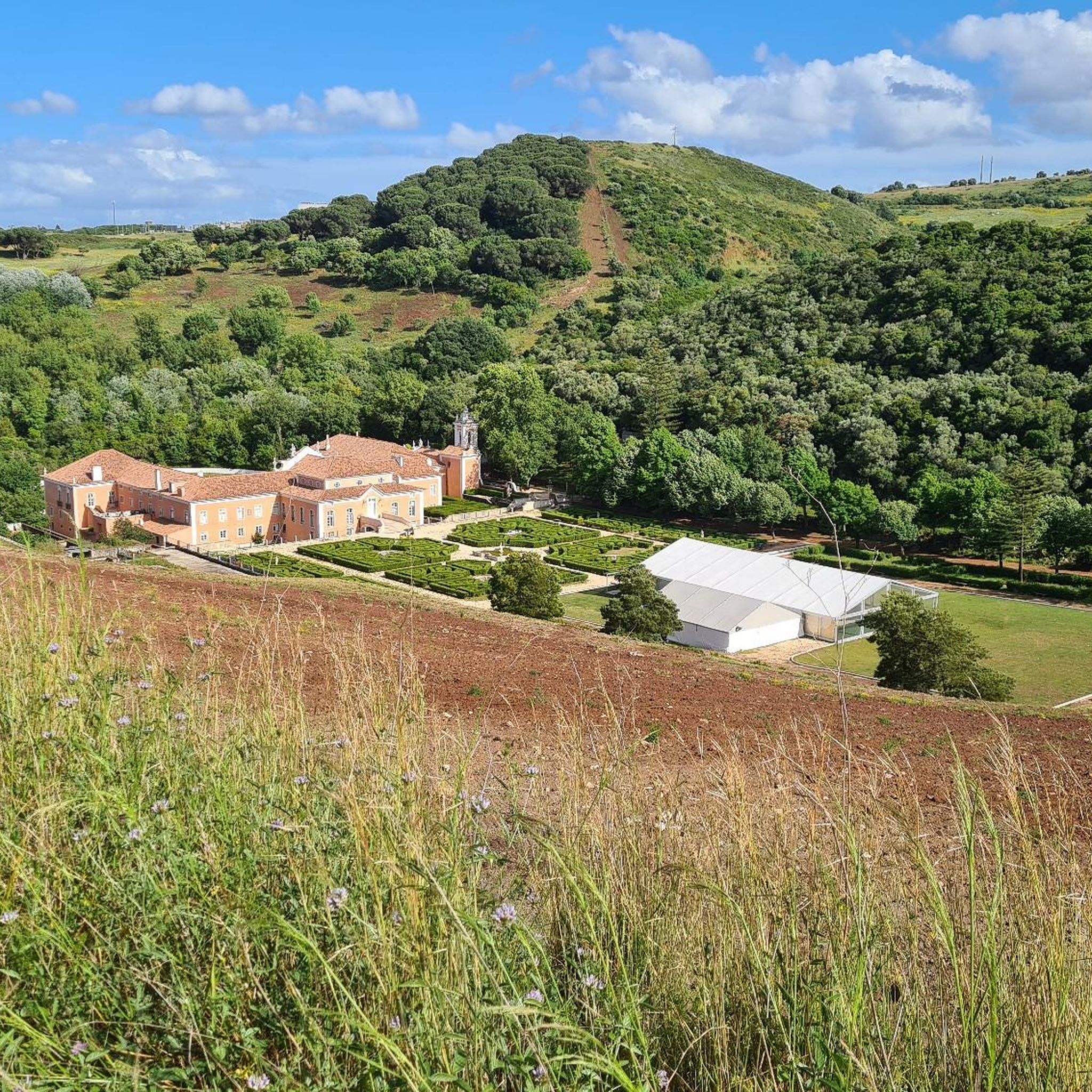
QUINTA DE MOLHA-PÃO Quinta do Molha-Pão near the village of Tala, Sintra, stands out for its rich architectural heritage, inserted in a walled area and 37 hectares, spreads over a landscape of great beauty, in a slightly sloping area isolated by a wall. According to Anne Stoop, its picturesque name is due to a popular soup offered every week to the poor (Stoop, 1999). The current area is one third of the original 90ha where a beautiful manor house, spacious gardens, agricultural fields, orchards and pine forest produce horticultural products that today still feed Lisbon's markets. The first known references to Quinta do Molha-Pão refer to a document by which Antão Gonçalves undertook to pay the fee relating to the Quinta to Senhor de Belas, dated 1633 (STOOP, 1999). courtesy: https://www.jardinshistoricos.pt/ad/741
2
0
Frequently Asked Questions
What kind of lakes can I expect to find around Loures?
The lakes around Loures are primarily man-made features integrated into historical estates, urban parks, and recreational areas. While natural lakes are not prominent directly within the municipality, you'll find serene water bodies within landscaped gardens and parks, offering tranquil environments.
Are there any historical lakes or water features in Loures?
Yes, a notable historical water feature is the lake at the Palace of Correio-Mor. This man-made lake is part of a historic Baroque architectural complex, featuring a garden of boxwood, a waterfall, and a tank adorned with azulejo panels, offering a glimpse into past centuries' landscaping and leisure.
Which lakes are suitable for families with children?
Several spots are great for families. Amália Rodrigues Garden Lake is part of a pleasant park with open spaces. Quinta das Conchas and Lilases Park offers large lawns for picnics and diverse nature. For a more active experience, Ilha Mágica do Lido Park features a shallow lake with an island for children to explore using boats and rafts, along with playgrounds and sports tracks.
Can I go hiking or cycling near the lakes around Loures?
While the lakes themselves are often within parks, the wider Loures region offers various outdoor routes. You can find numerous hiking trails, such as the 'Trancão Pedestrian and Cycle Bridge' loop, and cycling routes like the 'Caminho de Fátima' loop. For more details on routes, you can explore the hiking guide for Loures or the cycling guide for Loures.
What kind of activities can I do at the lakes?
Activities vary by location. At Gulbenkian Garden, you can observe turtles, fish, and ducks along tiny paths. Quinta das Conchas and Lilases Park is ideal for picnics on its open lawns. Ilha Mágica do Lido Park focuses on water-themed play and extreme sports for children. Generally, these spots are perfect for leisurely strolls, relaxation, and enjoying green spaces.
Are there any lakes with good viewpoints?
Yes, Amália Rodrigues Garden Lake is situated in a park that is one of the highest points in the city, offering excellent views. Quinta das Conchas and Lilases Park also features open views from its central nave area.
When is the best time to visit the lakes around Loures?
The lakes and parks around Loures can be enjoyed year-round. Spring and autumn offer pleasant temperatures for walking and picnicking. Summer is ideal for enjoying the green spaces, though it can be warm. Winter provides a quieter, more serene experience.
Are the lakes around Loures dog-friendly?
Many urban parks in Portugal, including those with lakes, generally allow dogs on leash, especially in designated areas. However, specific rules can vary by park. It's always best to check local signage or park regulations for each specific location you plan to visit with your dog.
How can I get to the lakes around Loures?
Access to these urban and estate lakes often involves a combination of public transport and short walks. Many parks are well-served by local bus routes. For locations further afield or those within larger estates, driving might be more convenient, with parking often available nearby. Specific transport details would depend on the individual lake or park you wish to visit.
Are there facilities like cafes or picnic areas near the lakes?
Yes, many of the parks featuring lakes are equipped with facilities. For instance, Quinta das Conchas and Lilases Park has picnic tables in its eucalyptus grove. Larger parks often have cafes or kiosks, and urban locations are usually close to local amenities. Ilha Mágica do Lido Park provides resting areas with benches and tables for visitors.
What makes Gulbenkian Garden a popular spot?
Gulbenkian Garden is an oasis of nature and peacefulness in Lisbon, known for its small ponds where visitors can observe turtles, fish, and ducks. It's praised for its beautiful design, various niches, and benches, making it a perfect place to escape the city's hustle and bustle.
What can I expect at Quinta das Conchas and Lilases Park?
Quinta das Conchas and Lilases Park offers a diverse experience with large open lawns for picnics, a dense forest area with varied tree species, and a romantic artificial lake. It's valued for its biodiversity and provides excellent areas for relaxing and enjoying nature.
Most popular attractions around Loures

Get inspired with the komoot mobile app


Explore more
Still not found your perfect lake around Loures? Check out the guides of these regions to see even more beautiful places.
