Top 6 Castles around Nossa Senhora Da Graça Do Divor
Best castles around Nossa Senhora Da Graça Do Divor are primarily found in the wider Évora region, as Nossa Senhora Da Graça Do Divor itself is known more for its rich megalithic heritage. The area is located within the municipality of Évora, Portugal, offering a landscape rich in history and cultural significance. While a local site referred to as "Castelo dos Mouros" is an archaeological site, the surrounding Évora region boasts several remarkable castles. These historical structures provide insights into…
Last updated: July 3, 2026
Páteo de São Miguel
Highlight • Historical Site
Translated by Google •
Tip by

Palace of the Dukes of Cadaval
Highlight • Historical Site
Translated by Google •
Tip by
Sign up now to discover places like this
Get recommendations on the best single tracks, peaks, & plenty of other exciting outdoor places.
Sign up for free
Arraiolos Castle
Highlight (Segment) • Castle
Translated by Google •
Tip by
Giraldo Castle
Highlight • Castle
Tip by
Royal Palace of Évora (Palace of King Manuel)
Highlight • Historical Site
Translated by Google •
Tip by

Sign up for free to discover even more castles around Nossa Senhora Da Graça Do Divor.
Sign up for free
Already have an account?
Start today with a free account
Your next adventure awaits.
Login or Signup
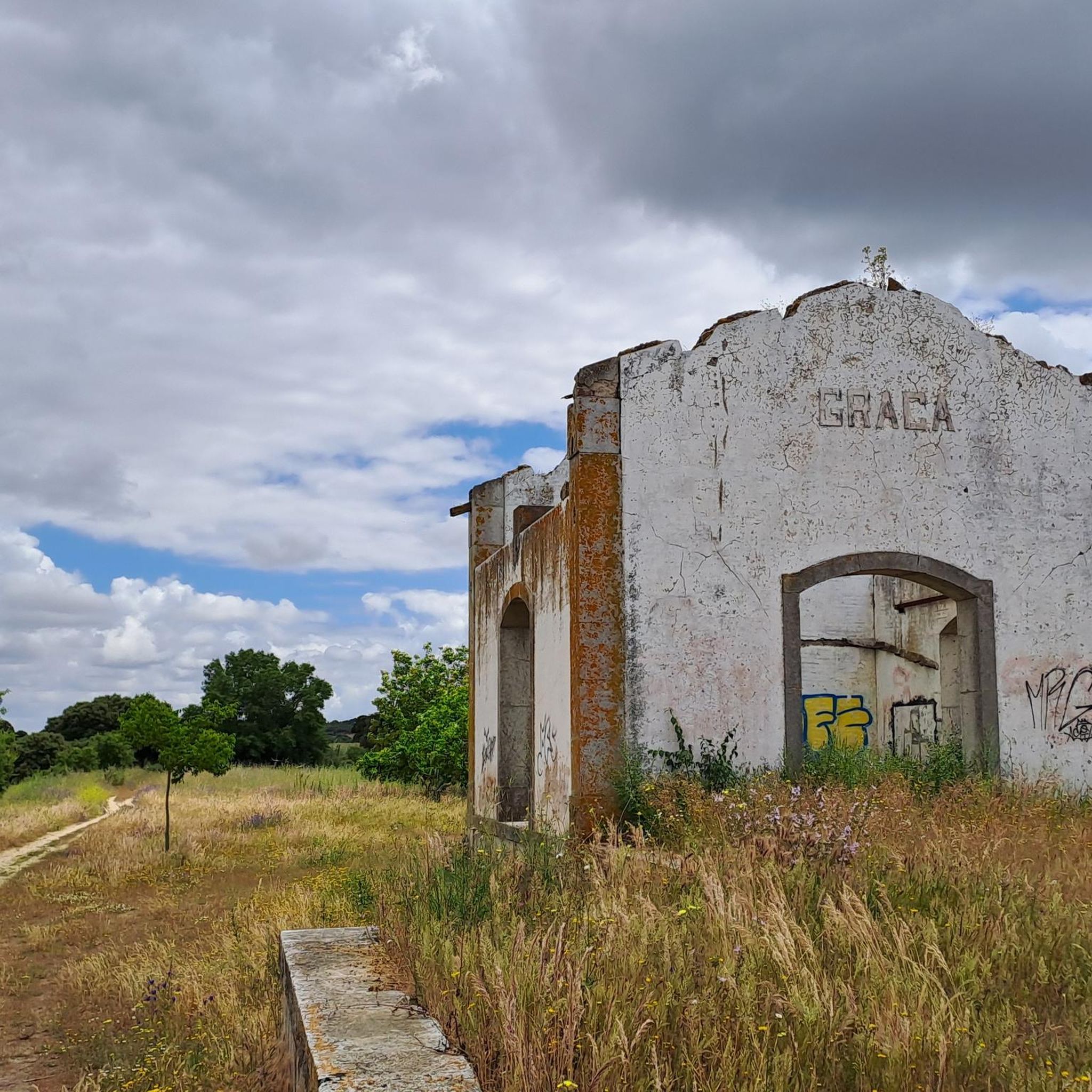

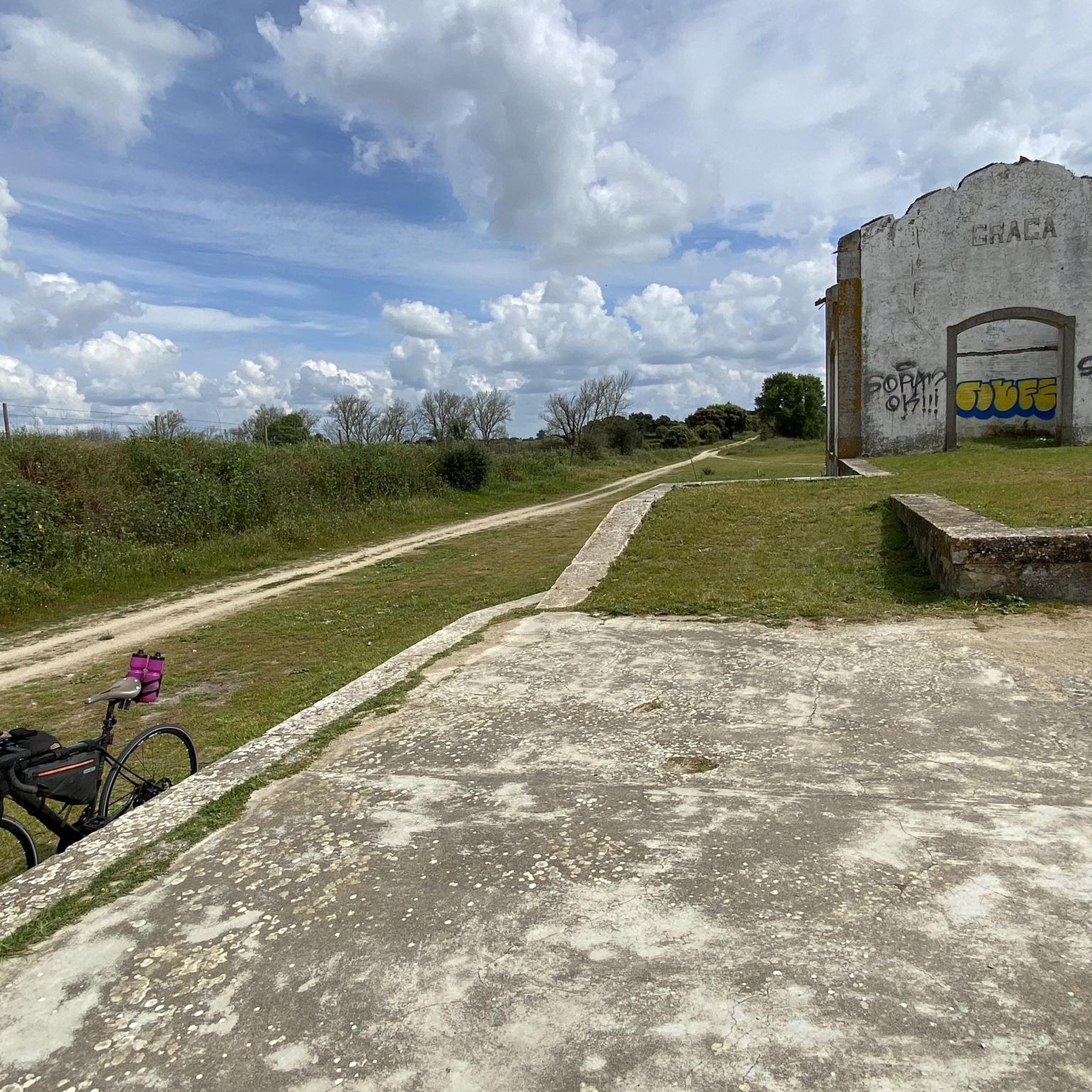
Tips from the Community

Access to a group of houses belonging to the Eugénio de Almeida Foundation. It can be visited.👍🇵🇹
2
1

The Royal Palace of Évora (Portuguese: Pa'o Real de Évora), also known as the Royal Palace of São Francisco (Pao Real de S'o Francisco) and the Palace of King Manuel I (Palácio de D. Manuel), is a former royal residence of the kings of Portugal. The Royal Palace of Évora has its origins in the Convent and College of São Francisco, built before the reign of King Afonso IV. The convent's first royal function was in 1336. https://en.wikipedia.org/wiki/Royal_Palace_of_%C3%89vora
2
1
The original palace was built in the 14th century next to the Tower of Évora, where Martim Afonso de Mello, a servant of the Royal Military Order of Saint Benedict of Aviz and a descendant of the Portuguese crown, ordered its construction. The palace was partially built on the Roman-Visigothic walls of the old castle of Évora, and traces of both remain in its buildings. At the rear of the palace, you can admire the extraordinary Torre das Cinco Quinas, the famous pentagonal tower that gave it its name. In addition to the large outdoor gardens and the numerous rooms and halls that make up the complex, it also houses the Casa Cadaval exhibition rooms, which house a collection of illuminated codices, sculptures, paintings, and armories with pieces from the 15th and 18th centuries. See https://en.wikipedia.org/wiki/Palace_of_the_Dukes_of_Cadaval
2
0
Located in the historic center of Évora, the Pateo de Sao Miguel (Páteo de Sao Miguel) possesses great symbolic significance, a site marked by successive military occupations over the centuries and serving as a setting for notable events in the history of the city and the country. ...The area enjoys the status of a noble and palatial zone. Its architectural ensemble includes the Sao Miguel Palace, the Ermida de Sao Miguel, the Carriage Collection, and the Eugénio de Almeida Archive and Library... https://www.cm-evora.pt/locais/pateo-de-sao-miguel/ This impressive complex has been beautifully restored and is definitely worth a visit.
2
0

Visiting the Cadaval Palace is to feel up close what is also the history of Portugal. The ancestral home and the property of the Dukes of Cadaval family, since its foundation in the 14th century until today, the Palace was built on the ruins of a Moorish Castle in the heart of Évora, and has been able to extend itself over time in all its essence through careful intervention programs. Located in front of the Roman Temple, the Palace is a singular example of the country’s architectural heritage, resulting from a unique combination of Mudéjar, Gothic and Manueline styles. The building’s body includes a vast multi-storey residential area, two interior gardens and a church that is the final resting place for every generation of the Dukes of Cadaval family. The church is, moreover, a national reference given its stunning interior, where azulejo tile panels signed and dated from the beginning of the 18th century prevail. Martim Afonso de Melo, noble servant of the Grand Master of the Order of Aviz and descendant of the Portuguese royal family, commissioned the building, then designated the Palace of the Tower of the Five Shields. The Palace served as the temporary residence of the monarchs Dom João II, Dom João IV and Dom João V. The Palace was also used to imprison the Duke Dom Fernando II of Braganza, accused of conspiring against King Dom João II and subsequently beheaded in the Praça do Giraldo, in Évora, in 1483. Today the Palace remains the residence of the Dukes of Cadaval, although the church and some of the rooms are open to the public throughout the year, exhibiting a collection of historical and contemporary pieces from the family: books, charters, armoury, painting, sculpture, furniture, porcelain, portraits and travel accessories, among other objects of value and major historical interest. At the same time, the Palace temporarily hosts several international cultural and artistic exhibitions.
6
1
Visiting Cadaval Palace is to experience up close the history of Portugal. The cradle and property of the Dukes of Cadaval family, from its founding in the 14th century to the present day, the Palace arose on the ruins of a Moorish castle in the heart of Évora, and has managed to preserve its essence through careful renovation programs. Located opposite the Roman Temple, the Palace is a unique example of the country's architectural heritage, resulting from the fusion of Mudejar, Gothic, and Manueline styles. The building's main building includes a vast multi-story residential area, two interior gardens, and a church that also serves as a pantheon for all generations of the Dukes of Cadaval family. The church is also a national landmark for its grand interiors, dominated by tile panels signed and dated to the early 18th century. Martim Afonso de Melo, a noble servant of the Master of Aviz and a descendant of the Portuguese royal family, commissioned the construction of the building, then known as the Palácio da Torre das Cinco Quinas (Palace of the Tower of the Five Quinas), which served as the temporary residence of the monarchs Dom João II, Dom João IV, and Dom João V. It was also in this palace that Dom Fernando II, Duke of Braganza, was imprisoned, accused of conspiracy against King Dom João II and later beheaded in Praça do Giraldo, Évora, in 1483. Today, the palace remains the residence of the Dukes of Cadaval, although the church and parts of the rooms are open to the public year-round, displaying a collection of the family's historical and contemporary pieces—books, charters, armory, paintings, sculptures, furniture, porcelain, portraits, and travel accessories, among others—while also hosting and temporarily hosting various international cultural and artistic exhibitions.
6
0
The Arraiolos Castle, or Paço dos Alcaides, is a 14th century castle located in Central Alentejo. Although it is not the largest castle in the region, it has a curious and almost unique peculiarity in the world, which makes it stand out in an area of the country with so many buildings of this type: its layout is circular architecture. For those who arrive in the town of Arraiolos (or pass through the surrounding region) it is impossible not to see the Arraiolos Castle, which stands proudly in the landscape, at the top of Monte de São Pedro. Historically, the Arraiolos Castle has had several roles. It was built in 1306 by D. Dinis, housing the population within its walls. Later it was the county seat of D. Nuno Álvares Pereira, 2nd Count of Arraiolos, who lived here for many years. Due to the cold and wind resulting from its location, it ended up losing many of its inhabitants. In an attempt to keep some of the population inside the walls, they began to be closed every night after the bell rang, which continued for several decades. However, the population eventually spread out along the surrounding slopes and three centuries after it was built, the Castle began to be looted for materials, eventually falling into ruins. It was during the reign of King John IV that it underwent major renovation work, but it eventually fell into ruins again, worsened by the earthquake of 1755. Between 1959 and 1963, it was partially restored by the State, achieving the appearance it still has today.
7
1
Giraldo Castle, or Geraldo Castle, is located in Nossa Senhora de Guadalupe, in the current parish of Nossa Senhora da Tourega and Nossa Senhora de Guadalupe, in the Municipality of Évora, District of Évora, in Portugal. It is a castro, a proto-historic fortified structure with origins in the Bronze Age or even the Chalcolithic, but with traces of later occupations. It has a subcircular plan and an outer perimeter of 114 meters. The wall that has survived to the present day probably belonged to a period of medieval occupation. Sources from the 15th century refer to the fortification, associating it with the presence of Geraldo Sem Pavor, a warrior who conquered Évora from the Muslims in 1165. It is currently in the process of being classified.
5
1
Frequently Asked Questions
Beyond the main highlights, what other significant castles can I explore in the Évora region near Nossa Senhora Da Graça Do Divor?
While Nossa Senhora Da Graça Do Divor is known for its megalithic heritage, the wider Évora region offers several remarkable castles. Consider visiting Monsaraz Castle, known for its well-preserved medieval structure and panoramic views over the Alqueva reservoir. Montemor-o-Novo Castle is an emblematic monument showcasing centuries of history, and Evoramonte Castle stands out with its distinctive cylindrical towers and historical significance as the site where the Portuguese Civil War ended. Another option is Vila Viçosa Castle, which houses a Hunting Museum and an Archeology Museum within its historic walls.
Are there any castles with unique architectural features in the area?
Yes, Arraiolos Castle is particularly notable for its curious and almost unique circular architectural layout. Built in the 14th century, its distinctive shape makes it an architectural marvel, offering commanding views of the Alentejo fields.
Which castles offer the best panoramic views?
Several castles in the region provide stunning panoramic views. Arraiolos Castle, perched atop Monte de São Pedro, offers commanding views of the Alentejo fields. Monsaraz Castle provides breathtaking vistas of the surrounding plains, including the Guadiana River and the vast Alqueva water reservoir. Evoramonte Castle, situated on a hilltop, also boasts magnificent views of the Alentejo region.
Are there family-friendly castles to visit near Nossa Senhora Da Graça Do Divor?
Many castles in the Évora region are suitable for families. The Palace of the Dukes of Cadaval and the Royal Palace of Évora (Palace of King Manuel) are both listed as family-friendly highlights, offering historical exploration. Additionally, the village of Monsaraz and its castle provide a charming atmosphere for all ages, and Vila Viçosa Castle's museums can engage younger visitors.
What kind of historical significance do these castles hold?
The castles in the Évora region are steeped in history. For example, Montemor-o-Novo Castle was a crucial site in the reconquest from the Moors. Evoramonte Castle is famous as the signing place of the Concession of Evoramonte, which ended the Portuguese Civil War. The Palace of the Dukes of Cadaval was built on Moorish castle ruins and served as a temporary residence for Portuguese monarchs, while the Royal Palace of Évora was a significant royal residence since the 14th century.
Can I find cafes or restaurants near the castles?
Yes, many of these castles are located within or near historic towns and villages that offer dining options. For instance, Monsaraz Castle is part of a charming hilltop village with local eateries. The Páteo de São Miguel complex in Évora, which includes historical elements, also features a café. The towns of Arraiolos, Montemor-o-Novo, Evoramonte, and Vila Viçosa will have local establishments for food and drink.
What outdoor activities can I do near these castles?
The region around Nossa Senhora Da Graça Do Divor and its castles offers various outdoor activities. You can find numerous road cycling routes, such as the 'Giraldo Square – Évora Public Library loop from Arraiolos' or the 'Aqueduct Hotel – Arraiolos loop from Évora'. For hiking enthusiasts, there are trails like the 'Caravan Park – Évora City Walls loop from Évora' or the 'Giraldo Square – Roman Temple of Évora loop from Évora'. Mountain biking trails are also available, including a 'Mountainbike loop from Évora'. You can explore more options on the Road Cycling Routes, Hiking, and MTB Trails guides for the area.
Are there any castles with museums or special collections?
Yes, Vila Viçosa Castle houses both a Hunting Museum and an Archeology Museum, offering additional insights into the region's heritage. The Palace of the Dukes of Cadaval displays a collection of the family's historical and contemporary pieces, including books, armory, paintings, and porcelain. The Páteo de São Miguel complex also features a Carriage Museum.
What is the best time of year to visit the castles in the Évora region?
The Alentejo region, where Évora is located, experiences hot, dry summers and mild winters. Spring (April to June) and autumn (September to October) are generally considered the best times to visit. During these seasons, the weather is pleasant for exploring the outdoor castle grounds and enjoying the panoramic views without the intense heat of summer.
How accessible are these castles by public transport?
While some castles, particularly those within the city of Évora like the Palace of the Dukes of Cadaval and the Royal Palace of Évora, are easily reachable within the city, reaching castles in more rural locations like Monsaraz or Arraiolos often requires a car. Public transport options to these smaller towns might be limited, so checking local bus schedules from Évora is recommended if you plan to rely on them.
Are there any less crowded or 'hidden gem' castles to discover?
While popular castles like Monsaraz and Arraiolos attract visitors, Montemor-o-Novo Castle and Evoramonte Castle might offer a slightly less crowded experience, especially outside peak tourist times. Their historical significance and architectural beauty are just as compelling, providing an authentic glimpse into the region's past without the larger crowds.
What kind of architecture can I expect to see in these castles?
The castles in the Évora region showcase a diverse range of architectural styles reflecting different historical periods. You'll find medieval military architecture, such as in Montemor-o-Novo Castle and Evoramonte Castle (which also has Renaissance influences). The Palace of the Dukes of Cadaval is a unique blend of Mudejar, Gothic, and Manueline styles, while the Royal Palace of Évora is a prime example of Manueline architecture.
Most popular routes around Nossa Senhora Da Graça Do Divor
Most popular attractions around Nossa Senhora Da Graça Do Divor

Get inspired with the komoot mobile app


Explore more
Looking for the best castles somewhere else? Discover other guides around Nossa Senhora Da Graça Do Divor:
