Top 5 Castles around Malagueira
Best castles around Malagueira are found in the historic core of Évora, a UNESCO World Heritage site bordering the modern Malagueira neighborhood. While Malagueira itself is an architecturally significant residential area, the broader region features impressive medieval walls, ancient ruins, and historical fortifications. These elements contribute to Évora's atmosphere, linking the modern area to its ancient past. The area offers a variety of historical sites and palaces for exploration.
Best castles around Malagueira
- The most popular castles is Tower of…
Last updated: July 3, 2026
Páteo de São Miguel
Highlight • Historical Site
Translated by Google •
Tip by

Palace of the Dukes of Cadaval
Highlight • Historical Site
Translated by Google •
Tip by
Sign up now to discover places like this
Get recommendations on the best single tracks, peaks, & plenty of other exciting outdoor places.
Sign up for free
Giraldo Castle
Highlight • Castle
Tip by
Royal Palace of Évora (Palace of King Manuel)
Highlight • Historical Site
Translated by Google •
Tip by

Tower of the Five Corners
Highlight • Historical Site
Translated by Google •
Tip by
Start today with a free account
Your next adventure awaits.
Login or Signup

Tips from the Community

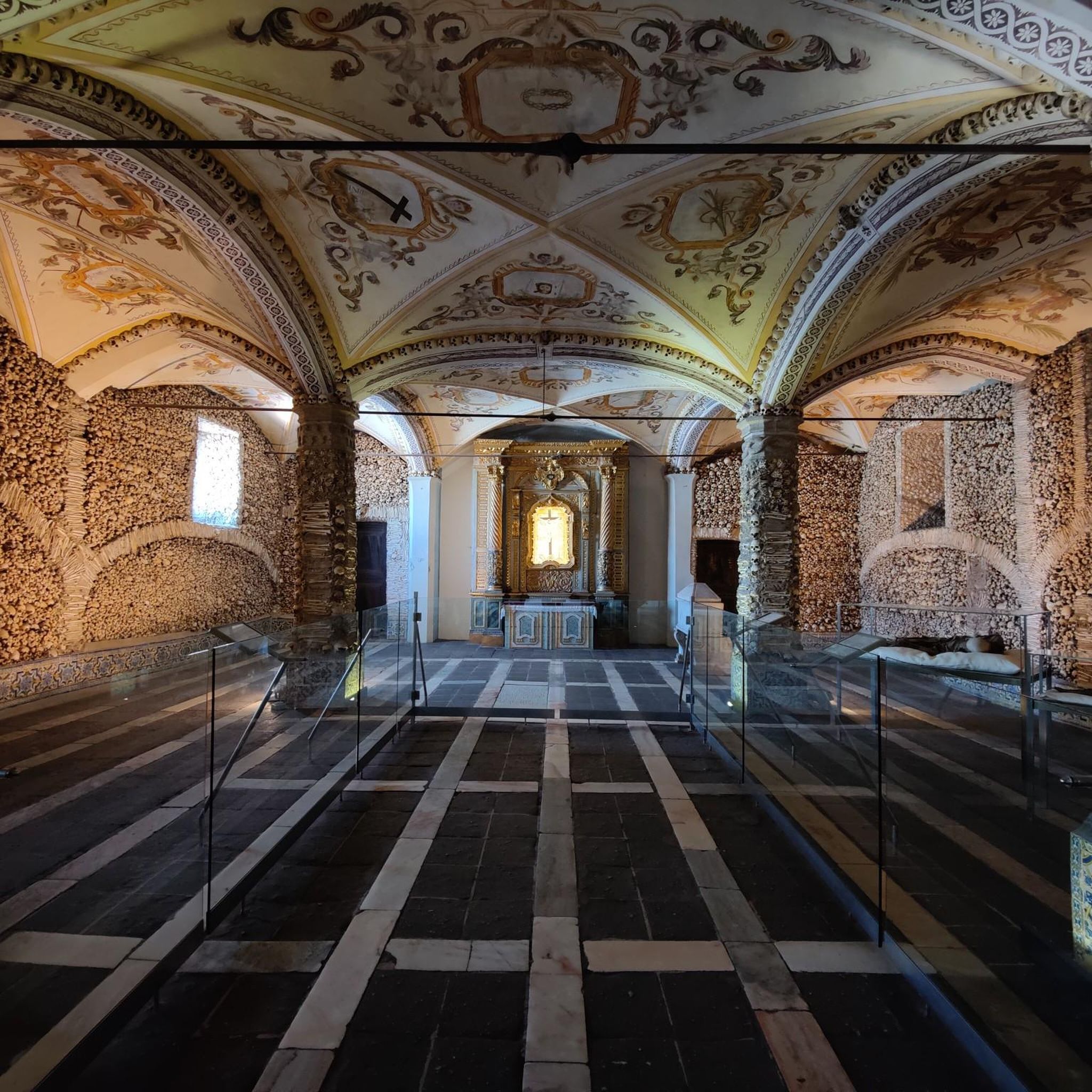
Access to a group of houses belonging to the Eugénio de Almeida Foundation. It can be visited.👍🇵🇹
2
1

The Royal Palace of Évora (Portuguese: Pa'o Real de Évora), also known as the Royal Palace of São Francisco (Pao Real de S'o Francisco) and the Palace of King Manuel I (Palácio de D. Manuel), is a former royal residence of the kings of Portugal. The Royal Palace of Évora has its origins in the Convent and College of São Francisco, built before the reign of King Afonso IV. The convent's first royal function was in 1336. https://en.wikipedia.org/wiki/Royal_Palace_of_%C3%89vora
2
1
This five-cornered tower is part of the Palácio dos Duques de Cadaval and was incorporated into the complex with its fire side facing Conde Vila Flor Beach. It was part of the old city walls of Évora.
2
0
The original palace was built in the 14th century next to the Tower of Évora, where Martim Afonso de Mello, a servant of the Royal Military Order of Saint Benedict of Aviz and a descendant of the Portuguese crown, ordered its construction. The palace was partially built on the Roman-Visigothic walls of the old castle of Évora, and traces of both remain in its buildings. At the rear of the palace, you can admire the extraordinary Torre das Cinco Quinas, the famous pentagonal tower that gave it its name. In addition to the large outdoor gardens and the numerous rooms and halls that make up the complex, it also houses the Casa Cadaval exhibition rooms, which house a collection of illuminated codices, sculptures, paintings, and armories with pieces from the 15th and 18th centuries. See https://en.wikipedia.org/wiki/Palace_of_the_Dukes_of_Cadaval
2
0
Located in the historic center of Évora, the Pateo de Sao Miguel (Páteo de Sao Miguel) possesses great symbolic significance, a site marked by successive military occupations over the centuries and serving as a setting for notable events in the history of the city and the country. ...The area enjoys the status of a noble and palatial zone. Its architectural ensemble includes the Sao Miguel Palace, the Ermida de Sao Miguel, the Carriage Collection, and the Eugénio de Almeida Archive and Library... https://www.cm-evora.pt/locais/pateo-de-sao-miguel/ This impressive complex has been beautifully restored and is definitely worth a visit.
2
0

Visiting the Cadaval Palace is to feel up close what is also the history of Portugal. The ancestral home and the property of the Dukes of Cadaval family, since its foundation in the 14th century until today, the Palace was built on the ruins of a Moorish Castle in the heart of Évora, and has been able to extend itself over time in all its essence through careful intervention programs. Located in front of the Roman Temple, the Palace is a singular example of the country’s architectural heritage, resulting from a unique combination of Mudéjar, Gothic and Manueline styles. The building’s body includes a vast multi-storey residential area, two interior gardens and a church that is the final resting place for every generation of the Dukes of Cadaval family. The church is, moreover, a national reference given its stunning interior, where azulejo tile panels signed and dated from the beginning of the 18th century prevail. Martim Afonso de Melo, noble servant of the Grand Master of the Order of Aviz and descendant of the Portuguese royal family, commissioned the building, then designated the Palace of the Tower of the Five Shields. The Palace served as the temporary residence of the monarchs Dom João II, Dom João IV and Dom João V. The Palace was also used to imprison the Duke Dom Fernando II of Braganza, accused of conspiring against King Dom João II and subsequently beheaded in the Praça do Giraldo, in Évora, in 1483. Today the Palace remains the residence of the Dukes of Cadaval, although the church and some of the rooms are open to the public throughout the year, exhibiting a collection of historical and contemporary pieces from the family: books, charters, armoury, painting, sculpture, furniture, porcelain, portraits and travel accessories, among other objects of value and major historical interest. At the same time, the Palace temporarily hosts several international cultural and artistic exhibitions.
6
1
Visiting Cadaval Palace is to experience up close the history of Portugal. The cradle and property of the Dukes of Cadaval family, from its founding in the 14th century to the present day, the Palace arose on the ruins of a Moorish castle in the heart of Évora, and has managed to preserve its essence through careful renovation programs. Located opposite the Roman Temple, the Palace is a unique example of the country's architectural heritage, resulting from the fusion of Mudejar, Gothic, and Manueline styles. The building's main building includes a vast multi-story residential area, two interior gardens, and a church that also serves as a pantheon for all generations of the Dukes of Cadaval family. The church is also a national landmark for its grand interiors, dominated by tile panels signed and dated to the early 18th century. Martim Afonso de Melo, a noble servant of the Master of Aviz and a descendant of the Portuguese royal family, commissioned the construction of the building, then known as the Palácio da Torre das Cinco Quinas (Palace of the Tower of the Five Quinas), which served as the temporary residence of the monarchs Dom João II, Dom João IV, and Dom João V. It was also in this palace that Dom Fernando II, Duke of Braganza, was imprisoned, accused of conspiracy against King Dom João II and later beheaded in Praça do Giraldo, Évora, in 1483. Today, the palace remains the residence of the Dukes of Cadaval, although the church and parts of the rooms are open to the public year-round, displaying a collection of the family's historical and contemporary pieces—books, charters, armory, paintings, sculptures, furniture, porcelain, portraits, and travel accessories, among others—while also hosting and temporarily hosting various international cultural and artistic exhibitions.
6
0
Giraldo Castle, or Geraldo Castle, is located in Nossa Senhora de Guadalupe, in the current parish of Nossa Senhora da Tourega and Nossa Senhora de Guadalupe, in the Municipality of Évora, District of Évora, in Portugal. It is a castro, a proto-historic fortified structure with origins in the Bronze Age or even the Chalcolithic, but with traces of later occupations. It has a subcircular plan and an outer perimeter of 114 meters. The wall that has survived to the present day probably belonged to a period of medieval occupation. Sources from the 15th century refer to the fortification, associating it with the presence of Geraldo Sem Pavor, a warrior who conquered Évora from the Muslims in 1165. It is currently in the process of being classified.
5
1
Frequently Asked Questions
What kind of historical sites can I expect to find around Malagueira?
While Malagueira itself is a modern residential area, it borders the historic core of Évora, a UNESCO World Heritage site. Here you'll find impressive medieval walls, ancient ruins, and historical fortifications. The Malagueira neighborhood also features modern aqueducts that cleverly reference Évora's ancient Aqueduto da Água de Prata, linking the new with the old.
Are there any family-friendly historical sites or castles near Malagueira?
Yes, several historical sites around Malagueira are suitable for families. The Palace of the Dukes of Cadaval and the Royal Palace of Évora (Palace of King Manuel) are both listed as family-friendly. Páteo de São Miguel also offers a cafe and a Carriage Museum, which can be engaging for children.
What is the best time of year to visit the castles and historical sites around Malagueira?
The best time to visit is typically during the spring (April to June) or autumn (September to October). The weather is milder, making it more comfortable for exploring the outdoor historical sites and walking through Évora's streets. Summers can be very hot, and winters can be cooler and wetter.
Can I find cafes or places to eat near these historical sites?
Yes, the historic center of Évora, where many of these sites are located, offers numerous cafes and restaurants. For example, Páteo de São Miguel has an interesting courtyard with a cafe, offering a pleasant spot to relax during your visit.
What are some notable historical palaces to visit in the area?
Beyond traditional castles, the region boasts significant palaces. The Palace of the Dukes of Cadaval, built on the ruins of a Moorish castle, showcases Mudejar, Gothic, and Manueline styles. The Royal Palace of Évora (Palace of King Manuel) is another former royal residence with a rich history dating back to the 14th century.
Are there any viewpoints offering scenic views of the historical area?
Yes, Páteo de São Miguel is noted for offering panoramic views. Exploring the medieval walls of Évora also provides elevated perspectives of the city and its surroundings.
What outdoor activities can I do near the historical sites around Malagueira?
The area around Malagueira and Évora offers various outdoor activities. You can find easy hikes, such as the 'Barahona Palace – Giraldo Square loop' or the 'Évora City Walls – Giraldo Square loop'. There are also options for mountain biking and road cycling. For more details, you can explore the easy hikes around Malagueira, MTB Trails around Malagueira, and Road Cycling Routes around Malagueira guides.
What is the significance of the Tower of the Five Corners?
The Tower of the Five Corners is a distinctive five-cornered tower that was once part of the old city walls of Évora. It is now incorporated into the complex of the Palace of the Dukes of Cadaval, highlighting the city's medieval defenses.
Are there any ancient or proto-historic fortified structures in the vicinity?
Yes, Giraldo Castle, located in Nossa Senhora de Guadalupe, is a significant site. It's a proto-historic fortified structure with origins in the Bronze Age or even the Chalcolithic, showing continuous occupation since 3000 B.C. It was later re-occupied and reconstructed during the Middle Ages.
What makes the Palace of the Dukes of Cadaval unique?
The Palace of the Dukes of Cadaval is unique for its blend of Mudejar, Gothic, and Manueline architectural styles, built on the ruins of a Moorish castle. It has been the ancestral home of the Dukes of Cadaval family since the 14th century, with parts of the palace and its church, which serves as a family pantheon, open to the public.
Are there any longer hiking trails that incorporate historical sites?
Yes, for those interested in longer walks, there are several routes that pass by historical points. For example, the 'Évora City Walls – Giraldo Square loop' is an easy hike of nearly 6 km. You can find more options in the easy hikes around Malagueira guide.
What is the historical context of the Royal Palace of Évora?
The Royal Palace of Évora (Palace of King Manuel) has its origins in the Convent and College of São Francisco, with its first royal function dating back to 1336. It served as a former royal residence for various kings of Portugal, including King Manuel I, and is a key site for understanding Portuguese history.
Most popular routes around Malagueira
Most popular attractions around Malagueira

Get inspired with the komoot mobile app


Explore more
Looking for the best castles somewhere else? Discover other guides around Malagueira:
