Top 6 Castles around Guimarães (São Sebastião)
Best castles around Guimarães (São Sebastião) are central to understanding Portugal's origins, situated within a region rich in historical significance. The area is characterized by its granite hills and forest parks, providing a natural setting for its ancient fortifications. These sites offer insights into medieval military architecture and the early formation of the Portuguese nation. The historical center, including its castles, is recognized for its cultural importance.
Best castles around Guimarães (São Sebastião)
- The most popular castles is Palace of…
Last updated: July 3, 2026
Palace of the Dukes of Braganza
Highlight • Castle
Tip by

Guimarães Castle Park
Highlight • Castle
Translated by Google •
Tip by

Sign up now to discover places like this
Get recommendations on the best single tracks, peaks, & plenty of other exciting outdoor places.
Sign up for free
Church of São Miguel do Castelo
Highlight • Religious Site
Translated by Google •
Tip by

Vizela Castle
Highlight • Castle
Tip by

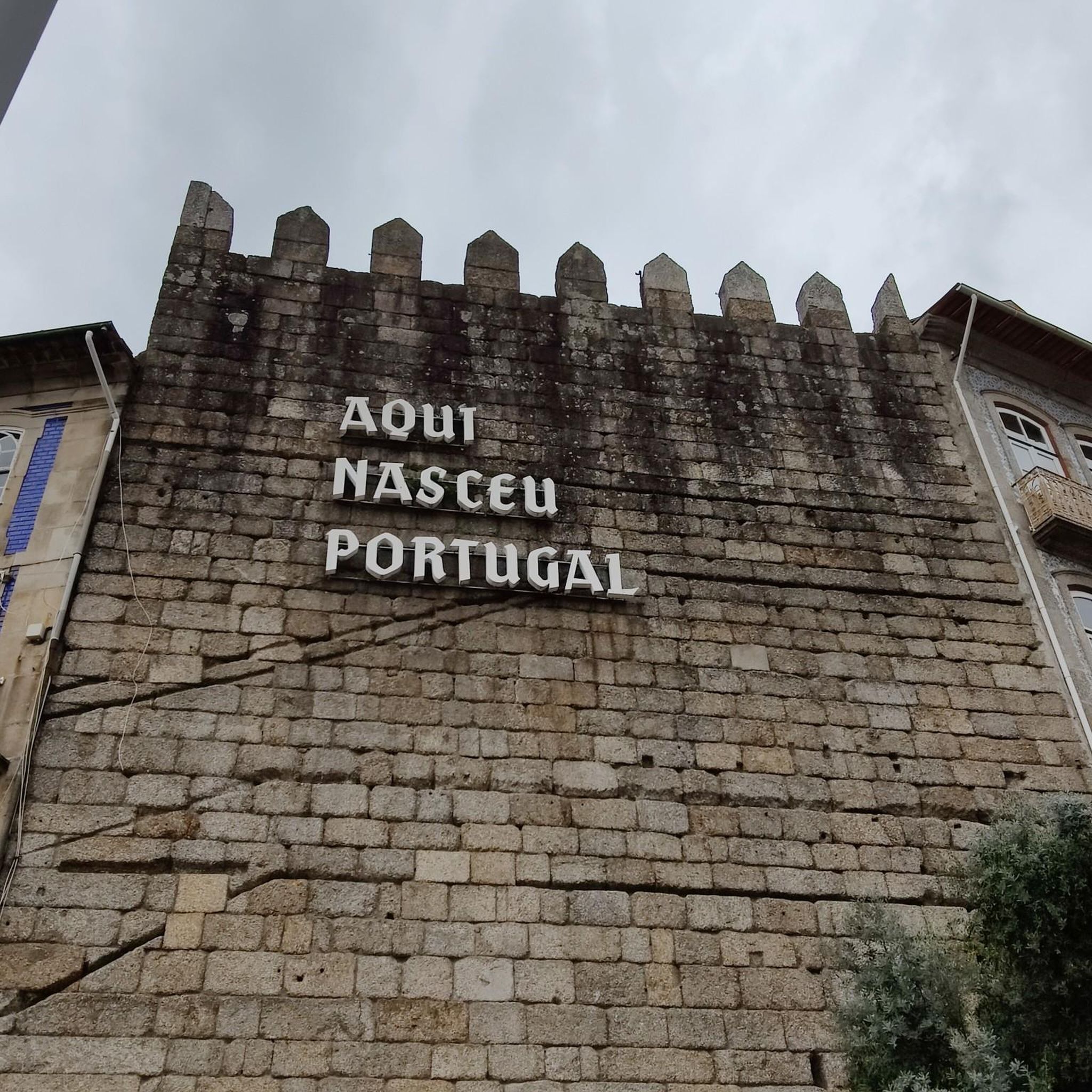
Portugal Was Born Here (Guimarães City Walls)
Highlight • Historical Site
Translated by Google •
Tip by
Sign up for free to discover even more castles around Guimarães (São Sebastião).
Sign up for free
Already have an account?
Start today with a free account
Your next adventure awaits.
Login or Signup



Tips from the Community

A site well worth seeing. It looks more impressive from a distance than up close.
1
0

A detailed plan of the complex with explanations can be found here: https://campanha.cmjornal.pt/portugal-monumental/
1
0
"Aquí nasceu Portugal" - "Here Portugal was born" - is emblazoned in large letters on the old city wall. Afonso Henriques is said to have come from this small town. He courageously broke away from Spain in 1139, proclaiming himself the first king of Portugal and making Guimarães its first capital.
2
0
The Church of São Miguel do Castelo, also known as the Chapel of S'o Miguel Castle, was built in 1239 by the Foundation of Our Lady of the Olive Tree. Legend has it that the first king of Portugal, D. Afonso Henriques, was baptized here. Over the centuries, it gradually fell into ruin, reaching a state of disrepair in the mid-19th century when the Martins Sarmento Society decided to restore it. https://pt.wikipedia.org/wiki/Igreja_de_S%C3%A3o_Miguel_do_Castelo
2
0

The Palace of the Dukes of Braganza was commissioned by Dom Afonso around 1420—the year of his second marriage to Constança de Noronha. Dom Afonso was the illegitimate son of King João I and acquired the titles of 8th Count of Barcelos, 2nd Count of Neiva, and 1st Duke of Braganza! It is considered a unique architectural example on the Iberian Peninsula!
2
0
Guimarães Castle is the most visited medieval castle in Portugal and one of the most beautiful and important castles in the country. It has been recognized as a National Monument since 1881, a UNESCO World Heritage Site since 2001, and one of the 7 Wonders of Portugal since 2007!
1
0

Very beautiful and pleasant historic center/medieval village and very well-preserved castle. Medieval atmosphere/festivities a few days before the June 24th celebration (date of the founding of Portugal)
2
1
This large park (about 10 hectares) was created in the 1950s. It consists of extensive lawns and trees such as plane trees, cypresses and chestnut trees.
1
0
Frequently Asked Questions
What is the historical significance of the castles in Guimarães (São Sebastião)?
The castles in Guimarães, particularly the Guimarães Castle Park, are deeply significant as the 'Cradle of the Nation.' This 10th-century fortification is believed to be the birthplace of Afonso Henriques, Portugal's first king, making it a pivotal site in the country's formation. The nearby Church of São Miguel do Castelo is also historically important as it's thought to be where he was baptized.
Are there family-friendly castles to visit in the area?
Yes, several castles and historical sites around Guimarães (São Sebastião) are family-friendly. Both the Palace of the Dukes of Braganza and the Guimarães Castle Park are suitable for families, offering engaging historical experiences. The Guimarães City Walls, with the 'Portugal Was Born Here' inscription, also provide an interesting stop for all ages.
What outdoor activities can I do near the castles?
You can enjoy various outdoor activities near the castles. There are several hiking routes, including easy options like the 'Guimarães Castle – Oliveira Square, Guimarães loop' or the 'Salado Monument – Guimarães Castle loop.' For more details on hiking, visit the Easy hikes around Guimarães (São Sebastião) guide or the Hiking around Guimarães (São Sebastião) guide. Road cycling routes are also available, such as the 'Guimarães Greenway – Igreja de Galegos loop,' which you can find in the Road Cycling Routes around Guimarães (São Sebastião) guide.
Where can I find panoramic views of Guimarães and the surrounding landscape?
The Guimarães Castle Park offers excellent panoramic views from its walls and the top of the keep. From here, you can see Guimarães, the surrounding area, and the nearby Palace of the Dukes of Braganza.
Is there a lesser-known castle worth visiting in the Guimarães area?
While not as historically central as Guimarães Castle, Vizela Castle offers a different architectural style. This Gothic Revival structure, though currently undergoing restoration after fire damage, has a unique history, having served various purposes from a potential town hall to a private club. It's located overlooking the Vizela river.
What is the best season to visit the castles in Guimarães (São Sebastião)?
The region experiences a Mediterranean climate. Spring (April-May) and early autumn (September-October) generally offer pleasant temperatures and fewer crowds, making them ideal for exploring the castles and walking around the historical sites.
What should I bring for a visit to the castles and surrounding areas?
For castle visits and walks, comfortable walking shoes are highly recommended, as you'll be exploring historical grounds and potentially uneven terrain. Bringing water, especially during warmer months, and a camera to capture the scenic views and historical architecture would also be beneficial.
Are there easy walking routes that connect the main historical sites?
Yes, there are easy walking routes that allow you to explore the main historical sites. For instance, the 'Salado Monument – Palace of the Dukes of Braganza loop' is an easy 2.9 km walk. You can find more options in the Easy hikes around Guimarães (São Sebastião) guide, which includes routes connecting the castle, palace, and other points of interest.
What is the <a href="https://www.komoot.com/highlight/2971437" target="_blank" rel="noopener">Palace of the Dukes of Braganza</a> and how does it relate to the main castle?
The Palace of the Dukes of Braganza is an imposing medieval estate that served as the residence for the first Dukes of Braganza. It was built in the early 15th century and is located very close to the Guimarães Castle Park, making it convenient to visit both as part of a historical tour.
Can I learn about the architectural evolution of Guimarães Castle?
Yes, the Guimarães Castle Park showcases a blend of late Romanesque and early Gothic architectural styles. Its distinctive pentagram, shield-like layout, eight rectangular towers, and the imposing 27-meter-high Torre de Menagem (keep) illustrate its evolution from a 10th-century defense structure to its present-day form, largely shaped by King Dinis in the 13th-14th centuries.
Are there any cafes or dining options near the castles?
The castles are located a short walk from the historic center of Guimarães, which offers numerous cafes, restaurants, and dining options. You'll find a variety of choices to suit different tastes and budgets within easy reach of the main historical sites.
Most popular routes around Guimarães (São Sebastião)
Most popular attractions around Guimarães (São Sebastião)

Get inspired with the komoot mobile app


Explore more
Looking for the best castles somewhere else? Discover other guides around Guimarães (São Sebastião):
