Top 13 Castles around Mietków
Best castles around Mietków are found within the Lower Silesia region, which is known for its rich historical architecture. While Mietków itself features the ruins of a 16th-century defensive residence, the broader area offers a variety of historical sites. The region is characterized by its historical significance, including former defensive structures and later palace conversions. The Mietków Lagoon, a large artificial lake, also provides a notable natural landscape feature.
Best castles around Mietków
- The most popular castles is Sadowice Palace…
Last updated: July 2, 2026
Sadowice Palace
Highlight • Historical Site
Translated by Google •
Tip by

Krzyżowice Palace
Highlight • Historical Site
Translated by Google •
Tip by

Sign up now to discover places like this
Get recommendations on the best single tracks, peaks, & plenty of other exciting outdoor places.
Sign up for free
Ruins of Panków Castle
Highlight • Castle
Translated by Google •
Tip by

Górka Castle
Highlight • Castle
Translated by Google •
Tip by

Krobielowice Palace
Highlight • Castle
Translated by Google •
Tip by

Sign up for free to discover even more castles around Mietków.
Sign up for free
Already have an account?
Start today with a free account
Your next adventure awaits.
Login or Signup

Tips from the Community

The price-performance ratio isn't right. If you exchange euros for zloty at the hotel, you lose 15%.
0
0
The castle is in excellent condition. But not accessible. It is secured with barbed wire and video surveillance. Why? I found the explanation on Wikipedia: The original palace stood on this site in 1574 (16th century). Gottlob Albrecht von Saurma (born 1743) [2] had the building rebuilt in the neoclassical style in 1798. In the first half of the 19th century, the castle was owned by the Counts von Stosch auf Manze from Mańczyce. In 1903, the building was expanded with side pavilions. The last German owner of the estate with knighthood rights until 1945 was Gustav von Johnston, a lieutenant in the Imperial Army [3]. After the end of World War II, the building fell into disrepair. The first major renovation took place in 1968. In 1977, the palace underwent extensive reconstruction. [4] It is the seat of the Ministry of Justice's correctional facility. The monument is part of the castle complex, which also includes a park [ 5 ] .
0
0
The palace complex is accessible. Wikipedia: After 1550, the Barons von Reichell owned the estate. In 1713, they had a Baroque manor house, a side wing, and a servants' quarters built south of the existing knight's residence. Starting in 1854, Benno von Tschirschky-Reichell had the ensemble expanded into a three-wing complex by connecting the servants' quarters. After a fire, the main wing was restored in a blend of Neo-Baroque and Neo-Renaissance styles. At the same time, two new staircases, a pedestal bay window, and a prestigious main portal were built. From 1908 to 1945, the Counts of Eulenburg owned the estate. In May 1945, Marie-Antoinette fled to Eulenburg, but soon returned and resumed operations. After Schlanz, along with almost all of Silesia, fell to Poland in 1945 as a result of the Second World War, the Schlanz estate was transferred to the University of Breslau as an agricultural teaching and experimental estate. Since 1989, the castle has housed a
0
0
A former monastery. Converted into a Neo-Renaissance castle at the end of the 19th century. Apparently a hotel today. When I arrived, it was firmly locked and there was no indication of this.
0
0

The palace in Sadowice, located in the Lower Silesian Voivodeship, is a 16th-century classicist residence, rebuilt in 1798 by Gottlob Albrecht von Saurma. The building is located on the Bystrzyca River, on the north-western edge of the village of Sadowice, with a façade facing the farm complex, preceded by a driveway and a round lawn. Currently, the palace serves as a Ministry of Justice Correctional Facility, which means that it is not open to visitors. For road cyclists, the asphalt routes in the vicinity of Kąty Wrocławskie are attractive, but it should be remembered that the area around the palace is fenced and inaccessible to visitors.
0
0

Ruins of the castle in Panków. You can go inside. Atmospheric place.
0
0

The palace is not available to see up close.
1
0

According to internet sources, the castle in Panków was built in the 14th century on the foundations of a fortified yard and stood on an artificial island surrounded by a moat filled with water from the Bystrzyca River. A stone bridge from the 16th century leads to it. The first owner of the village, mentioned in a document in 1371, was Kunemann von Pankendorf from Niegoszów. His courtyard (Wehrhof) was a place of refuge for the local population in troubled times. As early as 1405 it became the property of the Wiltperg family. In the 15th century in Panków, probably on the site of the manor house, a castle was built for the next owner of the estate - Christoph von Bock. It had a gate tower, two residential buildings and a wall enclosing the courtyard. The von Bock family ruled these lands with a brief interruption until 1650. At the end of the 16th century the castle was destroyed by a great fire, but was rebuilt and slightly enlarged. It was quickly rebuilt in the Renaissance style, enriched with a new dwelling house and the gateway received a cross vault. Unfortunately, the castle was not spared the turmoil of the Thirty Years' War, during which it was destroyed in 1650 and abandoned by the von Bock family. The owners of the castle, who later changed quite frequently, included: Christoph von Zedlitz, the von Schindel family, Counts of Hochberg, Hans Christoph von Schweinitz auf Tscheplau, Baron von Posadowsky, Count David Sigismund von Zedlitz and Leipe. Only the new owner - Friedrich von Zedlitz - rebuilt the castle in 1699, gave it the shape of a palace and gave it a baroque character. The castle consisted of a rectangular two-story building and a four-sided tower. In 1857, after the death of Charlotte Friederika von Zedlitz, née Panczewsky-Tenczin, the palace passed into the hands of her husband Wilhelm von Zedlitz's nephew (died 1847), Georg Gustav Rudolf von Salisch and Großgraben. It remained in the possession of this family until the end of World War II. The castle was only used by the von Salisch family during hunting, as their main residence was in Kraków. From the end of the 19th century it slowly fell into disrepair. The building was partially inhabited until World War II, in which the castle was destroyed and never rebuilt. The last owner of Pankow, Gotthilf von Salisch, fled with his wife from Lower Silesia to Bad Gandersheim in 1945 and the castle has been falling into disrepair ever since.
0
0
Frequently Asked Questions
What types of historical sites can I find directly in Mietków?
Directly in Mietków, you can explore the ruins of a historical defensive residence. Originally a 16th-century defensive tower, it was later expanded into a manor house and then a Neo-Gothic palace. Today, only perimeter walls, some internal partitions, corner turrets, and remnants of the original tower remain, surrounded by a neglected landscape park and segments of a double moat.
Are there any well-preserved castles near Mietków that I can visit?
While Mietków itself features ruins, the broader Lower Silesia region offers several well-preserved historical sites. For example, Krzyżowice Palace is a historical site with an accessible complex featuring a Baroque manor house. Another option is Krobielowice Palace, which functions as a hotel and restaurant, allowing visitors to view the palace from the outside.
What is the best time of year to visit the castles and historical sites around Mietków?
The best time to visit the castles and historical sites around Mietków is generally during the spring (April-May) and autumn (September-October) months. The weather is usually pleasant for exploring, and the natural scenery around the sites, such as the Mietków Lagoon, is particularly beautiful. Summer can also be a good option, though it may be warmer and potentially busier.
Are there any family-friendly activities or castles suitable for children near Mietków?
While specific family activities at the castles are not widely advertised, exploring the grounds of accessible sites like Krzyżowice Palace can be an interesting outing. The nearby Mietków Lagoon also offers recreational activities and birdwatching, which can be enjoyable for families.
Can I access the palaces and castles by public transport?
Information on direct public transport to individual palaces like Sadowice Palace or Krzyżowice Palace is limited. Many of these historical sites are best reached by car. It's advisable to check local bus schedules or consider taxi services from nearby towns for specific locations.
What outdoor activities can I do near the castles around Mietków?
The area around Mietków offers various outdoor activities. You can find excellent options for gravel biking, with routes like the 'Tąpadła Pass – Tąpadła Pass loop from Sobótka'. For hikers, there are mountain hikes around Mount Ślęża, including the 'PTTK Tourist House on Mount Ślęża – Bismarck Tower on Mount Ślęża loop'. There are also running trails, such as the 'Ruina dworu obronnego loop from Mietków'.
Are there any castles near Mietków that are currently used as hotels or restaurants?
Yes, Krobielowice Palace currently functions as both a hotel and a restaurant. While you can view the palace from the outside, staying or dining there offers a unique way to experience the historical setting.
What is the history behind the ruins of Panków Castle?
The Ruins of Panków Castle date back to the 14th century, built on the foundations of a fortified yard and originally surrounded by a moat. It underwent various transformations, including a rebuilding in Renaissance style after a fire and a Baroque conversion in 1699. Unfortunately, it was destroyed during the Thirty Years' War and again in World War II, never to be rebuilt. Today, it's an atmospheric ruin you can explore.
What is the status of Sadowice Palace for visitors?
Sadowice Palace, a 16th-century classicist residence, is currently not open to visitors. It serves as a Ministry of Justice Correctional Facility, and the area around it is fenced and inaccessible.
Are there any historical 'motte' structures in the Mietków area?
Yes, within the wider Gmina Mietków area, you can find historical 'motte' structures, which are fortified earthen mounds. Notable examples include the Maniów Mały Motte, featuring the ruins of a manor house on a quadrilateral mound encircled by moats and ramparts, and the Stróża Dolna Motte, a conical strong settlement.
Can I visit Górka Castle, and what is its history?
Górka Castle, originally a monastery with parts dating back to the 12th century, was converted into a Neo-Renaissance castle in the 19th century. While it has functioned as a hotel more recently, it has been closed since 2016. You can view it from the outside, but some parts of the grounds may be inaccessible.
What natural attractions are near the castles around Mietków?
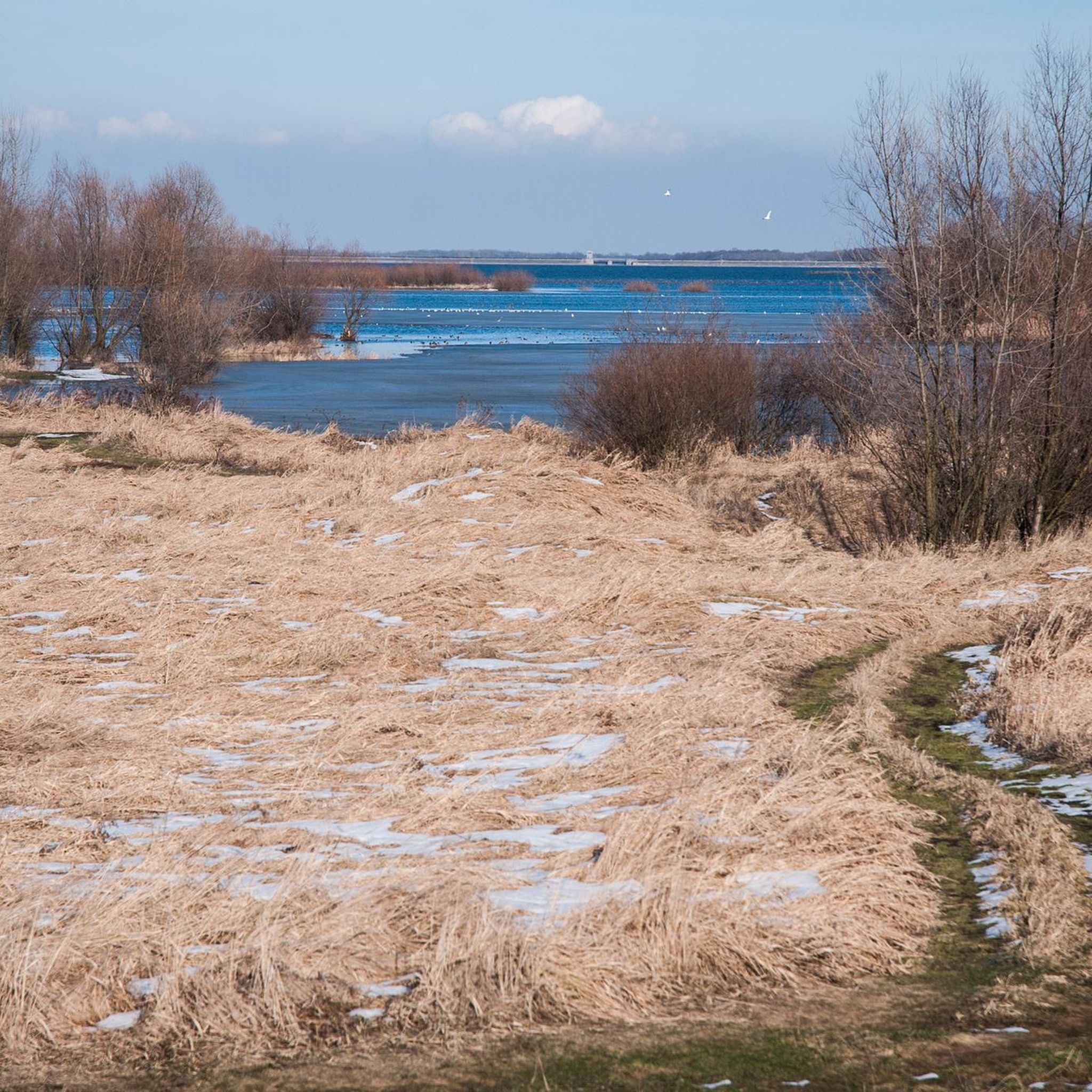
A significant natural attraction in the area is the Mietków Lagoon, a large artificial lake. It's a popular spot for recreational activities and observing various bird species, offering a pleasant contrast to the historical sites.
Are there any cafes or restaurants near the castles?
Krobielowice Palace hosts a restaurant, offering a dining option directly within a historical setting. For other castles, you might need to venture into nearby villages or towns to find cafes and restaurants.
Most popular routes around Mietków
Most popular attractions around Mietków

Get inspired with the komoot mobile app


Explore more
Looking for the best castles somewhere else? Discover other guides around Mietków:
