Top 5 Castles around Llerena
Castles around Llerena are part of a region rich in cultural heritage and historical significance in Extremadura, Spain. The area features a blend of Gothic-Mudejar, Renaissance, and Baroque architectural styles. While traditional castles are not within Llerena's direct urban fabric, the surrounding landscape offers notable fortified structures and historical buildings. These sites provide insights into the region's Muslim and Christian past, reflecting its strategic importance.
Best castles around Llerena
- The most popular castles is Castle of the Towers, a…
Last updated: October 13, 2026
Castle of the Towers
Highlight • Castle
Translated by Google •
Tip by

Castillo de las Torres and Dehesa on the Vía de la Plata
Highlight (Segment) • Castle
Translated by Google •
Tip by

Sign up now to discover places like this
Get recommendations on the best single tracks, peaks, & plenty of other exciting outdoor places.
Alcazaba de Reina
Highlight • Castle
Translated by Google •
Tip by
Montemolín
Highlight • Castle
Translated by Google •
Tip by

Views of Castillo de Reina
Highlight • Viewpoint
Translated by Google •
Tip by
Castle of the Order of Santiago (Valencia del Ventoso)
Highlight • Castle
Translated by Google •
Tip by
Start today with a free account
Your next adventure awaits.

Tips from the Community

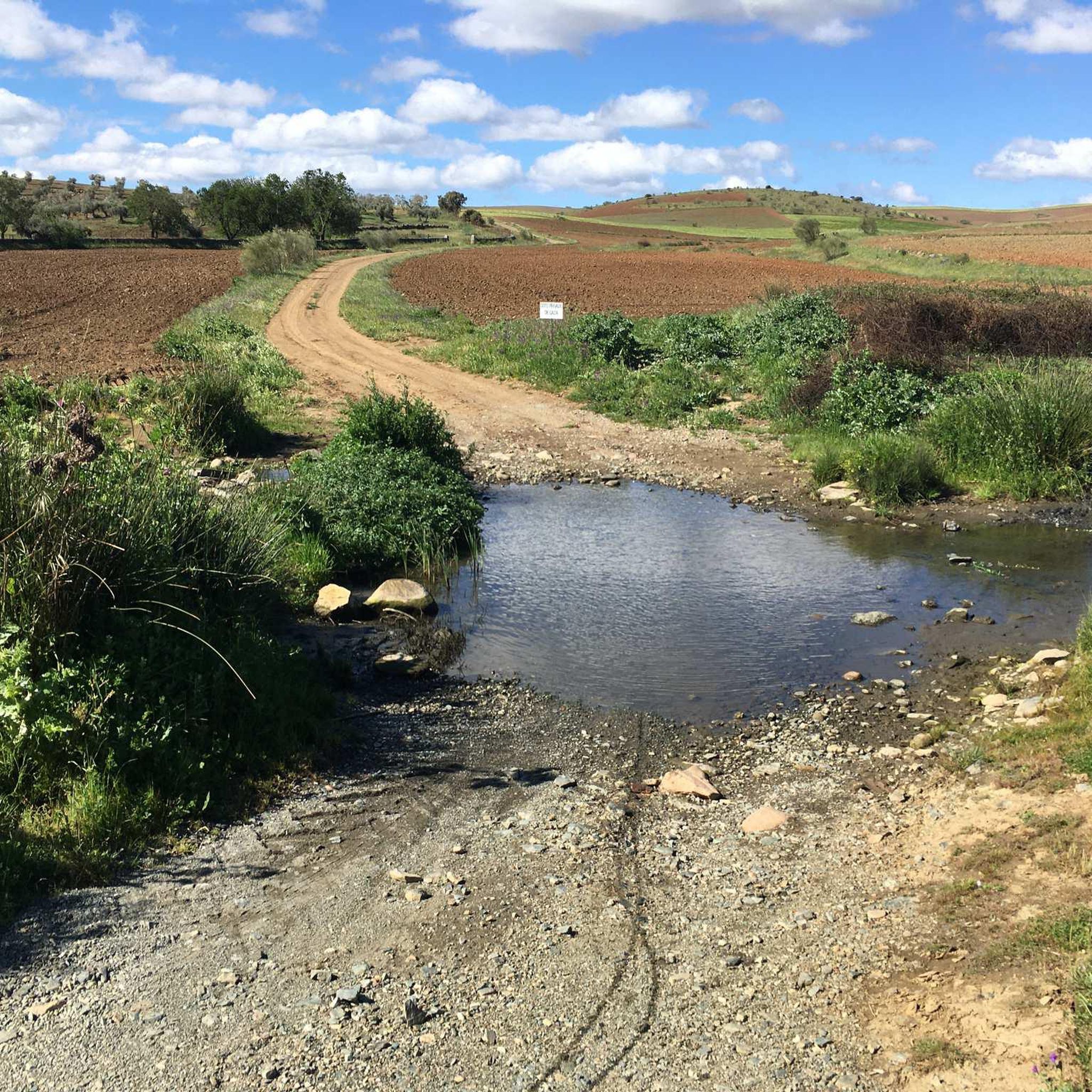
Section of the Camino de Santiago towards Monesterio.
0
1

Highly recommended place
0
0

The Alcazaba has its origins in Roman times, when the city of Regina Turdulorum was located in this area. However, the current fortress was built during the Almohad period in the 12th century. Later, in 1246, it was conquered by Ferdinand III and given to the Order of Santiago, becoming the head of an important commandery.
4
0
The Alcazaba de Reina is an impressive fortress located in the municipality of Reina, near Llerena, in the province of Badajoz. This fortress is located on top of Monte de las Nieves, at an altitude of about 825 metres, offering panoramic views of the Sierra Morena and the Llerena countryside.
4
0
The Castillo de las Torres is a fortress located in the municipality of Monesterio, in the province of Badajoz, Extremadura. It is believed that due to its typology it could date from the 15th or 16th century. This castle is located on a small rocky hill, near the Torres stream and the road that connects Monesterio with El Real de la Jara (old Camino de la Plata). Although it is in the municipality of Monesterio, it is only 1 kilometer from the town of El Real de la Jara in the province of Seville
6
0

This castle is located right on the border between Andalusia and Extremadura. Although its origin and purpose are not well defined, different studies confirm that it was built between the 15th and 16th centuries. From its three rounded towers it was possible to watch over the nearby Vía de la Plata.
3
0

The Castillo de Reina, Badajoz is a defensive building and its origins date back to the last third of the 12th century. The remains of what was a Muslim citadel where several towers and a great wall can still be seen are still visible.
0
0
Although the ruins are located in the Badajoz municipality of Monesterio, the closest town is El Real de la Jara, in the province of Seville. It is located on a rocky hillock that serves as its base.
13
1
Frequently Asked Questions
What kind of historical sites can I expect to find around Llerena?
While Llerena itself is known for its rich cultural heritage of religious and civil architecture, the surrounding area features notable fortified structures and historical buildings. These sites offer insights into the region's Muslim and Christian past, showcasing a blend of Gothic-Mudejar, Renaissance, and Baroque architectural styles.
Are there traditional castles directly within Llerena?
Llerena does not have large, traditional castles within its direct urban fabric. However, its history as a strategic point led to the construction of significant fortified palaces and religious structures, such as the Palacio de los Zapata and the Palacio Episcopal, which have historical and defensive elements.
Which fortified structures near Llerena offer insights into the region's Muslim and Christian past?
The Castillo de Reina (also known as Arab Castle or Alcazaba de Reina), located about 10 kilometers from Llerena, was originally built by Muslims and later became part of the Order of Santiago. It's a declared historical and artistic monument offering a glimpse into both periods.
Are there castles or historical ruins along the Vía de la Plata near Llerena?
Yes, the Castle of the Towers, located near Monesterio, consists of ruins situated on a rocky hillock. Built between the 15th and 16th centuries, it once featured three rounded towers that overlooked the nearby Vía de la Plata. The Castillo de las Torres and Dehesa on the Vía de la Plata is another highlight along this historic route.
What is the <a href="https://www.komoot.com/highlight/5337929" target="_blank" rel="noopener">Montemolín</a> castle known for?
The settlement of Montemolín is characterized by its castle, which is prominently situated on top of one of the hills close to the town center. It is easily visible as you enter the town.
What are some significant historical buildings in Llerena itself?
In Llerena, you can visit the Palacio de los Zapata, an emblematic civil building that served as the third and final seat of the Tribunal of the Inquisition. Another significant site is the Palacio Episcopal (Episcopal Palace), dating from the late 15th century, which showcases Mudéjar and Renaissance architecture and now houses the Llerena City Historical Museum.
What outdoor activities can I do near these castles?
The region around Llerena offers various outdoor activities. You can find numerous cycling routes, such as the 'Alcazaba de Reina y Ciudad romana Regina Turdulorum' or the 'Vía de la Plata Loop from Monasterio'. For hiking, explore trails like the 'Monasterio de Tentudía' or 'Sierra de San Miguel Trail'. Running enthusiasts can also find suitable routes. You can explore more options on the cycling guide, hiking guide, and running guide for Llerena.
Are there hiking trails that incorporate castle visits around Llerena?
Yes, several routes combine hiking with historical sites. For example, the Castillo de las Torres and Dehesa on the Vía de la Plata is a trail that passes the ruins of the Castle of the Towers. Many routes in the area offer views of historical landmarks and natural features. Check the hiking guide for Llerena for more options.
What is the best time to visit the castles and historical sites around Llerena?
The region experiences hot summers, so spring (April-May) and autumn (September-October) are generally the most pleasant times to visit. During these seasons, the weather is milder, making it ideal for exploring outdoor sites and engaging in activities like hiking or cycling around the castles.
Are there any castles associated with the Order of Santiago near Llerena?
Yes, the Castle of the Order of Santiago (Valencia del Ventoso) is located near Zafra, on the southern edge of the Zafrense area. This castle is situated in a region known for its outstanding natural beauty with meadows and scrubland.
What do visitors enjoy most about the castles and historical sites around Llerena?
Visitors appreciate the rich historical context and the variety of architectural styles, from Arab fortresses to Mudejar palaces. The opportunity to explore medieval ruins like the Castle of the Towers, often within picturesque landscapes, is also highly valued. The komoot community has shared 30 photos and given 35 upvotes to these highlights, indicating their appeal.
Most popular routes around Llerena
Most popular attractions around Llerena

Get inspired with the komoot mobile app


Didn’t find what you were looking for?
Explore Llerena’s best castles region by region:
Explore more
Looking for the best castles somewhere else? Discover other guides around Llerena:
