Top 4 Caves around Montignac
Best caves around Montignac are found in the Dordogne region of France, an area known for its significant prehistoric sites. The landscape features natural rock shelters and limestone formations, which have been utilized by humans for millennia. This region is recognized for its concentration of Paleolithic sites and historical dwellings integrated into cliffs. Montignac serves as a central point for exploring these ancient human habitats and decorated caves.
Best caves around Montignac
- The most popular caves is La Roque Saint-Christophe…
Last updated: October 11, 2026
La Roque Saint-Christophe
Highlight • Historical Site
Translated by Google •
Tip by

Lascaux International Centre for Cave Art
Highlight • Historical Site
Translated by Google •
Tip by

Sign up now to discover places like this
Get recommendations on the best single tracks, peaks, & plenty of other exciting outdoor places.
Maison Forte de Reignac
Highlight • Castle
Source Wikipedia en.m.wikipedia.org/wiki/Tursac
Translated by Google •
Tip by

The Rock Shelters of the Vézère Valley
Highlight • Cave
Translated by Google •
Tip by

Start today with a free account
Your next adventure awaits.
Other adventures around Montignac

Tips from the Community

A worthwhile visit, even if it's not the original cave. But the replica is very well done, and the self-guided tour with the audio guide, also in German, explains everything in a very interesting way.
1
0

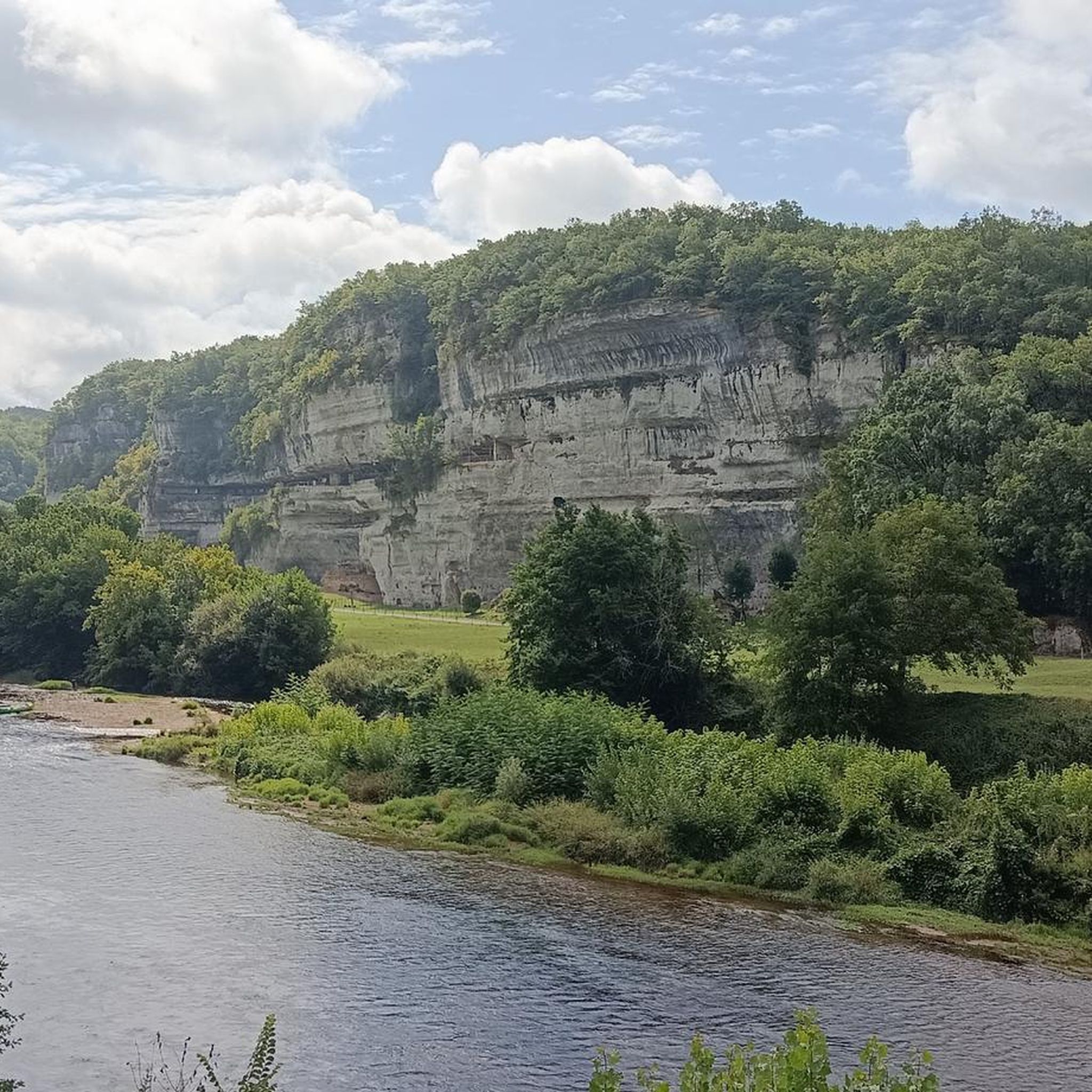
This real limestone wall, one kilometer long and eighty meters high, constantly undermined by the river and the frost, has been hollowed out with a hundred rock shelters and long aerial terraces; these natural cavities were occupied by prehistoric man and then modified to become a fort and a city from the Middle Ages until the beginning of the Renaissance.
4
0

This excursion takes visitors far back into prehistoric times. And the place - like the Vézère valley in the French Périgord - is not only marked as one (of many) highlights in the komoot system: UNESCO has also recognized the surprisingly well-preserved, ancient rock paintings and - quite rightly - awarded them the coveted title of World Heritage Site. The German-language television series "Treasures of the World - Heritage of Humanity" documents these special places from all eras and continents in quarter-hour contributions. If you are interested, see: => https://www.ardmediathek.de/video/schaetze-der-welt/vezere-frankreich-folge-227/swr/Y3JpZDovL3N3ci5kZS82OTg1MTQ2
2
0

¡Lascaux4 is “Brutalism in architecture”!
2
0

Said to be the last intact rock castle in France.
0
0

The International Center for Parietal Art in Lascaux is an essential destination for art and history enthusiasts. Located near the original Lascaux caves, this center offers an immersive and captivating experience. Visitors can explore the reproduction of the cave, known as Lascaux IV, which faithfully recreates Upper Paleolithic wall art. With state-of-the-art technology and interactive exhibits, the International Center for Cave Art provides an opportunity to delve into the fascinating history of prehistoric art and understand its cultural and artistic significance.
2
0

This is Lascaux 4 and here you can see the copies of the caves. Unbelievable what was created here. We got tickets for Lascaux 2 and got to Lascaux 4 on time because we thought we were in the right place. But we thought wrong when showing the tickets, we were kindly pointed out that we are wrong and where Lascaux 2 is located. We then jumped into the car and drove up the mountain. When we got to the top, we were a little disappointed when we saw the terrain. So we asked at the checkout what the difference was between Lascaux 2 and Lascaux 4. I now know how to read everything. So we jumped back in the car because we actually wanted to see Lascaux 4 which offered a complete copy of the cave. Arrived at the bottom we were allowed to exchange the tickets and received the tip that after 12:00 p.m. individual admission was without time limit and this was the right experience for us to move freely without a group. Thanks to the tablet, which automatically adapted to the visited rooms and also logged in to the right place for running films, it was a successful visit....
3
0

Worth to visit, very nice fortified house
0
0
Frequently Asked Questions
What kind of historical sites can I explore around Montignac?
Montignac is rich in historical sites, ranging from prehistoric dwellings to medieval fortresses. You can visit La Roque Saint-Christophe, a site where natural cavities were inhabited in prehistoric times and later converted into a fortress. Another unique site is Maison Forte de Reignac, a 16th-century castle built directly under a cliff. The region also features The Rock Shelters of the Vézère Valley, a kilometer-long limestone wall with numerous shelters occupied by prehistoric humans and later fortified.
Where can I see prehistoric cave art near Montignac?
For an immersive experience of prehistoric cave art, visit the Lascaux International Centre for Cave Art (Lascaux IV). This site offers a complete and faithful replica of the original Lascaux Cave, showcasing nearly 600 paintings and 1,500 engravings, primarily depicting animals like horses, bison, and deer. Another significant site is Rouffignac Cave, known for its extensive galleries adorned with over 250 prehistoric drawings and engravings, predominantly of mammoths, which you explore via an electric train.
Are there family-friendly cave experiences around Montignac?
Yes, several sites offer engaging experiences for families. The Lascaux International Centre for Cave Art provides an interactive and immersive journey into prehistoric art. Rouffignac Cave offers a unique electric train ride through its vast galleries, which is often a hit with children. Additionally, Le Thot Park, located near Montignac-Lascaux, features an animal park with descendants of animals depicted in the cave paintings, an interactive museum, and hands-on workshops on cave art and flint knapping.
What are the natural features of the caves and rock shelters in the Montignac area?
The Montignac area is characterized by significant natural rock shelters and limestone formations. Sites like La Roque Saint-Christophe and The Rock Shelters of the Vézère Valley are prime examples of natural cavities and aerial terraces carved into a massive limestone wall, which were utilized by humans for millennia. Rouffignac Cave, for instance, is one of Europe's largest painted caves, spanning over eight kilometers with evidence of cave bear activity.
Are there any wheelchair-accessible cave attractions near Montignac?
Yes, the Lascaux International Centre for Cave Art is designed to be wheelchair accessible, offering an inclusive experience for visitors to explore the replica cave and its interactive exhibits.
What outdoor activities can I do near the caves around Montignac?
The region around Montignac offers various outdoor activities. You can find numerous hiking trails, including routes like the 'Hike of Montignac' (21 km, difficult) or shorter, moderate loops such as 'Montignac-Lascaux Old Town – Lascaux II loop' (7.9 km). For cycling enthusiasts, there are road cycling routes like 'From Montignac to Salignac' (58.5 km) and gravel biking options such as 'Jolie vue – Château de la Fleunie loop' (34 km). You can explore more options in the Hiking around Montignac, Road Cycling Routes around Montignac, and Gravel biking around Montignac guides.
How long does it take to visit the Lascaux International Centre for Cave Art?
A visit to the Lascaux International Centre for Cave Art typically takes around 2.5 to 3 hours to fully experience the replica cave and the extensive exhibition spaces, which cover over 8,500 square meters.
What is unique about Rouffignac Cave compared to other caves in the region?
Rouffignac Cave, often called the 'Cave of a Hundred Mammoths,' is unique for its exceptional abundance of mammoth depictions, accounting for 30% of all mammoths in Paleolithic art. It also offers a distinctive experience as visitors explore its vast galleries aboard a small electric train, providing a comfortable way to view the extensive artwork and traces of cave bears.
Is there parking available at the major cave sites near Montignac?
Yes, major sites like the Lascaux International Centre for Cave Art typically have dedicated parking facilities for visitors. For other sites, it's advisable to check their official websites for specific parking information before your visit.
What should I wear when visiting caves in the Montignac area?
Caves generally maintain a cool and constant temperature year-round, regardless of the outside weather. It's recommended to wear comfortable walking shoes and bring a light jacket or sweater, even in summer, as the temperature inside can be quite cool.
Are there any sites that complement a visit to Lascaux?
Le Thot Park, located a few kilometers from Montignac-Lascaux, serves as an excellent complement to a visit to Lascaux. It provides further context on the prehistoric environment and the animals that inspired the cave artists, featuring an animal park with descendants of animals depicted in the cave paintings, an interactive museum, and workshops.
Can I visit caves near Montignac during the winter months?
Many of the major cave attractions and replicas, such as the Lascaux International Centre for Cave Art, are open year-round, including during winter. However, it's always best to check the specific opening hours and days of operation for each site before planning your visit, as schedules may vary seasonally.
Most popular routes around Montignac
Most popular attractions around Montignac

Get inspired with the komoot mobile app


Explore more
Extend your search for the best caves by checking out these guides of the top ones around Montignac:
