Top 8 Castles around Godewaersvelde
Best castles around Godewaersvelde are found in the French Flanders region, characterized by rolling hills and historical significance. The area features the Mont des Cats, a prominent hill offering panoramic views of the surrounding landscape. Godewaersvelde provides access to historical sites and natural areas, reflecting a rich cultural heritage. The region's terrain offers varied walking routes and opportunities to explore historical landmarks.
Best castles around Godewaersvelde
- The most popular castles is Marguerite Yourcenar Departmental Park, a forest that features…
Last updated: July 5, 2026
Marguerite Yourcenar Departmental Park
Highlight • Forest
One of the works is "M for Marguerite", of course placed here in the …
Translated by Google •
Tip by

De Lovie Castle Park
Highlight • Castle
The castle of De Lovie dates from 1856 and is built in neoclassical style.
Translated by Google •
Tip by

Sign up now to discover places like this
Get recommendations on the best single tracks, peaks, & plenty of other exciting outdoor places.
Sign up for free
View from the castle terrace
Highlight • Viewpoint
Translated by Google •
Tip by

Château du Couthof
Highlight • Castle
Translated by Google •
Tip by
Château Schabaillie
Highlight • Castle
Showing Translation
Tip by

Sign up for free to discover even more castles around Godewaersvelde.
Sign up for free
Already have an account?
Start today with a free account
Your next adventure awaits.
Login or Signup

Tips from the Community

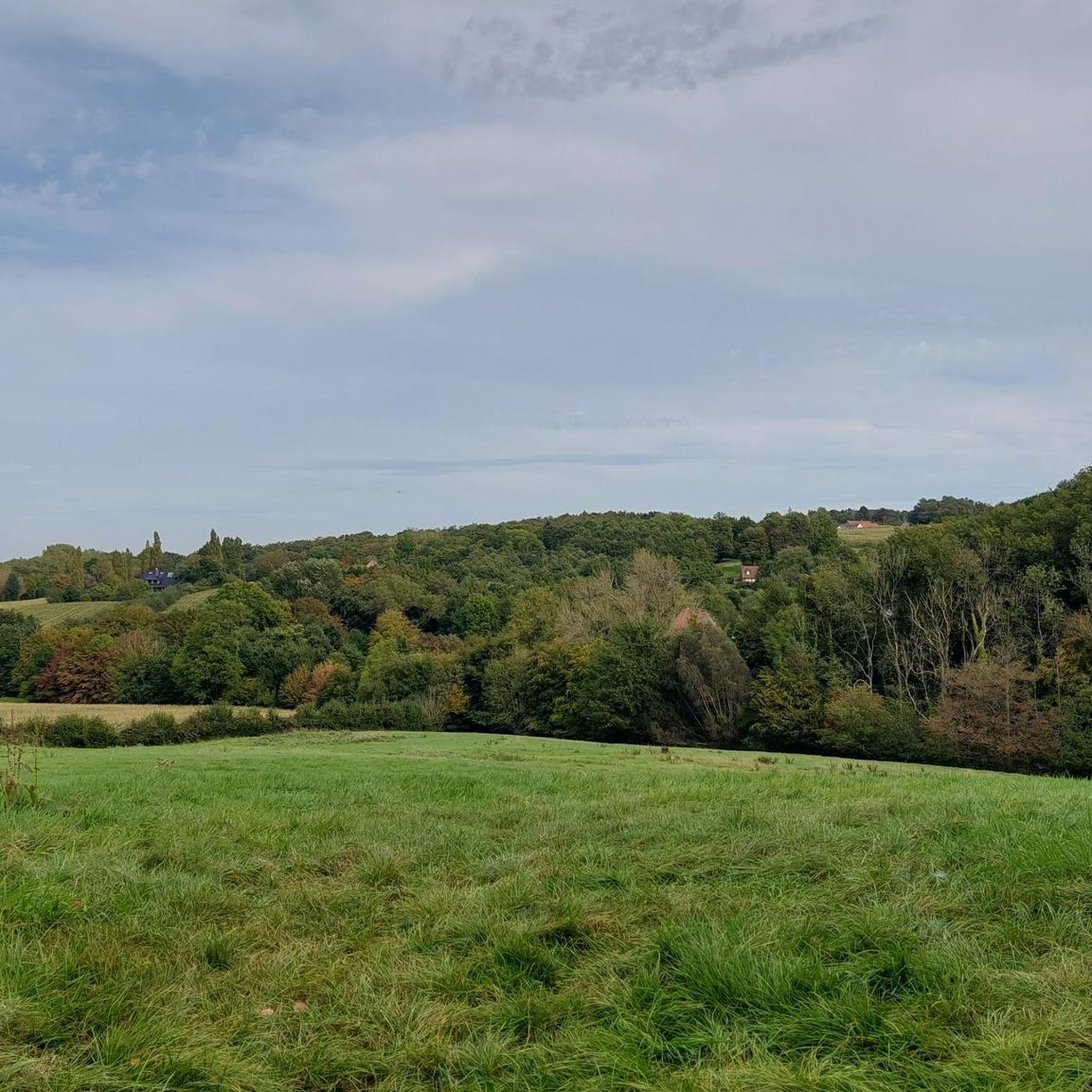
A beautiful, spacious park with grassy areas and clumps of woods. Plenty of space for a relaxing break.
3
0

Formerly called 'Chalet Schabaillie' after the builder and former resident, brickmaker A. Schabaillie. Mansion with a tower that gives the whole a castle-like appearance. The property stands in the middle of a still partly wooded garden with an L-shaped coach and stable wing to the north of which the facade faces the street. A garden pavilion leans against the garden wall to the northeast. On the street side, there is a low garden wall with a gate between pedestals to the right of the paved driveway. The whole was later divided: the former coach and stable wing now serves as a warehouse, part of the garden on the street side was subdivided and includes low new construction. The eclectic architectural style is characterized, among other things, by the decorative use of yellow and yellow-painted bricks and refers to similar local 'castles' from the same period. Mansion on a rectangular floor plan. Double house of two bays + central tower and entrance risalit of one bay + a wide bay ending in a dormer window with a gable roof, and two storeys under a hipped roof with an iron ridge, decorated with lilies, small dormers, and high chimneys, among other things. A year stone 1900 is incorporated into the gable. Red brick construction with the use of yellow bricks for horizontal facade bands, corner stones, finishing panels, and relieving arches of the Tudor and round arched openings. A wooden loggia is located to the right on the main floor. Tower with three storeys under a truncated pyramidal roof with a lantern under a slate spire. The other facades have a similar facing. On the left side of the rear facade, there is a partly adjoining low extension (kitchen) under a hipped roof (ridge direction perpendicular to the main house, mechanical tiles), in a matching architectural style; conservatory against the garden facade. L-shaped coach and stable wing of one and a half storeys under a gable roof with mechanical tiles. The striking corner tower with a slate spire is crowned with iron decoration, referring to the ridge of the mansion. The inscription 'Anno 1914' is incorporated into the plastered casement of the dormer window. Analogous brick architecture; additional decorative motifs of yellow brick, including St. Andrew's crosses. The street facade is a variation on the traditional gable facade: the stepped gable with a Bruges bay, and the central arched coach gate above which is a round arched window crowned with a cross of yellow brick. The garden pavilion against the northeast garden wall is a variation on the medieval dovecote type. Octagonal low building under a slightly constricted spire (slate) with wooden dormers. Matching architectural style. Source: DELEPIERE A.-M. & HUYS M. 1989: Inventory of cultural heritage in Belgium, Architecture, Province of West Flanders, District of Ypres, Canton Poperinge, Building through the centuries in Flanders 11n2, Brussels - Turnhout. Authors: Delepiere, Anne Marie; Huys, Martine Date: 1989 Text made available by: Agency for Immovable Heritage (AOE) Additional information Number 20 forms the last part of the stable wing. The part facing the street has since been demolished, but the rear part with the tower is still preserved. Information obtained from the Intermunicipal Immovable Heritage Service CO7 (July 29, 2021). Authors: Jacobs, Els Date: 11-04-2022 Text made available by: Agency for Immovable Heritage (AOE)
6
0

a nice little walk...
1
2

superb park to visit with the family
1
2

The panoramic terrace of the Château de Cassel offers a breathtaking view of the Flanders plain. You can see the mill, the monument of the Three Battles and the old crypt. All are emblematic places of the site. On the way back down the alpine ramp, a tavern awaits walkers for a friendly break.
5
0

At 176 metres high, this is the highest point in the area. It is a former castle terrace and until 1788, the St. Peter's Church stood here, of which remains of the crypt are still present. The belvedere is also a viewpoint. The Roman highways that can be seen from here and that fan out in all directions are spectacular.
8
0

From 1 June to 29 September 2024, the region will host the land art festival "ArtPenteurs". One of the works is "M for Marguerite", of course placed here in the park. (If you are standing with your back to the villa: about 50 metres further on, turn left)
4
0
Marguerite Yourcenar (1903-1987), the celebrated writer of, among others, "Het hermetisch zwart" (The Hermetic Black) and "Hadrianus' Herinnerschriften", refers to this place of her youth in many of her works. In interviews towards the end of her life, she repeatedly stated that it was her wish to protect this piece of nature. This was worked on from 1986 onwards. The villa in the 50-hectare park is now a writer's residence. In the vicinity of the villa there are many signs with quotes from famous authors.
3
0
Frequently Asked Questions
What kind of 'castles' can I expect to find around Godewaersvelde?
While Godewaersvelde itself has remnants of a historical feudal mound where a 14th-century castle once stood, the region offers a mix of castle parks, fortified villages, and sites with historical castle connections. You'll find places like De Lovie Castle Park with its neoclassical castle and preserved English landscape, or the fortified hilltop settlement of Cassel Village.
Are there any historical sites related to castles in Godewaersvelde itself?
Yes, historical records indicate that a 14th-century castle once existed in Godewaersvelde. While the castle itself is gone, remnants of its feudal mound are still visible today at a place called 'Haeghedoorn'.
What is the Abbaye du Mont des Cats and is it related to castles?
The Abbaye du Mont des Cats is a Cistercian Trappist monastery located on the Mont des Cats hill, offering scenic views. While not a traditional castle, it's a significant historical and cultural site in the region with origins tracing back to 1650. Visitors can explore the abbey's shop, known for its cheese and beer, and enjoy the peaceful surroundings. You can learn more about its history on Wikipedia.
Are there family-friendly castle-related attractions near Godewaersvelde?
Yes, several sites are suitable for families. Marguerite Yourcenar Departmental Park is a 50-hectare park with a villa and preserved nature, offering space for exploration. Cassel Village provides historical alleys and beautiful views that can be enjoyed by all ages. De Lovie Castle Park also offers open spaces and historical elements for families to discover.
What natural features or viewpoints can I find near these historical sites?
The region is characterized by rolling hills and offers several scenic viewpoints. From the View from the castle terrace in Cassel, you can see panoramic views of the Flanders plain and the Roman highways fanning out. The Mont des Cats, where the Abbaye du Mont des Cats is located, also provides excellent vistas of the surrounding landscape. Marguerite Yourcenar Departmental Park is a preserved natural environment with forests and walking paths.
What outdoor activities can I do near the castles around Godewaersvelde?
The area around Godewaersvelde is excellent for various outdoor activities. You can find numerous running trails, such as the 'Mont des Cats Abbey – Hyacinth trail loop' or 'Magnificent view – Mont des Cats Abbey loop'. For cycling enthusiasts, there are routes like the 'Flanders Windmills Trail' or 'Bailleul Belfry – Katsberg loop'. Gravel biking is also popular, with routes like 'Kemmelberg cobbled climb – Hellegatbos Forest Path loop'. For more details, explore the running trails, gravel biking routes, and cycling routes guides.
Are there any lesser-known or unique castle-like sites to explore?
Consider visiting Château du Couthof. Built as a summer residence in 1763, it's surrounded by a 19th-century landscape park with a pond, grasslands, and scattered garden ornaments. The domain is partially open to the public for walks through its cleared paths and around the old garden.
What is the best time of year to visit the castles and historical sites?
Spring and summer are generally ideal for visiting, offering pleasant weather for exploring the parks and outdoor areas. The region also hosts events like the 'ArtPenteurs' land art festival from June to September, which can add to the experience at places like Marguerite Yourcenar Departmental Park. Autumn can also be beautiful with changing foliage.
What do visitors enjoy most about the historical sites and castles in this area?
Visitors frequently appreciate the blend of history, culture, and nature. The panoramic views from elevated points like Cassel Village and the peaceful atmosphere of places like the Abbaye du Mont des Cats are often highlighted. The preserved natural environments, such as Marguerite Yourcenar Departmental Park, also receive positive feedback for their tranquility and beauty.
Are there parking facilities available at these castle-related locations?
Yes, some locations like De Lovie Castle Park and Château du Couthof offer parking facilities, making them accessible for visitors traveling by car. It's always advisable to check specific site information for the most up-to-date parking details.
Can I find cafes or restaurants near the castles and historical sites?
Yes, especially in fortified villages like Cassel Village, you'll find 'estaminets' (traditional Flemish pubs/restaurants) offering local gastronomy. The Abbaye du Mont des Cats also has a shop where you can purchase monastic products, including cheese and beer.
Most popular routes around Godewaersvelde
Most popular attractions around Godewaersvelde

Get inspired with the komoot mobile app


Explore more
Looking for the best castles somewhere else? Discover other guides around Godewaersvelde:
