Top 10 Lakes around Roncq
Lakes near Roncq offer diverse natural and recreational opportunities within the surrounding Lille metropolitan area. While Roncq itself does not feature prominent natural lakes, the region provides several options for outdoor activities. These areas are characterized by green spaces, water features, and managed natural reserves. The local landscape includes former gravel pits transformed into nature reserves and filtration ponds designed for water purification.
Best lakes around Roncq
- The most popular lakes is Bergelen Provincial Domain, an other natural area…
Last updated: June 21, 2026
Bergelen Provincial Domain
Highlight • Natural
Translated by Google •
Tip by

Green Area De Marionetten
Highlight • Forest
Translated by Google •
Tip by

Sign up now to discover places like this
Get recommendations on the best single tracks, peaks, & plenty of other exciting outdoor places.
Sign up for free
Leers Filtration Ponds
Highlight • Structure
Translated by Google •
Tip by

Bissegem Plage
Highlight • Natural
Translated by Google •
Tip by

Bergelenput
Highlight • Lake
Translated by Google •
Tip by

Sign up for free to discover even more lakes around Roncq.
Sign up for free
Already have an account?
Start today with a free account
Your next adventure awaits.
Login or Signup

Tips from the Community


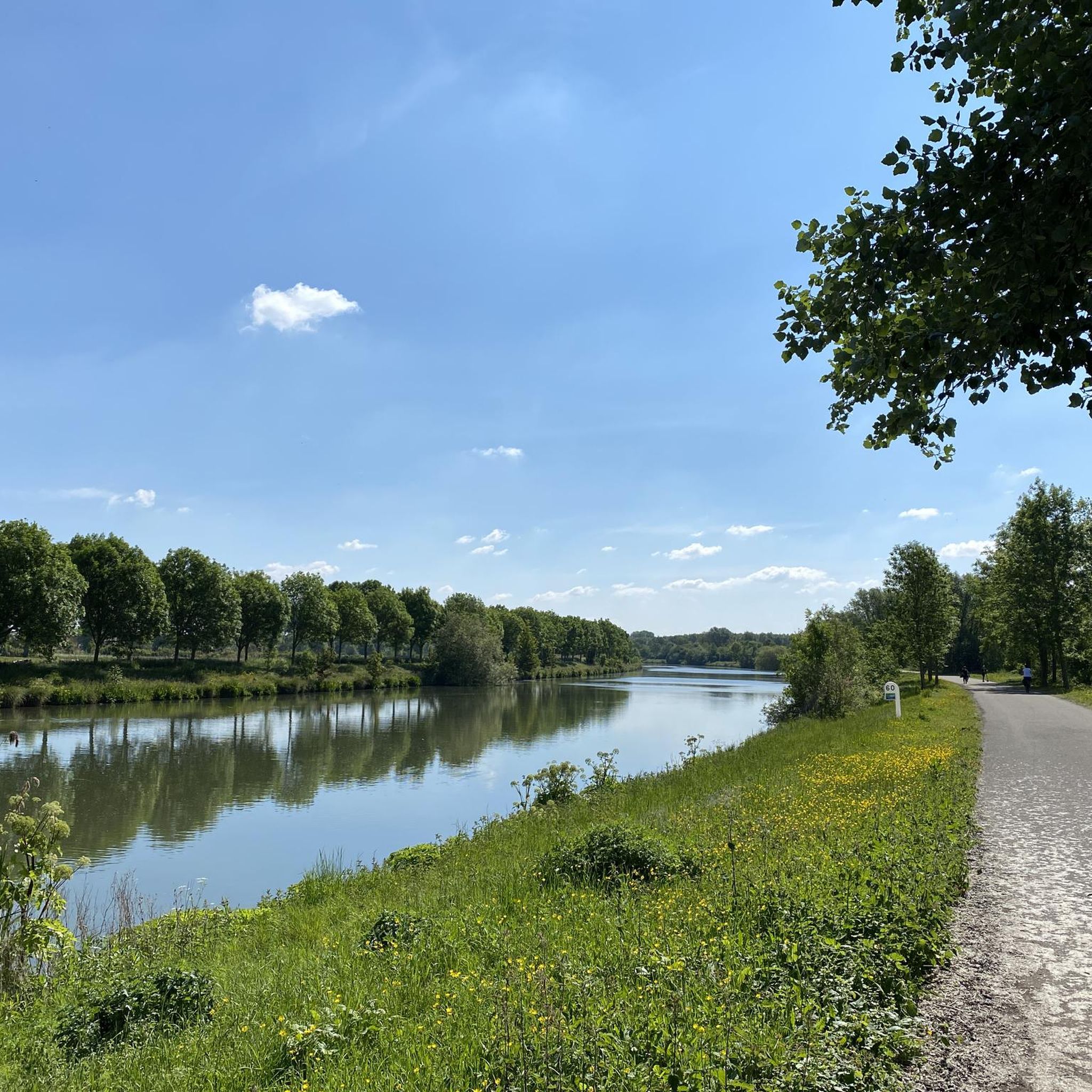
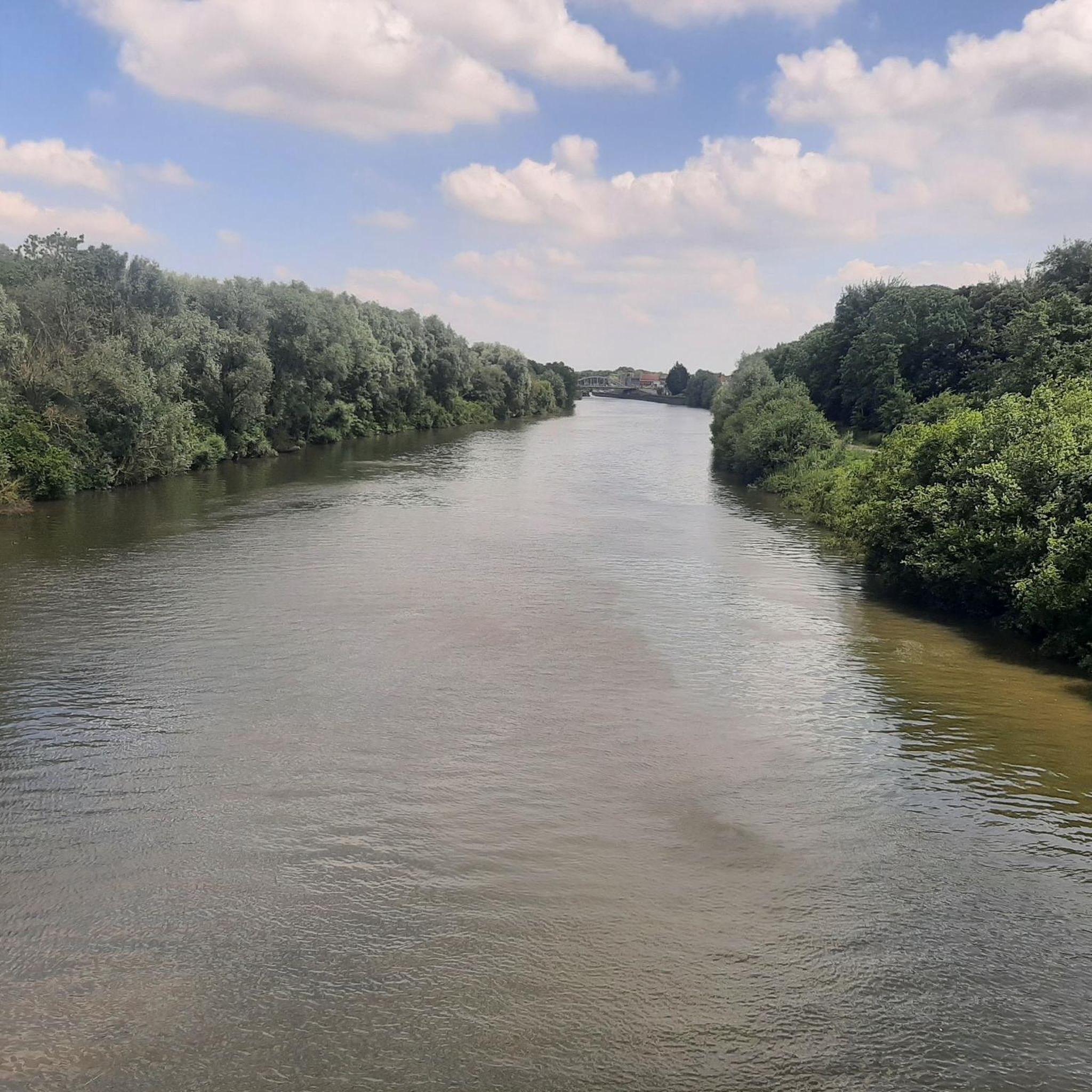
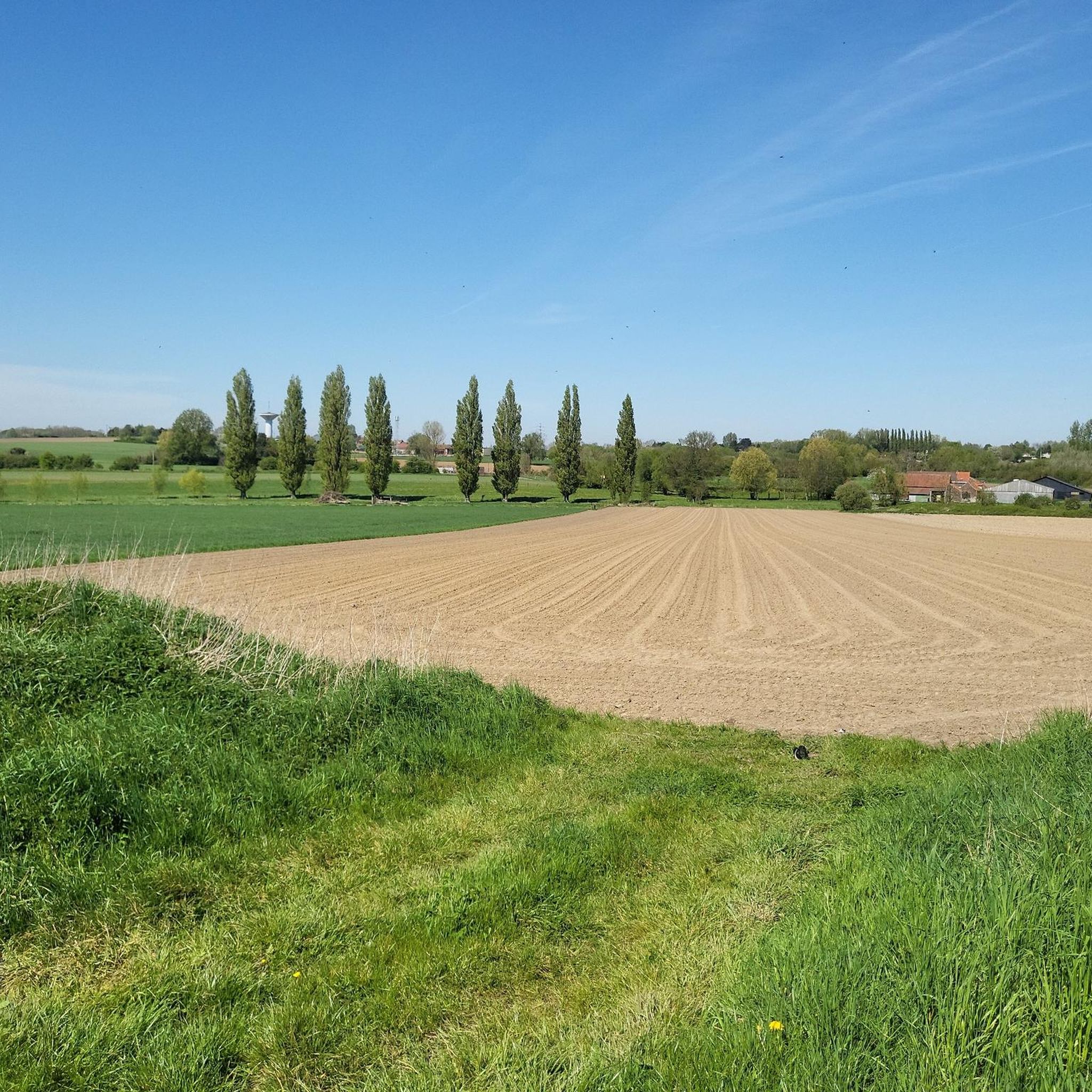
The entire area, 86 hectares in size, is owned and managed by the city of Kortrijk. It is located at the highest point of Kortrijk. The Marionetten urban green space itself is 57 hectares. The nature reserve was developed from 1996 onwards on the former grounds of nv Dakpannenfabriek Pottelberg, which received a permit in the 1950s to extract brown and blue clay here. After the clay extraction ceased, the pit was filled with waste. In 1996, the pit was covered, after which it was laid out as a nature reserve. The unfilled clay pit forms the pond. From 2008 onwards, this part forms the central part of the Marionetten urban green space: between Canaertstraat and Bosstraat. A RUP (Urban Development Plan) was drawn up for the entire zone (86 ha) and an implementation plan was drawn up, which was carried out step by step and completed in 2004. As of today, the Marionetten urban green space has not yet been fully acquired; parts still need to be purchased or are subject to an agricultural lease. The previous history of the site now creates differences in elevation. At the highest point stands the large Libel, containing information about the area, fauna, and flora. A staircase has been built on the side of the pond. Source: natuurpunt.be
2
0
The Bergelen Provincial Estate in Wevelgem developed around a 10-hectare artificial sand extraction pit. The sand was used for the construction of the E403 (A17) motorway in the early 1970s. The municipality purchased this pit and surrounding land between 1989 and 1995. Various planting activities and numerous management works (reprofiling the banks, creating a water berm, building observation huts and walls, creating walking paths, constructing a bat shelter, digging ponds, etc.) were carried out by the municipal council. This created a small but very interesting nature reserve. In 1996, the farm and the 29 hectares of surrounding agricultural land were purchased by the province, and large parts of the newly acquired area were afforested. In 1999, the province entered into a lease with the municipality for the management of the Bergelen pit and its surroundings. This created the Bergelen Provincial Estate, which currently covers an area of 47 hectares. The Heulebeek stream flows along and through the estate, still following a largely natural course there. You'll also find the Bulskamphoeve, first mentioned in Gullegem in 1549. It's a historic farmstead whose horseshoe-shaped buildings are situated within the ramparts. The farmstead was destroyed several times during wartime and subsequently rebuilt or renovated. The current building is believed to date from 1775. A protected monument, the Meiboom, also stands in the area. This is a group of six lime trees with a large iron cross in the center. Source: wevelgem.be
3
0
The filter ponds in Leers were built to supply water to the Roubaix Canal, which is located nearby. Their primary function is to purify some of the water from the Grimonpont wastewater treatment plant. This plant initially filters 75% of the water; the ponds then process the remaining 25%. This final filtration takes seven days. During this process, the water flows through several ponds, moving from one to the other by gravity. This filtration technique is called phytoremediation: the water is naturally purified by algae, plants, and microorganisms that thrive in these ponds. In Leers, plants such as yellow iris and purple loosestrife, among others, play this purifying role. After seven days of filtration, the water flows into a final 9,000 m² basin. At this stage, it is perfectly purified and of very high quality. This final basin, known as the "storage basin," is the final step before the water is conveyed to the canal. The Leers filter ponds, formerly a landfill, are now a peaceful 5-hectare nature reserve, perfect for a relaxing walk, alone or with the family. The area is home to around thirty bird species, including the coot, the Mediterranean gull, and the reed bunting. If you look closely, you might even be lucky enough to spot a smooth newt swimming in the ponds, searching for small invertebrates to feed on. To protect the environment and wildlife, dogs must be kept on a leash on the paths and are not permitted in the winding sections of the ponds. Source: enm.lillemetropole.fr
2
0

With the realisation of Bissegem Plage, Bissegem will gain an attractive and peaceful location. It will be a beautiful piece of nature of almost 10,000m² (1ha) that will be permanently free from construction. In this way, we will preserve the unique green character along the Leie. This will undoubtedly become one of the most beautiful parts of Bissegem. In this zone, we will set up a water buffer basin. We will collect all the rainwater from the Driekerkenstraat here. It concerns two buffer basins, one of which overflows into the other. They are a maximum of half a metre deep. The largest of the two will never be dry. A jetty (wooden terrace) will partly bridge this basin. Here, everyone can enjoy the peaceful atmosphere and the passage of large boats. We provide a connection with the cemetery. In a large part of the site, children can romp and play freely. This is also possible in the smallest buffer basin. (info City of Kortrijk)
2
0

A special place that is definitely worth a visit. The Bergelenput is a former gravel pit, which has been transformed into a nature reserve over the years. The water in the pits and the surrounding grounds have developed into a valuable nature reserve, making it an ideal place for various species of animals and plants. The area is managed with care, and is home to numerous water birds and amphibians.
1
1


A stone's throw from the city center you will find a green treasure. Stadsgroen Marionetjes is an ecological recreational nature reserve in Kortrijk, attractive and accessible to all Kortrijk residents and visitors. You walk through different parts of the landscape: forest edges, water features, open spaces, hidden corners, a play hill, a forest to romp in and meadows. A piece of nature, in the middle of your city. Ideal for getting some fresh air, stretching your legs, relaxing or just having fun. More info at https://www.kortrijk.be/stadsgroen-mariotten
1
0
Frequently Asked Questions
What are some notable lakes and natural areas near Roncq?
While Roncq itself doesn't have major lakes, the surrounding Lille metropolitan area offers several options. You can explore the natural reserve at Bergelenput, a former gravel pit now home to diverse wildlife. Another significant area is Stadsgroen Marionetten – The Dragonfly, an ecological recreational nature reserve with water features near Kortrijk. Additionally, the Bergelen Provincial Domain offers a large artificial lake and a nature reserve.
Are there family-friendly lakes or activities available?
Yes, several locations are suitable for families. Bergelen Provincial Domain features a playground for children and a café-restaurant. Stadsgroen Marionetten – The Dragonfly is also designed for family enjoyment, with forest edges, water features, open spaces, and a play hill. Bissegem Plage is being developed with children in mind, offering space to play freely.
Where can I go for a walk or hike around the lakes near Roncq?
Many lakes offer walking opportunities. The Bergelen Provincial Domain provides a nice walk around its pond. The lakes in Villeneuve-d'Ascq, such as Lac du Héron, have continuous paths stretching over twelve kilometers, ideal for strolling. For more structured routes, you can find various hiking trails in the region, including those around Roncq, by visiting the Hiking around Roncq guide.
Can I swim in any of the lakes near Roncq?
One of the closest options for swimming and watersports is Les Prés du Hem in Armentières, which features a beach by a lake. However, it's important to note that swimming is generally prohibited in the lakes of Villeneuve-d'Ascq, such as Lac du Héron, due to safety concerns.
What kind of natural features can I expect to see at these lakes?
The lakes and natural areas around Roncq offer diverse natural features. At Bergelenput, you'll find a valuable nature reserve with numerous water birds and amphibians. The Leers Filtration Ponds are a peaceful nature reserve where you can observe around thirty bird species, including coots and reed buntings, and possibly smooth newts. Lac du Héron is known for observing elegant nuptial parades of grebes in spring.
Are there cycling routes near the lakes?
Yes, the region offers various cycling opportunities. You can find routes like the 'Canal de Roubaix – Canal de Roubaix Towpath loop from Roncq' or the 'Voie Verte du Ferrain – Bois Leurent Park loop from Roncq'. For a comprehensive list of cycling trails, refer to the Cycling around Roncq guide.
What is the best time of year to visit the lakes around Roncq?
Spring is particularly beautiful for wildlife observation, especially at Lac du Héron where you can see grebes. The warmer months are generally ideal for outdoor activities and enjoying the natural beauty. Autumn offers pleasant walking conditions with changing foliage, and winter walks can also be enjoyed, though some activities like swimming might be restricted.
Are there any historical sites or unique features near the lakes?
At the Bergelen Provincial Domain, you can find the historic Bulskamphoeve, a farmstead first mentioned in 1549, and a protected monument called the Meiboom, a group of six lime trees with a large iron cross. The Leers Filtration Ponds, while serving a modern purpose, were built to supply water to the historic Roubaix Canal.
Are dogs allowed on trails around the lakes?
When visiting natural areas like the Leers Filtration Ponds, dogs must be kept on a leash on the paths to protect the environment and wildlife. Specific rules may vary by location, so it's always best to check local signage.
What kind of amenities, like cafes or restaurants, are available near the lakes?
The Bergelen Provincial Domain includes a café-restaurant. Les Prés du Hem in Armentières is also known to have facilities for visitors. For other locations, it's advisable to check specific visitor information for cafes or pubs nearby.
Are there any mountain biking trails in the vicinity of these lakes?
Yes, there are mountain biking opportunities in the wider Roncq area. You can find trails such as the 'Port halluin – Port Fluvial Trails loop from Bousbecque'. For detailed routes and difficulty levels, consult the MTB Trails around Roncq guide.
Most popular attractions around Roncq

Get inspired with the komoot mobile app


Explore more
Still not found your perfect lake around Roncq? Check out the guides of these regions to see even more beautiful places.
