Top 14 Caves around Castellgalí
Best caves around Castellgalí are situated within the Central Catalonia UNESCO Global Geopark, a region recognized for its geodiversity. This geological context, characterized by karst formations, indicates the presence of various natural cavities. The area offers a landscape shaped by erosion, providing diverse natural features for exploration. While Castellgalí itself may not feature widely publicized cave systems, the surrounding region contains notable examples of geological interest.
Best caves around Castellgalí
- The most popular caves is The Blood Hospital, a…
Last updated: October 7, 2026
The Blood Hospital
Highlight • Cave
Translated by Google •
Tip by

Font de l'Esllavissada
Highlight • Cave
off the cliff, hence the toponym of the landslide. Inside there is a small perennial water …
Translated by Google •
Tip by

Sign up now to discover places like this
Get recommendations on the best single tracks, peaks, & plenty of other exciting outdoor places.
Pruneres Cave
Highlight • Cave
Despite the fact that in many maps and texts it appears as a balm, we prefer to mention it …
Translated by Google •
Tip by
The Birdhouse of Montserrat
Highlight • Cave
Translated by Google •
Tip by
Graons Rock Shelter (Mura)
Highlight • Cave
Translated by Google •
Tip by

Sign up for free to discover even more caves around Castellgalí.
Already have an account?
Start today with a free account
Your next adventure awaits.
Tips from the Community

It is a small cave 4.50 meters long and 1.50 meters high. It is located on the left side of the road and to enter you have to bend down a little. There is no documentation of the cave and its use is unknown.
1
0

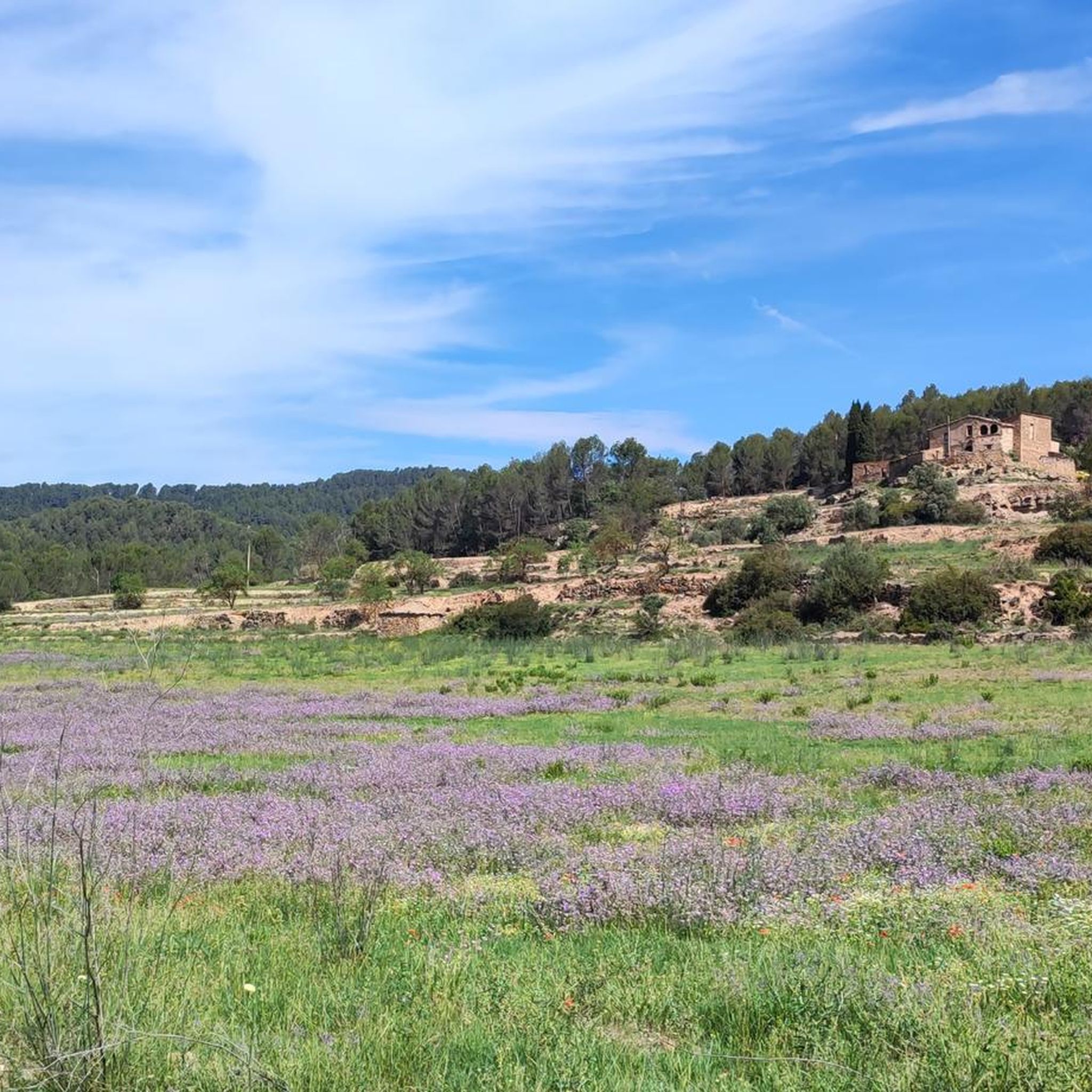
Spacious balma that had been enabled as a refuge in Montserrat Despite the fact that in many maps and texts it appears as a balm, we prefer to mention it as a cave, which is what it is in reality and, moreover, this is how it appears on the map of the Cartographic and Geological Institute of Catalonia. It is a fairly spacious cave, it is 16 meters deep and 45 meters wide, inside there is a small wall of stones. Josep Fatjó tells us about this cavity, "it was fixed throughout the year 1959 and on the day of the inauguration the climbing monks said a mass". In the cave there was a wall in front of wood, bedrooms with two rows of wooden bunks and logs with a capacity for about 15-20 people, there was also a firewood store and a dining room with a fireplace, all made by members of the GAM of the Barcelonès Mountain Club. The unsightly people who roam the mountains with their lack of civility have dedicated themselves to burning everything and have reduced this emblematic place to a pile of ashes.
0
0
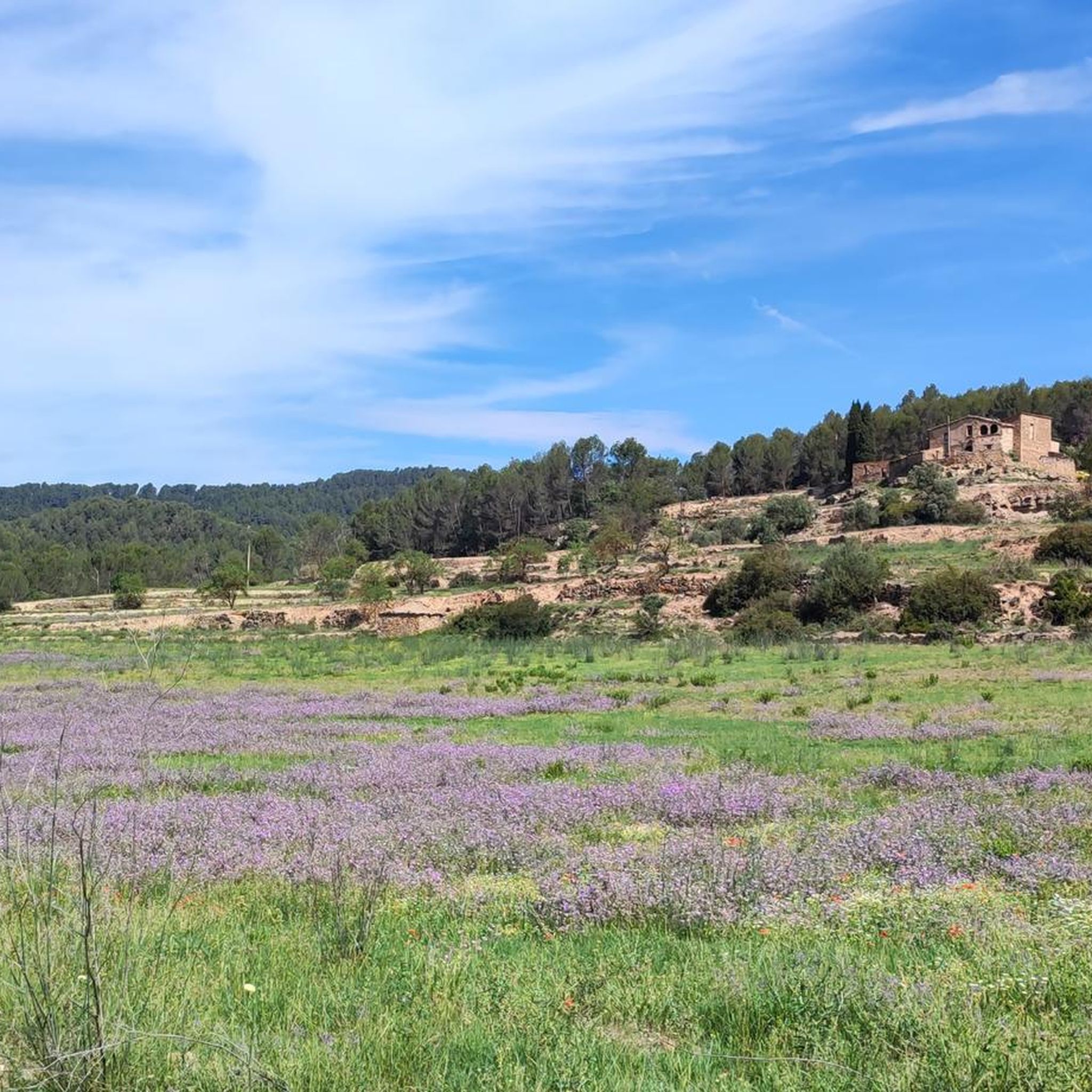
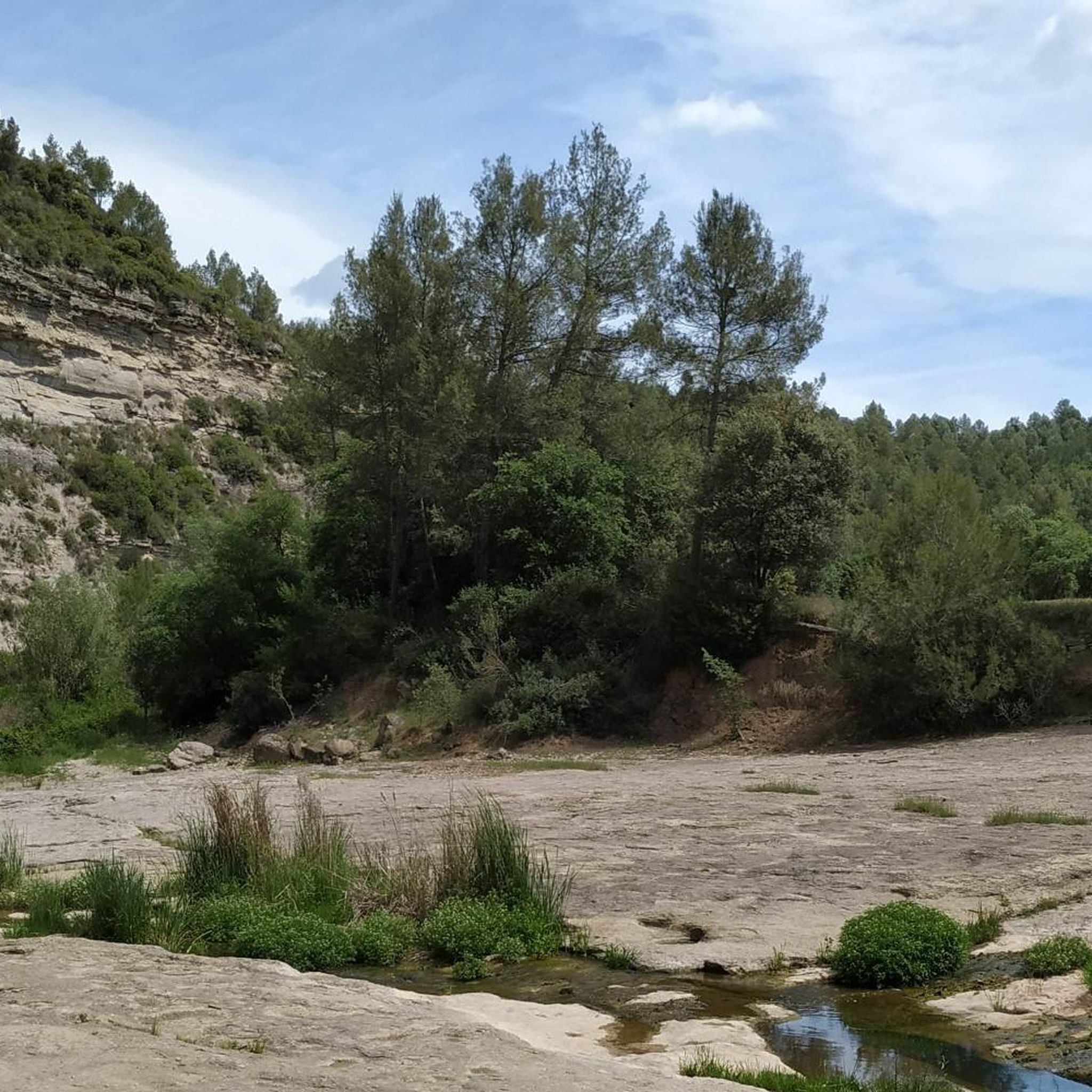
Cavity 23 meters long by 5 meters wide. It is formed under some rocks off the cliff, hence the toponym of the landslide. Inside there is a small perennial water cistern, built in 1947, and next to it there is a chest with a fountain, which although years ago we had seen in good condition, is currently unusable. All of this favored the climbers' stay. Known since time immemorial. Mentioned in all the collections of cavities and guides of Montserrat, but of little speleological interest.
1
0

Small fountain hidden inside a bauma.
0
0
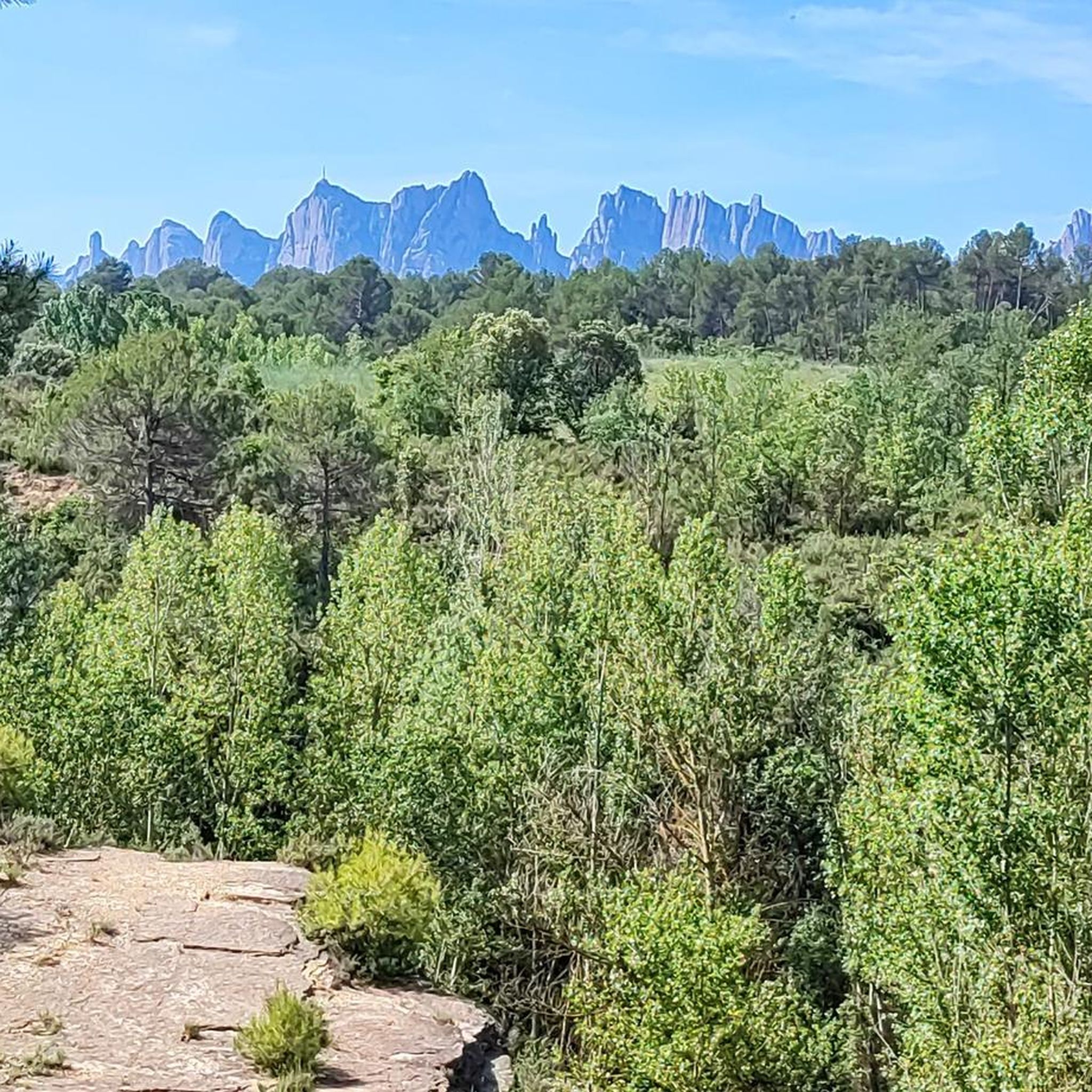
It was located at the head of the torrent of the same name, under the rocks known as the viewpoint of Sant Joan, about fifty meters below the hermitage of Sant Joan, a little to the right of the ravine, facing south, at an altitude of 985 meters. For the construction, a wide balma was used, in which some parts of the walls are still standing, holes to point the beams, and, above all, the important pipes worked in the rock, of considerable depth and very well distributed for water conduction. Due to its excellent orientation towards the south and well sheltered, it had a reputation for sheltering many nests, especially nightingales and blackbirds, so much so that it was known by the Montserrat Birdhouse.
0
0

It is located at the Cami de Pas....
8
0
the blood hospital was a royal hospital during the Carlist wars
7
0

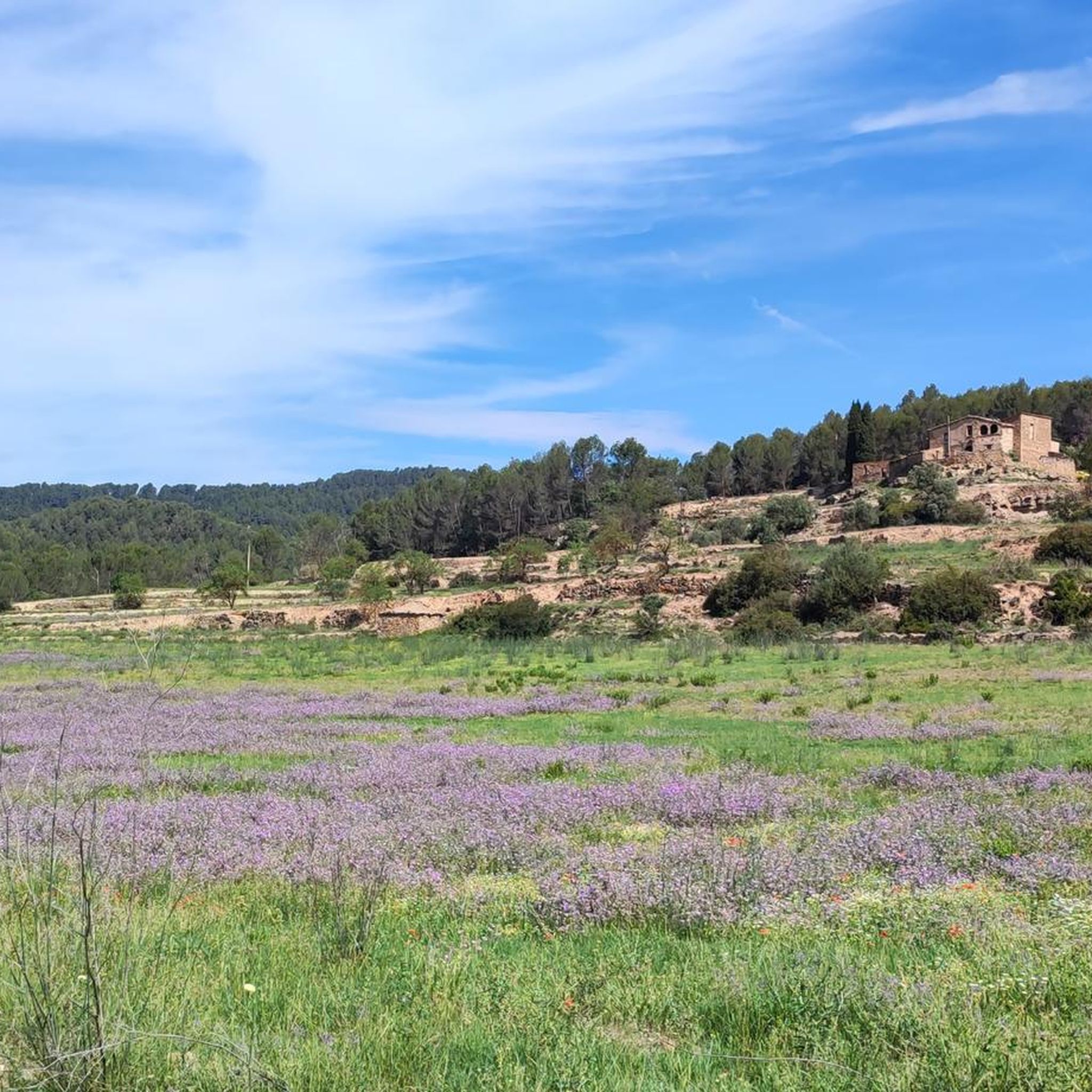
The so-called Blood Hospital is a large triangular ravine that crosses in the middle (as if it were a natural tunnel) a rocky end of the Turó de la Fosca. Its current name comes from the 19th century, when this cavity was used by the Carlist army as a hospital to care for its wounded. It was later a refuge for woodcutters and charcoal burners, but has survived its name of Carlist origin. To condition the cavity, the soldiers covered its two accesses (on either side of the rock) with exposed masonry walls, part of which is still preserved. The Carlists chose this place for its size, for having a water source (Rossinyol's fountain located in the neighboring cave of the Cort Fosca) and for being strategically hidden and offering an excellent aerial view of the Torrent del Figueret, the ridge of the Espluga and other parts of the Obac.
7
0
Frequently Asked Questions
What are the most historically significant caves or shelters in the Castellgalí area?
The most historically significant cave is The Blood Hospital, which was used by the Carlist army as a hospital in the 19th century and later served as a refuge for woodcutters and charcoal burners. Additionally, the Coves de Castellolí, located nearby, have archaeological evidence of human occupation dating back to the Neolithic period (4200 – 3800 B.C.).
Are there any caves around Castellgalí that are suitable for families or children?
While the guide highlights don't explicitly tag family-friendly options, the nearby Coves de Castellolí are described as easily visitable, even with children, offering both challenging and easy entrances. Graons Rock Shelter (Mura) is a small cave that might also be suitable for those looking for a less strenuous experience, though you need to bend to enter.
What kind of natural features can I expect to see in the caves and shelters around Castellgalí?
The region, part of the Central Catalonia UNESCO Global Geopark, is known for karst formations. You can see various natural cavities, from small rock shelters like Graons Rock Shelter (Mura) to larger formations. The Cova de l'Arcada features a monumental arch approximately 30 meters high by 60 meters wide. The Coves de Castellolí contain stalactites and stalagmites. Beyond caves, the area also features unique geological formations like the Badland of Cornet, sculpted by erosion.
What are the difficulty levels for exploring caves in the Castellgalí region?
Difficulty levels vary. Some highlights, like The Blood Hospital and Font de l'Esllavissada, are rated as intermediate. The Cova de l'Arcada is considered challenging, especially for canyoning enthusiasts who access it via abseiling. Small shelters like Graons Rock Shelter (Mura) are less demanding, though they may require bending to enter.
Are there any viewpoints or summits near the caves in Castellgalí?
Yes, Turó de la Cort Fosca is a summit that offers a landmark of piled stones and includes cavities at its base. It provides an excellent aerial view of the surrounding torrents and ridges, as noted in the historical context of The Blood Hospital.
What outdoor activities can I do near the caves around Castellgalí?
The area around Castellgalí offers diverse outdoor activities. You can find numerous hiking trails, including moderate options like the Sant Bernat Viewpoint loop. For mountain biking, there are routes such as the Hípica Montserrat loop. More challenging mountain hikes are also available, like those leading to Sant Jeroni Summit. You can explore these options further in the Hiking around Castellgalí, MTB Trails around Castellgalí, and Mountain Hikes around Castellgalí guides.
Are there any caves or rock shelters that offer natural protection from the elements?
Yes, Turó de la Cort Fosca features a balma (rock shelter) that provides shelter from rain. Historically, The Blood Hospital also served as a refuge for woodcutters and charcoal burners, indicating its protective qualities.
What are some lesser-known or unique geological features in the Castellgalí area, besides the main caves?
Beyond the specific caves, the region is part of the Central Catalonia UNESCO Global Geopark, characterized by remarkable geodiversity and karst formations. A unique feature is the Badland of Cornet, a formation of poorly consolidated blue or grey mudstones sculpted by erosion, reaching about 200 meters in length and 35 meters in height. While not a cave, it offers a visually interesting landscape.
What do visitors appreciate most about the caves and natural features in Castellgalí?
Visitors appreciate the historical significance of sites like The Blood Hospital, which offers a glimpse into the region's past. The diverse natural cavities, from small shelters to monumental arches like Cova de l'Arcada, are also highly valued for their geological interest and opportunities for exploration. The komoot community has shared over 20 photos and given more than 20 upvotes, highlighting the area's appeal.
Are there any caves in the wider region near Castellgalí that are notable for reasons other than historical use?
Yes, in the wider region, the Coves de Castellolí are notable for their labyrinthine system in calcareous rock, approximately 450 meters long, containing stalactites and stalagmites. Another significant site is La Cova de Sant Ignasi in Manresa, known for its association with Saint Ignatius of Loyola.
Can I find water sources or cisterns within any of the caves?
Yes, Font de l'Esllavissada contains a small perennial water cistern, built in 1947. Historically, The Blood Hospital was chosen by the Carlists partly because of a nearby water source, Rossinyol's fountain, located in the neighboring cave of the Cort Fosca.
Most popular routes around Castellgalí
Most popular attractions around Castellgalí

Get inspired with the komoot mobile app


Explore more
Extend your search for the best caves by checking out these guides of the top ones around Castellgalí:
