Top 6 Castles around Almoguera
Castles around Almoguera are situated in the province of Guadalajara, Spain, offering a glimpse into centuries of history. The region is characterized by its strategic location along the Tagus River valley, featuring a landscape that once served as a frontier. These historical sites reflect a past shaped by Arab origins and Christian conquests. The area provides panoramic views and a tangible link to its historical significance.
Best castles around Almoguera
- The most popular castles is Recópolis Archaeological Site, a…
Last updated: July 3, 2026
Recópolis Archaeological Site
Highlight • Historical Site
Translated by Google •
Tip by

Zorita de los Canes Castle
Highlight • Castle
Translated by Google •
Tip by
Sign up now to discover places like this
Get recommendations on the best single tracks, peaks, & plenty of other exciting outdoor places.
Sign up for free
Fuentidueña de Tajo Town Center and Historic Landmarks
Highlight • Historical Site
Kilometer 0
The ruins of the castle reveal the strategic town of Fuentidueña de Tajo on the river bank, a passageway for important communication routes since Roman …
Translated by Google •
Tip by

Almoguera Castle
Highlight • Castle
Translated by Google •
Tip by
Ruins of the Vállaga Castle
Highlight • Castle
Translated by Google •
Tip by
Start today with a free account
Your next adventure awaits.
Login or Signup


Tips from the Community

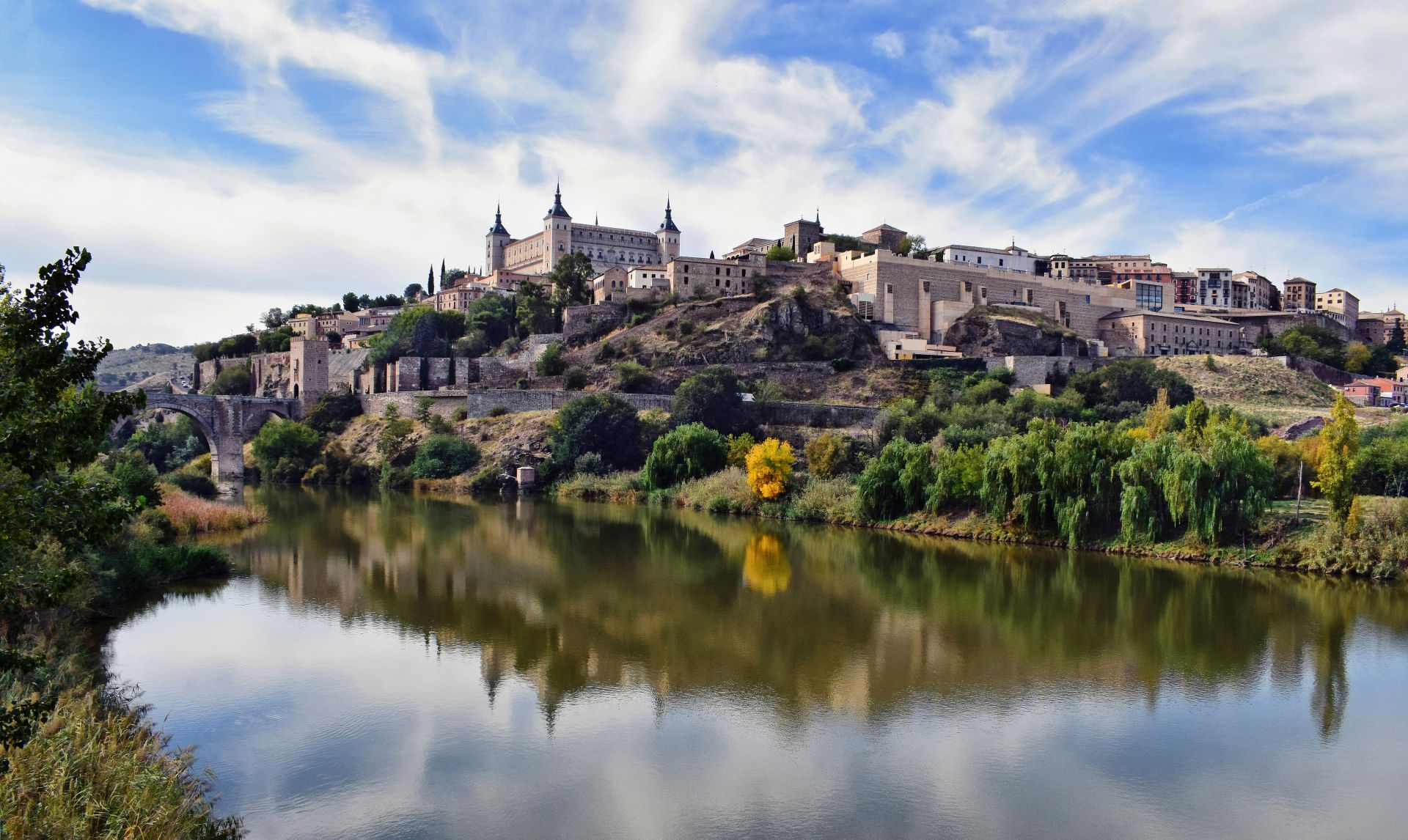
Fuentidueña de Tajo Kilometer 0 The ruins of the castle reveal the strategic town of Fuentidueña de Tajo on the river bank, a passageway for important communication routes since Roman times. In the Middle Ages, the Via del Esparto was very popular, one of the most valuable products in those times in the Las Vegas region, which ran on a primitive Roman road and reached Esparteros Street, in the center of Madrid. On the way up from the castle is the Fuente de la Dueña or Fuente Salobre, it is a limestone pylon rebuilt in the 19th century and a key link in the historical foundations of Fuentidueña. The “owner” of the fountain and responsible for the name was Doña Urraca, lady of the fortress for a time, formerly called Santiago due to its connection with the order and popularly known as Torre de Piquillos, a few ruins on the hill where the fountain springs. spring. The old watchtower, the fountain, the church of San Andrés and the Plaza de la Constitución, where the Clock Tower is located, make up a valuable heritage complex in one of the most important passes of the Cañada Real Soriana Oriental in the Tagus Valley. The livestock route crosses the Tagus Natural Trail in the streets of Fuentidueña, crosses the town to the river bank and changes banks over a historic iron bridge from the 19th century. The Tagus Bridge is a magnificent work of civil engineering inaugurated in 1867. The designer of the project was the architect José de Echevarría, who sought collaborators in France within the Eiffiel team and used riveted iron beams to build a solid bridge in a fundamental step of the Tajo plain, in the transit of the Cañada Real Soriana Oriental and the Camino Real de Valencia, an ancient Post Road and route of peasants and merchants since the Early Middle Ages. The first mechanical means to cross the Tagus riverbed was a rope boat, later replaced by a rope bridge to withstand unforeseen floods, but it was destroyed by General Prim's troops in the 19th century.
0
0

The castle of Zorita de los Canes stands on a hill on one of the banks of the Tagus River. It is a fortification of Arab origin built in the 9th century.
4
1
The castle of Vállaga, today in ruins, is a fortification of Arab origin built in the 12th century that was later used as a wine cellar and known as the Cuevas del Marqués.
1
0
The castle of Almoguera dates from the 15th century, although it was built on the ruins of an old Arab fortification. Little remains of this medieval construction, as the current castle is a reconstruction from the end of the 20th century.
1
0
Recópolis is an archaeological site located near Zorita de los Canes. Here are the ruins of an ancient Visigothic city.
3
2

A typical Gothic castle whose current shape was arranged by the masters of the Order of Calatrava, inside which we will find interesting remains from the different periods in which it was occupied. The Iron Gate, the result of the reforms of Caliph Al-Nasir in the 10th century; the Priory Church of San Benito inside the enclosure; the crypt with a Visigothic Corinthian capital, reused as a baptismal font; the Sala del Moro, covered by a hemispherical ashlar vault; the Torre del Espolón, adaptation to the use of artillery, from the s. XVI; the cistern; the Omega room, with two rooms excavated in the rock, a ribbed plaster vault and a bench running along the walls; the watchtower And all this, in the surroundings of the Visigothic city of Recópolis.
6
2

Fortification located in the Spanish municipality of Zorita de los Canes (Guadalajara). It is located on the hill under which the town is located, on the left bank of the Tagus River. Strategically located, the fortress began to be built at the end of the 9th century by order of the Cordovan emir Mohamed I. It was ceded by Alfonso VIII of Castile to the Order of Calatrava in 1174.2 It was declared a Historic-Artistic Monument on June 3, 1931.
4
2

Also known as the Cuevas del Marqués, it is a fortification of Andalusian origin built in the 11th century, belonging to the current unpopulated area of Vállaga. Its access is complicated, but it can be seen from the road itself.
0
0
Frequently Asked Questions
What kind of historical sites can I explore around Almoguera?
The region around Almoguera offers a rich tapestry of history, primarily featuring castles and archaeological sites with Arab, Visigothic, and Christian origins. You can explore the ruins of ancient cities like Recópolis Archaeological Site, a rare Visigothic city from the 5th-8th century, or visit the strategically located Zorita de los Canes Castle, which has Arab origins and was later adapted by the Order of Calatrava.
What kind of views can I expect from the castles in the Almoguera area?
Many of the castles, such as Zorita de los Canes Castle and Almoguera Castle, are situated on dominant elevations. This provides expansive panoramic views of the Tagus River valley and the surrounding Alcarria landscape, offering a glimpse into their historical defensive purpose.
Are there hiking or cycling routes near the castles?
Yes, the area around Almoguera offers various outdoor routes. For road cycling, you can find routes like 'From Mondéjar to Castillo de Almoguera' or 'Roadbike loop from Orusco de Tajuña'. If you prefer running, there are trails such as 'Running loop from Nuevo Baztán' or 'Stone Bridge – Vía Verde del Tajuña loop from Mondéjar'. For general cycling, explore options like 'Chapel of the Holy Children – Tajuña Greenway loop from Ambite'. You can find more details on these and other routes in the Road Cycling Routes around Almoguera, Running Trails around Almoguera, and Cycling around Almoguera guides.
When is the best time of year to visit the castles around Almoguera?
The best time to visit is generally during spring (April-May) and autumn (September-October) when the weather is milder and more pleasant for exploring historical sites and engaging in outdoor activities. Summers can be very hot, and winters can be chilly, though often sunny.
Are the castles around Almoguera suitable for families with children?
Some sites, like the Fuentidueña de Tajo Town Center and Historic Landmarks, are categorized as family-friendly. While many castles are ruins, their historical significance and the opportunity to explore offer an engaging experience for children, especially when combined with the surrounding natural landscapes and views.
How can I get to Almoguera Castle and is there parking available?
Almoguera Castle is easily accessible on foot from the urban center of Almoguera. The town itself has parking options, and from there, you can walk up to the castle ruins. Public transport to Almoguera typically involves bus services from larger nearby towns or cities.
What is the historical significance of Almoguera Castle?
Almoguera Castle is a rock castle with Arab origins, dating back to the 9th-10th centuries, forming part of the Andalusian defensive system. After the Christian conquest, it passed through various noble hands and military orders, including the Order of Calatrava. Although largely a reconstruction today, its strategic position next to the Tagus River and its history as a frontier fortress make it a significant site.
Are there any other notable historical sites or ruins besides the main castles?
Yes, beyond the prominent castles, you can explore the Fuentidueña de Tajo Town Center and Historic Landmarks. This area features the ruins of a castle, a historic iron bridge over the Tagus, and other valuable heritage elements like the Fuente de la Dueña and the Church of San Andrés, all part of an important historical pass.
Can I visit the castles with my dog?
While specific regulations for each site may vary, many outdoor historical sites and trails in Spain are generally dog-friendly, especially if dogs are kept on a leash. It's advisable to check local signage at each specific castle or archaeological park for any restrictions, particularly within enclosed areas or buildings.
What makes Recópolis Archaeological Site unique?
Recópolis Archaeological Site is unique because it contains the ruins of an ancient Visigothic city, making it one of only two known sites in all of Europe dating from the 5th-8th century. It offers a rare glimpse into Visigothic urban planning and life, and is located barely 1.5 km from the Andalusian city of Zorita with its citadel.
Are there places to eat or stay near the castles in Almoguera?
Almoguera, being a town, offers local amenities including cafes, restaurants, and some accommodation options. These can be found within the town center, providing convenient choices for visitors exploring the nearby castles and historical sites.
What is the condition of the Ruins of the Vállaga Castle?
The Ruins of the Vállaga Castle are a fortification of Arab origin from the 11th-12th century, now largely in ruins. It was later used as a wine cellar and is also known as the Cuevas del Marqués. While its access can be complicated, it can be viewed from the road, offering a glimpse into its past as an Andalusian stronghold.
Most popular attractions around Almoguera

Get inspired with the komoot mobile app


Explore more
Looking for the best castles somewhere else? Discover other guides around Almoguera:
