Top 8 Castles around Tournai
Best castles around Tournai offer a journey through history in a region known for its rich heritage. Tournai, one of Belgium's oldest cities, is situated on the Scheldt River, providing a landscape that has shaped centuries of architectural development. The area features a variety of historical sites, from medieval fortifications to renovated châteaux, reflecting diverse periods and functions.
Best castles around Tournai
- The most popular castles is Antoing Castle, a castle known for its neo-Gothic architecture. This site, originally dating to the 12th century, has been extensively rebuilt and remains a residence of the Princes de Ligne.
- Another must-see spot is Ruins of la Royère castle, a historical site with origins around 1100. This feudal motte and stone tower has a complex history of ownership and is currently undergoing restoration efforts.
- Visitors also love Ruins of Vaulx Medieval Castle, a castle recognized as the last medieval castle in the Tournai area. This site hosts a medieval festival, providing an immersive historical experience.
- Tournai is known for its medieval ruins, neo-Gothic châteaux, and renovated historical residences. The region offers a variety of castles to see, ranging from ancient fortifications to more modern manor houses.
- The castles around Tournai are appreciated by the komoot community, with more than 90 upvotes and over 60 photos shared by visitors.
Last updated: October 3, 2026
Ruins of la Royère castle
Highlight • Castle
The inhabitants of Tournai submitted to Philip II Augustus. The Tournai region would belong to the French royal family for over 300 years (1187-1521).
La Royère is located in the Château de Lille, in the Flanders region, on the hills of Leers and Néchin, on the edge of the Wattines forest, on the border with Tournaisis: it is the castle of the border.
In 1227, it was probably a feudal motte with a stone tower that was purchased by Arnoul IV.
Wealthier than the seller Hugues de Roubaix, he may have had Tournai's stone walls built. From 1500 onwards, the lords of Roubaix also became lords of La Royère through marriage: the de Werchin and the de Melun.
Pierre de Melun, governor of Tournai, lord of Roubaix and La Royère, and a Protestant supporter, was considered civilly dead by Philip II, the Catholic king. His possessions passed to the Ligne family through Anne de Melun.
As a supporter of the Edict of Nantes (Henry IV, 1598), Louis XIV returned La Royère to the de Melun family. This led to family disputes: the property first went to the de Ligne family and then back to the de Melun family.
A Crombez from Tournai bought La Royère, 35 hectares (Popp map circa 1850). Miss Crombez de Remond de Montmort married Count Ferdinand Costa de Saint-Gérix de Beauregard…
Everything was then sold to farmers. Source: leershistorique.fr
Translated by Google •
Tip by

Templeuve Castle
Highlight • Castle
In 1278, Guillaume de Mortagne received the lordship of Rumez, which is now a hamlet within the municipality. Guillaume was also lord of Dossemer, near Templeuve. It is assumed that he also received the lordship of Templeuve from there. In any case, his son, Guillaume II, gave it to his wife as a dowry in the early 14th century.
Dossemer and Templeuve remained in the hands of the Mortagne family until the end of the 14th century. This family presumably gradually expanded the manor, thus laying the foundation for the first fortified castle in Templeuve-en-Dossimer. In 1414, only Templeuve came into the possession of the du Quesnoy family. The Blondel and finally the Lannoy families followed.
Around 1500, the castle likely became a manor house and a farm. The evolution of military weapons led the lords to demolish the old, cumbersome fortress and replace it with a lavish and modern residence. Out of respect for feudal traditions, which would continue for another two centuries, the moat was preserved, but the drawbridge was replaced by a permanent stone bridge. Originally, moats ran along all sides of the castle. The moat surrounding the castle on the east side was removed in 1845 by Victor de Formanoir de la Cazerie.
The towers, a privilege of the noble lord, are preserved more as decoration than as a means of defense, as is the quadrangular shape, which was once dictated by military necessity.
In short, its appearance as a 'castle' or 'fort' is more defined by tradition and grandeur than by military function.
Source: Wikipedia
Translated by Google •
Tip by
Sign up now to discover places like this
Get recommendations on the best single tracks, peaks, & plenty of other exciting outdoor places.
Fort Rouge
Highlight • Historical Site
Translated by Google •
Tip by

Antoing Castle
Highlight • Castle
Translated by Google •
Tip by

Château de Bruyelle
Highlight • Castle
Translated by Google •
Tip by

Ruins of Vaulx Medieval Castle
Highlight • Castle
Translated by Google •
Tip by

Château d'Arondeau
Highlight • Castle
Translated by Google •
Tip by

Beauregard Castle
Highlight • Castle
The castle, with a pond and a balustrade-lined terrace, is situated in an English-style parkland with meadows planted with ginkgo trees (Chinese conifers), weeping willows, and purple beeches. The manor house consists of a rectangular main building with a peristyle connecting the two projecting wings to the facade. The facade extends over seven bays and three stories. A staircase leads to the peristyle with Tuscan columns and the entablature with triglyphs that supports the balustrade-lined terrace on the second floor. The plastered facade has bays with corner and central stone mullions, each adorned with a tall stone keystone. The side facade consists of six bays and is lit by openings with beveled frames. To the south of the castle is a courtyard with brick outbuildings, built by A. Decraene in 1842.
The complex was classified as a protected heritage site on November 4, 1976 (the complex includes the castle, the park, and the tourist center, consisting of the church, the lime-tree-lined avenue leading to it, the old watermill, the ponds, and the surrounding grounds).
Source: agencewallonnedupatrimoine.be
Translated by Google •
Tip by
Pottes Castle
Highlight • Castle
Translated by Google •
Tip by

Château du Prince de Croÿ Estate in Rumillies
Highlight • Castle
The castle domain was inherited by Charles' son, Albert de Robiano. In the cemetery of Robiano, you will find the neo-Gothic burial chapel of the Robianos. After his death in 1904, his daughter Mathilde (1868-1946) remained the sole heiress.
Through her marriage to Prince Charles de Croÿ-Solre (Le Roeulx, 1869 - Rumillies, 1943) in 1896, this family acquired the property and henceforth called themselves de Croÿ-Rumillies.
During the First World War, the castle was heavily damaged in 1918 by fighting between German and English troops. The ruin was completely demolished and a new castle was built.
source: Wikipedia
Showing Translation
Tip by
Sign up for free to discover even more castles around Tournai.
Already have an account?
Start today with a free account
Your next adventure awaits.
Popular around Tournai
Grande Randonnée GRavel — Western Hainaut
From Picardie to the Ardennes — Crossing Wallonia by Bike
Through forests and fields – trail running in the Flemish Ardennes
Cycling from Bethuné to Brussels – Eurovelo 5
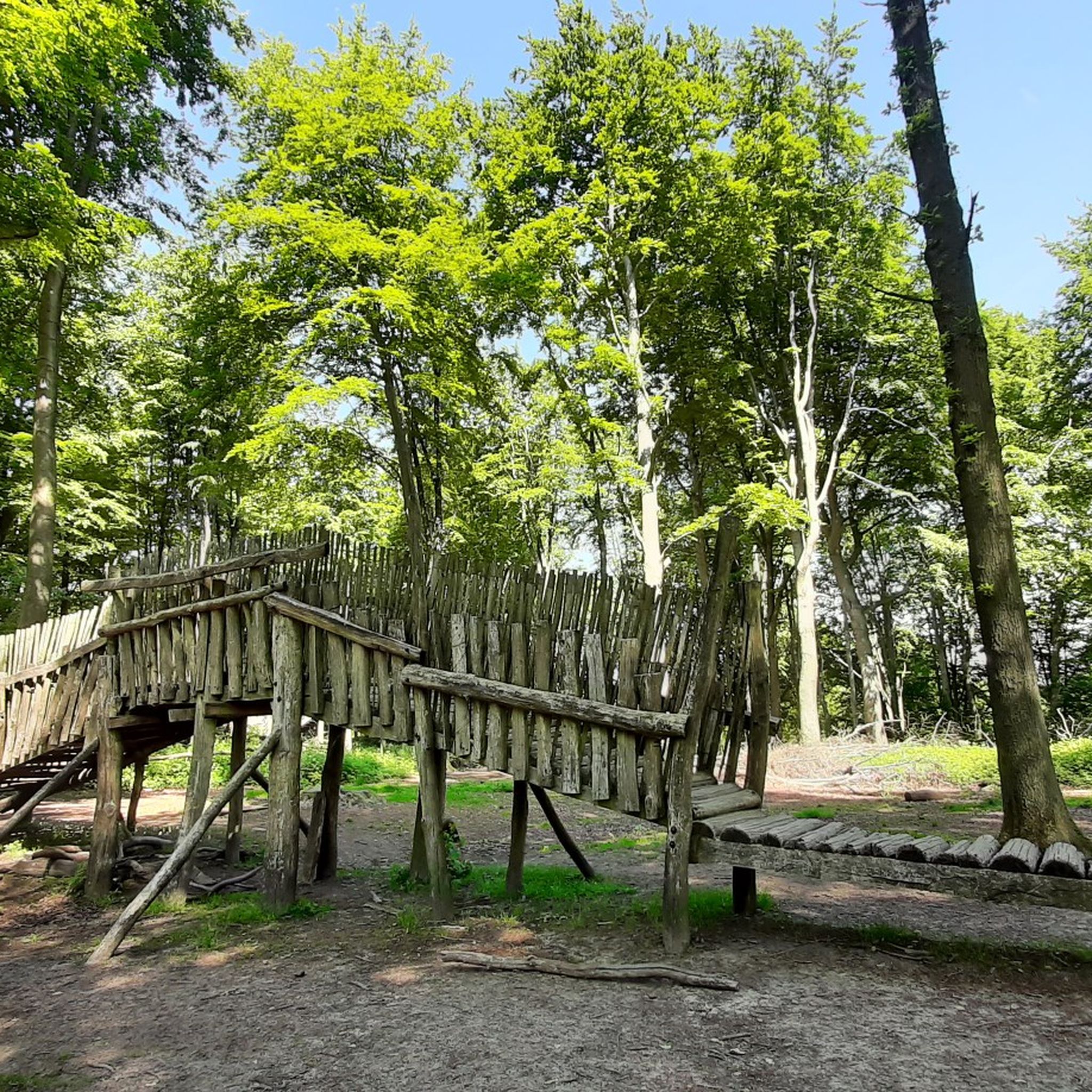
Hiking around Tournai
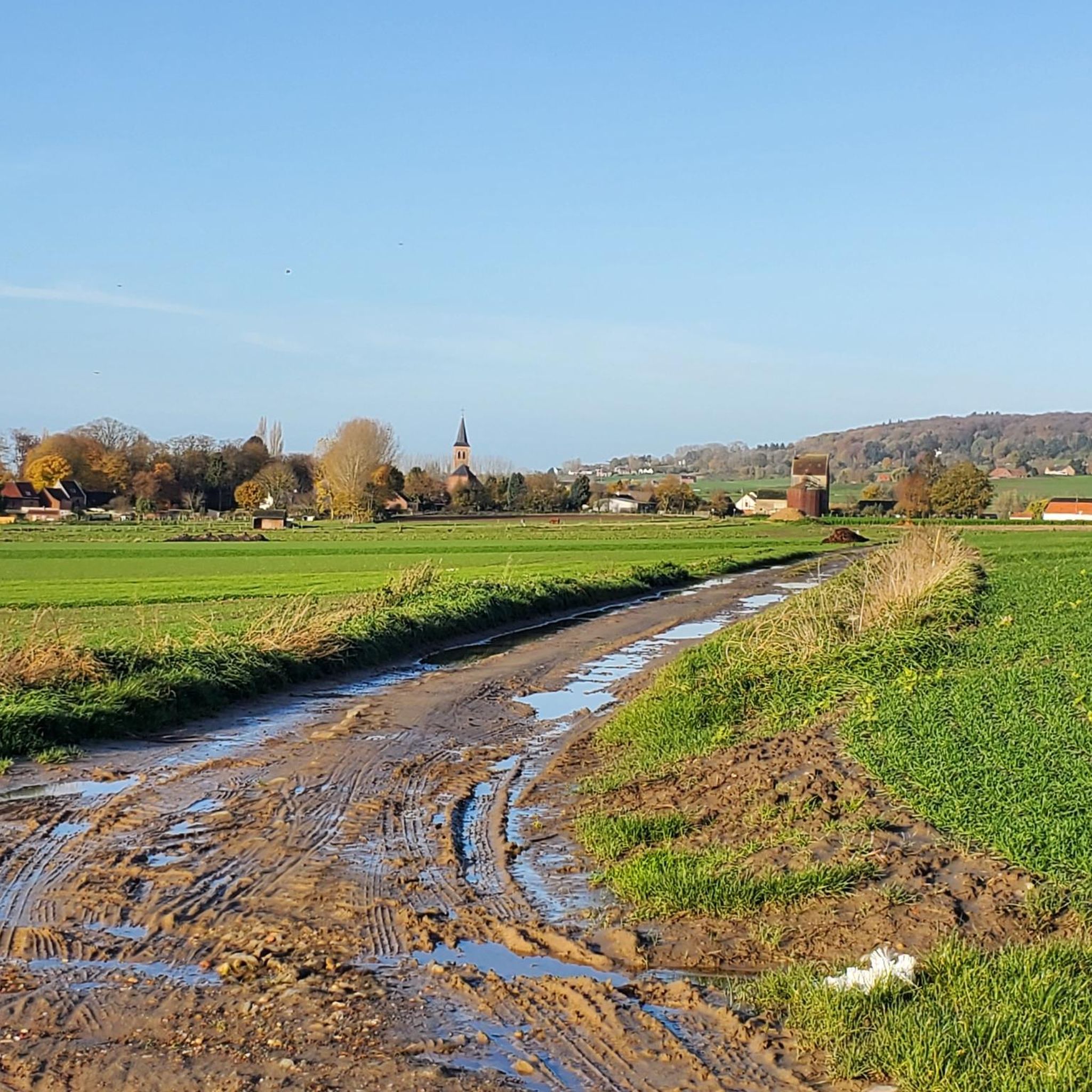
Running Trails around Tournai
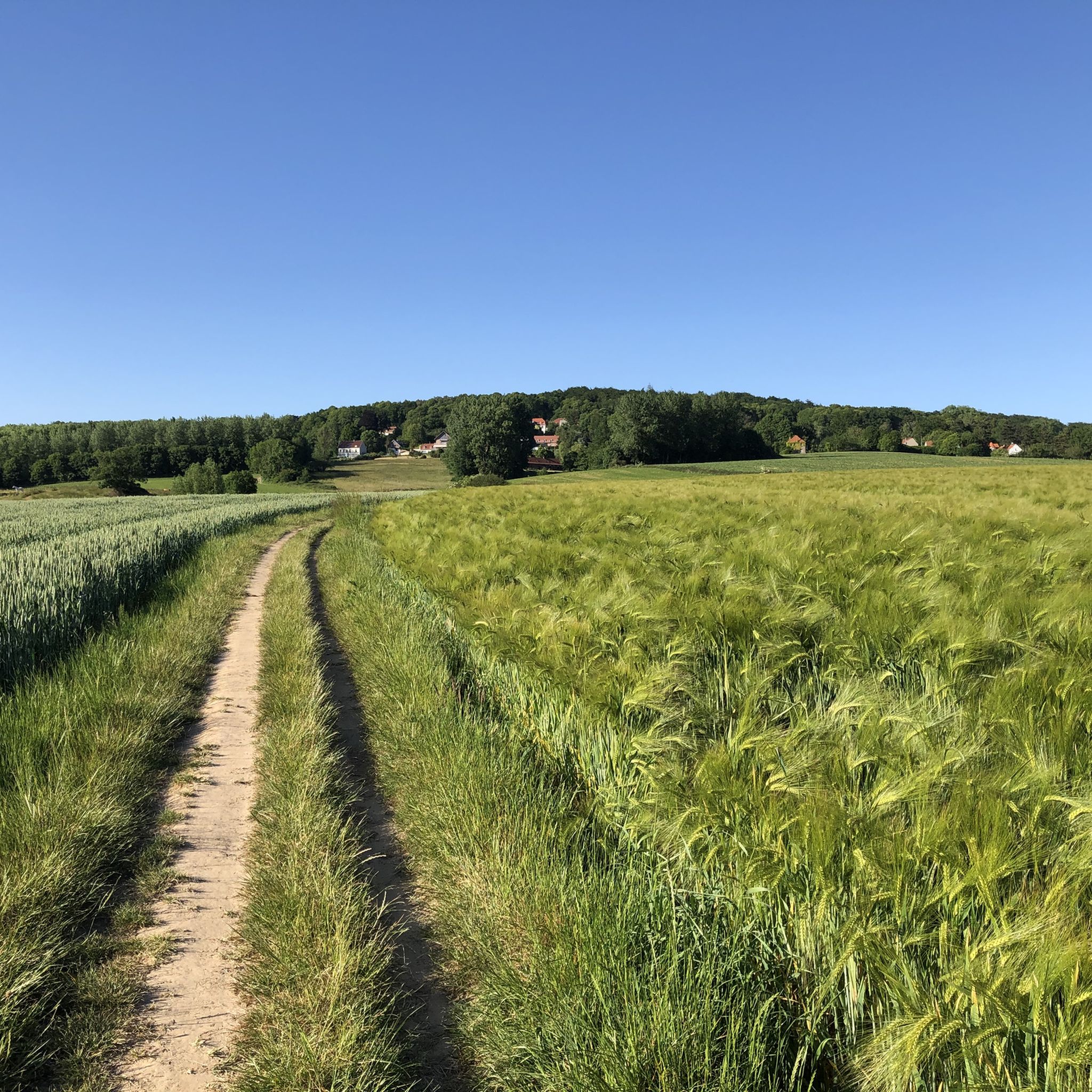
MTB Trails around Tournai
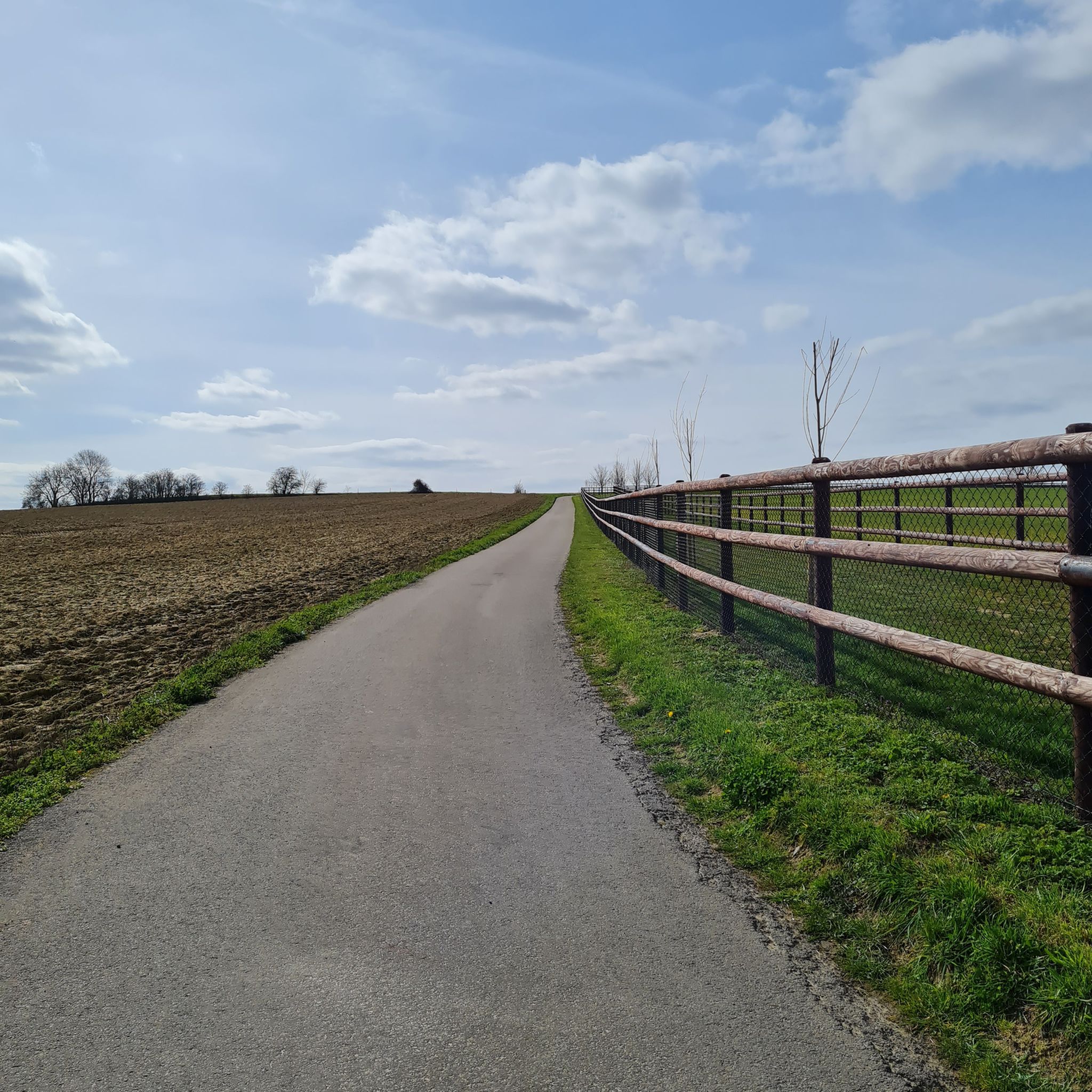
Road Cycling Routes around Tournai
Cycling around Tournai

Gravel biking around Tournai
Other adventures around Tournai


Tips from the Community

Here we had a good and substantial second breakfast
0
0

Various scenes from the multi-season France2 television series "Les petits meurtres d'Agatha Christie" (2017-2021) were filmed here, in this castle. Source: lavenir.net
2
0
Many properties in Doornik and Rumillies once belonged to the De Cazier family. The last male descendant of this family was René-Albert-Joseph de Cazier, who died without issue in 1833. He had purchased the castle of Rumillies in 1786 and donated it in 1828 to his brother-in-law Charles de Robiano, while the rest of his fortune was inherited by his young widow, Countess Marie-Anne-Norbertine de Robiano (1789-1866). The castle domain was inherited by Charles' son, Albert de Robiano. In the cemetery of Robiano, you will find the neo-Gothic burial chapel of the Robianos. After his death in 1904, his daughter Mathilde (1868-1946) remained the sole heiress. Through her marriage to Prince Charles de Croÿ-Solre (Le Roeulx, 1869 - Rumillies, 1943) in 1896, this family acquired the property and henceforth called themselves de Croÿ-Rumillies. During the First World War, the castle was heavily damaged in 1918 by fighting between German and English troops. The ruin was completely demolished and a new castle was built. source: Wikipedia
2
0
This tower from the first city wall from the 11th century was thoroughly restored and reinaugurated on October 24, 2023. A commemorative plaque bears witness to this.
5
0
The Lordship of Guermignies (one of the streets in Pottes still bears that name), of which the castle was once the seat, produced figures who played an important role in the history of our region. For instance, the House of Croÿ was of great importance in the unification of the Netherlands. The current appearance of the building is that of a large farmhouse rather than a castle.
2
0

Originally, this was the seat of the Guermignies estate, which was successively owned by the Croÿ, Marnix, Croix, and Beauffort families. It was first mentioned as a manor house in 1388. It was rebuilt in 1624 by Jean de Marnix. The main house, gatehouse, and an outbuilding date from that year.
6
0
The building is currently completely covered in scaffolding. The site will become a large wellness complex, developed by Waer Waters. Source: notele.be
4
0
The Château de Beauregard dates from the late 18th century. The neoclassical building was commissioned by Hippolyte Marescaille de Courcelles and built by Antoine Payen-le-Vieux, an architect from Tournai, starting in 1795. The manor house stands on a former castle site that had belonged to several families since the 15th century. The two-story castle was extended in 1841 with a third story in the same style. The castle, with a pond and a balustrade-lined terrace, is situated in an English-style parkland with meadows planted with ginkgo trees (Chinese conifers), weeping willows, and purple beeches. The manor house consists of a rectangular main building with a peristyle connecting the two projecting wings to the facade. The facade extends over seven bays and three stories. A staircase leads to the peristyle with Tuscan columns and the entablature with triglyphs that supports the balustrade-lined terrace on the second floor. The plastered facade has bays with corner and central stone mullions, each adorned with a tall stone keystone. The side facade consists of six bays and is lit by openings with beveled frames. To the south of the castle is a courtyard with brick outbuildings, built by A. Decraene in 1842. The complex was classified as a protected heritage site on November 4, 1976 (the complex includes the castle, the park, and the tourist center, consisting of the church, the lime-tree-lined avenue leading to it, the old watermill, the ponds, and the surrounding grounds). Source: agencewallonnedupatrimoine.be
4
0
Frequently Asked Questions
What are the most popular castles to visit around Tournai?
Among the most popular castles, you'll find Antoing Castle, known for its impressive neo-Gothic architecture and rich history. Visitors also frequently explore the Ruins of Vaulx Medieval Castle, which offers a tangible link to the medieval past and hosts a medieval festival. Another significant historical site is the Ruins of la Royère castle, with origins around 1100.
Are there any family-friendly castles or historical sites near Tournai?
Yes, several sites are suitable for families. Fort Rouge is categorized as family-friendly. The Ruins of Vaulx Medieval Castle is particularly known for its medieval festival, which brings history to life with minstrels, falconry, and artisans, making it an immersive experience for all ages. Additionally, Templeuve Castle, which partly houses a municipal school, also offers a family-friendly atmosphere.
What is the best time of year to visit the castles around Tournai?
The best time to visit is generally during the spring and summer months (April to September). This period offers pleasant weather for exploring castle grounds and ruins. If you're interested in the medieval festival at Ruins of Vaulx Medieval Castle, check their schedule, as it typically takes place during warmer months. For specific opening hours and event dates, it's always best to consult the individual castle websites.
Can I take a guided tour of Antoing Castle?
Yes, guided tours are available for Antoing Castle. These tours provide extensive historical details and anecdotes, covering areas like the 12th-century walls, a 15th-century fortified bastion, a lapidary museum, the dungeon, knights' room, and the lord's bedroom. Climbing the dungeon tower offers a magnificent panoramic view. Visits are only possible under supervision. You can find more information on booking tours at Visit Wallonia or Antoing Tourisme.
Are there hiking trails near the castles in the Tournai region?
Yes, the Tournai region offers various hiking opportunities. While specific trails directly to every castle might vary, you can find numerous routes in the area. For example, you can explore the 'very nice passage along the Scheldt' near the Ruins of Vaulx Medieval Castle. For a broader selection of hiking trails, check out the Hiking around Tournai guide, which includes routes like the 'Circuit du Grand Large' and 'Sunrise poets' walk' in the Parc naturel des Plaines de l'Escaut.
What kind of historical significance do the castles around Tournai hold?
The castles around Tournai boast significant historical depth. Antoing Castle, for instance, dates back to the 12th century and has been held by powerful families like the Princes de Ligne. The Ruins of la Royère castle has origins around 1100 and a complex history of ownership, reflecting centuries of feudal power struggles. The Ruins of Vaulx Medieval Castle is recognized as the last medieval castle in the immediate Tournai area, with parts dating to the 14th century, offering a direct link to the Middle Ages.
Are there any castles that are primarily event venues or accommodations?
Yes, some châteaux in the Tournai area serve primarily as event venues or guesthouses rather than traditional public museums. For example, Château De Ramegnies-Chin operates as a venue for weddings and seminars, also offering luxury accommodation. Similarly, Château de la Saulinière in Kain functions as a comfortable guesthouse, providing a peaceful stay in a historic setting with scenic views of its park.
What outdoor activities can I do near the castles?
Beyond exploring the castles themselves, the region offers various outdoor activities. You can find numerous hiking trails, such as those listed in the Hiking around Tournai guide. For cyclists, there are road cycling routes like the 'Spiere Valley Route' and 'Mont-Saint-Aubert – Kluisberg loop' detailed in the Road Cycling Routes around Tournai guide. Mountain biking enthusiasts can also find trails, including the 'Rural Singletrack Path' and 'Kluisbos Countryside Trail' in the MTB Trails around Tournai guide.
Is there public transport available to reach Antoing Castle?
While specific public transport routes directly to Antoing Castle might require local bus connections or a short walk from a nearby stop, Antoing is a town close to Tournai. It's advisable to check local bus schedules from Tournai to Antoing and then plan your route to the castle. For detailed public transport information, local tourism offices or regional transport websites would be the best resource.
What are visitors saying about the castles around Tournai?
Visitors appreciate the historical depth and architectural beauty of the castles. For instance, Antoing Castle is described as 'superb' with a 'very nice cobbled climb' that makes you 'feel like another time.' The passage along the Scheldt near the Ruins of Vaulx Medieval Castle is also noted as 'very nice.' The komoot community has shared over 60 photos and given more than 90 upvotes, highlighting the visual appeal and historical interest of these sites.
What is the current status of the Ruins of la Royère castle?
The Ruins of la Royère castle is a historical site with origins around 1100. It is currently undergoing restoration efforts by its owners. While you can see signs of construction work from a distance, approaching close to the ruins is generally not permitted due to the ongoing work. This preservation effort aims to secure its future as a significant heritage site.
Are there any castles with unique architectural styles in the area?
Yes, the region showcases diverse architectural styles. Antoing Castle is a prime example of neo-Gothic architecture, having undergone a significant redesign in the 19th century. In contrast, Templeuve Castle is an old feudal castle in Flemish Gothic style. The Château de Bruyelle, built in 1760, exhibits a very pronounced Louis XV style, both externally and internally.
Most popular routes around Tournai
Most popular attractions around Tournai

Get inspired with the komoot mobile app


Didn’t find what you were looking for?
Explore Tournai’s best castles region by region:
Explore more
Looking for the best castles somewhere else? Discover other guides around Tournai:
