Top 20 Lakes around Oostkamp
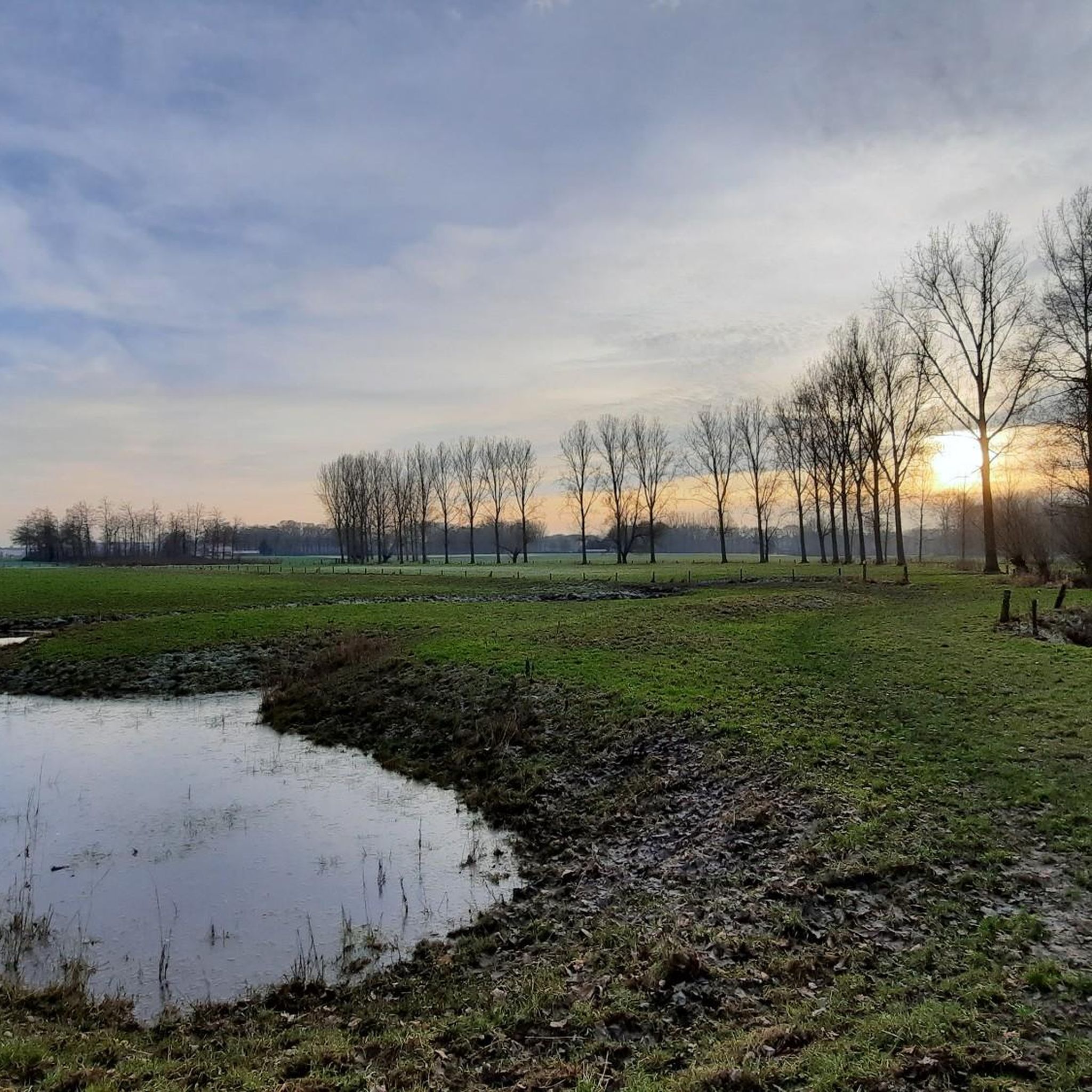
Best lakes around Oostkamp are primarily serene natural water features found within the forest-rich municipality of West Flanders, Belgium. The region is characterized by natural ponds and marshlands, often situated within protected nature reserves. These areas provide opportunities for nature observation, tranquil walks, and appreciating local flora and fauna.
Best lakes around Oostkamp
- The most popular lakes is d'Aertrycke Castle, a castle with a lake. This neo-Renaissance castle, built between 1868 and 1871, is now a provincial property offering…
Last updated: May 3, 2026
Poertoren (Powder Tower), Bruges
Highlight • Monument
Translated by Google •
Tip by

Boardwalk Over the Large Pond, Heideveld-Bornebeek
Highlight • Trail
Translated by Google •
Tip by

Sign up now to discover places like this
Get recommendations on the best single tracks, peaks, & plenty of other exciting outdoor places.
Sign up for free
Bulskampveld
Highlight • Forest
Translated by Google •
Tip by
De la Faille Castle at Minnewater
Highlight • Castle
Translated by Google •
Tip by

Minnewater Park
Highlight • Natural
Translated by Google •
Tip by
Sign up for free to discover even more lakes around Oostkamp.
Sign up for free
Already have an account?
Start today with a free account
Your next adventure awaits.
Login or Signup
Tips from the Community

A very large forest with various amenities, including a tea room and restaurant. There's also a herb garden and a farm where you can buy ice cream.
2
0

After the Tillegembos (Bruges) and the Palingbeek (Ypres), the Lippensgoed-Bulskampveld became the third provincial domain of West Flanders. In 1970, 201 ha of forest, agricultural land, park, castle and associated farms were purchased and opened to the public after construction and development. The Lippensgoed-Bulskampveld was the largest public domain in West Flanders for a long time. In the 1980s, the castle garden was transformed into a didactic herb garden and the exhibition of agricultural materials in galleries around the herb garden was established. In 1990, one of the leased farms within the provincial domain became available. In order to increase the recreational opportunities, various afforestations were carried out there and new avenues were created. With an additional acquisition of 17 ha in 1992, the surface area was increased to 218 ha. About 10 years later, in 2003, 6 ha of St-Amandus were rented and integrated into the existing domain via an educational nature trail. Finally, in 2005, about 8 ha of forest were purchased and added to the public domain, bringing the total to 232 ha. (Province of West Flanders)
13
0
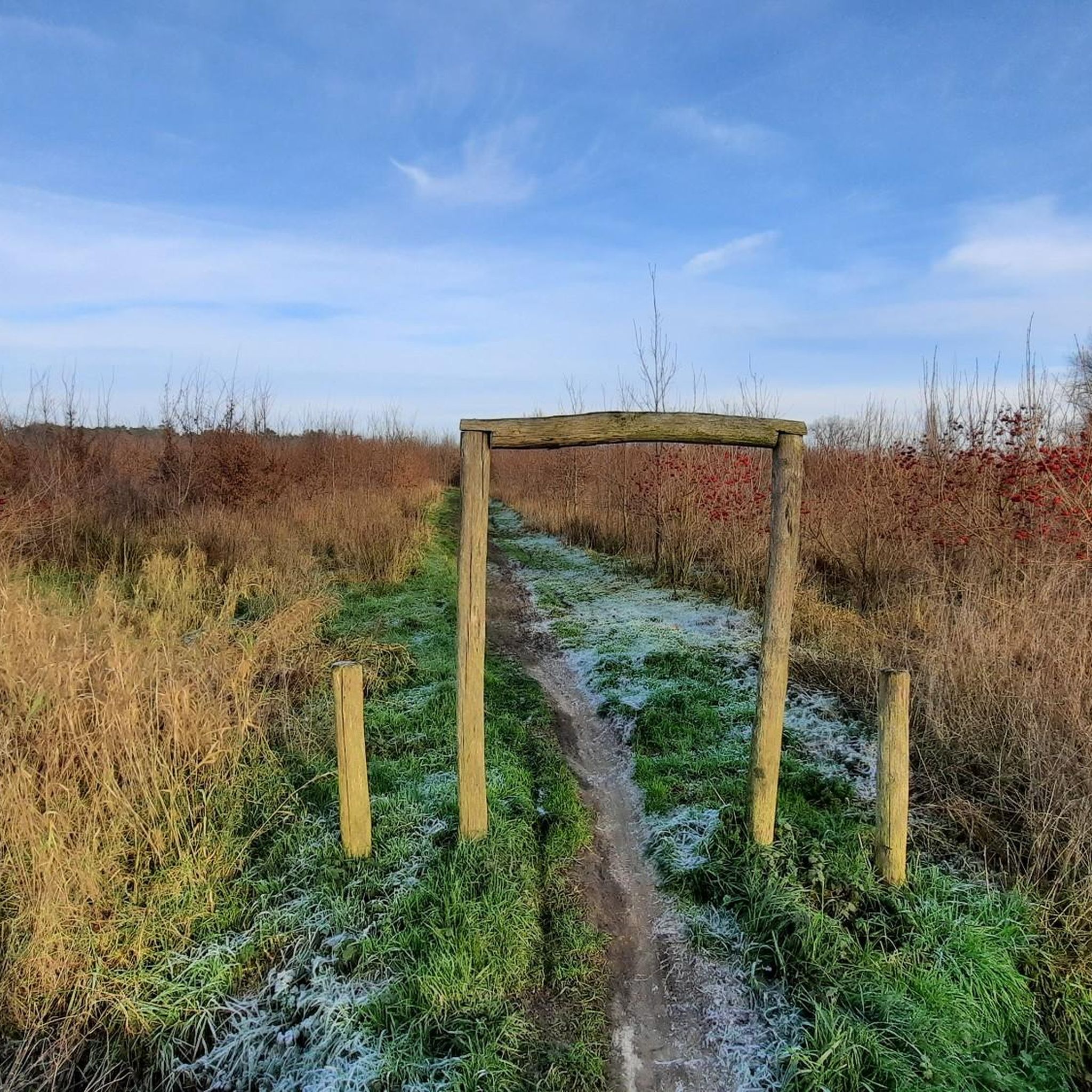
A boardwalk over a large pond: fun guaranteed. And a beautiful panorama.
12
1

beautiful boardwalk, recently renovated, and beautiful view
6
1

The Reie (the river after which the canals were later named) and its tributaries probably remained untouched until around the 9th century. Nevertheless, it is suspected that small hydraulic engineering works were already carried out by the Romans in the 1st century. The largest amount of river water flowed into the city center in the south, where the Minnewater is located. This elongated lake probably originated in the 12th or 13th century as a kind of reservoir, due to the construction of the locks at the lock house. The name Minnewater could mean communal water. However, a number of linguists explain minne as a water spirit. The Reie was the most important watercourse in Bruges and its name evolved to refer to all city canals. The Reie is further identified with the current Waardammebeek, river stream and ring stream. The locks of the lock house allowed the Minnewater to be kept at a constant level. Their purpose, however, was mainly to regulate the water supply to the city center. There used to be three mills around the Minnewater: the stadvolmolen (1646), a water mill on the eastern bank (where the castle now stands); the fulling mill, a windmill on the fortress next to the Minnewaterbrug symmetrical with the Poertoren and the Kasteelmolen (presumably 13th century), a watermill at the confluence of the Bakkersreitje and the Katelijnevest. The wide Minnewater was probably used in the Middle Ages to keep the water mills running. From the 1620s, the Minnewater was used as a trading basin. When the Coupure was dug in 1752 to create a smoother connection between the Ghent and Ostend canals through the city, the Minnewater lost this function. Dredging boats that ensured regular transport between Bruges and Ghent had their mooring there until 1782. Immovable Heritage Inventory: Minnewater and surroundings, https://id.erfgoed.net/erfgoedobjecten/301976
9
0
Free-standing tower, built in 1398-1401 by Jan Van Oudenaarde; from the 15th century to the first quarter of the 20th century, gunpowder store, see name; in 1665 it was used as a fuller's mill for several years; cellars already used as ice cellars before 1785. Restored in 1989-1991 according to a design by architect A. Cottyn (Bruges). Immovable Heritage Inventory: Poertoren, https://id.erfgoed.net/erfgoedobjecten/200722
13
0

A beautiful walk to see/hear many birds 🥾🥾🦇🪺🐦⬛🦆🦉
3
2

The Minnewater lake is located in a very beautiful park landscape within the old fortifications of Brüggen. On the east bank is the striking neo-Gothic castle of the noble de la Faille family, which was built in 1893 according to a design by the architect Karel De Wulf. On the west side, on Professor Doctor Joseph Sebrechtsstraat, is the former building of the Minnewater clinic. After the neo-Gothic 175-meter-long building initially served as a Catholic hospital and was occupied by the German occupying forces from 1917 during the First World War, the nuns returned and used it until 1933. From 1947 to 1977, Joseph Sebrechts used it as an operating room for the adjacent St. John's Hospital. It is currently a residential and care center with a palliative care department. By the bridge is the Poertoren Tower, which served as an ammunition depot under the regime of the time. Poer is a dialect word for gunpowder. For many centuries, the site of today's Minnewater Park was used as a bleaching meadow. The oldest mention of this term dates back to 1580. Until the beginning of the 20th century, the site was still used as a bleaching plant. Then it was divided up and passed into the possession of various owners. On part of it, Ludovic Fraeys de Veubeke had a neo-Gothic castle, Het Fraeyhuis, built and a garden laid out. The castle was demolished in 1969. The gatehouse and some of the linden trees in the garden were preserved. At the beginning of the 1970s, the city council and in particular Mayor Michel Van Maele asked themselves whether the construction of a villa suburb was still justified and whether, on the contrary, the creation of a public park should not be preferred. By deed of August 9, 1974, the city became the owner of the 1.55 hectare site. The design of the park had two objectives: firstly, to complete the tourist pedestrian route near the Minnewater and secondly, to create a green area with various passive recreational functions. The basic structure of the new park was outlined using the valuable remains of the Fraeyhuis gardens. Construction began in 1977 and it was opened in 1979. Shortly afterwards, the park was expanded by another half a hectare through the purchase of two adjacent plots of land.
6
0
Frequently Asked Questions
What kind of lakes and water features can I expect to find around Oostkamp?
Oostkamp is characterized by serene natural water features, primarily natural ponds and marshlands, often situated within protected nature reserves. These areas are ideal for nature observation and tranquil walks rather than large-scale swimming or boating.
Are there any historical sites or castles near the lakes in Oostkamp?
Yes, you can visit historical sites like d'Aertrycke Castle, a neo-Renaissance castle with a lake, which is now a provincial property offering walking routes. Another notable spot is Poertoren and Minnewater Bridge, offering romantic views of the Minnewater, a tranquil water surface within a city park.
Which areas are best for birdwatching around Oostkamp's water features?
The Warandeputten nature reserve is an excellent spot for birdwatching. Its marshland, reed beds, and open water attract a diverse range of birds, including the Common Kingfisher, Little Grebe, Tufted Duck, and Water Rail. The reserve features viewing huts and walls specifically for observation.
Are there family-friendly walking options around the lakes in Oostkamp?
Absolutely. The Boardwalk Over the Large Pond, Heideveld-Bornebeek offers a unique and family-friendly walk with panoramic views. Minnewater Park also provides a pleasant environment for families, and Domein Zorgvliet has an extensive play zone near its parking area.
What kind of walking paths and terrain can I expect around Oostkamp's natural water areas?
You'll find well-maintained walking paths and boardwalks, especially in areas like Warandeputten, which lead through open water, reed marshes, and marsh forests. Domein Zorgvliet offers paths winding through diverse deciduous woodlands. The terrain is generally suitable for tranquil walks.
Can I bring my dog to the natural areas with lakes in Oostkamp?
While dogs are generally not allowed within the main Warandeputten reserve to protect wildlife, they are permitted on a leash along the Rivierbeek at the edge of the area. Always check local signage for specific rules in other nature reserves or parks.
What outdoor activities can I do near the lakes around Oostkamp?
Beyond walking, you can explore various outdoor activities. There are numerous running trails, cycling routes, and gravel biking paths that often pass by or through these scenic water-rich landscapes.
What is the best time of year to visit the lakes and nature reserves in Oostkamp?
The natural areas around Oostkamp, with their marshlands and woodlands, offer beauty throughout the year. Spring and autumn are particularly pleasant for walking and birdwatching due to milder temperatures and vibrant seasonal colors. Winter walks can also be tranquil, especially in areas like Warandeputten and Domein Zorgvliet.
Are there any facilities or amenities available near these natural water features?
Some areas, like the broader Bulskampveld provincial domain, offer facilities such as benches and cafes. Warandeputten has picnic tables for a relaxing break. Domein Zorgvliet includes a play zone and informative signs. For specific amenities, it's best to check details for each location.
What makes Domein Zorgvliet a unique place to visit?
Domein Zorgvliet is a Natura 2000 area, highlighting its importance for protecting valuable plants and animals. It combines a varied walking forest with historical elements like traces of a former castle, a walled garden, and a natural pond. It's a peaceful environment for walks and relaxation, appealing to those interested in both nature and local heritage.
Can I find circular walking routes around the lakes in Oostkamp?
Yes, many of the natural areas, including Warandeputten, are integrated into larger walking networks like the Bulskampveld walking network, which offers various signposted routes, including circular options, allowing for diverse walking experiences around the water features.
Most popular routes around Oostkamp
Most popular attractions around Oostkamp

Get inspired with the komoot mobile app


Explore more
Still not found your perfect lake around Oostkamp? Check out the guides of these regions to see even more beautiful places.
