Top 4 Castles around Chiesina Uzzanese
Best castles around Chiesina Uzzanese are found in the surrounding Valdinievole region, offering insights into medieval history. Chiesina Uzzanese itself is known for its historical role on the Via Francigena, with sites like the remains of a medieval Xenodochio. The nearby hills host several fortifications, providing a blend of historical exploration and scenic routes. These structures often served as defensive points, offering views over the Tuscan landscape.
Best castles around Chiesina Uzzanese
- The most popular castles is Cozzile Castle and…
Last updated: June 30, 2026
Cozzile Castle and the Clock Tower
Highlight • Castle
Translated by Google •
Tip by

Rocca del Cerruglio, Montecarlo
Highlight • Castle
Translated by Google •
Tip by
Sign up now to discover places like this
Get recommendations on the best single tracks, peaks, & plenty of other exciting outdoor places.
Sign up for free
Cozzile Medieval Village
Highlight • Settlement
Translated by Google •
Tip by

Porta Nuova, Cozzile
Highlight • Historical Site
Translated by Google •
Tip by
View of Montecarlo and the Valdinievole Valley
Highlight • Viewpoint
Inside the Castle you won't be able to see too much from the surrounding area.
Tip by

Start today with a free account
Your next adventure awaits.
Login or Signup
Tips from the Community

a village definitely worth visiting!
0
0

very intimate and typical village, with a beautiful view of the reserve.
0
0

Fantastic village with a view and a place to stop; there is also public water with fountains.
0
0

I was lucky enough to stay right below the fortress of this wonderful town.
3
0

Montecarlo is a charming medieval village located in the province of Lucca, in Tuscany. It stands on a hill overlooking the Valdinievole and the Lucca plain, offering breathtaking panoramic views. The town is famous for its fortress, the Rocca del Cerruglio, built in the 14th century to defend against external attacks, and for its well-preserved walls.
0
0

Cozzile was probably founded at the end of the 12th century around fortification works with lookout and extreme defense functions. Even at the beginning of the 14th century they hosted a castellan and a small garrison on behalf of the people of Lucca. Around the fortress a fortified town arose with a structure similar to that of Massa, organized in a "fishbone" pattern on both sides of the road that crossed it and which, exiting at the other end of the town, led towards the Apennines and towards Modena. The houses were grouped into two neighborhoods or "deeds" (Volata to the East, and Cessana to the West of the main road) with the square located to the north and the church to the south. In the city walls, of which important remains are still visible incorporated into the houses built above them, three doors opened: one to the east, corresponding to the entrance to the town of the medieval road from Massa (gate to Massa), one to the west , on the diametrically opposite side (Porta Vecchia)
0
0
Cozzile was probably founded at the end of the 12th century around fortification works with lookout and extreme defense functions. Even at the beginning of the 14th century they housed a castellan and a small garrison on behalf of the people of Lucca. Around the fortress a fortified town arose with a structure similar to that of Massa, organized in a "fishbone" pattern on both sides of the road that crossed it and which, exiting at the other end of the town, led towards the Apennines and towards Modena. The houses were grouped into two neighborhoods or "deeds" (Volata to the East, and Cessana to the West of the main road) with the square located to the north and the church to the south. In the city walls, of which important remains are still visible incorporated into the houses built above them, three doors opened: one to the east, corresponding to the entrance to the town of the medieval road from Massa (gate to Massa), one to the west , on the diametrically opposite side (Porta Vecchia)
0
0
Cozzile was probably founded at the end of the 12th century around fortification works with lookout and extreme defense functions. Even at the beginning of the 14th century they housed a castellan and a small garrison on behalf of the people of Lucca. Around the fortress a fortified town arose with a structure similar to that of Massa, organized in a "fishbone" pattern on both sides of the road that crossed it and which, exiting at the other end of the town, led towards the Apennines and towards Modena. The houses were grouped into two neighborhoods or "deeds" (Volata to the East, and Cessana to the West of the main road) with the square located to the north and the church to the south. In the city walls, of which important remains are still visible incorporated into the houses built above them, three doors opened: one to the east, corresponding to the entrance to the town of the medieval road from Massa (gate to Massa), one to the west , on the diametrically opposite side (Porta Vecchia)
0
0
Frequently Asked Questions
Where can I find castles near Chiesina Uzzanese?
While Chiesina Uzzanese itself is known for its historical role on the Via Francigena, the most prominent castles are found in the surrounding Valdinievole region. Notable examples include Cozzile Castle and the Clock Tower and Rocca del Cerruglio, Montecarlo.
What is the historical significance of the castles in the Valdinievole region?
Castles in the Valdinievole region, such as those in Cozzile and Montecarlo, played crucial defensive roles during the medieval period. Cozzile Castle, for instance, was founded around the late 12th century for lookout and defense, housing a castellan and garrison. Rocca del Cerruglio, Montecarlo, built in the 14th century, was essential for defending against external attacks, particularly from the Florentines.
Are there hiking opportunities near these castles?
Yes, the area around Chiesina Uzzanese and its castles offers various hiking opportunities. For example, you can find routes like the 'Hiking loop from Uzzano Castello' or 'Beautiful view on the plains – View of Massa e Cozzile loop from Borgo a Buggiano'. You can explore more options on the Hiking around Chiesina Uzzanese guide.
Which castles offer the best panoramic views?
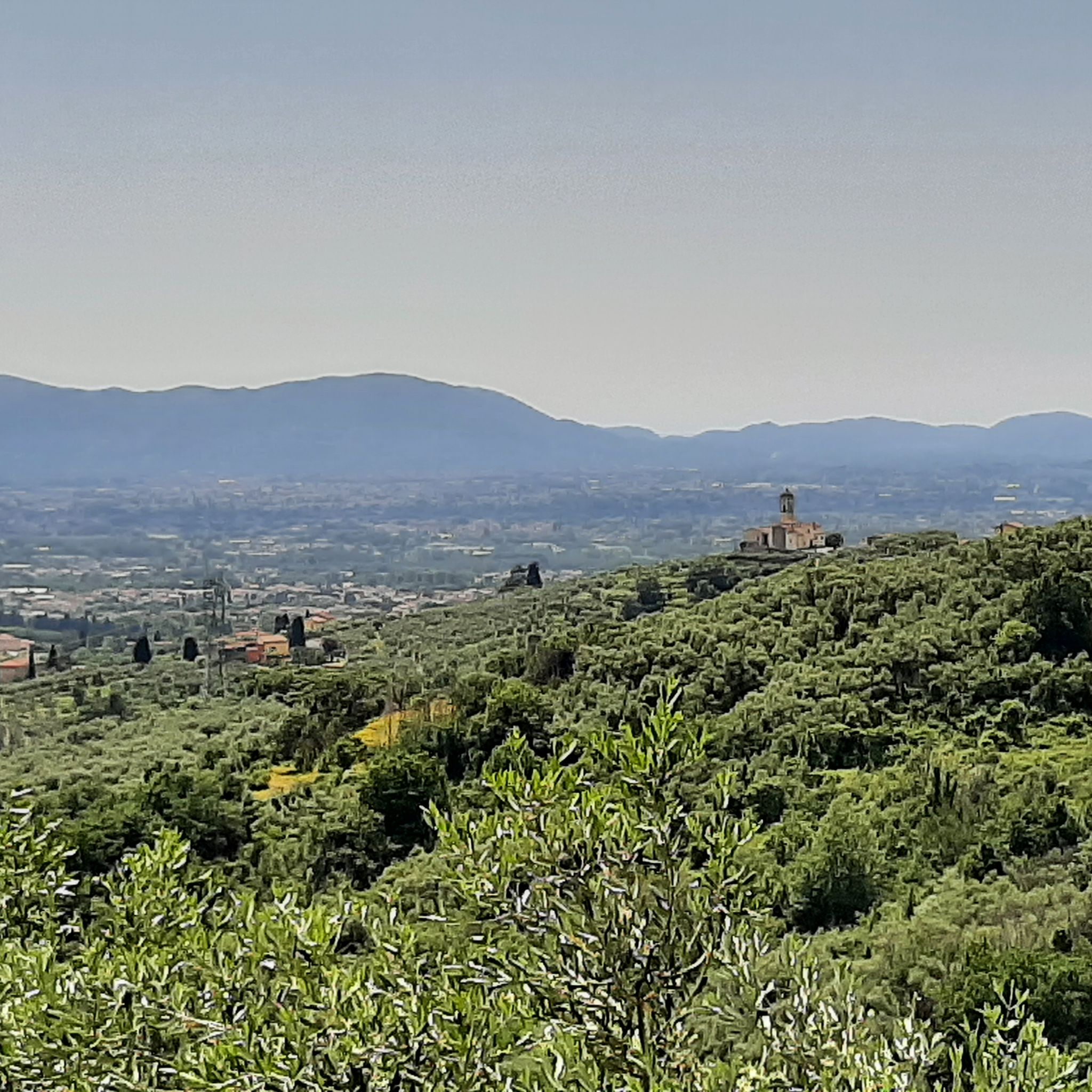
Many castles in the region are situated on hills, providing excellent panoramic views. The Cozzile Medieval Village offers a vast panorama towards the south over the Valdinievole and all of Tuscany. Similarly, Rocca del Cerruglio, Montecarlo, overlooks the Valdinievole and the Lucca plain, providing breathtaking vistas.
What is the best time of year to visit the castles in this area?
The spring (April-May) and autumn (September-October) months are generally ideal for visiting the castles in Tuscany. The weather is pleasant for exploring, and the landscapes are particularly beautiful. Summers can be hot, while winters might be cooler with some rain, but offer a less crowded experience.
Are the castles near Chiesina Uzzanese family-friendly?
Many of the medieval villages and castle sites, like the Cozzile Medieval Village, are suitable for families to explore. They often involve walking through historical streets and offer open spaces. However, specific accessibility for strollers or very young children might vary depending on the terrain and individual castle structures.
Can I find cafes or restaurants near the castles?
Yes, the medieval villages where these castles are located, such as Cozzile and Montecarlo, typically have local amenities including cafes and restaurants. These establishments often offer traditional Tuscan cuisine and a chance to relax after exploring the historical sites.
What other historical sites are there in Chiesina Uzzanese itself?
Chiesina Uzzanese has its own historical points of interest, primarily related to its role on the Via Francigena. You can visit the Parish Church of Santa Maria della Neve, which dates back to 1848 and houses notable artworks. The remains of a medieval Xenodochio (hospice) are also visible in the town's central square, which provided lodging for pilgrims.
What kind of outdoor activities can I do in the broader region?
Beyond hiking, the region around Chiesina Uzzanese is excellent for cycling. You can find various routes for road cycling and touring bicycles, ranging from easy to difficult. Check out the Road Cycling Routes around Chiesina Uzzanese or the Cycling around Chiesina Uzzanese guides for more details.
What do visitors appreciate most about the castles in this area?
Visitors frequently appreciate the well-preserved historical structures, the sense of stepping back in time, and the stunning panoramic views over the Tuscan landscape. The community has shared over 20 photos and given more than 45 upvotes for these sites, highlighting their visual appeal and historical charm.
Are there any less crowded castles to visit near Chiesina Uzzanese?
While popular sites like Cozzile and Montecarlo attract visitors, exploring the smaller, less prominent medieval villages in the Valdinievole region can offer a more tranquil experience. These often feature remnants of fortifications and provide a glimpse into local history without the larger crowds.
How long should I plan for a day trip to visit castles from Chiesina Uzzanese?
A day trip can comfortably cover one or two major castle sites and their surrounding villages. For example, visiting Cozzile Castle and the Rocca del Cerruglio in Montecarlo, including travel time and exploration, could take anywhere from 4 to 8 hours depending on your pace and how much you wish to delve into each location.
Most popular routes around Chiesina Uzzanese
Most popular attractions around Chiesina Uzzanese

Get inspired with the komoot mobile app


Explore more
Looking for the best castles somewhere else? Discover other guides around Chiesina Uzzanese:
