Top 5 Castles around Latera
Best castles around Latera are found in a medieval village in Italy's Viterbo province, known for its historical fortified structures. The village is situated on a hill overlooking the volcanic Caldera di Latera, offering views of the surrounding landscape. Latera's historic center features cobblestone alleys and stone houses, reflecting its past as an Etruscan center and fortified stronghold. This area provides insights into centuries of history and culture.
Best castles around Latera
- The most popular castles is Sorano, a…
Last updated: June 30, 2026
Sorano
Highlight • Settlement
Translated by Google •
Tip by

Rocca Farnese of Capodimonte
Highlight • Castle
Translated by Google •
Tip by

Sign up now to discover places like this
Get recommendations on the best single tracks, peaks, & plenty of other exciting outdoor places.
Sign up for free
Orsini Fortress of Sorano
Highlight • Castle
Translated by Google •
Tip by

Vitozza
Highlight • Historical Site
Translated by Google •
Tip by

Caves and Ancient City of Vitozza
Highlight • Historical Site
Translated by Google •
Tip by

Sign up for free to discover even more castles around Latera.
Sign up for free
Already have an account?
Start today with a free account
Your next adventure awaits.
Login or Signup

Tips from the Community

With its imposing mass, the Orsini Fortress dominates the medieval village of Sorano and represents one of the greatest examples of medieval architecture of the Renaissance. Built by the Aldobrandeschi in the 13th century, it was later expanded and renovated by the Orsini, according to the needs imposed by the advent of firearms. The aim was to make Sorano a powerful military bulwark in the centuries-old dispute between this turbulent family and the Republic of Siena. The oldest structures, identifiable with the surviving portions of the Rocca degli Aldobrandeschi, are located in the northern area of the fortification. The complex must have been divided into two main alignments that delimited an open space facing the town below (now Piazza Cairoli) to the east and south. In the mid-16th century, other structural interventions completely modified the original layout of the ancient keep, which was adapted to the use of a count's residence. Today some of these rooms house the Civic Archaeological Museum which preserves finds from the territory of Sorano, Sovana and Castell’Ottieri. The entrance to the keep was protected by a drawbridge, now disappeared, and by a deep moat which delimited, descending into the valley, also the two gates of access to the village. The large square in front, supported on two sides by walls, was the nodal point of all the daily activities of the garrison. The sixteenth-century complex consists of a central keep where the headquarters was located and which housed the armory, the gunpowder and saltpetre warehouse, the foundry and the prisons. At the base of the building was located the guardhouse to control the main entrance to the Fortress. Above the portal stands the coat of arms with the rampant lions of the Aldobrandeschi, the rosette and the bars of the Orsini, surmounted by the crest on which rests the heraldic bear. The Mastio is connected to the two corner bastions, also decorated with a coat of arms and by embankments that delimit a second moat that was filled in during the Lorraine period. The various buildings, which make up the Renaissance complex, are connected to each other by a series of underground walkways that allowed the rapid movement of troops along the entire perimeter of the walls. The paths are dug on multiple levels and are equipped with "wolf mouth" slits suitable for defense with arquebuses and culverins. The two bastions also constituted the main deposits for food and water reserves and were used as milling rooms for the processing of grain and gunpowder. The water supply was via a system of canals connected by some cisterns dug into the tuff. In the second half of the 16th century, the political situation of the County changed radically when it became part of the Grand Duchy of Tuscany. From this moment on, the large military complex, which had withstood many battles, lost its strategic function and was gradually abandoned. Today, thanks to numerous restoration interventions, it is possible to visit the entire bastion complex of the Fortress by going to the Museum located in the fourteenth-century part.
0
0

Sorano is a small medieval town built on tuff rocks in the province of Grosseto/Tuscany.
1
0

Along the Vie Cave of Vitozza we can admire the caves that have been divided into three types: mixed-use caves (as a dwelling and stable); stables (recognizable by the presence of mangers, troughs and fences); caves for residential use (present especially on the south-west side, more sheltered and better exposed to the sun). The latter are characterized by jars for grain, wells for collecting water and chimneys. The first evidence dates back to the 11th century, when numerous castles were built throughout the area. At that time Vitozza must have been part of a large fiefdom that included 15 castles among which we remember Sorano, Pitigliano, Farnese, Mezzano, etc. (Guiniccesca land). The fiefdom must have had considerable strategic importance since thanks to the fortifications it was possible to control the natural access routes to the sea.
0
0

The area of Vitozza, near San Quirico, is one of the most important medieval rock settlements in Italy that developed on a tuff spur above the Lente valley. The settlement, already existing in the 12th century, was definitively abandoned around the 15th century due to wars and depredations. Traveling along the main dirt road you can admire the remains of fortifications, churches and also numerous caves (more than two hundred) that were used as stables, homes and places of work.
1
0

The Rocca Farnese, located in Tuscia, is an imposing 16th-century structure built around a medieval tower, which dominates the historic center of Ischia di Castro. The palace, unfinished for centuries, was recently restored by the new owner, bringing to light ancient forms and a walled Renaissance loggia. Originally built in the 13th century as a fortress, it was transformed into a palace in the 16th century, perhaps designed by Antonio da Sangallo the Younger. It was the residence of the Farnese, lords of the Duchy of Castro, and, after the end of the duchy in 1649, it passed to the Apostolic Chamber and various families.
3
0

Sorano is located in a suggestive mountainous region immersed in the richness of forests. The medieval village clings to a steep tuff rock called Masso Leopoldino, which dominates the valley of the Lente stream. The tower houses, the winding streets, the open spaces, the alleys and tunnels that intertwine in the heart of the rock give the neighborhood a unique charm. The panorama from the terrace on the top of the cliff offers exceptional views of Sorano, the volcanic gorges and the Lente valley. Over the centuries, Sorano has been the scene of disputes, sieges and wars, earning it the curious nickname of "Italy's match".
3
0
Frequently Asked Questions
What historical sites can I explore in Latera beyond the main castles?
Beyond the prominent castles, Latera itself is a rich historical site. You can explore the ancient gateway known as The Four Arches, which marks the entrance to the oldest part of the village and is of Lombard origin. The historic center of Latera, with its narrow cobblestone alleys and stone houses, offers a journey back in time, reflecting its past as an Etruscan center and fortified stronghold. For more information on the village's history, you can visit visitlazio.com.
Are there any castles or historical sites near Latera that are particularly family-friendly?
While specific family-friendly activities within each castle may vary, the medieval village of Sorano is often considered family-friendly due to its charming winding streets and historical atmosphere. Exploring its unique architecture and the general ambiance of a 'lost in time' village can be an engaging experience for families.
What kind of natural features or viewpoints can I find near the castles around Latera?
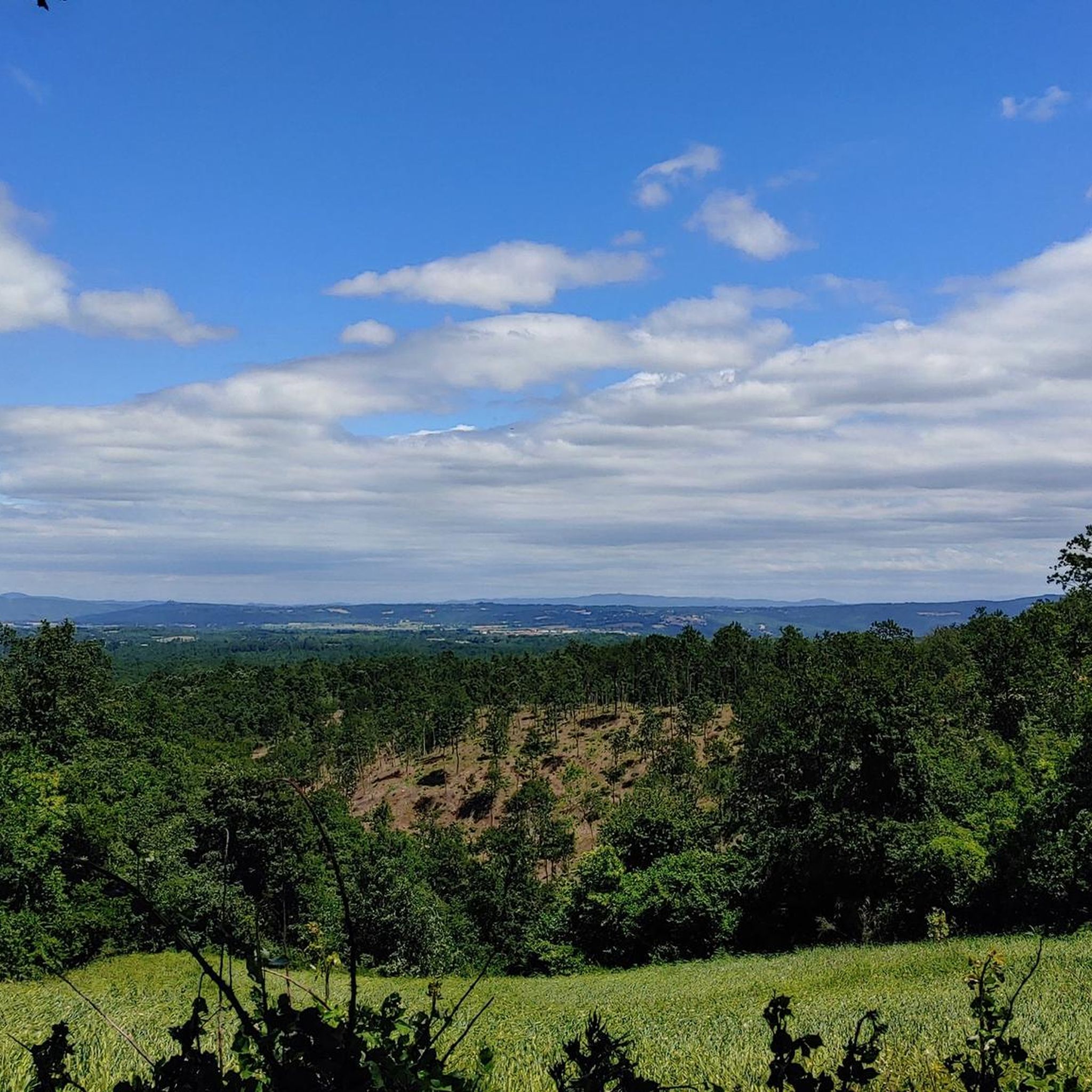
The region around Latera is rich in natural beauty. From the Palazzo Farnese (La Rocca) in Latera, you can enjoy pleasant views of the eastern part of the village and the surrounding green woods. The village's strategic location on a hill overlooking the volcanic Caldera di Latera offers breathtaking views, including distant sights of Mount Amiata and the lakes of Mezzano and Bolsena. The terrace on top of the cliff in Sorano also provides exceptional panoramas of the village, volcanic gorges, and the Lente valley.
What outdoor activities are available near the castles around Latera?
The area around Latera offers various outdoor activities. For hiking enthusiasts, there are trails like the 'Descent to the Valley of the Lente – Vitozza loop' which is an easy 4.1 km hike. If you're looking for more challenging options, the 'Trail of the Brigands Stage 6' is a moderate 9.9 km hike. Cyclists can explore routes such as the 'Lake Bolsena – Montesenano Beach loop' (moderate, 17.6 km). You can find more details on these and other routes in the Hiking around Latera and Cycling around Latera guides.
Can I visit the interior of Rocca Farnese of Capodimonte?
The Rocca Farnese of Capodimonte is an imposing 16th-century structure that offers a nice view from the old castle. However, the castle itself is private property, so visitors cannot go inside. You can still enjoy the exterior views and explore the narrow roads of the old city center and the pretty harbor nearby.
What is the best time of year to visit the castles and historical sites around Latera?
While specific recommendations for Latera are not provided, generally, the spring (April-May) and autumn (September-October) months offer pleasant weather for exploring historical sites and engaging in outdoor activities in the Lazio region of Italy. These periods avoid the intense heat of summer and the cooler, potentially wetter conditions of winter, making for a more comfortable visit.
Are there any unique historical settlements or rock structures to explore near Latera?
Yes, the area of Vitozza, near San Quirico, is one of Italy's most important medieval rock settlements. It features more than two hundred caves that were used as stables, homes, and workplaces, along with remains of fortifications and churches. This ancient city developed on a tuff spur above the Lente valley and offers a fascinating glimpse into past ways of life.
What is special about the Orsini Fortress of Sorano?
The Orsini Fortress of Sorano is a magnificent example of medieval and Renaissance military architecture. Built by the Aldobrandeschi in the 13th century and later expanded by the Orsini family, it played a crucial role in historical disputes. Today, it houses a museum where you can explore its impressive structure, including underground walkways and bastions, and learn about its rich history. The fortress dominates the medieval village of Sorano.
Are there any dog-friendly walking trails near the castles in the Latera area?
While specific dog-friendly designations for trails directly adjacent to castles are not detailed, many of the outdoor routes in the region are suitable for walks with dogs, provided they are kept on a leash and local regulations are followed. For example, the 'Descent to the Valley of the Lente – Vitozza loop' is an easy hiking trail that could be suitable for a walk with your dog. Always check local signage for any restrictions. You can find more hiking options in the Hiking around Latera guide.
What makes Sorano a popular destination for visitors interested in castles and history?
Sorano is affectionately known as 'the Matera of Tuscany' due to its unique medieval village clinging to a tuff cliff. Visitors are drawn to its authentic experience, characterized by winding streets, tower houses, and the majestic Orsini Fortress. The panorama from the cliff's terrace offers exceptional views, and the village's history of disputes, sieges, and wars adds to its intriguing character, making it a journey through centuries of culture and history.
Are there cafes or places to eat near the castles in Latera?
Latera, being a charming medieval village, offers local cafes and eateries within its historic center where you can find refreshments. Similarly, nearby towns like Sorano and Capodimonte, which host other significant historical sites, also provide options for dining and cafes, allowing visitors to enjoy local cuisine and take a break during their exploration.
What is the historical significance of the Palazzo Farnese (La Rocca) in Latera?
The Palazzo Farnese (La Rocca) in Latera is a monumental structure with deep historical roots. Constructed in 1408, it stands on the ruins of an ancient Lombard fortification, highlighting Latera's long history as a stronghold. It served as an important seat for the powerful Farnese family, who owned it until 1668. Its Renaissance-style facade, possibly designed by Jacopo il Bello da Vignola, underscores its architectural and historical importance in the region.
Most popular attractions around Latera

Get inspired with the komoot mobile app


Explore more
Looking for the best castles somewhere else? Discover other guides around Latera:
