Top 7 Castles around Murlo
Best castles around Murlo are found in a medieval village in Tuscany, Italy, known for its Etruscan origins and historical role as a feudal center. The area features a diverse landscape, including the wooded hills of the Maremma and the distinctive countryside of the Crete Senesi. This region offers a blend of well-preserved medieval architecture and significant historical sites. Visitors can explore fortified villages and castle ruins that provide insight into the area's past.
Best castles around Murlo
- The most…
Last updated: June 30, 2026
Montalcino Fortress
Highlight • Castle
Translated by Google •
Tip by

Bibbiano Castle
Highlight • Castle
castellitoscani.com/bibbiano
Translated by Google •
Tip by

Sign up now to discover places like this
Get recommendations on the best single tracks, peaks, & plenty of other exciting outdoor places.
Sign up for free
Murlo Historic Village
Highlight • Historical Site
Translated by Google •
Tip by

Castello Tricerchi
Highlight • Castle
Località Altesi, 53024 Montalcino SI
linktr.ee/castellotricerchi_
05771912361
Translated by Google •
Tip by

Murlo
Highlight • Settlement
Translated by Google •
Tip by
Sign up for free to discover even more castles around Murlo.
Sign up for free
Already have an account?
Start today with a free account
Your next adventure awaits.
Login or Signup

Tips from the Community

Castello Tricerchi extends over 400 hectares on the northern slopes of Montalcino , 13 of which are dedicated to Sangiovese Grosso , and suited to the production of Brunello and Rosso di Montalcino . At the center of the property stands the Castle, completed in 1441 by the Tricerchi family , and today the home and company headquarters of their direct descendants, the Squarcia family. – 1290 – The Tricerchi family was part of the Sienese oligarchy and a member of the Government of the Nine: the council of nine noble families who governed the city of Siena. – 1330 – The Tricerchi family became supervisors of the Biccherne, a magistracy of Siena that dealt with the finances of the Republic, and was headed by the Monks of San Galgano. – 1441 – The Tricerchi family completes Castello Tricerchi in Montalcino, on the Via Francigena. – 1569 – Under the Grand Duchy of Tuscany, by appointment of the Medici family of Florence, the Tricerchi family were elevated to the rank of nobility, carrying out important public functions in the city of Siena and obtaining the administration of Montalcino. – 1600 – Spanish domination, Tricerchi Castle a point of reference for pilgrims travelling to Rome. – 1700 – Construction of the chapel dedicated to the Virgin of the Veil, which houses a fragment of the Virgin's Veil and the accompanying Papal Bull. In the same year, the family received a plenary indulgence. – 1800 – the castle and its properties passed from Maddalena (Nena) to her firstborn Julio Squarcia, founder of the current family. Tricerchi Castle was built in the 13th century on the Via Francigena in Montalcino by the Altesi family and completed in 1441 by the Tricerchi family. The 6,000-square-meter structure is a typical example of medieval fortified keep architecture, featuring numerous decorative motifs attributed to Baldassarre Peruzzi, a well-known artist of the period. Over the centuries, the castle served as a refuge and protection for those who, along the Via Francigena, made their pilgrimage to Rome. In the 17th century, the chapel, originally located within the fortified walls, was moved to the end of the avenue and dedicated to the Virgin of the Veil. A fragment of the Veil, certified by papal bull, is still kept inside. With Ministerial Decree 1982, Tricerchi Castle was declared part of Italy's historical and artistic heritage.
0
0

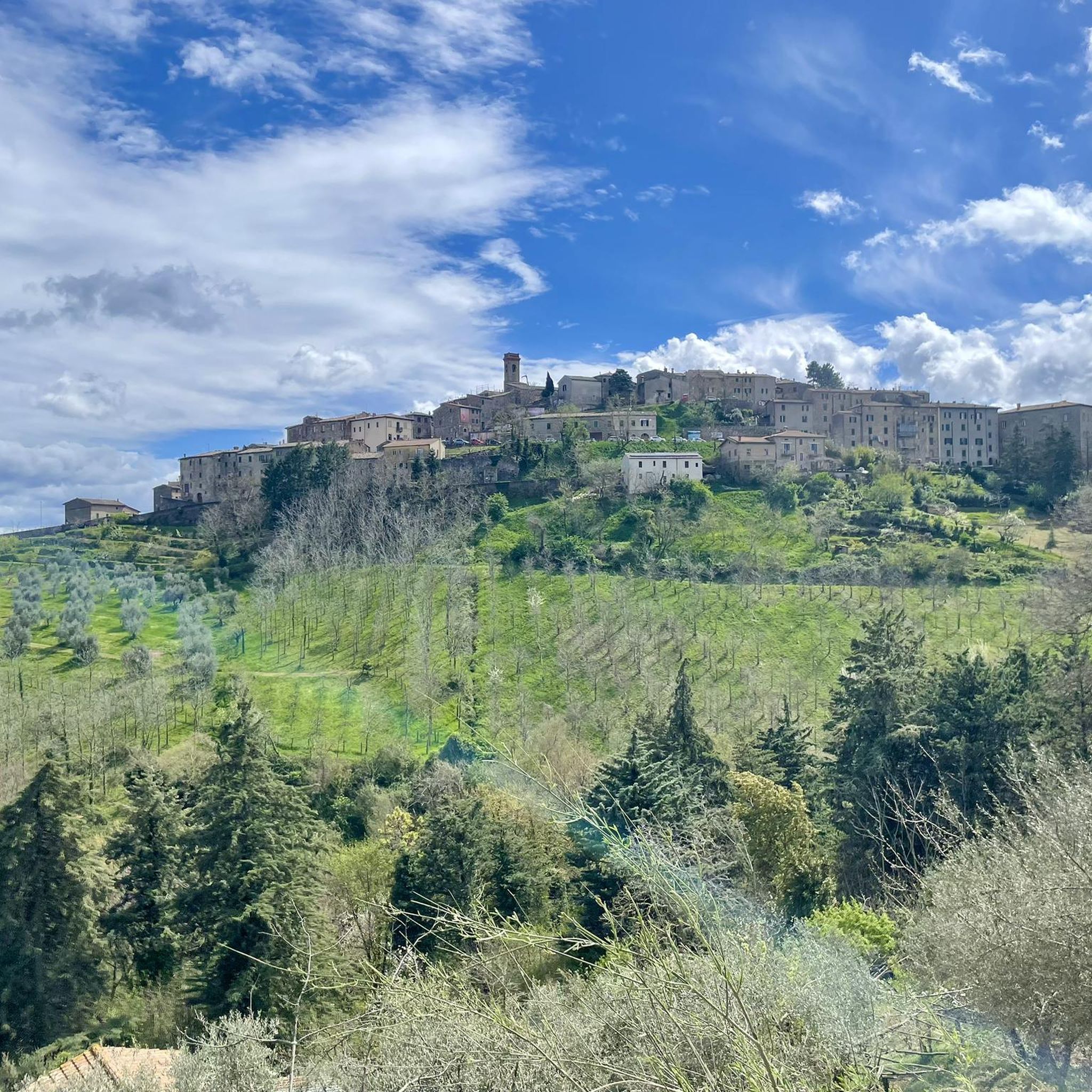
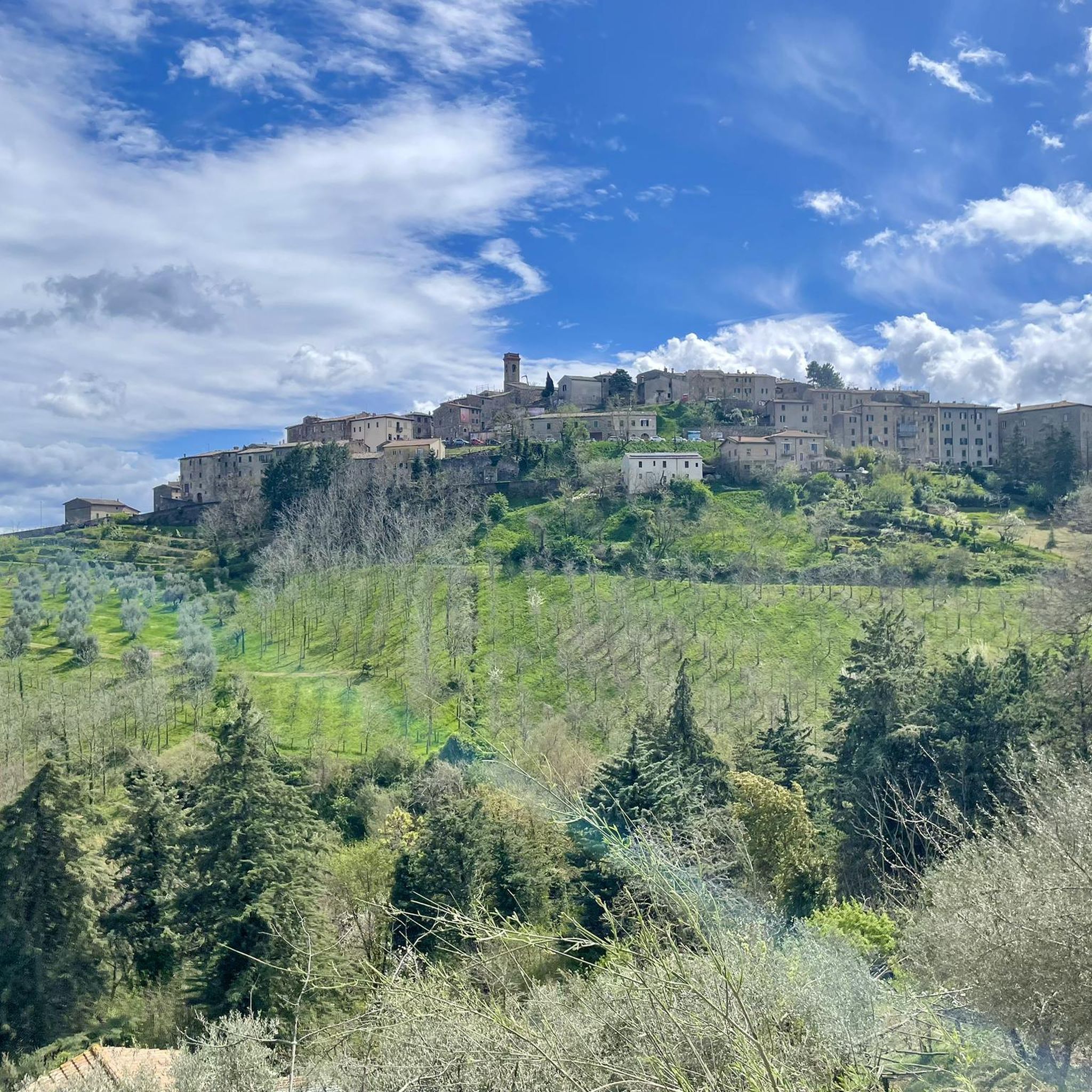
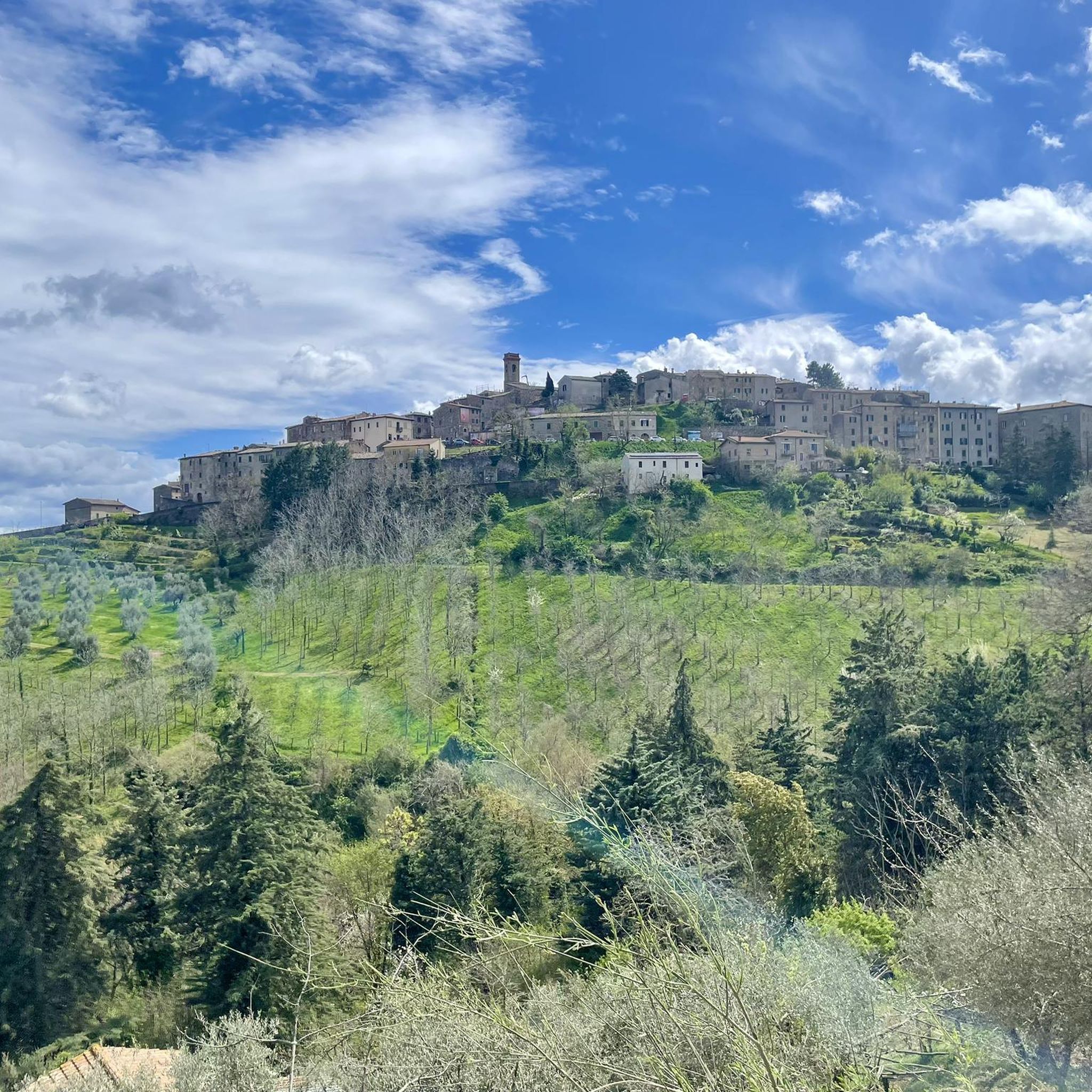
The Murlo Castle was the main center of the episcopal fiefdom, seat of the Bishops of Siena. The Castle is dominated at the highest point by the imposing bishop's palace, square in shape and with a sloped base, commonly called the "Palazzone". The entrance door is interesting, surmounted by a pointed stone arch, and inside, the vaulted rooms on the ground floor and the rooms with beams on the first floor are noteworthy. The palace was built by transforming and expanding the pre-existing building consisting of a 13th century tower; traces of it can be seen on the facade and especially inside on all floors. The walls surrounding the village/castle are from the same period and are still visible along almost the entire perimeter, along which there are two doors, one to the north and the other to the south/west. Characteristic are the houses leaning against the walls, most of which were also built after the war of Siena, in which secular traces have emerged during the renovations of recent decades. Until 1832, the seat of the Murlo Town Hall was in this Palazzina. Currently the Bishop's Palace houses the Archaeological Museum of Murlo, with the rich archaeological finds of Poggio Civitate; beautiful views that can be seen from the windows of the top floor.
0
0
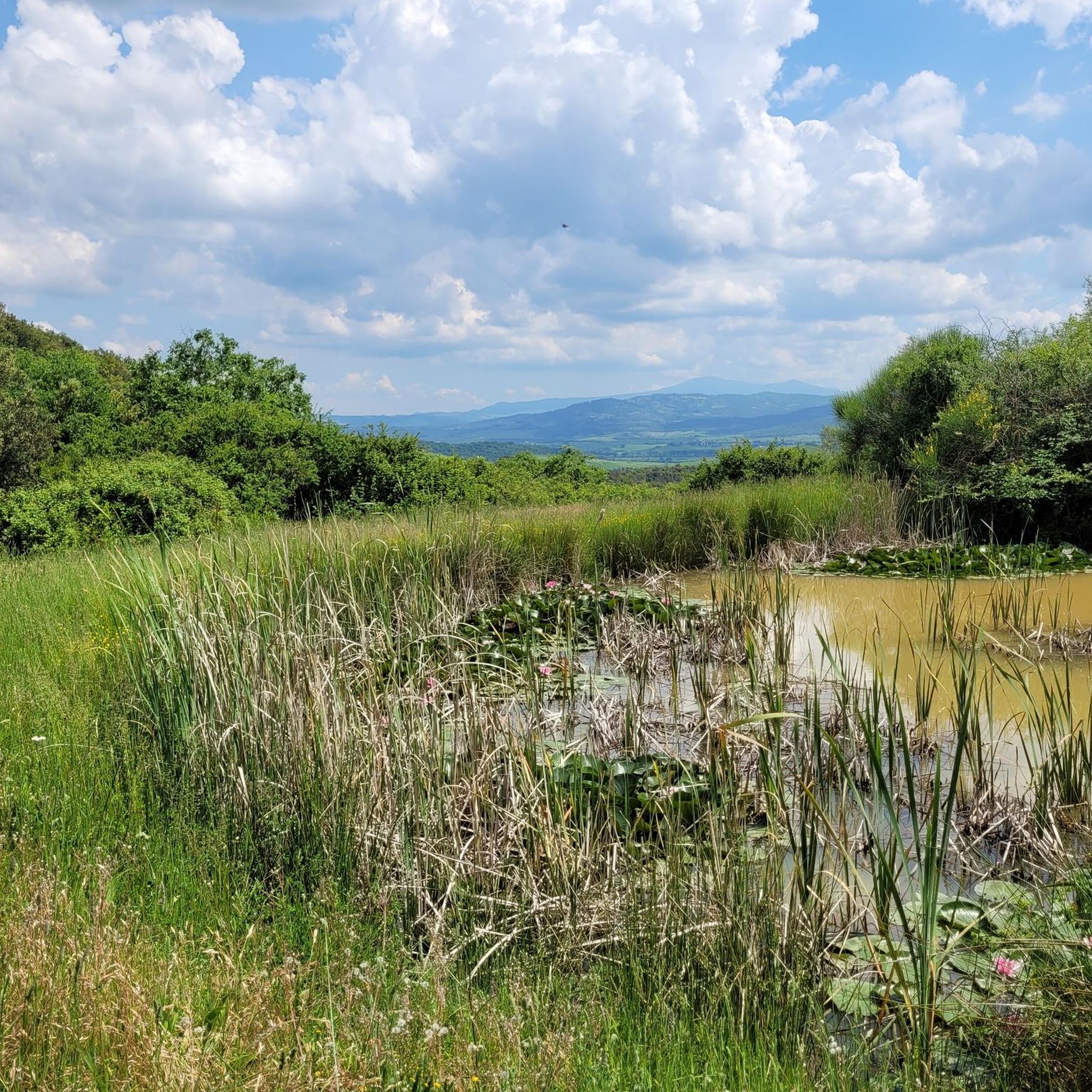
The municipality of Murlo is very large and is made up of numerous hamlets and small clusters of houses. Nestled in the Val di Merse, it enjoys both the wooded landscape and the typical hilly panorama of Siena. The territory is crossed by the Crevole stream, a tributary of the Ombrone, and by the Merse river that gives its name to the valley. Ruins of churches and castles constitute a cultural heritage of great interest. You can visit quarries and mines and take nature trails that lead to places now forgotten but which retain all their charm intact. The municipality of Murlo is very large and is made up of numerous hamlets and small clusters of houses. Nestled in the Val di Merse, it enjoys both the wooded landscape and the typical hilly panorama of Siena. The territory is crossed by the Crevole stream, a tributary of the Ombrone, and by the Merse river that gives its name to the valley. Ruins of churches and castles constitute a cultural heritage of great interest. You can visit quarries and mines and take nature trails that lead to places now forgotten but which retain all their charm intact.
0
0

A beautiful and welcoming square
0
1

The Castello Tricerchi extends over 400 hectares on the northern slopes of Montalcino. 13 hectares are dedicated to the cultivation of Sangiovese Grosso, the vines that produce Brunello and Rosso di Montalcino. In the historic cellars of Castello Tricerchi, Brunello di Montalcino and Rosso di Montalcino are aged in oak barrels.
1
0
The Castello Tricerchi is one of the oldest and most historic wine-producing castles in Tuscany. The castle was built in the thirteenth century on the Via Francigena near Montalcino by the Altesi and completed in 1441 by the Tricerchi. It covers 6000 m² and is a typical example of a medieval castle with a fortified keep, decorated with motifs attributed to Baldassarre Peruzzi, a famous artist of the period.
1
0


Montalcino Castle to visit before leaving the town
1
0
Frequently Asked Questions
What are the most historically significant castles to visit in the Murlo area?
The most historically significant castle is the Murlo Historic Village, which served as the main feudal center for the bishops of Siena and has deep Etruscan roots. Its Bishop's Palace now houses the Archaeological Museum of Murlo, displaying important Etruscan artifacts. Other notable historical sites, though largely in ruins, include Crevole Castle, Montepescini Castle, and Campriano Castle, all offering insights into the region's medieval past.
Are there any castles around Murlo that are particularly family-friendly?
Yes, several castles in the area are considered family-friendly. The Murlo Historic Village is a great option, offering a well-preserved medieval setting and an archaeological museum that can engage children. Additionally, Montalcino Fortress and Bibbiano Castle are also categorized as family-friendly, providing historical exploration opportunities for all ages.
What kind of views can I expect from the castles in the Murlo region?
Many castles in the Murlo area offer impressive panoramic views. From the Montalcino Fortress, you can enjoy extensive vistas over the Val d'Orcia, the Crete Senesi, and Monte Amiata. The Murlo Historic Village itself provides 360-degree views of the surrounding countryside, including the wooded hills of the Maremma and the distinctive Crete Senesi.
What outdoor activities can I do near the castles around Murlo?
The Murlo area is excellent for outdoor activities. You can find numerous hiking, mountain biking, and road cycling routes. For hiking, consider trails like the 'Murlo Mines Railway Trail – Ponte Nero loop' or the 'Santo Stefano loop'. Mountain biking options include routes around 'Bibbiano Castle' or 'Murlo'. Road cyclists can explore routes like 'Castello di Bibbiano – Montalcino loop'. You can find more details on these activities in the hiking guide, MTB guide, and road cycling guide for Murlo.
Is there an archaeological museum associated with any of the castles?
Yes, the Murlo Historic Village is home to the Archaeological Museum of Murlo (Museo Civico Archeologico Antiquarium di Poggio Civitate). Housed within the Bishop's Palace, this museum showcases significant Etruscan artifacts discovered from nearby excavations at Poggio Civitate and Poggio Aguzzo, offering a unique 'museum with a view' experience.
What is the best time of year to visit the castles in Murlo?
While specific seasonal information for castles isn't provided, the region of Tuscany generally enjoys pleasant weather in spring (April-May) and autumn (September-October), making these ideal times for exploring historical sites and enjoying the scenic countryside. Summer can be hot, but the views remain stunning. Winter offers a quieter experience, though some facilities might have reduced hours.
Are there any castles that are less crowded or considered 'hidden gems' near Murlo?
While Murlo Historic Village is a popular draw, the ruined castles of Crevole, Montepescini, and Campriano offer a more secluded and reflective experience. These sites, though less preserved, provide a tangible connection to the region's tumultuous past without the crowds, allowing for a deeper historical exploration.
What kind of historical architecture can I expect to see at these castles?
You'll encounter a range of medieval architecture. The Murlo Historic Village features well-preserved 12th-century walls, small dwellings, and the imposing Bishop's Palace. Bibbiano Castle boasts Lombard-period features like a boundary wall, moat, drawbridge, and battlements. Even in ruins, Crevole Castle shows remnants of a square tower and walled enclosures, while Campriano Castle retains sections of its city walls and towers, alongside a Romanesque church.
Can I find places to eat or drink near the castles?
The village of Murlo itself, which encompasses the historic castle, has a trattoria and other amenities. For other castles, especially those in more rural or ruined states, it's advisable to check for nearby towns or villages for dining options. Montalcino, for example, is a larger town with various cafes and restaurants near its fortress.
What do visitors enjoy most about the castles around Murlo?
Visitors frequently highlight the well-preserved medieval integrity of places like the Murlo Historic Village, appreciating its open-air museum feel and deep Etruscan history. The spectacular panoramic views from fortresses like Montalcino Fortress are also a major draw. Many enjoy the sense of stepping back in time and the blend of history with the stunning Tuscan landscape.
Are there any specific historical events or periods associated with the Murlo castles?
The castles around Murlo are deeply tied to the medieval period and the power struggles of Tuscany. The Murlo Historic Village was a key feudal center for the bishops of Siena, undergoing alterations after the fall of the Republic of Siena. Crevole Castle was strategically important and frequently contested between the Bishop and the Republic of Siena, eventually being largely destroyed during the Sienese War. Montalcino Fortress was built in 1361, marking the city's passage under Sienese dominion.
How long should I plan for a visit to the castles in the Murlo area?
For the Murlo Historic Village and its Archaeological Museum, you could easily spend half a day exploring the village, museum, and enjoying the views. Visiting other sites like Montalcino Fortress or Bibbiano Castle might take 1-2 hours each, depending on your interest. If you plan to visit multiple castles and combine it with outdoor activities, a full day or even a weekend would be ideal to fully experience the region.
Most popular attractions around Murlo

Get inspired with the komoot mobile app


Explore more
Looking for the best castles somewhere else? Discover other guides around Murlo:
