Top 10 Castles around Sant'Agata De' Goti
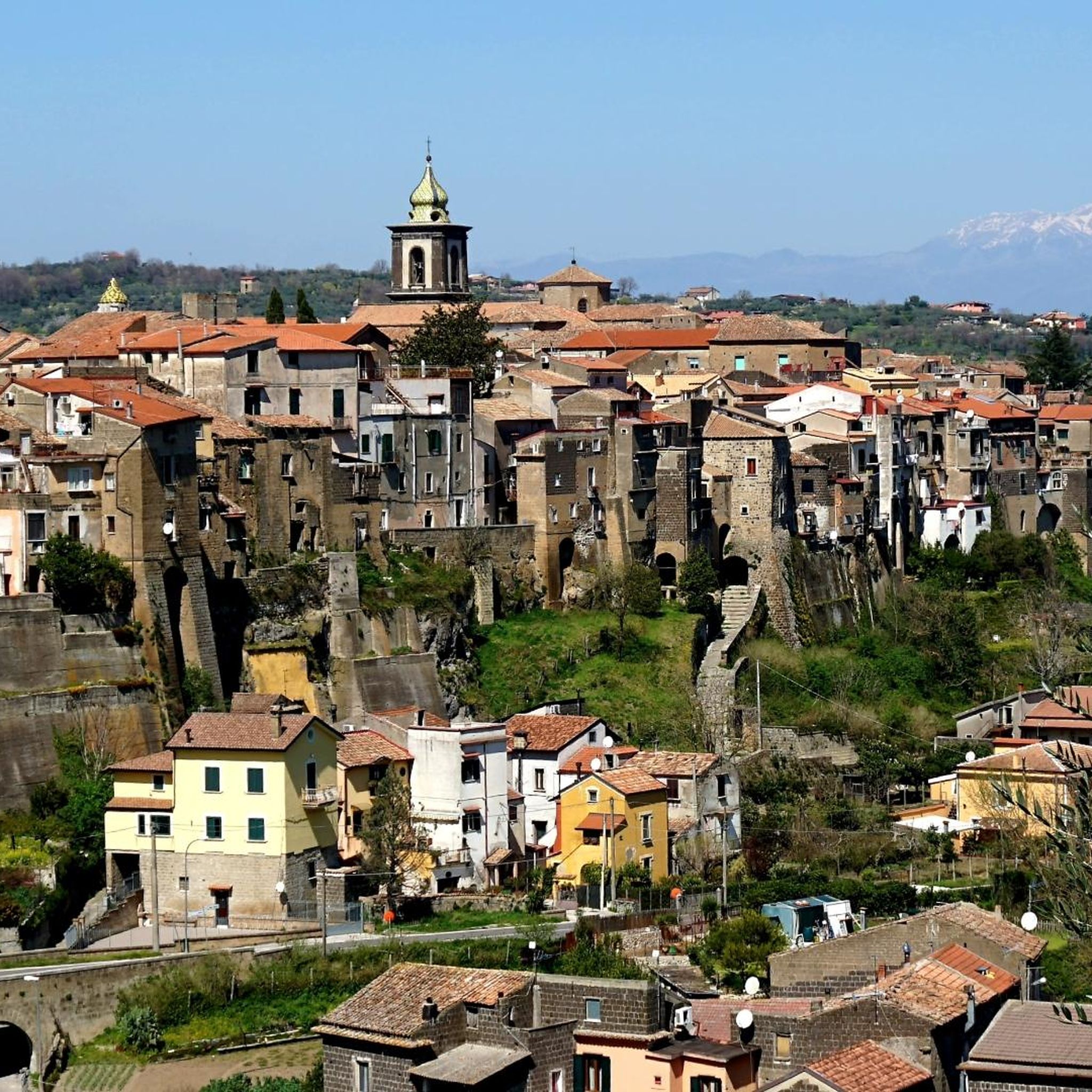
Castles around Sant'Agata De' Goti offer a journey through centuries of history in a region known for its medieval heritage. Located in the province of Benevento, this area features a landscape shaped by the Tifatini mountains and the Suessola valley. The town itself is recognized as one of Italy's most beautiful villages, characterized by its historical architecture and strategic position.
Best castles around Sant'Agata De' Goti
- The most popular castles is Matinale Castle, a castle that stands on an…
Last updated: June 30, 2026
Matinale Castle
Highlight • Castle
Translated by Google •
Tip by

Casertavecchia Medieval Village
Highlight • Historical Site
Translated by Google •
Tip by

Sign up now to discover places like this
Get recommendations on the best single tracks, peaks, & plenty of other exciting outdoor places.
Sign up for free
Courtyard of Castello del Matinale
Highlight • Castle
Translated by Google •
Tip by

Castello di Arienzo (Castem Vetus)
Highlight • Castle
Translated by Google •
Tip by
Royal Palace of Caserta
Highlight • Historical Site
Translated by Google •
Tip by

Sign up for free to discover even more castles around Sant'Agata De' Goti.
Sign up for free
Already have an account?
Start today with a free account
Your next adventure awaits.
Login or Signup


Tips from the Community

Unfortunately I didn't go out to enter the palace - I have to go back!
0
0

Worth a visit...but without a bicycle!
0
0

TO visit, it is still possible to climb up one of the 4 towers for a view over the entire valley
1
0

The Royal Palace of Caserta is the symbol of the city. It was built at the behest of Charles Bourbon in 1752, since 1997 it has been a UNESCO heritage site.
2
0

Admission is free every first Sunday of the month, the combined ticket Garden+Palast normally costs 15 euros
1
0
Culture, history and a great park.
1
0

This castle was wanted by Tommaso II d'Aquino. Over the years it was the home of nobles, such as the Sicilian kings, but later also of brigands.
2
0

The castle of Matinale, or castle of Rudovaco, is a castle of Cancello, a fraction of the municipality of San Felice a Cancello, in the province of Caserta. It stands on an elevation overlooking the entrance to the Suessola valley. The construction of the castle of Matinale is attributed to Tommaso II d'Aquino, count of Acerra, on the occasion of his wedding with Margherita di Svevia, illegitimate daughter of Emperor Frederick II, a wedding which took place before 1247. The bride's dowry included the fiefdom di Suessola, to which the Cancello hamlet also belonged. According to local tradition, an original Lombard fortification of the ninth century would have been the work of a certain Rudovaco and would have passed on to his death to the Count of Acerra, Cullezio. He wanted to join his castle of Acerra to that of Cancello with an underground path, causing the ruin of the western side and was unable to restore it following his death in battle. The castle was later restored or rebuilt by the Norman Ramperto and again by the Mattaloni counts in the 12th century. The castle hosted the kings of Sicily Guglielmo il Malo (1131-1166) and Manfredi di Svevia (1232-1266) and the Dukes of Rebursa and again, in the Angevin period, King Ladislao I and the Carafa in the Aragonese period. In the 15th century it was abandoned, having lost its military function. It was the seat of an inn and probably housed an archpriest church dedicated to St. Thomas the Apostle. In 1799 the French general Jean Étienne Championnet established his headquarters there and later became a den of brigands. It was donated at the beginning of the twentieth century by the D'Aquino family, princes of Caramanico, to the baron Giovanni Barracco. During the Second World War it hosted the allied command in 1943.
19
0
Frequently Asked Questions
What is the historical significance of the castles around Sant'Agata de' Goti?
The castles in this region, such as the prominent Ducal Castle in Sant'Agata de' Goti, trace their origins back to the Lombard era, serving as defensive structures. They underwent transformations through Norman, Swabian, and later noble family influences, reflecting centuries of strategic importance and architectural evolution. Many, like Castello di Arienzo (Castem Vetus), were built by the Lombards for defense and later modified by various rulers.
Which castles offer the best panoramic views of the surrounding area?
For breathtaking panoramic views, the imposing watchtower of the Ducal Castle in Sant'Agata de' Goti is highly recommended. It offers spectacular vistas over the village rooftops and surrounding hills. Additionally, Casertavecchia Medieval Village and Castello di Arienzo (Castem Vetus) also provide excellent viewpoints due to their elevated positions.
Are there any medieval villages to explore near the castles?
Yes, the Casertavecchia Medieval Village is a must-see historical site located on the slopes of the Tifatini mountains. It offers ancient origins and stunning views. The town of Sant'Agata dei Goti itself is also recognized as one of Italy's most beautiful villages, with a rich historical center to explore.
What can I expect to see inside the Ducal Castle in Sant'Agata de' Goti?
Inside the Ducal Castle, you can explore rooms featuring original frescoes and period architectural details. Notable are the mythological frescoes and 18th-century works by Tommaso Giaquinto, depicting scenes like Diana and Actaeon. The interiors showcase decorative renovations from the 15th and 16th centuries, reflecting its transition from a fortress to a noble residence.
What outdoor activities can I do near these castles?
The region around Sant'Agata de' Goti offers various outdoor activities. You can find numerous running trails, road cycling routes, and mountain biking trails. For example, there are running loops around Casertavecchia and road cycling routes that pass by the Royal Palace of Caserta. You can explore more options on the Running Trails around Sant'Agata De' Goti, Road Cycling Routes around Sant'Agata De' Goti, and MTB Trails around Sant'Agata De' Goti guides.
Are there family-friendly castles or historical sites to visit?
The settlement of Sant'Agata dei Goti itself is considered family-friendly, offering a rich historical experience. While specific castles may have varying accessibility, exploring the medieval village of Casertavecchia or the historic center of Sant'Agata de' Goti can be enjoyable for families.
What is the best time to visit the castles around Sant'Agata de' Goti?
The region generally enjoys pleasant weather during spring (April-May) and autumn (September-October), making these seasons ideal for exploring historical sites and enjoying outdoor activities without extreme heat. Summer can be warm, but early mornings or late afternoons are still good for visits.
How can I access Matinale Castle?
Matinale Castle stands on an elevation overlooking the entrance to the Suessola valley. While its military function was abandoned in the 15th century, it remains a significant historical site. Access typically involves reaching the municipality of San Felice a Cancello, where the castle is located, and then proceeding to its elevated position.
Are there any cultural events or exhibitions held at the castles?
The Ducal Castle in Sant'Agata de' Goti frequently hosts cultural events and temporary exhibitions. These events offer further insights into the region's history and culture, providing an enriching experience beyond just architectural appreciation. It's advisable to check local listings for current schedules.
Where can I find cafes or restaurants near the castles in Sant'Agata de' Goti?
The historic center of Sant'Agata de' Goti, particularly around the Ducal Castle, offers various cafes, pubs, and restaurants. Similarly, the Casertavecchia Medieval Village also has refreshment activities and bars where you can stop for a coffee or lunch break.
What kind of architecture can I expect to see in the castles?
The castles in the area showcase a blend of architectural influences. You'll find examples of medieval military architecture, including robust tufa stone structures and fortified dwellings with large rooms. Influences from Lombard and Norman-Swabian designs are evident, with later Renaissance expansions and decorative renovations also present, particularly in the Ducal Castle.
Is there an entry fee for the Ducal Castle in Sant'Agata de' Goti?
While the Ducal Castle in Sant'Agata de' Goti is a significant historical site, information regarding specific entry fees is not provided in the guide data. It is recommended to check local tourist information or the castle's official website for the most current details on opening hours and admission costs. You can find more historical context on Cultural Heritage Online.
Most popular routes around Sant'Agata De' Goti
Most popular attractions around Sant'Agata De' Goti

Get inspired with the komoot mobile app


Explore more
Looking for the best castles somewhere else? Discover other guides around Sant'Agata De' Goti:
