Top 17 Caves around Campagna
Best caves around Campagna offer a diverse range of natural and historical underground experiences. This region, known for its varied landscapes, features karst formations, marine grottoes, and ancient rock-hewn structures. Visitors can explore geological wonders and sites with significant cultural heritage. The area provides opportunities for both accessible tours and more challenging explorations into its subterranean world.
Best caves around Campagna
- The most popular caves is The “Grotta Profunnata” in the Oasi Valle della Caccia, a cave that features…
Last updated: October 16, 2026
The “Grotta Profunnata” in the Oasi Valle della Caccia
Highlight • Cave
This place, already known as a refuge for brigands in the …
Translated by Google •
Tip by

The rock church of Madonna del Fiume
Highlight • Religious Site
Located inside a karst cave, which can be accessed …
Translated by Google •
Tip by
Sign up now to discover places like this
Get recommendations on the best single tracks, peaks, & plenty of other exciting outdoor places.
Tana del cinghiale - Natural rock cavity
Highlight • Cave
Trekking clothes and sturdy shoes!
Translated by Google •
Tip by
View of the entrance to the "Grotta di Strazzatrippa"
Highlight • Cave
Here is the information on the cave.
destinazionesalerno.info/Oasi-Parchi-e-Giardini/Grotta-Strazzatrippa.html
Translated by Google •
Tip by
The cave of San Michele and Nardantuono
Highlight • Cave
Translated by Google •
Tip by

Sign up for free to discover even more caves around Campagna.
Already have an account?
Start today with a free account
Your next adventure awaits.

Tips from the Community

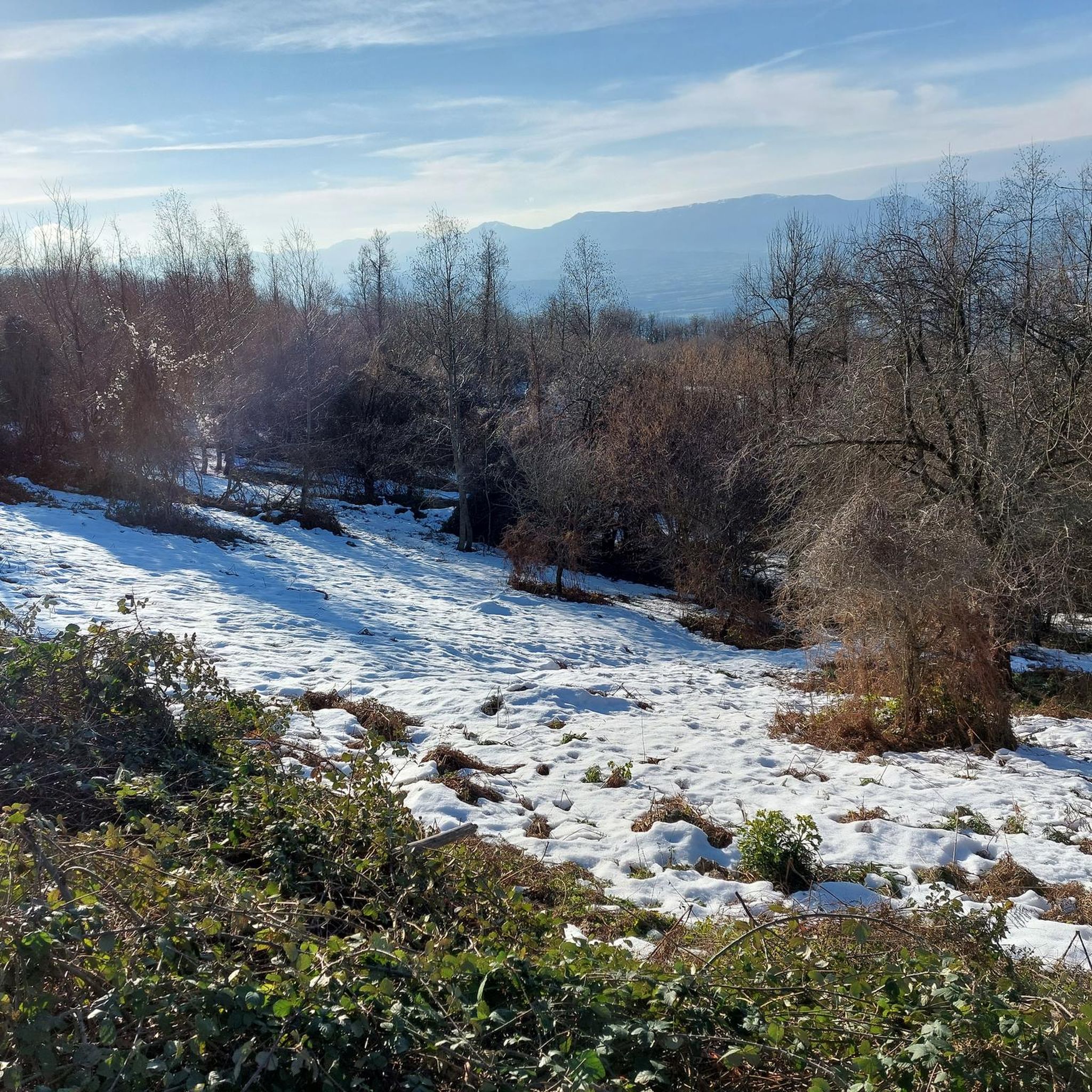
As you can see from the photos, access is not easy. Here is the information on the cave. https://www.destinazionesalerno.info/Oasi-Parchi-e-Giardini/Grotta-Strazzatrippa.html
1
0

The cave of San Michele Arcangelo is a natural cavity located on the western slope of Monte Raione in the municipality of Olevano sul Tusciano in the province of Salerno. Inside there is a religious complex of the IX-X century. The entrance to the cavity is located on a limestone ridge of the mountain, close to the Tusciano river. It is accessed via two paths: one starts from the hamlet of Ariano and the other starts from the hamlet of Salitto. The two paths join just before the cave, ending with a stairway. The peculiarity of the site is the presence within it of a complex religious structure of particular historical significance, made up of five buildings of considerable value called martyrion, a single hall basilica with frescoes from the Lombard era, two votive aedicules with courtyard, a church and an oratory.
16
0

The Grotta Profunnata is one of the most interesting attractions of the Oasi Valle della Caccia. It has different environments, and is only partially accessible to visitors, with the help of suitable equipment and under the guidance of an expert.
2
0
Along the path that leads from the Valle della Caccia WWF Oasis to the "Grotta Profunnata" you come across a natural rock cavity called the "Boar's Den". Trekking clothes and sturdy shoes!
5
0
One of the jewels of the Picentini Mountains is the "Grotta Profunnata", an interesting discovery inside the mountain massif. This place, already known as a refuge for brigands in the second half of the 19th century, saw its first official exploration only in 2004. The speleologists who ventured there managed to identify real "environments" within it: a small cave joined by a corridor to a larger one, which overlooks the Valle del Trientale. Continuing along the path, stalactites and stagmites dominate, leading to a small lake, characterized by crystal clear water. Unfortunately, the cave in its entirety is not a place accessible to everyone: in its entirety it can only be visited by speleologists or, in any case, experts equipped with the appropriate equipment. For ordinary visitors, the excursion is only possible in the initial part, always with the aid of suitable equipment and under the guidance of an expert. https://grandecampania.it/oasi-valle-della-caccia/
4
1
To reach it, trekking clothing and sturdy shoes are recommended.
5
0
The rock church of the Madonna del Fiume of Calabritto is located in Ponticchio, a few steps from the Bard'natore waterfall. Located inside a karst cave, which can be accessed along a nature trail, this suggestive rock church dates back to the 17th century. According to tradition, its construction would follow the episode in which a chapel, located on the bank of the Meria torrent, was overwhelmed due to the overflowing of the watercourse caused, in turn, by the conspicuous rains which affected the town for several days. The cataclysmic event, however, left intact a depiction of the Virgin Mary painted on the wall, which is why the Church was erected which, still today, is a pilgrimage destination for many faithful and excursionists. Another belief of pagan origin is also linked to the Church of the Madonna del Fiume in Calabritto: if a woman expecting a child drinks the water that drips from a particular breast-shaped stalactite, she will be assured of plenty of milk. This legend, corroborated by the fact that the Madonna del Fiume is the protector of pregnant women, means that, every year, on the occasion of Monday in Albis, the expectant Calabrian women go to the rock church, as a sign of devotion to the Virgin and auspicious for the health and growth of their children. Emblem, perhaps unique in Irpinia, of the perfect symbiosis between faith and nature, the rock church of the Madonna del Fiume in Calabritto is a stop not to be missed for those who love to spend moments of profound reflection and contemplation. https://infoirpinia.it/santuario-della-madonna-del-fiume-calabritto-percorso-trekking/
5
0
Here is a link for detailed information: http://www.olevanosultuscianoarte.it/2017/01/15/grotta-dellangelo-san-michele/
3
0
Frequently Asked Questions
What are some unique historical caves to visit in Campania?
Campania offers several caves with rich historical significance. The rock church of Madonna del Fiume is a 17th-century religious building nestled inside a karst cave, known for its blend of faith and nature. Another notable site is the cave of San Michele and Nardantuono, which houses a 9th-10th century religious complex with Lombard era frescoes. The Grotte di Pertosa-Auletta are unique in Europe for preserving remains of a pile-dwelling village from the second millennium BC, alongside an underground river.
Are there caves in Campania that offer boat tours?
Yes, several caves in Campania are best experienced by boat. The Grotta Azzurra on Capri is famous for its mesmerizing blue light, accessed via small rowboats. The Grotta dello Smeraldo near Amalfi offers boat tours through its emerald green waters and past an underwater nativity scene. The Grotte di Pertosa-Auletta provide a unique experience with a boat ride on an underground river, the Negro.
Which caves in Campania are known for their unique light effects?
The Grotta Azzurra on Capri is world-renowned for its ethereal blue light, created by sunlight filtering through an underwater opening. Similarly, Palinuro's Grotta Azzurra also features a brilliant blue light effect. The Grotta dello Smeraldo near Amalfi is named for its incredible emerald green waters, a result of sunlight filtering through an underwater fissure.
What kind of natural formations can I expect to see in Campania's caves?
Campania's caves are rich in diverse natural formations. You can expect to see spectacular stalactites and stalagmites, some forming impressive columns, as found in the Grotta dello Smeraldo and Castelcivita Caves. The “Grotta Profunnata” in the Oasi Valle della Caccia also features stalactites and stalagmites leading to a small lake. The Grotte di Pertosa-Auletta are known for their varied shapes, colors, and sizes of these formations, including the rare 'kiss' between stalactites and stalagmites.
Are there any family-friendly caves in the Campania region?
While many caves in Campania offer guided tours suitable for families, some, like the Grotta Azzurra (Capri) and Grotta dello Smeraldo, are easily accessible by boat and offer a magical experience for all ages. The Castelcivita Caves also offer a standard tourist tour option, which is generally suitable for families. For the “Grotta Profunnata”, only the initial part is accessible to ordinary visitors with expert guidance.
What is the best time of year to visit caves in Campania?
The best time to visit caves in Campania generally depends on the type of cave. Marine grottoes like Grotta Azzurra (Capri and Palinuro) and Grotta dello Smeraldo are best visited during spring, summer, and early autumn (April to October) when the weather is calm, and boat access is reliable. Inland caves like Grotte di Pertosa-Auletta and Castelcivita Caves can be visited year-round, though spring and autumn offer pleasant temperatures for travel to and from the sites.
Are there any caves in Campania that require special equipment or expert guidance?
Yes, some caves in Campania are more challenging. The “Grotta Profunnata” in the Oasi Valle della Caccia is only partially accessible to ordinary visitors and requires suitable equipment and expert guidance for exploration. Similarly, reaching the rock church of Madonna del Fiume and the cave of San Michele and Nardantuono requires trekking clothing and sturdy shoes, with the latter also needing an appointment and accompaniment.
Can I find any hidden or less-known caves in Campania?
Beyond the famous grottoes, Campania has several less-explored or historically significant caves. The “Grotta Profunnata” in the Oasi Valle della Caccia, for instance, was only officially explored in 2004 despite being known as a brigand refuge. The Brigand's Cave at the foot of Monte Ripalta also served as a hideout for criminals and brigands, with a challenging path leading to another cave, the 'Grotta del Prete'.
What outdoor activities can I do near the caves in Campagna?
Near the caves in Campagna, you can find various outdoor activities. For mountain biking, explore routes like 'I monumenti di Olevano sul Tusciano – giro ad anello' or 'Tusciano River Loop'. Road cyclists can enjoy routes such as 'Fontana del Vescovo – Le Croci di Acerno loop' or 'Temple of Athena, Paestum – Via Campo Fiorito loop'. Running enthusiasts have options like 'Along the Tusciano River – loop run' or 'Laceno Lake – Lago Laceno loop'. You can find more details on these activities in the MTB Trails around Campagna, Road Cycling Routes around Campagna, and Running Trails around Campagna guides.
Are there any caves in Campania with religious significance?
Yes, Campania features several caves with strong religious connections. The rock church of Madonna del Fiume is a 17th-century pilgrimage site located within a karst cave. The cave of San Michele and Nardantuono houses a significant 9th-10th century religious complex. Additionally, the Grotta del Santissimo Salvatore in Serino is an ancient sanctuary carved into rock, formerly known as the Grotto of the Angel or San Michele, holding spiritual importance.
How long does it typically take to explore the main caves in Campania?
The duration of a cave visit in Campania varies. For marine grottoes like Grotta Azzurra (Capri) or Grotta dello Smeraldo, the boat tour itself might be 20-30 minutes, but the entire experience including waiting times and travel can take a few hours. Larger inland systems like Grotte di Pertosa-Auletta or Castelcivita Caves offer guided tours that can range from 1 to 2.5 hours, depending on the chosen route. More challenging caves like the “Grotta Profunnata” or cave of San Michele might involve longer excursions due to access requirements and the nature of the exploration.
What is the difference between a 'cave' and a 'grotto' in Campania?
In Campania, the terms 'cave' and 'grotto' are often used interchangeably, but 'grotto' typically refers to a smaller, often picturesque cave, especially one that is partially or entirely filled with water and accessible by boat. Examples include the famous Grotta Azzurra (Blue Grotto) and Grotta dello Smeraldo (Emerald Grotto). 'Cave' is a broader term that can refer to any natural underground space, including larger karst systems like the Grotte di Pertosa-Auletta or Castelcivita Caves, which might have extensive dry sections or underground rivers.
Most popular routes around Campagna
Most popular attractions around Campagna

Get inspired with the komoot mobile app


Explore more
Extend your search for the best caves by checking out these guides of the top ones around Campagna:
